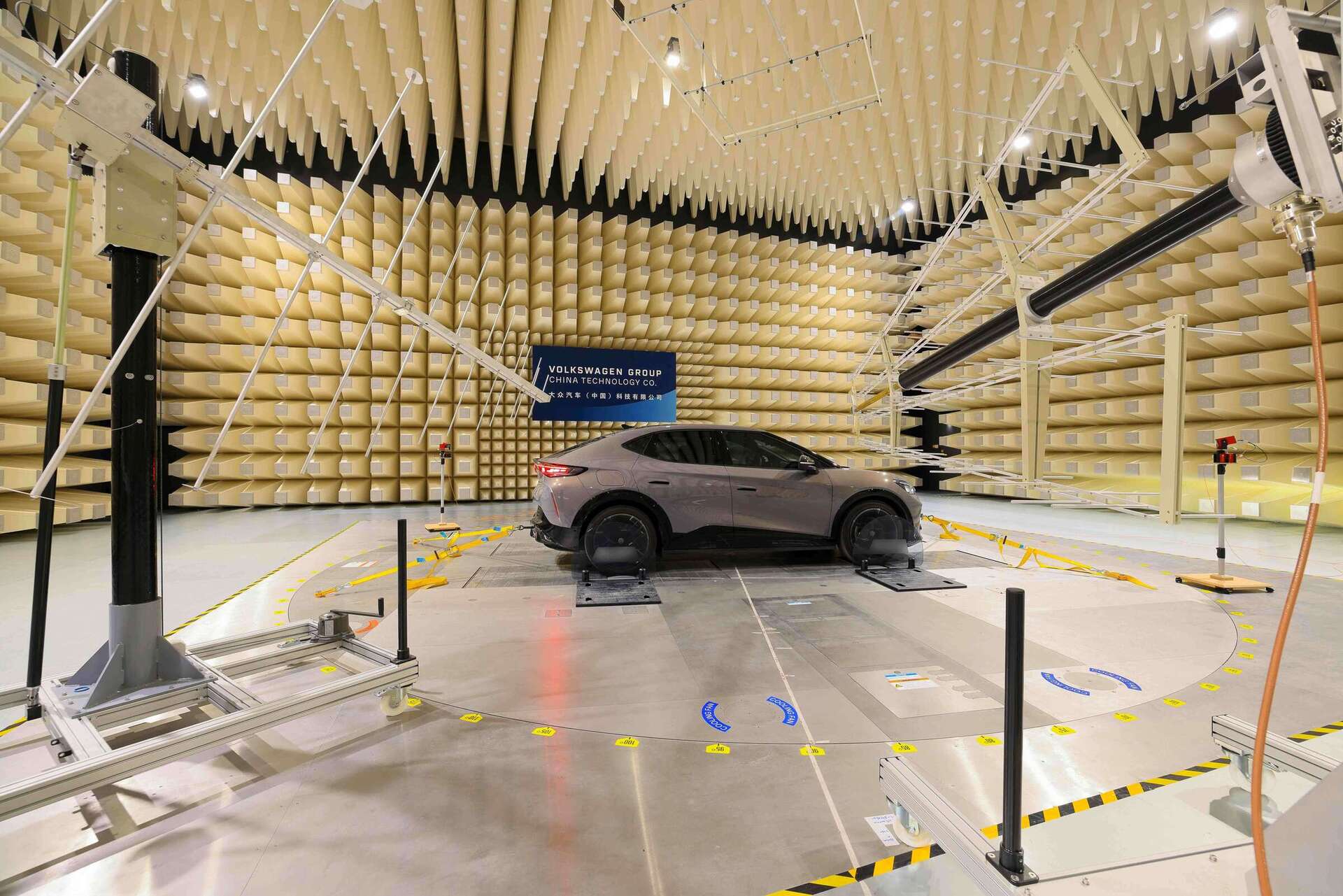
For the first time in Volkswagen’s corporate history, entire vehicle platforms and key technologies can be developed, tested and brought to series production outside Germany.
❝“China is the most competitive and most innovative automotive market in the world.”
Ralf Brandstätter, CEO VW China🏭 A Wolfsburg in the East: In Hefei, eastern China, around 100,000 square meters of space and more than 100 high-tech labs are available. Software, batteries, drives and complete vehicles are tested and validated there.
💡 China expertise as leverage: VW emphasizes that its China teams can now develop complete vehicle platforms. Approval processes run entirely outside Germany.
⏱ Shorter cycles, lower costs: New EV models can be developed in China 30 % faster and produced 50 % cheaper. The reason is a denser ecosystem of suppliers, technology partners and software providers.
🌏 China as export hub: From Hefei, VW is already planning additional export markets. The first sedans are being shipped to the Middle East, and the company is evaluating destinations in Southeast and Central Asia.
🚫 No China-built EVs for Europe: The EV architectures developed in China differ too much from Europe’s software strategy. Exporting them to Europe would be technically complex and economically unattractive.
And Germany?
Planned job cuts: VW wants to eliminate around 30,000 jobs in Germany by 2030 to reduce costs and restructure capacity.
Productivity under pressure: High energy costs, rigid structures and slow development cycles intensify Germany’s competitive disadvantages compared to China.
Background
Volkswagen has been active in China since 1984 and, for decades, was synonymous with “German cars” in the country. Today, the market has flipped. China sells more than three times as many electric cars as Europe. Local brands like BYD, Li Auto, and Xiaomi put massive pressure on VW.
Without the speed coming out of Hefei, the group would continue losing ground in the world’s most important car market.
Sources: Press Release VW, Business Times
The China Survival Guide for Western Businesses
Entity setup, WeChat strategy, hiring your first local team. 12+ years on the ground in Shanghai.