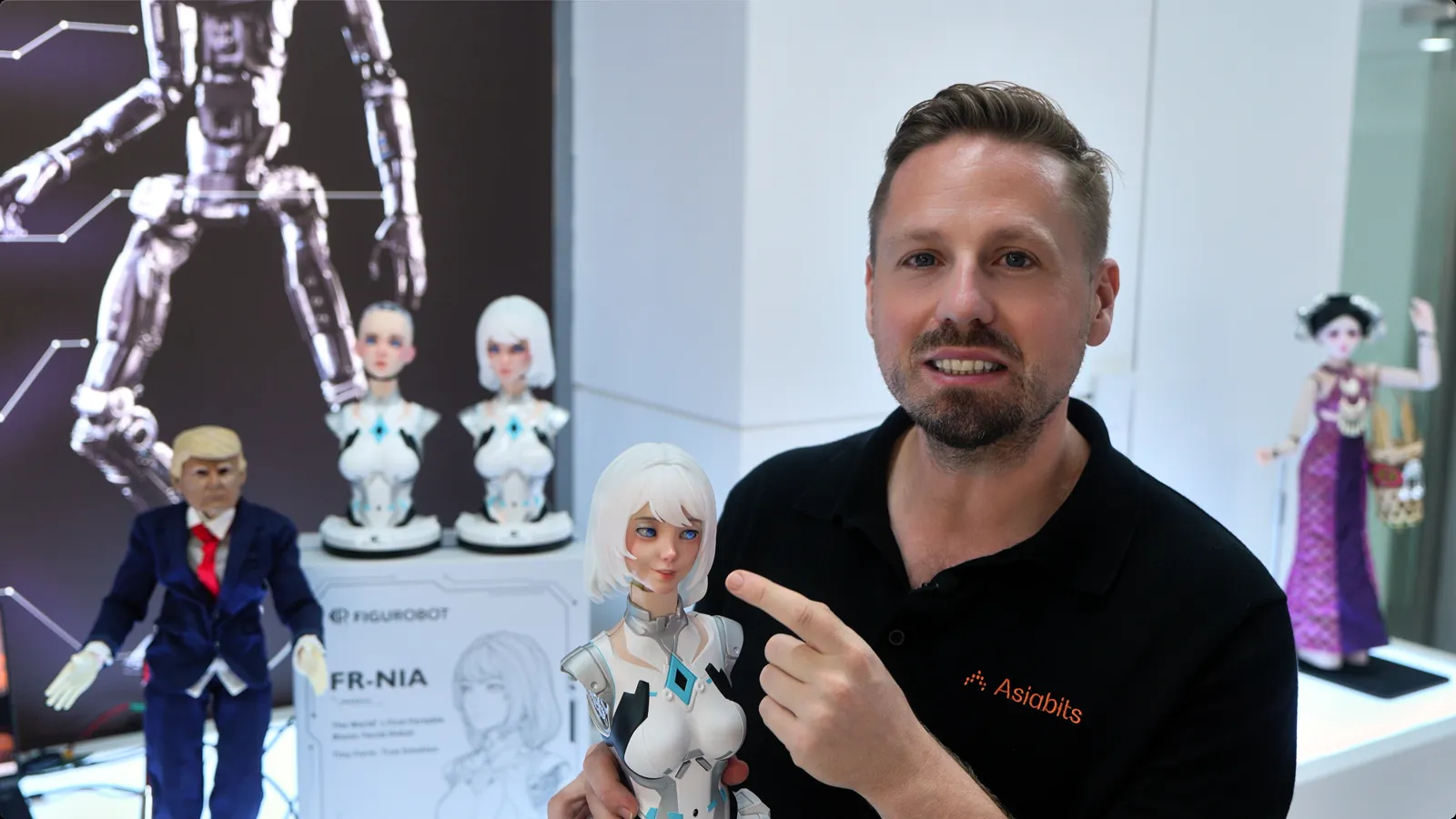
Figurobot’s FR-NIA is a 28-centimetre AI companion robot that brings conversation, facial expression and a customizable character onto your desk. Developed by the team behind NIA in China, it combines a moving silicone face with app-based interaction. Its Kickstarter launch is planned for 20 October 2026.
I’ve been talking with Figurobot’s team in Shanghai over the past few weeks. The thing I keep coming back to is the face.
We are getting used to speaking to AI. We ask questions, get help with work and sometimes have surprisingly long conversations with a voice coming out of a phone. Put a small character in front of that voice, give it eyes that move and a mouth that changes expression, and you introduce a different kind of interaction.
Now something is looking back at you.
That is what makes NIA interesting to me. It takes a familiar experience, talking to an AI, and gives it a physical presence. Whether you find that charming, slightly strange or immediately appealing probably says something about the kind of robot you would welcome into your home.
What is Figurobot’s FR-NIA?
FR-NIA is a compact companion robot designed for personal spaces such as a desk or bedside table. At roughly 11 inches tall, it is small enough to carry with you, and its design leaves plenty of room for personality: a recognizable face, changeable looks and interaction settings users can personalize.
Figurobot’s app lets users control expressions and movements, with tools including motion recording and keyframe adjustment. There is a creative side to the product as well as a conversational one. You can work on how the character moves and presents itself.
That opens up several reasons to own one. Someone might enjoy it as an anime-inspired desktop character. Someone else might be interested in experimenting with robotic expressions. Another person might simply like having a small companion nearby while working.
I find that variety appealing. Consumer robotics gives people room to discover uses that an engineering team might never have put at the top of its presentation.
Why is a robot face so difficult to build?
There is a lot happening beneath NIA’s skin. Figurobot describes ten degrees of freedom across the face and neck: seven in the face and three in the neck. A silicone layer around two millimetres thick covers the facial mechanisms.
Moving that skin convincingly is a very particular engineering challenge. Tiny movements around the eyes, eyebrows and mouth need to work together. The covering has to follow the mechanisms underneath, and everything has to fit into a small head.
A face also gives the viewer an unusually demanding reference point. We have spent our entire lives looking at other people. We notice expressions instinctively, including when something about them feels a little off.
That makes the combination of hardware and software especially interesting. Figurobot says NIA draws on information such as sound direction, the user’s position and conversational context when responding. The expression and the words need to belong to the same moment.
For me, this is where robotics becomes very tangible. You can understand the challenge without knowing anything about actuators. Just watch a face while it talks.
How much of the character can you make your own?
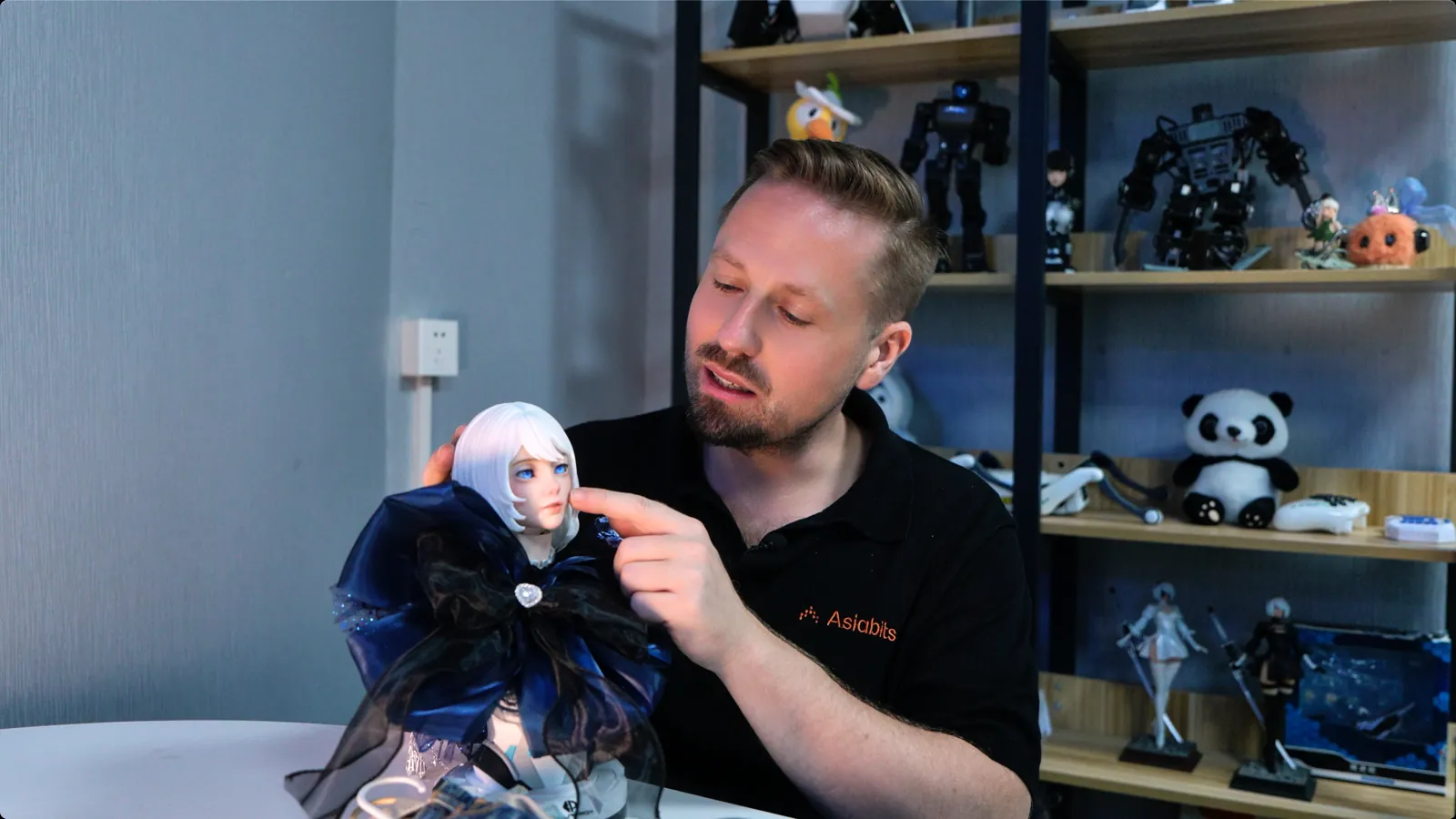
Customization is an important part of Figurobot’s approach. Different looks, voices and interaction styles give users ways to shape the character. The company’s product images show how much a change of hairstyle or outfit can alter NIA’s appearance.
I think this matters because a companion is personal by definition. The character one person enjoys talking to may be completely different from what another person would choose.
There is also an interesting connection to collecting and creative hobbies. People already spend time choosing figures, decorating a workspace or building a character in a game. A customizable robot adds movement and conversation to that experience.
Figurobot’s longer-term plans include memory and a relationship that develops across repeated interactions. That direction makes sense to me: remembering the thread of a conversation could give people a reason to keep coming back to the same character.
The real test of a companion product is what happens after you have shown it to your friends. Does it become part of your day? Do you keep changing its look? Do you find yourself talking to it while making coffee?
Those ordinary moments are where I would look for the answer.
What does NIA tell us about robotics in China?
Figurobot also develops a separate, approximately 60-centimetre humanoid capable of whole-body movement. FR-NIA brings the company’s work on expressive interaction into a smaller consumer format.
I like having both products in view because they show how many choices are behind the word “humanoid.” A team can work on walking and coordinated movement, or concentrate its engineering on the face and the experience of talking to a machine. Different products can emerge from the same robotics expertise.
From Shanghai, that is one of the things I enjoy following through Asiabits: how companies turn an ambitious technical idea into something a person can actually imagine buying and using.
NIA makes that conversation accessible. You can show someone a picture and ask whether they would want it beside their laptop. You will probably get a more interesting answer than you would from a page of specifications.
Where can you follow the FR-NIA launch?
Figurobot is bringing FR-NIA to Kickstarter, with launch materials describing Lite, Pro and Pro Max configurations. The campaign is the place to see the available packages, current pricing and delivery plans.
I’ll be following how people respond to it. A small expressive robot is a good way to start a much bigger conversation about what we want AI to become in our everyday lives.
Explore FR-NIA on Kickstarter.
At Asiabits, we spend time with the teams building China’s next generation of robots and help international businesses connect with them. If you would like to meet robotics companies in China yourself, take a look at our bespoke visits and tours.
Get These Insights Every Monday
Join 18,000+ professionals reading Asiabits. Free, every Monday, straight from Shanghai.
Subscribe Free →