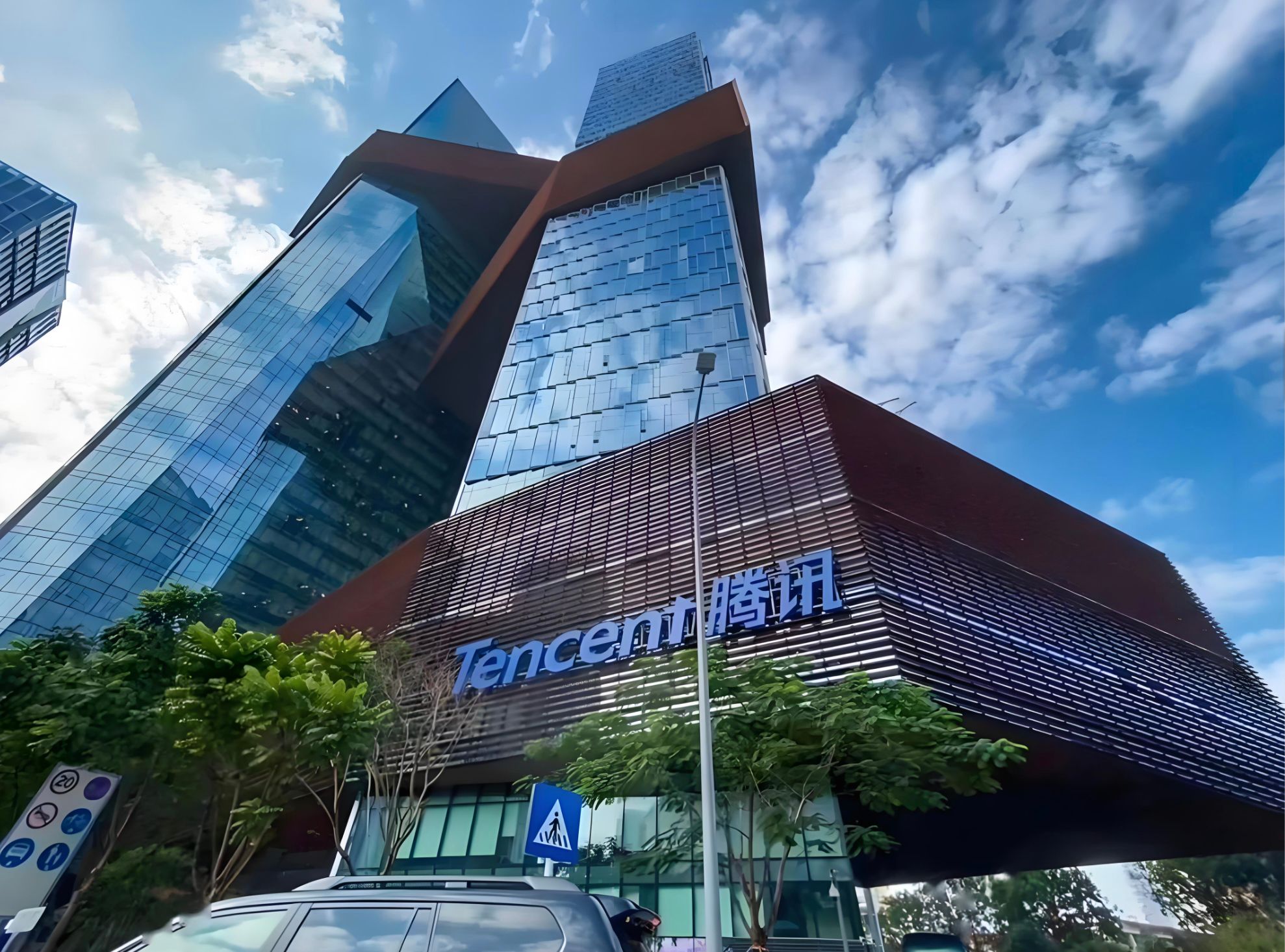
On a Friday in mid-March, a Chinese AI lab open-sourced an agent framework called OpenClaw. By Tuesday, almost a thousand people were queuing outside Tencent's Shenzhen headquarters trying to install it. By Wednesday, Tencent had shipped its own version inside WeChat. We were in the building that afternoon, watching the product team launch QClaw to a small group of foreign founders.
This is the 72-hour story that almost no Western publication picked up. The short version is here. The full roundtable we recorded inside Tencent HQ is the video further down.
The line outside Tencent
OpenClaw is an open-source AI agent framework. A Chinese team behind a separate AI product, Manus, shipped it on a Friday in mid-March. By the following Tuesday it had gone fully viral inside China. Thousands of people, many of them well outside the usual tech crowd, queued at Tencent's Shenzhen headquarters in the hope of getting help with the install.
A micro-economy popped up around the queue. On Xiaohongshu and Xianyu, people started offering paid OpenClaw installation services at anywhere from 50 to 700 yuan per setup, or about $7 to $101. That is the kind of demand curve you see when a product becomes a moment rather than a feature.
What was striking was who was lining up. There were retirees. There were small business owners. There were university students looking for an edge. Most of them did not have a clear use case for an AI agent yet. They wanted to be among the first to use the thing that, in their words, felt like the beginning of AI for everyone.
72 hours from open-source to QClaw
Tencent's response set the tone for the week. Within roughly three days of OpenClaw being open-sourced, the WeChat team shipped its own version. They called it QClaw, and the consumer product was a one-click installer and manager for OpenClaw, living directly inside the WeChat ecosystem. A separate enterprise version, WorkBuddy, was ready for WeChat Work and Tencent Meeting at the same time.
That is not a beta. That is two production products, on two of the largest distribution surfaces in the world, in less time than a Western product team typically needs to greenlight a roadmap review.
You hear the phrase "China speed" a lot if you live here. It is a marketing line on a slide deck and a competitive constant on the ground at the same time. While Silicon Valley debates AGI timelines, the Shenzhen ecosystem ships product cycles in days. The asymmetry is not about who has the better model. It is about who can move from open-source release to consumer-shippable product in a week, on infrastructure 1.3 billion people already use.
The 60-year-old lobster shop owner
The clearest signal that this wave is mainstream and not niche came from a small town in Jiangsu. A 60-year-old woman named Ms. Dai runs a lobster restaurant in Xuyi, famous in China for its crayfish. Her son works in Shenzhen and helped her set up QClaw on her business WeChat account.
She now uses an AI agent to write her Xiaohongshu posts, manage a 2,000-person customer group, push a daily lobster-themed news clip to that group, and brainstorm new menu items based on online reviews. She is, by any reasonable definition, running an AI-augmented small business. She is also one of the first lobster-restaurant owners in China to do it.
"They don't wait for people to come to the technology. They put the technology where people already are."
That is the line that landed for us when Tencent's product manager explained the QClaw strategy. The point is not that an AI agent suddenly works better. The point is that for the first time, the agent lives inside the app a 60-year-old restaurant owner already opens forty times a day.
This is the story that Business Insider picked up. Not the product spec. Not the roadmap. The lobster lady. AI is no longer for SF engineers. It is for restaurant owners.
WeChat is the distribution layer Western AI does not have
ChatGPT has somewhere north of half a billion users. WeChat has 1.3 billion. The difference that matters is not the gap in raw users. It is what WeChat actually is.
WeChat is the operating system that Chinese consumers open sixty times a day. Messaging. Payments. Government services. Hospital appointments. Train tickets. Grocery orders. Group chats with their high-school class. Inside that operating system, an AI agent is not "another app to download." It is a QR code you scan inside an app you are already inside.
Tencent's Hunyuan models, QClaw, WorkBuddy and the rest of their AI stack all ride the same rails. Every Western AI startup spends 30 to 40 percent of its capital on user acquisition. Tencent and Alibaba already have the users. The Chinese AI race is not really being run on model benchmarks. It is being run on which distribution surface gets the first agent integrations.
This is the structural advantage. Algorithm parity does not matter when one side controls the surface.
What the West misses about Chinese AI adoption
Spend any time inside the Chinese AI ecosystem and you notice three things that do not get covered in Western press.
Curiosity beats caution. In Germany, where I grew up, most people feel that their lives are reasonably OK and there is no urgent reason to try a new tool. In China, especially among small business owners, the default is the opposite. People are actively looking for the next thing that might give them an edge. That is why a lobster shop owner installs QClaw before most enterprise procurement teams in Europe have heard of it.
Government support is real and explicit. Beijing has consistently framed open-source AI as a vehicle for economic mobility, particularly for one-person businesses and SMEs. State media covered the OpenClaw moment positively. That cover gives ecosystem players permission to move fast.
Optimism is the asymmetry. People in China are not waiting for regulators to figure out what to do. They are trying things, breaking things, and shipping. The result was the queue outside Tencent. There is no equivalent line outside any Western AI company headquarters.
The roundtable inside Tencent HQ
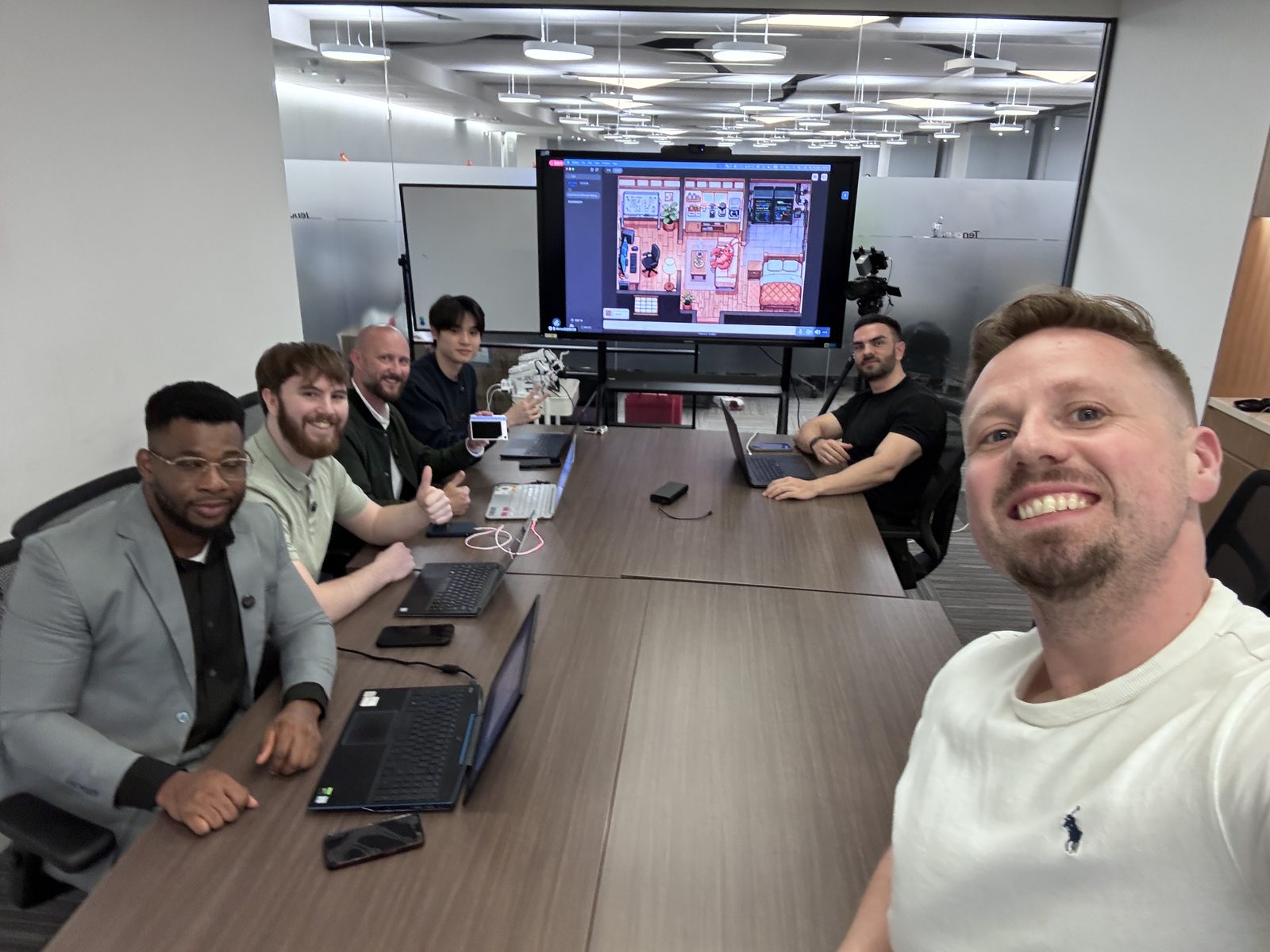
The afternoon we spent inside Tencent's Shenzhen building was a working session, not a press event. Six foreigners on one side of the table, the WeChat and QClaw product teams on the other.
- Laurent Le Pen, founder and CEO of Oxtak, 18 years in Shenzhen building consumer AI hardware.
- Isaac Sin and Ryan Chen, CTO and co-founder of MakerMods, the team behind XLeRobot and open-source physical-AI hardware.
- Joshua Charles Woodard, MIT, formerly running Apple's China operations.
- Francis Okafor, AI and tech lead, based in Shenzhen.
- Angus Wong, builder and operator, Hong Kong / Shenzhen.
We installed QClaw and WorkBuddy live, asked the product team where the rough edges were, and gave them unfiltered first reactions. Some bugs surfaced. Some "wait, this just worked" moments surfaced too. Tencent had not asked for a polished marketing video. They wanted to see what happened when international founders used the product cold.
The full conversation, edited down to nine minutes, is the video at the top of this page. It is the closest thing we have to a real-time snapshot of what 72 hours of China speed looks like from inside the building.
Want to see China's AI ecosystem up close?
We design and operate single-day and multi-day China innovation tours for executive teams. Tencent, Alibaba, Huawei, DJI, BYD, Unitree, and the kind of access we had inside Tencent HQ for this story. Twelve years of relationships, no tourist filter.
Talk to Us →The lesson: distribution beats algorithm
OpenAI has the better model. Tencent has the better surface. For the next phase of the consumer AI race, that asymmetry is the entire game.
If your AI strategy does not include a serious answer to "how do we ship inside WeChat or its equivalent," you do not yet have a China strategy. You have a U.S. product strategy with a Chinese ambition.
The lobster lady will not be the last surprise out of this wave. She will be the first of many. Builders, operators and small-business owners in China are about to try things with AI agents that nobody has thought to try yet, because the surface is finally low-friction enough to support real experimentation.
If you want to see what AI-for-everyone actually looks like at scale, this is the place to look first.
This article is based on a co-produced shoot with Tencent at their Shenzhen headquarters in March 2026. Watch the full roundtable on YouTube. Read Thomas Derksen's as-told-to essay in Business Insider. Subscribe to Asiabits for weekly intelligence on China tech, robotics, and AI.
Get These Insights Every Monday
Join 18,000+ executives reading Asiabits. Free, every Monday, straight from Shanghai.
Subscribe Free →