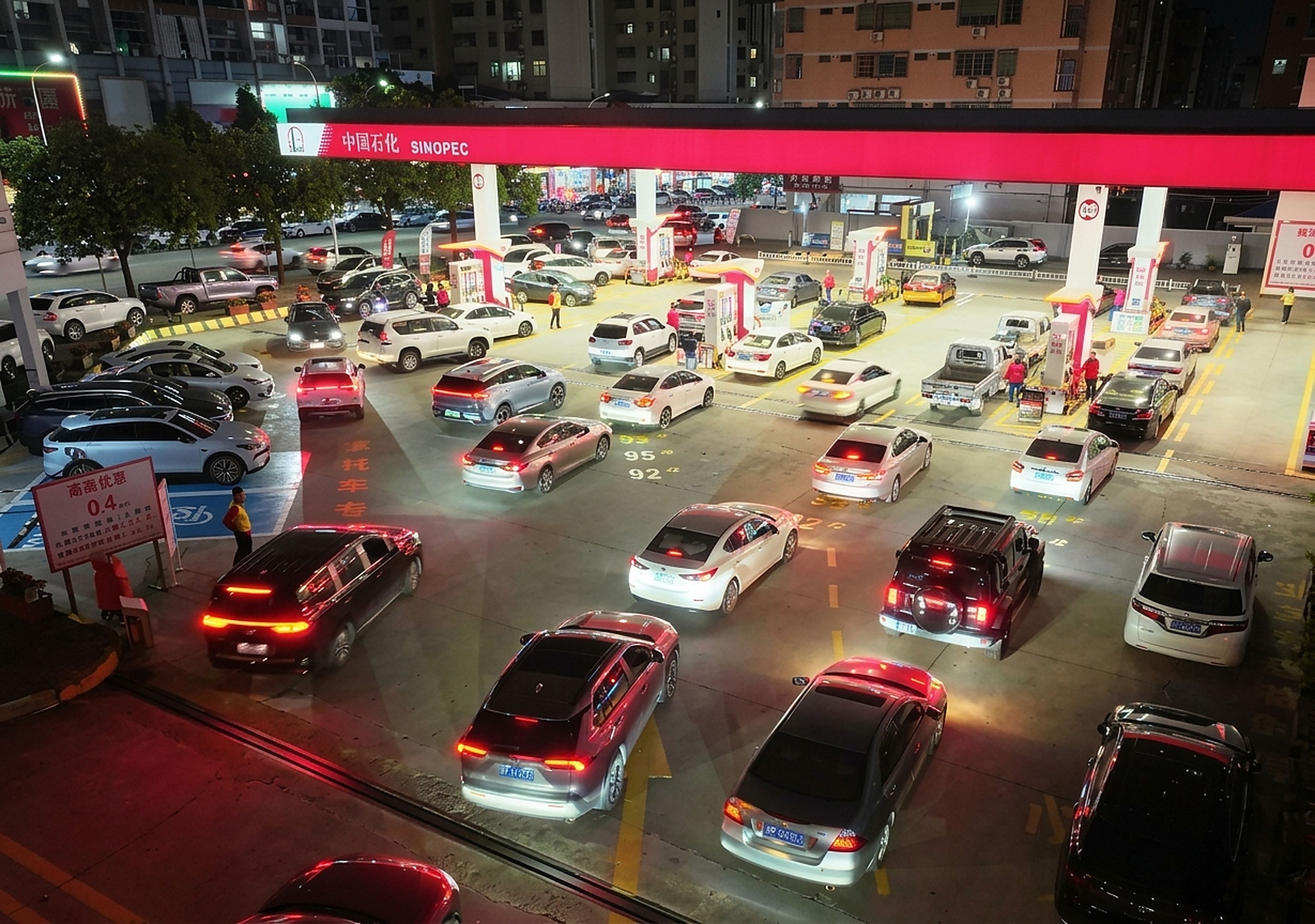
Miles-long lines in front of gas stations in Beijing, Nanjing, Dongguan. On Sunday, China's oil giant Sinopec sent a message to millions of customers:
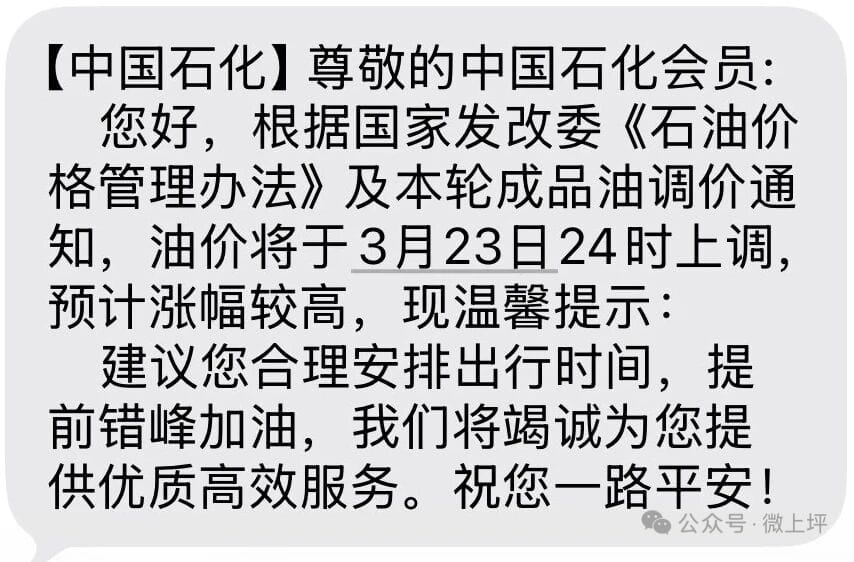
What followed was a nationwide rush to the pumps.
The price shock in numbers
Although the state planning commission (NDRC) intervened in an unprecedented step to avoid endangering social stability, the increase is the sharpest since the introduction of the current pricing system in 2013.
The intervention: An increase of 2,205 yuan per ton was originally planned. The NDRC halved this value by emergency decree to 1,160 yuan ($168).
At the pump: The price per gallon climbed on Tuesday from an average of $4.20 to $4.70 (planned was $5.10). That corresponds to a jump of about 20% since the war began.
Group | Impact | Reaction |
|---|---|---|
Gig workers (Didi, JD.com) | Massive margin collapse | Demand for fuel surcharges or longer working hours. |
Truckers | Profitability threshold undercut | Hundreds of truck drivers stated on social media they are suspending operations for now. |
State refineries | Rising losses | Due to the state price cap, they cannot fully pass on high global crude oil prices. |
Vanishing point: electric mobility
The crisis acts like an accelerant for China's already rapid shift to e-cars.
While 300 million gasoline car drivers tremble, tips for cost avoidance are spreading on platforms like Rednote: "Charging after 10 PM costs less than 50 cents per kWh."
Nevertheless: For the remaining combustion engine fleet, which still handles the majority of commercial traffic, there is no escape.
Sources: Reuters, New York Times, CNBC
Get These Insights Every Morning
Join 18,000+ professionals who start their day with Asiabits. Free, every weekday, straight from Shanghai.
Subscribe Free →