
$212K Ad Spend, Amex Capped Mid-Campaign, Still Hit $1M
"I think I probably had 10K in the bank account. This thing doesn't work, then I'm screwed."
With Oliver Masson, Solo Founder of Blisstil
- $1M alone at his computer. Oliver crossed one million dollars on Kickstarter sitting solo at his laptop. "You're never ecstatic, just more tired." Six years of work compressed into one quiet moment.
- $10K goal, $1,001,216 raised in 30 days. The public goal was a Kickstarter algorithm trick. Oliver's real internal target was $800,000. The campaign funded in 59 minutes and pulled in 3,272 backers.
- From solar car engineer to hardware founder. UNSW Renewable Energy Engineering, Sunswift Solar Racing Team that broke the world record for fastest EV over 500km on a single charge, ex-carpenter, ex-entrepreneurship lecturer. Then six years building one product alone.
- 36 prototypes to make foam meet electronics. The Serenade is over-ear ANC sleep headphones with no parts touching your ear. Soft foam outside, hard electronics inside. Three dozen iterations to make that work for side sleepers.
- $212K ad spend during the campaign. Including $180,000 in a single month. Amex capped his card from $100K to $38K mid-campaign. A best friend lent him 150,000 EUR at 2.5% after Oliver proved 7:1 ROAS. "Kickstarter lenders charge 5% per month. Those are fucking sharks."
- Crying in a Shenzhen hotel room. First trip to China, $10K in the bank, no factory, no plan. Oliver cried alone at 1 a.m. in a budget hotel. He found his Shenzhen partner via Scott Miller and Dragon Innovation, the network behind Pebble and iRobot.
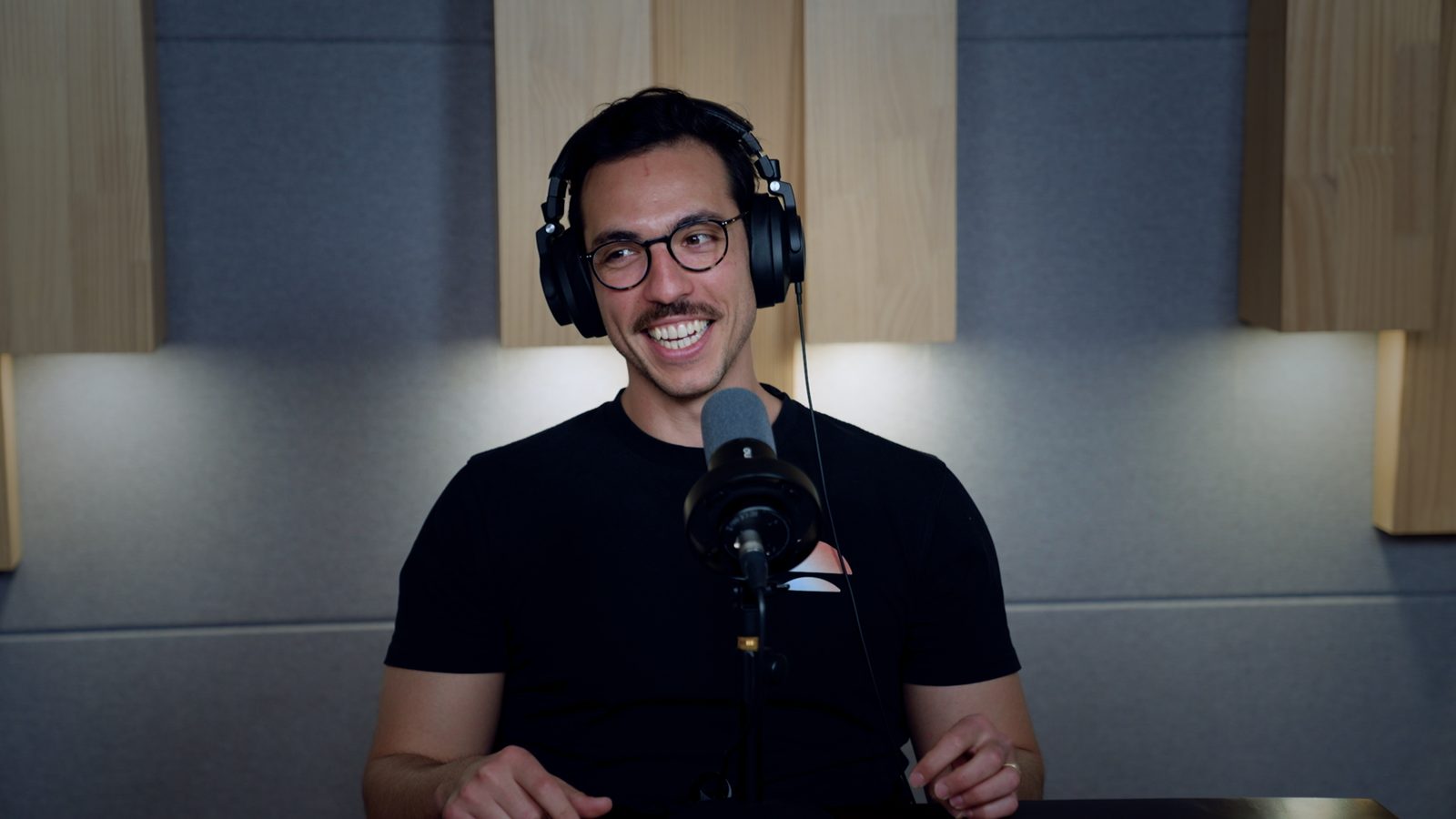
$1 Million Alone at His Computer
Oliver Masson crossed one million dollars on Kickstarter sitting alone at his desk. No team, no investors, no celebration. Just a number ticking up on a screen after six years of solo work. He had set a public goal of $10,000 and raised $1,001,216 from 3,272 backers in 30 days. The campaign funded in 59 minutes. By the time the headline number landed, all he felt was tired.
"You're never ecstatic. You're just more tired. Every milestone is just one more reason you can't quit yet."
The $10,000 goal was a Kickstarter algorithm trick. The platform rewards campaigns that hit their goal fast, then keeps surfacing them for the rest of the run. Oliver's real internal target was $800,000. He wanted enough margin to actually ship 3,272 units of a $399 over-ear headphone without going bankrupt on freight, components, and after-sales support.
Six Years, 36 Prototypes, $700K Burned
The Blisstil Serenade is over-ear ANC sleep headphones designed for side sleepers. No drivers touching your ear, no hard plastic pressing into your temple. Soft foam outside, hard electronics inside. Making those two things coexist took 36 prototypes. Before the headphones came SleepMuffs, a foam earmuff product that ran a smaller Australian Kickstarter in 2020 and raised AU$100,000 from 869 backers. SleepMuffs paid for the early years of R&D on the Serenade.
By the time Oliver launched the main campaign in July 2025, he had spent roughly $700,000 over six years. His own savings, his parents' money, his brother's money, and the SleepMuffs profits were all in the product. Most of that went into prototyping, tooling, and small-batch test runs in factories that did not yet exist in his network.
"We spent 700,000 dollars over six years building this thing. It's my money, my parents' money, my brother's money. So when you ask me when I wanted to quit, I'd say at least once a day for six years."
From Solar Cars to Sleep Headphones
Oliver studied Renewable Energy Engineering at the University of New South Wales. He graduated with First Class Honours. He spent his university years on the Sunswift Solar Racing Team, the team that broke the world record for fastest electric vehicle over 500 kilometres on a single charge. Before engineering he was a carpenter. Between SleepMuffs and the Serenade, he taught entrepreneurship at UNSW. He also co-founded Australian Native Remedies, a Daigou-market business selling Australian wellness products into China.
By the time he started Blisstil, Oliver had three things most solo hardware founders do not have at the same time: an engineer's instinct for tolerances, a carpenter's instinct for materials, and a business teacher's instinct for unit economics. He also had a problem he could not stop thinking about. He had bought every earbud, every earmuff, every foam plug on the market. None of them let him sleep on his side without pain. So he started cutting open earmuffs in his kitchen and gluing speakers into them.
Crying in a Shenzhen Hotel Room
The first trip to Shenzhen almost killed the company. Oliver flew over with about $10,000 in his bank account, no factory partner, no real plan beyond "go and find someone." He ended up alone in a budget hotel late at night, exhausted, jet-lagged, and aware that one wrong supplier choice would empty his runway. He sat on the bed and cried.
"I was kind of risking it all. I was like, fuck me, if this thing doesn't work, then I'm screwed. I went to Shenzhen and I remember I was in the hotel room kind of crying from frustration."
The breakthrough came from outside the trip itself. Oliver had been talking to Scott Miller at Dragon Innovation, the network behind Pebble, iRobot and Ninja Blender. Dragon connected him to a Shenzhen partner who could actually run the audio electronics side. From there, the Serenade had a path to manufacture. Oliver kept his German business partner on EQ and electronics, the Shenzhen partner on factory operations, and ran the rest of the company alone.
$212K Ad Spend and an Amex Cap
The Kickstarter mechanics matter because most founders do not see them. Oliver spent $212,000 on advertising during the 30-day campaign. $180,000 of that landed in a single month. The math works only if the platform's own algorithm picks up the campaign and starts feeding it organic traffic. In Oliver's case, 23 percent of pledges came directly from Kickstarter's internal discovery, free of acquisition cost. The other 77 percent had to be bought.
Mid-campaign, American Express capped his card. The limit dropped from $100,000 to $38,000 overnight. With ad accounts about to go cold, Oliver called a best friend and asked for a bridge. The friend lent him 150,000 EUR at 2.5 percent interest after Oliver showed him a 7:1 return on ad spend. Kickstarter-specific lenders had quoted him 5 percent per month.
"Those Kickstarter lenders, they're sharks. 5 percent a month. My friend gave me 150,000 euros at 2.5 percent because he saw the ROAS."
Fall in Love With the Problem
Oliver ships 3,272 units in April 2026. The Serenade retails at $399, positioning it directly against the Bose Quiet Comfort Ultra at $439. He thinks the headphone category is one of the few left where someone can still compete with Bose on engineering, because almost everyone else stopped trying. The next product is already in design: a softer, more emotional version of the Serenade with washable covers, built for travellers who care about how a thing feels in their hand and not just how it sounds.
His advice to other solo founders, repeated three times in the recording, sounds like a teacher's line because it is. He used to say it from a UNSW lecture hall. He says it now sitting in front of 36 prototypes and a finished product.
"Fall in love with the problem, not the solution. Do the business case first. The product is just whatever survives the math."
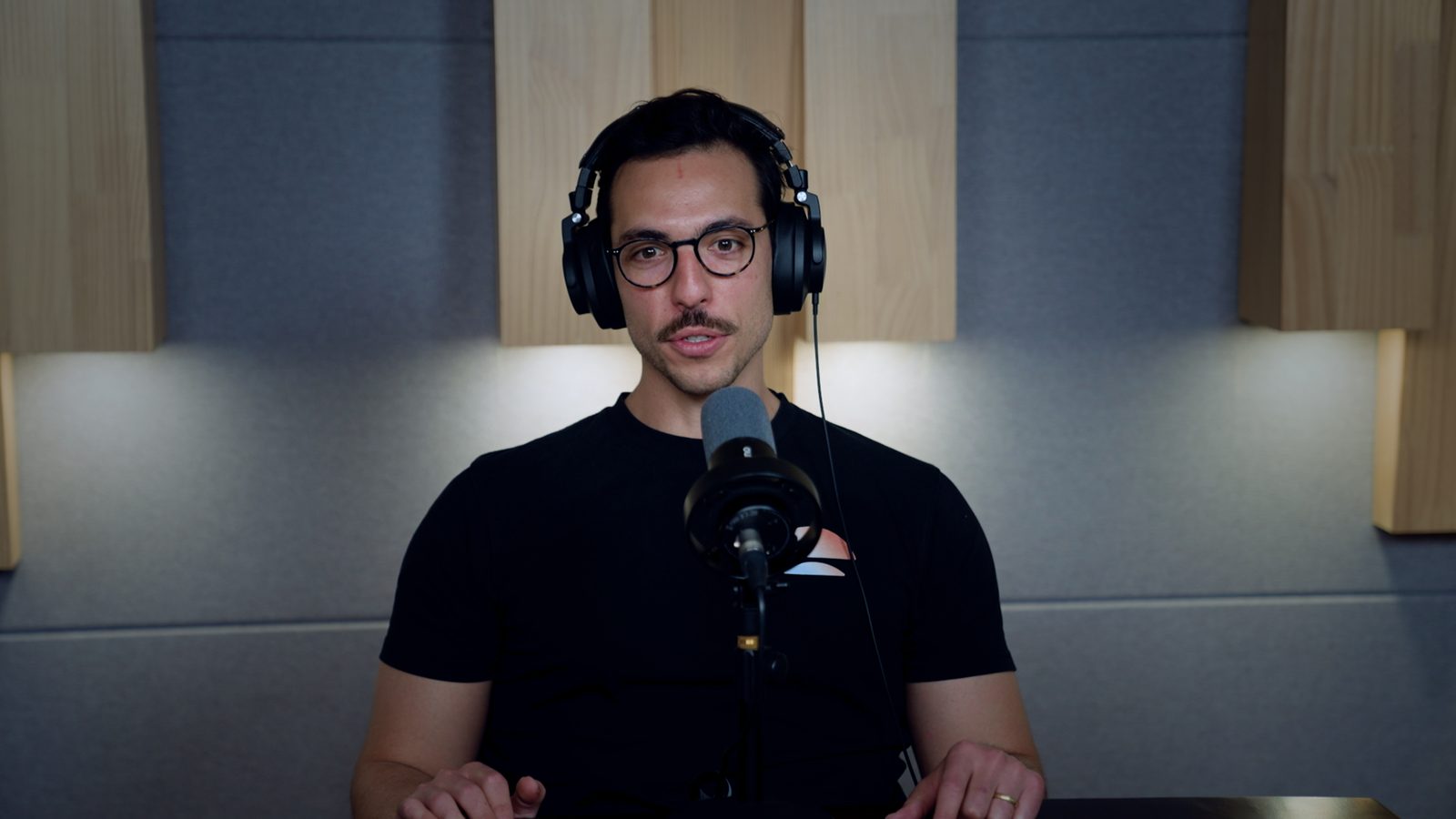
Oliver Masson
Oliver Masson is the solo founder of Blisstil, maker of the Serenade over-ear ANC sleep headphones. Australian, based in Lisbon. He studied Renewable Energy Engineering at UNSW with First Class Honours and was part of the Sunswift Solar Racing Team that broke the world record for fastest electric vehicle over 500 kilometres on a single charge. Before Blisstil he was a carpenter, a sustainability consultant, an entrepreneurship lecturer at UNSW, and a co-founder of Australian Native Remedies. He spent six years and roughly $700,000 building the Serenade, then raised over $1,000,000 on Kickstarter in 30 days.
[00:00] I was kind of risking it all. You probably had $10K in the bank account. I was like, "Fuck me, if this thing doesn't work, then I'm screwed." I went to Shenzhen and I remember I was like, you know, in the hotel room, kind of fucking crying from frustration. I was like, "Oh my God, what am I doing?" Was there a time in these six years where you said, "I want to quit"? I think it's like at least once a day. Once a day. We spent $700,000-something over the course of six years that we were building it. It's my money,
[00:31] it's my parents' money, it's my brother's money. We spent $212,000. Crazy. We spent $180,000 in a month. It's getting rarer and rarer for solo creators to actually manage to reach that million-dollar mark. I'm always impressed by all these great founders we have on our podcast. Right. They're smart minds, and everybody's deep into hardware and tech here in Shenzhen, which is also obvious. Like, most of the reason
[01:05] why they come here is because it's so convenient to get to all these manufacturers and suppliers within a few distance reach, right? Yeah. No place like Shenzhen. Exactly. That's why one of our guests also told us, "If you want to build hardware, if you want to build your product, you have to come here." Right? Right. But that's also like one of the questions we get asked most: How do I start? I mean, it's obvious when I came here, it still has some barriers. China is still a closed system, ecosystem somehow. And it's always the question:
[01:36] How do I find reliable partners? Right? How do I know I can trust this business? We've helped many startups and people source products, but it's still hard to navigate, right? It is. I mean, we have so many people coming to us asking the same questions all the time: How do I find business partners? How do we do contracts with them? How do we do the payments? And that's why we're very happy we partnered up
[02:07] with Wise, the sponsor of today's episode. And they have this great system that solves a big, big problem: payment. So Wise is originally a London startup, and they got acquired in 2019 by Ant Financial, which is the parent company of Alipay. We all know Alipay, right? So they have this system now where they have 1.5 million businesses already inside the system. And if you do business with and in China,
[02:39] they help you resolve a lot of your problems. They have real-time payment, no hidden fees, and you can do it inside the ecosystem. So it is safe, it is reliable, and it's fast. So if we have people watching this and they want to do business in and with China, we think Wise is a really great choice. And we're very happy they partnered up with us. So we put the link in the description. If you're interested in doing safe, reliable business in China without hidden fees, Wise is your number one choice.
[03:11] And you'll find all the information in the description. So Oliver, how did it feel when you crossed $1 million on Kickstarter? Did it feel as good as you imagined? It is. I actually took a picture. It was something I wanted to do for a long time. I was honestly obsessed with trying to get that magic number. And it's getting rarer for solo creators to actually manage to reach that million dollars. I mean, I was happy, but it was like any goal that you reach, right? You're never ecstatic. You're just more tired from all the work you did to get there, especially. It's kind of like, it's not like winning a race after running super quickly
[03:41] and then everybody's applauding around you. It's like you're in front of your computer, by yourself, celebrating yourself, probably. You took the screenshot. Like, when did that happen? You were actively following. Okay, when did it cross the line? I mean, there was my family, my wife's family, my wife, and a few friends that were following it. And every day they were sending me screenshots like, "Oh wow, you did $45K today. That's insane!" You know, and so I'd always get hot tips from them. And then one day, yeah, I crossed the million-dollar mark.
[04:11] I think I was by myself, but the next day I did... (blank) (blank) (blank) (blank) (blank) (blank) (blank) (blank) (blank) (blank) (blank) (blank) (blank) (blank)
[04:44] have a party with a few friends. So you're actually doing all this on your own? Pretty much. So I do have some people in my team that help me here and there, you know, manage everybody and do everything. A lot of the grind work is done by me. So I have a German business partner who did the electronics development. He worked a lot before the campaign, obviously, to get the product out. And then he recently worked on the EQ.
[05:17] So the equalizer settings on the headphones so they sound nice, but apart from that, he doesn't do all the rest. So manage the business, manage the teams, manage the manufacturing here in Shenzhen, which is a lot of work, and then grow the business as well. So that's all on me. So, yeah, pretty much all by myself. But I do have, you know, a lot of people helping me as well. It's just that I have to be the one pushing everyone. But one thing that happens by yourself is finding a problem. Yeah. Or identifying a problem and then saying, I need a solution for this.
[05:51] Yeah. So you build hardware that solves what it solves: sleeping comfortably with headphones. That's pretty much it. And then you have some, you know, imagine trying to fall asleep with these things. They're not made for it. You roll around, they'll come in front of your face. You sleep on your side, they'll crush your ears. They don't have any noise canceling, you know, active or passive. And so the premise of the whole thing is to be able to sleep with headphones on your ears that don't touch them. So a lot of the solutions that exist today are either earbuds or headbands, things that wrap around your eyes. They cover your ears, and so
[06:24] something is always touching your ears. And the cartilage of your ears is pretty sensitive. So when you're sleeping on your side, especially for like eight hours or something, it just has to be a tiny bit hard, and it hurts. You know, the fact that earplugs are super tiny, but because you're sleeping on your side, as soon as you roll over, there's pressure. Right? Yeah. And the foam ones are particularly harsh. They block a lot of noise, which is great, but as soon as you go on your side, they just sort of swim into your ear canal and start, you know, tickling your throat, which is a disgusting feeling. So the whole premise of it is to try to fall asleep on your side or on your back with stuff that's
[06:55] really protecting your ears from the noise around it and then being able to play whatever audio you want. So white noise, brown noise, your favorite podcast, you know, whatever type of music. So the sleeping market is actually super hot. It's a very hot topic right now. It became even hotter when all these tracking devices came out. Like, I bought myself one or two because I want to track why I'm sleeping so bad. So that was also one of the problems that you faced before you started your whole journey thinking about building something for better sleep. Right. So how did that start your whole journey? So I sleep terribly and I always have a lot of it, you know, is due to stress. So I'm a pretty anxious person
[07:27] naturally. So I'm always stressing over stuff, and I think that's probably what makes me such a good entrepreneur. Yeah, same with us. Oh my God. Yeah. I could track my device right now. It was saying like five and a half hours of sleep on average over the last 30 days. It's always like that—five hours, four hours. I checked the recovery. It's bad. Okay, fuck this. Then you get even more anxious. Yeah, well, that's why I don't have one, so. Yeah, that's exactly why I don't have one.
[07:57] And I know that a lot of the times the whole reason why I sleep poorly is because of my anxiety. And, you know, the only way that I can sort of deal with that is through not looking at screens, not looking at, you know, anything that's electronic. So nothing that sort of triggers me and just trying to space out. Working out is of it, you know, is due to stress. So I'm a pretty anxious person naturally. So I'm always stressing over stuff, and I think that's probably what makes me such a good entrepreneur. Yeah, same with us. Oh my God. Yeah.
[08:29] I could track my, like, my device right now. It was saying like five and a half hours of sleep on average. Yeah. Over the last 30 days, it's always like that. Five hours, four hours. I checked the recovery. It's bad. Okay, fuck this. Then you get even more anxious. Yeah, well, that's why I don't have one, so. Yeah, that's exactly why I don't have one. And I know that a lot of the times the whole reason why I sleep poorly is because of my anxiety. And, you know, the only way that I can sort of deal with that is through not looking at screens, not looking at, you know,
[09:03] anything that's electronic. So nothing that sort of triggers me and just trying to space out. Working out is a great way to manage my anxiety. Reading a book is a great way to do it. Meditating, all that kind of stuff. Nothing requires technology. Right. And when I feel disconnected from all the media and electronic stuff, I do feel a lot less anxious. And that's what I try to do with the headphones as well. I don't want them to be something where you know, screen. Yeah. I want them to be completely like, you know, your
[09:36] partner in sleep. Not something that tracks you and tells you to do this. It's just there for you, and you know, it helps you when you need it. You tell it what to do and it'll do it for you. Yeah, it's actually super interesting because I'm also somebody whose stress is basically constant. And then I tried so many things and solutions already. That's why I try to track it as little as possible so that I can see if it matches the way I
[10:06] feel in my body. And then I thought, okay, maybe working out is a good way to release the stress. But on the other hand, you have stress when you work out as well. Like, you have mental stress. And then when you go to the gym, you have stress on your body, right. So you never reach the point where you really relax. Yeah. So that was also the main problem that I have right now. That's why I find it particularly interesting, like the solution that you built. Thank you. That's the whole point, right. I mean, the only real time where you can actually be free of your anxiety or stress is when
[10:38] you space out completely from your mind, right. And meditating is one of the best things you can do for that, really. Just exiting your mind and looking at it from afar. For me, one thing that works really well for me is doing ice baths and saunas, right. So going from one to the other, being in that high stress environment in the ice bath where I have to completely detach myself from my body because if I think about it, then I'm suffering. Whereas, yeah, Michael loves the ice bath. I love it. I love suffering also. Yeah, I mean, it's suffering for something that gets you somewhere. Basically, that's
[11:11] the feeling afterwards. Exactly, right, exactly. And another thing—same sort of thing through suffering is the release, right. I like to stretch, but I stretch to the point where it's really painful. And I know that when I'm stretching to that point, I have to exit my body completely. I have to forget about the pain that's occurring in my body and go further. And when I do that, I just go, wow, I feel very relaxed. And then obviously there's all the breathing that goes
[11:45] with it that helps a lot. But yeah, that's what I found. And the headphones, they don't make it painful, but they do help you space out. And they help you space out through music, right? So you can use any type of music that helps you space out. And because it has the neck support and because it covers your ears, it doesn't go inside. It's basically like a pillow that wraps around your head, right. And so, and it gives you the support that you need. So
[12:15] you could just completely become limp and stay in the same sort of position. And that's really helpful for relaxing. So, but why would you say that you have this problem and you would go and solve it on your own and not just look if there's anything on the market that could help you? I did. You did? Yeah, I did. I looked at a lot of different solutions. Most of them were in-ear. So the earbuds or the on-ear ones that were laying on your head, there were some. There was one guy who made some ear muffs
[12:45] for sleeping, but they didn't block enough sound and they were on the person's ears. So I'm like, I really want something that covers your ears, doesn't touch them and that blocks the noise and that can play audio. That was the sort of thing. And then from there I saw all the problems that they had with for sleeping, but they, they didn't block enough sound and they were on the person's ears. So I'm like, I really want something that covers your ears, doesn't touch them and that blocks the noise
[13:16] and that can play audio. That was, that was the sort of thing. And then, and then from there I saw all the problems that they had with their product, and I tried to solve it with mine. But you're not an entrepreneur by birth, right? You studied solar energy. This year I studied renewable energy.
[13:46] Renewable energy? Yeah, renewable energy. But how do you go from there to building a hardware startup on your own? That's a great question. And to be honest, it's just— I love making things with my hands. Part of my journey to becoming the CEO of Blisstil was, at the beginning, working as a carpenter. But I didn't become a carpenter because that was the only option I had. I became a carpenter because
[14:19] I love working with my hands. I love making stuff. And so I've always made stuff. My dad's an engineer as well, and he always taught me. He's like, "When I was younger, I was making go-karts with lawnmowers and stuff like that." And I was exactly right. All by myself. And so, you know, it always got me thinking.
[14:57] My brother and I, as kids, we'd always go dumpster diving and stuff like that, find some old toys, rip them apart, and put them back together, and try to make helicopters and robots and stuff like that with what we had. So I've always been handy. And then the engineering— When I did my renewable energy engineering degree,
[15:29] I actually went into construction, right? And so what I did was my thesis was basically around helping an orphanage in Thailand reduce their energy bills. I went to the orphanage and looked around, trying to find various methods to
[16:04] reduce the energy bills. One of the things I had to do for that thesis was create a 3D model of the building. The building was huge, right? I don't know how many square meters, but it must have been a couple thousand.
[16:37] And so I did the 3D model, and I kind of fell in love with 3D modeling. Just the fact that you could create something on your computer in 3D— I found that absolutely incredible. And I would go into not very useful detail in my 3D
[17:09] designs, but that eventually worked. And then from there, I went into environmentally sustainable design engineering for a boutique consulting firm in Australia. My job was to design buildings in a more sustainable way. One of them was to model the building in
[17:45] 3D and apply different filters to the windows, walls, and stuff like that, to try to reduce its energy consumption I do think we could release another version of the SleepMuffs, which would be a non-tech, like no electronic version of the Serenade. So just basic passive noise canceling. That was basically the foundation of the whole thing. Okay, I'll go into the sleep market. Yeah. Right. When was that? That was six years ago, I think in 2019.
[18:18] Okay. And essentially, when I started, everybody's like, "What are you doing in sleep?" Yeah. Is it a niche market? Well, it's not anymore. So how big is the market? Well, there's around 50% of people who sleep poorly and have trouble sleeping because of noise specifically, and they identify as light sleepers. That's 50% of them. And then you also have a couple of other dozen percent of people that don't sleep well at all. And then you only have a few percentage of people that actually sleep correctly. So previously, it was commonly accepted to sleep poorly, and you'd just push through.
[18:48] Especially if you slept a lot, you weren't seen as efficient. You had to grind through and work your ass off. Right. Nowadays, it's like if you're not sleeping, then you're not optimizing. We're in the era of the optimized self. Right? Yeah. Biohacking. Yeah, exactly. Sleep is the foundation of everything. Right? So if you don't sleep correctly, then nothing else works. Correct. And so now that everybody has understood that, we see the sleep market exploding. Yeah. That's why it's so interesting. You started in 2020, like six years ago, and then all the tracking hype started with Whoop and Aura, whatever. Yeah. And then how did that affect the sector over the six years? Like what did you discover throughout the years? Well, sales grew naturally with the first product. Like I didn't have to do anything
[19:19] because people were starting to get more and more interested in finding various solutions. Now the funny thing is that nowadays the sleep market, especially in headphones, is still pretty small. So you have all the tracking stuff that's huge and exploding. But in terms of headphones, it's still a pretty niche market, and that's what we're trying to do. We're really trying to grab that market. There are a few big players, big-ish players. But yeah, we're trying to tackle the problem from a different angle with a different solution. Yeah, I haven't seen any sleeping headphones yet on the market. No, not from big brands like Bose. Yeah, well, Bose actually tried to do one. Okay. But they had a lot of issues with the product. I think it wasn't a big enough money maker for them, so they kind of let it go. And a few Bose engineers made a spin-off of that. Oh, really? Yeah. So these are now your competitors? Well, yeah,
[19:49] so you're playing in a totally different league than them. Right? It's a big corporate. But then you decided, okay, I will do it on my own. I will bootstrap. This will go on Kickstarter. How do you actually start? So you have this idea. What is step number one? Over six years, it's like a thousand steps. So what is step number one? You go on Google and do market research or... Yeah, definitely. Before you waste your time on a business idea, you try to build a business plan to see if it's actually worth something. The fact that it's a personal problem does help motivate you, but the first step was definitely to start off and see, okay, are there any competitors? And you look at the available products that are there. You see if people are satisfied with the solution. What exactly are they doing? Back in the day, we didn't have AI, so I did a massive spreadsheet of all the comments I would see from Amazon and Google and stuff like that about different products.
[20:19] And then I'm like, okay, well there's nothing really that is the solution I want to create. And it seems like what people are looking for in the reviews are things that my product could answer to. Right. So people were looking for things, something and that's what we're trying to do. You know, we're really trying to. Really trying to grab that market. There's a few big players, big ish players. But yeah, we're trying to, you know, tack the, the problem from, from a different angle with a different solution. Yeah, I haven't, I haven't seen any sleeping headphones yet on the market. No, not from the big, big brands like Bose or whatever. Yeah, well, Bose actually tried to, to do one. Okay.
[20:51] But they had, they had a lot of issues with, with the product and I think it wasn't a big enough money maker for them, so they kind of let it go and that the, the product, a few Bose engineers and they made a spin off of that. Oh, really? Yeah. So these are now your competitors? Well, yeah, so. But you are, you played a totally different league than them. Right. It's a big corporate. But then you decided, okay, I will do it on my own. I will bootstrap. This will go on Kickstarter. How do
[21:22] you actually start? So you have this idea. What is step number one? This is, I guess over six years. It's like thousand steps. You go, so what is step number one? You go on Google and do a market research or. Yeah, definitely. Before you waste your time on a business idea, you try to build a business plan to see if it actually is worth something. So the fact that it's a personal problem does help to motivate you, but the first step was definitely to you start off and you go and see, okay, are there any competitors? And you go
[21:53] and see the available products that are. That are there. You go and see if people are satisfied from the solution. What exactly are they doing? Back in the day, we didn't have AI So I would like, you know, I did like a massive spreadsheet of all the comments that I would, I would see from the, from the, on Amazon and Google and stuff like that about different products that existed. And then I'm like, okay, well there's nothing really that is sort of the solution that I want to create. And it seems like what the
[22:25] people are looking for in the reviews are things that my product could answer to. Right. So people were looking for things that, something that had high noise canceling, and that's a very common problem with people who sleep—they're often in pretty noisy environments, either from their neighbors or their partner, or they live near a train or, you know, high-traffic zones that sort of flare up at 5:00 a.m. in the morning or at 12:00 a.m. at night. And so people
[22:58] were always trying to find a solution to block out the noise. And even today, there's really no solution that offers serious noise canceling. And that was the premise of the first product as well. On top of not being able to touch your ears, but also being able to block a lot of noise—that was it. I saw that and I'm like, okay, well, that's what people want. You know, they want this, but they also want all these other secondary things. And so, like, what's the best solution to block out noise comfortably? And that night, I actually fell asleep with a pair of earmuffs. And I'm like, I'm going to try this out, you know, see if it works. And I woke up the next morning feeling sort of tired
[23:31] but still happy that I actually managed to fall asleep. And stay asleep because I didn't have any noise, but I was a bit sweaty and stuff like that. So I'm like, okay, I could probably make this into something that is worth sleeping with. So that's when I started prototyping. And I think this is probably where a lot of people get lost, but when you prototype, you want to make it as cheap as possible. Yeah. How do you prototype? I mean, it's easy said, but not easy done, right? Yeah, exactly right. So for me, the way that I did it is that I basically took a pair of earmuffs that existed. I wrapped some foam around it, and I'm like, okay, well, this kind of works. And then I tried it a couple of times
[24:02] and then tried to optimize it. It wasn't perfect—it was pretty uncomfortable in certain situations. And then I tried to optimize the comfort. I tried to optimize the noise blocking. And then once I tried a bunch of different prototypes, I'm like, okay, so this is the solution that I'm going for. I think this one is going to work. And so what I did from there is that I hired an agency—an industrial design agency— and then they helped me create a 3D model because, you know, creating buildings is pretty easy. It's like squares and stuff like that. But when you're doing industrial design, it's like rounds and 3D shapes, which is a lot more complicated. It's not my realm. So they helped me do that. And from there we got more complex
[24:33] prototypes—stuff that would resemble what we were going to try to sell. And then, yeah, once I got a prototype that I was happy with, I'm like, okay, I think this could work. I went to Kickstarter and I raised—I think it was 100,000 Australian dollars, which fluctuates with the exchange rate, but I think it's like 70,000 USD now. And then basically I used that money to launch a batch of SleepMuffs, and then did all the manufacturing side. That whole process took me from ideation all the way to manufacturing and delivering the product. I think it took me two and a half to three years. I'm not sure. I can't remember. But it's a pretty long time. It's quite long, right? Yeah, it's pretty long.
[25:04] We had guests here on the podcast. It took them six months, but they were in Shenzhen doing it. Yeah, yeah, yeah. So how about, like, where was your industrial design team? They were in Australia. Okay. Yeah. So the whole prototyping was done in Australia. And so the difficulty with these types of products is you're actually trying to create a feeling with your headphones, right? So it's very subjective, and maybe there's a science that I'm not aware of, but you know, ergonomics is what we're trying to achieve with the product, and everybody's different. So being able to create something that works for like, okay, I think this could work. I went to Kickstarter
[25:36] and I raised. I think it was 100,000 Australian dollars, which is, you know, fluctuates with the exchange rate, but I think it's like 70,000 US now. And then basically use that money to launch first a batch of Sleepmuffs, and then. And then from that, did all the manufacturing side. But so that. That whole process took me from, you know, ideation all the way to manufacturing and delivering the product. I think it took me two or three and a half years, maybe a bit more.
[26:06] I'm not sure. I can't remember. But. Pretty long time. It's quite long, right? Yeah, it's pretty long. We had guests here on the podcast. It took them six months, but there they were, like, in Shenzhen doing it. In Shenzhen. Yeah, yeah, yeah, yeah, yeah. So how about, like, where was your industrial design team? They were in Australia. In Australia. Okay. Yeah. So the whole prototyping was also done in Australia. Prototyping was done in Australia. And so the difficulty with these types of products is you're actually trying to create a feeling with your headphones, right?
[26:38] So it's very subjective, and maybe there's a science that I'm not aware of, but, like, you know, ergonomics is what we're trying to achieve with the product, and everybody's different. So being able to create something that is. That works for absolutely, you know, 90% of people—that's what's really hard, right? When they're like people that sleep on their back, right? People sleep on their side and people that have big necks, small necks, big jaws, small jaws, big foreheads, you know, and it
[27:11] changes. So your product has to be able to change all the time, has to be able to adapt. So how do you achieve this? Well, we use foam. So there's foam, and inside there's a neck band, and then there's a metal piece inside that opens and closes. But then also we have everything articulated inside, right? So the ear cups are articulated as well. So they move this way, that way. There are like special slits at the back that allow the headphones to open up really wide or close like that, or go like this. And it's very flexible. And achieving
[27:42] that design is what took a lot of time. And getting it comfortable was working a lot of time. It has to be soft also, right? Yeah, yeah. And then you also have to, you know, it has to be soft. It has to be comfortable, but it has to block a lot of noise, and it has to have electronics to block a lot of noise and have electronics, you need to have hard parts in it, right? But to be comfortable, it has to be soft. Yeah, right. So you're trying to mix two things together that just don't work. Yeah, they just don't work. And so we took a lot of time trying to figure that out, you know, the perfect combination. So you have these two problems, and then you find the industrial designer.
[28:13] And how much do they help throughout the whole process to really solve the problem? They didn't really help solve the problem. What they did— I came to them with the design and I told them, "This is what I need," and they just put it into a 3D CAD model. So there wasn't a lot of engineering on their side. Okay, so they were basically only doing the design for you. And then you have to figure out how you bring both worlds together. Yeah, yeah. So the engineering was done by me for everything— that's ergonomics with the product. Oh, wow. Yeah, everything.
[28:43] So how many iterations did it take? We had like 36 prototypes. Okay, so that was just of the headphone version, but we had maybe, you know, 20 prototypes for the SleepMuffs. And then in terms of ideas that we theoretically tested—hundreds. Just hundreds. It was just trying everything under the sun to make it work. It was incredibly difficult. But yeah, I think the solution that we have now is pretty cool. But the thing is, it's not only hard to design the product, right? But then it's also hard to actually manufacture it. So it's not standard operation for any of the factories we use at the moment. So as soon as you do something new,
[29:13] and we heard that from a lot of people here that build new products, it's always hard to find the factory that's helping you. You want something new? Yeah, yeah. You know, there are a lot of factories where it's easier to just repeat something that you've already done and make money out of it. It's always a risky endeavor to help someone that's probably never had a product before. Exactly. And on top of that, something you've never done and he's never done, right? So it's really a question of faith. Luckily, we found it. So I have a business partner in Shenzhen as well that helped me find all the different manufacturers.
[29:44] So we have like three main manufacturers that we use. And from those three main manufacturers, there's a constellation of suppliers that help out. Luckily, everybody's really happy to work on the product. Everybody's like super excited. They see the potential, they see how good it is, and they just really want to make it work. So that's very lucky. So when was the first time you heard of Shenzhen? I think it was probably when I was with the industrial designers. So the first ones, the guys that were in Australia, they were like, "Oh, you have two choices. Either you make them in Australia or that build new products. It's always hard to find. Like. Yeah, the factory that is helping you. Okay. Yeah. You want something new? Yeah, yeah. You know, there's a lot of the factories that it's
[30:19] easier to just to repeat something that you've already done and you'll make money out of it. It's always a risky endeavor to go and help someone that's. First of all, probably never had a product before. Exactly. And on top of that, something that you've never done and he's never done. Right. So it's really A question of faith. Luckily we found. So I have a business partner in Shenzhen as well that helped me find all the different manufacturers. So we have like three main manufacturers that we use. And you know, from there those three main manufacturers have
[30:52] constellation of, of suppliers that help out. Luckily, everybody's really happy to work on the product. Everybody's like super excited. They see the potential, they see how good it is and they just really want to make it work. So that's very lucky. So when was the first time you heard of Shenzhen? I think it was probably when I was with the industrial designers. So the first ones, the guys that were
[31:23] in, in Australia, so they were like, oh, you have two choices. Either you make them in Australia or you spend a bit more time and you go and make it in Shenzhen. At the time, you know, I had just come out of sustainability and had done my engineering degree in sustainability. And I'm like, oh, I really need to do something that's short circuit, right? So like something that's made and sold within the same area. And that was my motivation to go and make it in Australia.
[31:53] And what I realized is that I kind of shot myself in the foot because the manufacturers in Australia are not made for consumer products. These guys work for big companies, big corporates. So they don't really take care of you. They don't care. They have their business and, you know, I remember once I told my factory, I'm like, listen, I need 600 units to be ready in four months. Plenty of time to make it, right? So I'm not worrying too much, you know. And then I think it was like a month out. I called them, I'm like, you know, have you started?
[32:24] He's like, mate, I forgot. And so you forgot. I forgot, okay? I forgot. It was not even like, we're going to do it. It's like, I forgot. Damn it. So, you know, there's that. He was still a nice guy, you know. Thanks to him, you managed to launch the first couple thousand units of the SleepMuffs, which was great. You know, without him I wouldn't have been able to do it. But it also taught me that in manufacturing you can't just rely on your factory to do it. You have to micromanage a lot of things. Because these guys are so busy, they have so much business, right? They're doing this guy's product, that guy's product, this thing, that thing. And so their attention is torn everywhere. And if you're not the guy that's going
[32:55] like, where is it? When is it done? Show me the standing operating procedure. Show me this, show me that, show me how it's done. I want to go and see it. Follow-ups are so important. So that taught me a lot. But yeah, and so Shenzhen, I learned about it there. And then I was like, well, I need to. You know, once I did the SleepMuffs, I'm like, I need. Actually, what I needed was a short circuit within the manufacturing because in Australia, I had one guy doing one thing, the other guy doing this other thing. I was importing products from China to make certain parts. And I had this sort of global supply chain. And I was this tiny player. This makes no sense, right? And so I'm like, well, I knew that in Shenzhen there was everything, right? You go from one manufacturer to the other in like, you know, one hour car ride. So I'm like, this is where it needs to be made.
[33:25] So when did you come here for the first time? I came here, I think, two years ago. For the first time? Yeah. So how was it for you? Honestly, it was pretty daunting because at the time I did not have any money and I was kind of risking it all. You know, I think I probably had 10K in the bank account. I was like, if this thing doesn't work, yeah, then I'm screwed. And so I went to Shenzhen. I remember I was in the hotel room, kind of crying from frustration. I was like, oh, my God, what am I doing here? And I had arrived. I think I had arrived in Hong Kong and it was late, I think it was 11:30 or something. And I grabbed one of the shuttles to go from Hong Kong to Shenzhen. So I arrived in Shenzhen. It was probably 12:30 at night in a country I had never been to all by myself and I didn't speak the language. I didn't know you need to have WeChat and stuff like that. But I didn't realize you had no other options without WeChat.
[33:58] I did. I had a WeChat, but I didn't properly install my bank because in Australia, I had one guy that was doing one thing, the other guy that was doing this other thing. I was importing products from China to make certain parts. And I had like, you know, this, this sort of global supply chain. And I was this, you know, tiny player. This makes no sense, right? And so I'm like, well, I knew that in Shenzhen there was everything, right? You go from one manufacturer to the other in like, you know, one hour car ride. So I'm like,
[34:28] this is, this is where it needs to be made. So when did you come here for the first time? I came here in, I think it was two years ago. For the first time? Yeah. So how was it for you? Honestly, it was pretty daunting because at the time I did not have. I didn't. Didn't have any money and I was kind of like risking it all. You know, I had, I had, I had. I think I probably had 10k in the bank account. I was like, me, this thing doesn't work. Yeah, then I'm screwed. And so,
[35:02] and so I went to Shenzhen. I remember I was like, you know, in the hotel room, kind of like fucking crying or frustration. I just, I was, I was like, oh, my God, what am I doing here? And I had arrived. I think I had arrived. So I had arrived in Hong Kong and it was late, I think it was 11:30 or something. And I grabbed one of the, you know, shuttles to go from Hong Kong to Shenzhen. So I arrived in Shenzhen. It was probably 12:30 at night in a country I had never been all by myself and I didn't speak the language. I didn't know you need to have. I sort of knew you had. It needed
[35:33] WeChat and stuff like. But I didn't, I didn't realize you had no WeChat. I did. I had a WeChat, but I didn't properly install my bank card on it. So I couldn't pay. I think my internet wasn't working somewhere. And I was like, I didn't know where the hotel was because I had taken this cheap hotel that was hidden inside this building. It was crazy. And I got into the hotel room and sat down on the floor. I'm like, "Fuck, what am I doing here?" And then the next day, I
[36:07] met with my Chinese business partner for the first time face to face. And he was super nice. And immediately, I felt reassured to be working with him in Shenzhen. And then we went to the factories and stuff like that. And that's when I started getting excited. I'm like, "Oh wow." Because I love making stuff, and seeing people make stuff really gets me excited. So seeing all that happen, I was like, "This is the right place to be." Where and how did you find
[36:38] your business partner then? Was it from the industrial design agency that gave you the contact? Or is he also an industrial designer? No, so the way that I found him was through multiple layers. I went on Kickstarter and I wanted to find someone trustworthy, someone who had made electronic
[37:11] products before. In electronics, it's pretty easy to mess something up and it doesn't work. Battery fails or some connections aren't working or the chip doesn't connect to your Bluetooth. And the thing is so small that it's hard to know what happened and how it happened. So I'm like, I need someone trustworthy. On top of that, making a new product, the shape of it's really hard. The manufacturing process is fairly hard. And I invented the manufacturing
[37:43] process, so I had to explain it to them. So I needed someone trustworthy. And I went on Kickstarter and went through. They have a list of partners basically on there. And I saw this one company called Dragon Innovation, and I really liked the name. And I go, "Wow, that's cool." So I clicked on it and I saw that they had worked with huge names
[38:13] like the Pebble Smartwatch. They had worked with some 3D printers, iRobot, Ninja Blenders. They had worked with all these varieties of different electronic products. And I'm like, "Well, these guys definitely know what they're doing, right?" So I went onto the website and sent them an email. Nobody answered. Yeah, this is the fate of emails in China. Yeah, nobody answered.
[38:45] So I started trying to figure out why they weren't answering because I really wanted to work with them because they seemed great. And then I saw I went on the website. They had a video and the CEO was talking. The CEO was American. And I saw his name in the video, so I went on LinkedIn and sent him a message. And he's like, "Oh yeah, we actually closed the business because of COVID. But you know, I do this other thing now. Let's have a call and we'll see
[39:16] what I can do for you." So we had a call, chatted for a long time, and then he's like, "Listen, Ollie, you seem like a very capable guy. I'm not going to sell you my services because he was someone who was basically helping people manufacture products, but just by himself. He's like, I'm not going to sell you my services. I'll just
[39:47] put you in contact with a few manufacturers and you see how it goes." And so he put me in contact with a few manufacturers. Didn't work. They were trying to charge me 10K units plus, like $250,000 worth of fees just to get the product started. That's not even counting I'll put you in contact with them. And so I went into contact with them, and, you know, they were smaller. They had contacts
[40:18] with smaller manufacturers, with people who were nimble, really eager to get a new product out there and work on something new. And I'm like, "These are the people that I need." So that's how I met my business partner in Shenzhen. Yeah. Was there a time in these six years where you said, "I want to quit?" I think it's at least once a day. Once a day? Like, in front of your computer, "What am I doing?"
[40:48] I mean, luckily you didn't. Then you had your Kickstarter in July 2025. Yes, right? Your goal was $10K, and you got it in 59 minutes, and then in the end, raised over $1 million. Pretty wild. Yeah, pretty wild. It was insane. Actually, not to gloat, but it's one of the best Kickstarter campaigns. If you look at the daily amount of money we made, it's insane. So generally, what happens with Kickstarter is you're going to have a very big first couple of days,
[41:20] and then it's going to go into this sort of valley of death, and then it'll come back towards the end where people get excited and have a lot of FOMO. Our campaign went like this. It went like— okay? And it's more than 3,000 backers. Yeah. So it's not just your family. No, actually. Oh, I mean, I do come from a large Catholic family, so, you know, it's pretty big. Yeah. But no. So what do you think? Why were people so excited about it? I think it's
[41:51] because it solves a real problem. On Kickstarter, there's a real innovation, and people are on Kickstarter because of that. They want something innovative, something different from what already exists on the market. It's not just a smaller version of an earbud. It's actually really innovative. And I'd done a previous campaign, so people trusted me. I had delivered on that campaign. And yes, it was that. There's also the fact that I'm a solo creator, so I think people like that, especially on
[42:24] Kickstarter. You're there to support creators, not big businesses. Now big businesses are actually using Kickstarter. So you have brands like Anker, the Chinese brand, who use Kickstarter to launch a lot of their products, which— kudos to them, you know—but they don't really need it, right? They're benefiting from this system that's supposed to help people who are much smaller. Kickstarter isn't unhappy because they raise tens of millions of dollars, so everybody's happy. But yeah, what you're solving is the solution to a problem. What these other tracking devices are doing is basically saying,
[42:54] "Okay, you have a problem," but then how do you solve it, right? That's definitely something playing into your cards. Yeah, we had a lot of founders telling us that Kickstarter isn't the goal. Kickstarter is just the beginning, and sometimes the Kickstarter money isn't enough to really bring it to level two. How did you feel about that? Because I did a first Kickstarter, I knew all the costs involved in a Kickstarter campaign. Running a Kickstarter campaign is insanely expensive. Is it? Tell us. It's very expensive. Like, first of all, you have to
[43:26] get the product to a certain shape before you can bring it to Kickstarter, right? So that costs a lot of money. I think we spent $700K+ over the course of six years that we were building it. So it's my money, my parents' money, my brother's money, money I made with the first product as well. All the profit we had from there, we put into the new business. And then once you get the product there, you have to create all the marketing assets, which cost maybe $10K to $20K. And then you have to—including your video, your pictures, your 3D designs, all that kind of stuff. And then you have the marketing agencies. The big marketing agencies— the ones we used, for example, take 15% of the sales
[43:57] they bring in, which for us translated to around 12.5% of revenue. So they take that. But without them, you can never reach that level. I couldn't have reached a million dollars without them. That's impossible. So I knew with my first product that, you know, to reach massive heights, your pictures, your 3D designs, all that kind of stuff. And then you have the marketing agencies that. Marketing the big marketing agencies that. So the ones that, you know, for example, that we used take 15%,
[44:27] right. Of, of the sales that they bring in, which for us Translated to around 12 and a half percent of our revenue. So that, that's, they take that. But, you know, without them, you can never reach the level. I could have never reached a million dollars without them. That's impossible. So I knew that with my first product, I knew that, you know, to be able to reach massive heights, you need help and obviously everybody needs to get paid. And that's how it works. So then there's that. And then Kickstarter takes, you know,
[44:58] 5% of the earnings that you make and then you have another 3% that goes to Stripe. So, you know, 5% plus 3%, that's 8%. That's just to use the platform and try to raise money. And then obviously you have the taxes, then you have to pay yourself. You have to pay the people that you work with, you have to pay for the product, you have to pay for the shipping, you have to do all this kind of stuff, right? And so if you don't manage your costs from the beginning, you can get screwed very easily.
[45:28] You can lose money on a Kickstarter campaign extremely easily. And because a lot of people have only done one Kickstarter campaign, most creators don't know how to cost a lot of the expenses. They don't know all the hidden costs. They don't know that your logistics partner tells you, yeah, it's going to cost you $15 to ship. And in the end they're like, oh, well, it's actually $28, right? Nobody tells you that. But your logistics partner assumes that, you know, because they've been doing this their whole life. So, like, well, you didn't know that shipping costs fluctuate. I don't understand, you know, and you're like, well, no, I didn't. Then your real goal wasn't $10K, right?
[46:00] What number did you have in mind? So my real goal was $800,000. That was like, if I reach that, I'll be happy. And I did. Yeah, so the $10K is, you know, it's a Kickstarter trick, right? You want to overachieve. Yeah. So on Kickstarter, there's the Kickstarter algorithm, right? And a lot of them. So we had, I think we had 20%, I can't remember exactly, above 20% of our pledges came from Kickstarter itself. Right. So that's pretty much free money, free pledges from Kickstarter. I mean, so I didn't have to pay a marketing agency, I just had to pay them 5% plus 3% fee.
[46:32] And so you want to rank highly within the Kickstarter algorithm. So basically, when somebody goes onto Kickstarter, they're going to go into their favorite category. The biggest categories are generally design and technology, and then you go into all the subcategories and then essentially you want to rank high in those categories. So you have to think of Kickstarter kind of like Amazon for people that like new stuff, right? And so they're going to click on their favorite category and then they're going to start browsing and they'll browse the first maybe 20 products, 20 campaigns that are there.
[47:02] So it's the first page, maybe the second page, and if you're not at the very top or at least within the first 10, then you're not going to get hardly any pledges directly from Kickstarter. So you're going to be paying for pledges a lot more, right? And then, yeah, I actually forgot to mention, right on top of the 8% from Kickstarter, you have to pay Facebook for all your marketing ads, right? So you're paying for the marketing spend. We spent $212,000. Crazy. We spent $180,000 in a month. That's actually very interesting because when you think about it, I'd say, wow, you got a million dollars. A million
[47:33] dollars goes directly in your pocket. But that's... No, no, you don't. And, you know, you have to manage those costs. You have to front that money for like a month. And I actually went to Amex. I'm like, listen, guys, I have this great project. I'm gonna launch this thing and it's gonna work, but I need your help. I need a lot of money. And they're like, hmm. And they started looking into your business, and, you know, your credit. I've always paid my credit card bills on time and in full and stuff like that. But, you know, the business has been alive for a while, and they saw that I wasn't turning over hundreds of thousands of dollars. So they just want to make sure that you will. What they did is
[48:04] they actually capped my account. Oh, really? your marketing ad. All your marketing spend, right? So you're paying for the marketing spend. You're up. We spent $212,000. Crazy. We spent $180,000 in a month. That's actually very interesting because when you. I would say, wow, you got 1 million. 1 million goes directly in your pocket. But that's. No, no, you don't. And, you know, you have to manage those costs. You have to front that. That money for like a month. And I actually,
[48:36] I went to. I went to Amex. I'm like, listen, guys, I have this. I have this great project. I'm gonna launch this. This thing and it's gonna work, but I need your help. I need a lot of money. And they're like, mm, mm, mm, let's see. And they started, you know, looking into your business, and, you know, your. Your. I've always paid my. Paid my. My credit card bills on time and in full and stuff like that. But, you know, my. The business has been alive for a while, and they saw that I wasn't like, turning over, you know, hundreds of thousands of dollars. So you just want to make sure
[49:08] that they will just. What they did is. What they did is they actually capped my account. Oh, really? It went the other way. It was the other way. They actually capped the account. So I'm like, oh, fuck. Shit. And as the saying goes, it means don't wake sleeping dogs. That's exactly right. I woke up the sleeping dog. Like before, I was checking my limit and it was like 100K, 150K. I'm like, wow, we got this massive limit. So cool. And then I went. I woke up the dog. And he's like, I'm gonna limit you at 50K. No, 38K. That was it. I'm like, oh, shit. But luckily, I had a friend. I have a friend, he's my best friend, and he has a very successful business. And he's like, listen, if you manage to prove that what you're doing has return,
[49:39] then I'll lend you some money. And he lent me €150,000. So how did you do that? How did you prove it? Well, I basically had all the money in my bank account, plus the 30K from Amex. And I was like, the first couple of days, I have to prove that I can get a higher ROI. So I can then, you know, go and see my friend and tell him, listen, you know, I think this is worth your money. I'm gonna be able to refund you and then some as well. And so essentially, I told the marketing agency guys, I'm like, listen, you're gonna spend. On the first day, you're gonna spend $2,000. I actually wanted them to spend
[50:10] $5,000. And they're like, it's a bit much. Keep it calm. We don't know yet if it's gonna work. So they're like, okay, we'll do $2,000. And then I told them, okay, so the next day, just go up to $3,000 and $4,000 and then go quickly up to $5,000, because I know this product's going to work, even though, like, probably I'll explain that later. But so the first couple of days, we had this insane ROAS. We were spending a dollar and making seven dollars. Wow. And we were like, oh, my God. And that's when I went to see him. I said, listen, listen, you asked me to prove to you that it was gonna work. Look, it works. Every time we spend a dollar, we make seven dollars. And he's like, okay, here's 50K. And then he's like, go and spend that and show me if you can continue making the money. And I'm like, okay, okay. I'm going to see the marketing agency. I told him, put some cash on the fire. Go and get some pledges. And they did. And the pledges just kept coming in. And obviously, there was a lot of work behind that. I was constantly behind my computer answering comments, going on Reddit, Facebook, LinkedIn, Instagram, all these places where people were hanging out on Kickstarter
[50:40] as well, asking questions, doing stuff. And that really created momentum. I think my winning ad in the end had maybe 650 likes and, I don't know, 400 or 500 comments on an ad. Right. Which is unheard of. And that's because I just fueled the thing, right. And Facebook obviously loves that. I was getting some useful comments, but a lot of them. Yeah. Yes. At one point, people started fighting in the comment section. That's hilarious. And I was just watching that. I'm like, I'll let them be. But yeah. And so it just kept on coming. The ROAS was always good. And I would go and see my friend. I'm like, listen, we're running out of cash. I need 50K extra. He's like, okay, here you go. Which was really nice. But actually, the first time he gave me 50K, I kind of felt bad to go and ask him for more money. And I went to go and see this mechanism that exists within the Kickstarter environment where these guys can lend you money and they lend you up to 100K, but for this crazy rate, this crazy rate, I think it's like 5% a month, right? So Mafia. Yeah, that's piling up. Yeah, yeah, yeah. And it piles up real quick. I mean, you don't have the option, right? They're taking a huge risk. And I'm like, you know what I mean? And so after the first 50K, I want to go and see my friend. I'm like, listen, I have
[51:11] And we were like, oh, my God. And that's when I went seeing, Listen, listen, you asked me to prove to you that it was gonna work. Look, it works every time we spend a dollar, we make seven dollars. And he's like, okay, here's 50K. And then he's like, go and spend that and show me if you can continue making the money. And I'm like, okay, okay. I'm, like, going to see the marketing agency. I told him, put some cash on the fire. Go and get some pledges. And they did.
[51:43] And the pledges just kept on coming in, coming in, coming. And obviously, there was a lot of work behind that. I was constantly behind my computer answering comments, going on Reddit, Facebook, LinkedIn, Instagram, all these places where people were hanging out on Kickstarter as well, asking questions, doing stuff. And that really created momentum. I think my winning ad, in the end had maybe 650 likes and, I don't know, 400 or 500 comments on an ad.
[52:16] Right. Which is unheard of. And. And that's because I just, like, fueled the thing. Right. And Facebook obviously loves that. Loves that. I was. I was getting some, you know, useful comments, but a lot of them. So. Yeah. Yes, yes. At one point, you had. People started fighting on the comment section. That's hilarious. And I was just watching that. I'm like, I'll let them be. And. But, yeah. And so. And so it just kept on coming. The roas was always good. And I would go and see my friend. I'M
[52:46] like, listen, we're running out of cash. I need 50k extra. He's like, okay, here you go. Which was really nice. But actually, the first time he gave me 50k, I'm like, you know, I kind of felt bad to go and ask him for some more money. And I went to go and see this mechanism that exists within the Kickstarter environment where these guys can lend you money and they lend you, like up to 100k, but for this crazy rate, this crazy rate, I think it's like 5% a month, right? So Mafia.
[53:21] Yeah, that's piling up. Yeah, yeah, yeah. And it piles up, you know, real quick. I mean, you don't have the option, right? They're taking a huge risk. And I'm like, you know what I mean? And so I want to go after the first 50k, I want to go and see my friend. I'm like, listen, I have this option where these guys are giving me, you know, 100K for 5%. But I mean, I definitely prefer what, you know, I didn't really present it that way to him, but he's like, "Man, don't do that. Those are fucking sharks. Don't go and see them. I'll lend you the money and I'll make you a better rate as well."
[53:51] And so I ended up borrowing from him 150K at 2.5%, which is, you know, still a sizable amount of interest. But I had the money and he was happy, I was happy. Happy days. So how do you sleep right now? Well, my anxiety levels are through the roof, so. And, you know, by solving the problem, you created more problems for yourself, right? Well, that's it. That's it. I guess that's the life of
[54:22] any anxious person, right? You always try to find a solution and then you get anxious. But at what stage are you now with the product? We're planning to start shipping in April. So at the moment, we have, you know, we've done a lot of samples, like, you know, 50 or 60 different samples, and we're in the process of finalizing a few things before launching production. But we should be launching production fairly soon
[54:55] and then, yeah, delivering in April. So you're in a very hot phase right now. You're starting shipping in April, sorry. Yeah, so you're in a very hot phase right now, right? Yes. So how does a day in your life look like? Normally you're in Lisbon, Portugal, right? Normally, yes. Yes. So how does it look like? I try to sleep as well as I can, generally have breakfast, and then start working. But I'm much more efficient in the afternoon, which is why I decided to take the podcast this time, not in the morning. And so in the morning, I sort of do more of the easier tasks,
[55:27] and then in the afternoon, I go into the deep dive situations where I really have to think and innovate and invent and stuff like that. There's more creative stuff that I have to do. So you're already thinking about future products and development, because you have to have a sort of plan and vision to keep the business running after you've shipped the first product. Obviously, you get feedback from customers, and then improve the product, scale manufacturing. So how is that going? What is your vision? The vision is what I'd like to do. So I want to create an emotional product with my headphones.
[55:57] I don't want the headphones to be just a tool, but I want the headphones to really be a partner. And I think a lot of that is through the way that it feels, obviously. That's what we control, and that's the same with every single product. But then it's the way that it looks. I think we use fabric to cover the headphones, and that fabric can be changed with a bunch of different covers. The fabric's removable. You can put it in the wash and stuff like that. And what I'd like to do is offer dozens of covers, change them, change the style at least every three months, and offer that to customers. So when they put the cover on and put the headphones on,
[56:30] it makes them feel some way. You know, it's the same way that when you wear your favorite shirt. I'm obsessed with my boxers. I love every time I have boxers with very colorful stuff, and depending on my mood, I'll wear different ones. And I know that this one's going to make me feel a certain way and this one's going to make me feel stupid, but, you know, it just makes you feel some way. You're emotionally tied to that. And I'm emotionally tied to that because I love them. They're comfortable, but also because they look exactly the way that I want them to look and make me feel. So that's one of the things that I want to do with the product: make something that's emotional. So when you wear it, you feel a certain way and it helps you fall asleep because you feel that way
[57:00] when you wear it. But I also want to obviously improve the product, make it more noise canceling, make it sound better, make it more comfortable. And, you know, that's just going through the feedback loop with customers. and depending on my mood, I'll wear different ones. And I know that that one's gonna make me do this and this one's gonna be stupid, but, you know, it just makes you feel some way you're emotionally tied to that. And I'm emotionally tied to that because I love it. They're comfortable, but as well, because they look. They look exactly the way that I want them to look and make me feel. So that's
[57:32] one of the things that I want to do with the product, is making something that's emotional. So when you wear it you feel a certain way and it helps you fall asleep because you feel that way when you wear it. But I also want to obviously improve the product, make it more noise canceling, make it better sounding, make it more comfortable. And, you know, that's just going through the feedback loop of the customers listening to what they have to say, identifying which person has the right sort of feedback and how you can integrate that feedback into your product and into your manufacturing. Then going through that loop again and again and again, working on that. That's the main goal and what I've thought about a lot. There are obviously some
[58:02] different approaches that I want to explore, and that would be to create basically an app that would help with different sounds and different things like that, where people could basically choose what they want to listen to with sleep scapes that are made for them. Yeah, I know there are a couple of apps like Endel or so where you can also. Yeah, there's a few of them. There's Noisli, where Calm is a massive one. Headspace as well. But I don't want to go into the meditation space. I just want noise and stuff. This is a whole other business. You can imagine how much money they spend already on their stuff. They don't have a hardware product. Right. Do you still want to do it alone or do you want to be the next JBL or Bose? I don't necessarily have the ambition to become the next Apple. I definitely have the ambition to make an absolutely fantastic product. And if
[58:33] that brings me to become the next Apple or Bose, then why not? But in a couple of weeks, you have to first ship like 3,200 parcels to your backers. How does it work? Will they send it directly from here or will they go to a warehouse? Basically, the manufacturer packages the individual products and sends them to the logistics partner. The logistics partner has a list of orders, scans the products, puts them into a box, and then closes the box and ships it directly from China to the end user. That whole logistics process goes through obviously various hands because not everybody uses the same logistics partner. But we have that, and then we also have some shipping in bulk through to a warehouse that we have in the US. How far developed is the product now? Is it 100% ready or are you still doing some small changes? Products are never ready to ship, right? That's why you're
[59:03] here, right? Yeah, exactly. That's why I'm here. So you're still anxious? Yeah. And I'll probably still be anxious even once I say it's finished. Because it's never really finished, right? It's always something more that you can do, something more that you can make, you know. You can always make it better. There's always a way you can make it better. But you already have a kind of high-quality product, right? Yes, it is. When it comes to pricing, it's a premium price. So how did you come up with the price? The pricing is based on what your competitors sell for. My competitors are mainly earbuds and headbands. The most expensive earbuds are selling at $350 US, so typically headphones are more expensive. You look at any type of high-quality
[59:36] headphone, and it's always more expensive. And then you look at the features of those headphones and think, well, Bose, for example, has the QuietComfort Ultra. They have passive and active noise cancellation. They're selling for I think $429 or $439. We have the same sort of tech that they're using. And I'm like, you know, on top of that, mine's super comfortable and you're going to be wearing it eight hours a night. I'm not creating a product that you're going to throw away next year. I'm creating a product that's going to last. My
[1:00:08] customer is going to buy one thing and then I'm not going to see them unless they buy the covers, which I would appreciate but doesn't have to. Then I won't see them again until whenever they want to upgrade or until we have the next innovation. So you have to price that as well because it is obviously expensive to attract your customer. I mean, you guys probably know that you have to spend exactly, that's why I'm here. Yeah. So you're still anxious. Yeah, yeah. And I'll probably still be anxious even once I say, oh, it's finished. Because it's never really finished, right? Yeah, yeah. It's never filling. It's always, there's always something more that you can do, something more that you can,
[1:00:38] you can make, you know, you can make it better. There's always a way you can make it better. But you already have like a kind of high quality product, right? Yes. When it comes to pricing, it's. Yes, it is a premium price. Yeah, it is a premium price. Right. So how did you come up with the price? So the pricing is, there's obviously what your competitors sell for, right? So my competitors are mainly earbuds and headbands. So the most expensive earbuds are selling at $350 US so typically headphones are more expensive. So you'll look at
[1:01:12] any type of headphone, high quality headphone, it's always more expensive. And then you look at the features of those headphones and you're like, well, Bose, for example has the QuietComfort Ultra. They have the passive and the active noise cancellation. They're selling for I think 429, 439. So we have the same sort of tech that, that they're using. And I'm like, well, you know, on top of that, mine's like super comfortable and you're going to be wearing it, you know, eight hours a night. So I'm like, I'm not creating a product that you're going to throw away, you know, next year. So I'm creating product that's going to last.
[1:01:46] So obviously my customer is going to buy one thing and then I'm not going to see him unless he buys obviously the, the covers, which is I would appreciate but doesn't have to. Then he's, I won't see him again until, you know, whenever he wants to upgrade or until we have the next innovation. So you have to price that as well because it is obviously expensive to attract your customer. I mean, you guys probably know that you have to spend a lot of money on ads to attract your leads. And then once you've attracted your lead, you have to transform
[1:02:16] that lead into a paying customer. And that, you know, it's a pretty expensive exercise. Right. So you have to factor that in. You have to factor the price of your product, you have to factor a whole bunch of stuff as well. So actually, I have a list because it's a question that people ask me. So in the cost of a product, there's a product cost, there's a customer acquisition cost, there's logistics costs: warehousing and shipping, there's sales tax, transaction fees, customer service costs, returns and undelivered parcels, refunds. Then there's contractors: marketers, legal team, accountants, graphic designers, 3D artists, video and photography, product design. Then there's capital cost, which is the molds, materials, licenses, compliance, stock of your own product.
[1:02:47] So if you can't buy more stock of what you have, then you're never going to be able to sell. So you have to take that into account in your product as well, into your profit. You have to factor in loan repayments to the bank and the interest on those loans. 2.5%. Yeah, exactly. Subscriptions to all your software. Oh yeah, yeah. It's huge. Like Shopify and all the e-commerce apps as well. And then you have your office expenses, your travel expenses, your salaries to your employees. And then if you have enough money, you'll pay yourself. Anxiety level through the roof. Yeah. That's why you have to bring it on paper.
[1:03:21] Yeah, out of your brain. Yeah. And you see it. Okay. And then you look at it at night: "Oh, I can't sleep. It's like, okay, there's a couple dollars left for me tonight." That is exactly why I think that building hardware is nothing for people who just want to have fun. Right. It's like, if you're not serious about your vision. No, you really have to go all in. It's crazy. Yeah. Okay. You have this in my bank account, like, "lend me some money. I know this is going to work." Yeah, I'll go all in. Yeah, yeah, yeah. And you have to be extremely well organized as well. If you're not, then, you know, and you're saying, yeah, I can go and spend that money. I can go and spend that money.
[1:03:55] And then what happens is that, you know, you get less and less of it, and then you get screwed. You have nothing left. Yeah. So what is the one biggest piece of advice you would give to people, to our listeners who want to build hardware by themselves? I think a lot of hardware founders—and I used to be a university lecturer as well at UNSW in Australia after my carpentry stint—and I taught entrepreneurship. And I saw that a lot of entrepreneurs didn't actually fall in love with their solution instead of the problem. And so they would try to adapt their solution to the problem every single time instead of saying, right, you know, this is the problem. How am I going to bring it back to fundamentals to be able to solve the problem that customers are actually looking to solve and propose various solutions to get it to work? I think that's number one. But before you do that, do your business case. Go and see what your competitors are doing. Go and see how much they're selling for. Go and see how much money you can make. Try to build a list of assumptions of all the costs that would go into the thing and build a list of assumptions of what your competitors do and all their problems
[1:04:28] and stuff like that, and try to verify those assumptions. But build a business case, see if there's enough money for you to make, and then if there's enough money, go. And that's all based on the problem, right? That's all based on the problem. Every single time. And then if there's enough money in that problem, then you go and find a solution to that problem. You don't find the solution first, and then you identify the problem and then you go and do your business case. Yeah. That's actually super valuable. It is. Yeah. I said it before and I'll say it again. The people I admire the most are engineers with a business mindset. But I will add: engineers plus carpentry and a business mindset. Then you can be very successful. Thank you, Oliver. It was amazing.
[1:04:58] Thank you. Appreciate it. Really appreciate it, guys. Real-life MBA. There you go. Thank you. to be able to solve the problem that customers are actually looking to solve and proposing various solutions to get it to work? I think that's like number one. But before you do that, do your business case. Go and see what your competitors are doing. Go and see how much they're selling for. Go and see how much money you can make. Try to build a
[1:05:29] list of assumptions of all the costs that would go into the thing and build a list of assumptions of what your competitors do and all their problems and stuff like that, and try to verify those assumptions. But build a business case, see if there's enough money for you to make, and then if there's enough money, go. And that's all based on the problem, right? That's all based on the problem. Every single time. And then if there's enough money in that problem, then you go and find a solution to that problem. You don't find the solution first, and then you identify
[1:06:01] the problem and then you go and do your business case. Yeah. That's actually super valuable. It is, Yeah. I said it before and I'll say it again. The people I admire the most are engineers with a business mindset. But I will add is engineers plus carpenter and a business mindset. Then you can be very successful. Thank you, Oliver. It was amazing. Thank you. Appreciate it. Really appreciate it, guys. Real life mba. There you go. Thank you.
Founder Report
Get instant access.
Enter your email to unlock the full Asiabits report on DJI's alumni and the next wave of Shenzhen founders.


Get These Insights
Every Monday
Join 18,000+ professionals who stay ahead with Asiabits. Every Monday, straight from Shanghai.