
He Left the US Army to Build Asia's First AI Fund
"It's going to be Armageddon. China's perception is, this is great. We should embrace it."
With Tak Lo, Founder & Managing Partner of Komputational Kulture
- "I did a deck eight years ago around why this is the Asian century." Tak Lo was running a comparative study between the US and China on AI adoption. The US framing was Armageddon, the China framing was productivity. He wrote the deck eight years before ChatGPT made the gap obvious.
- "When you download an AI app, you are trading your privacy." Tak's framing of the deal Chinese users sign without flinching: data for capability. The US, in his telling, can't lock down a comparable consumer adoption curve because the same deal lands differently on the other side of the Pacific.
- DeepSeek as a side hustle out of a hedge fund. The founder of DeepSeek had a quant fund and bought China's largest Nvidia GPU inventory for trading models. DeepSeek itself fell out of that GPU stockpile. Tak watched a global shock land on a single weekend in early 2025 and vindicate his eight-year-old deck.
- From US Army engineer to Asia's first AI accelerator. Tak served 2.5 years in Korea, then Booz Allen Hamilton in Virginia, then a London Business School MBA, then Techstars London, then Hong Kong eleven years ago. He founded Zeroth.ai in 2017 with around 50 portfolio companies, one IPO, and two acquisitions before Animoca Brands bought a majority stake.
- Two new funds at Komputational Kulture. One in media and entertainment, one in space. Thesis on the media side: as AI slop floods every feed, live human content becomes the premium product. Recent media bet includes Kudum, a Chengdu spin-off that turns a phone camera into a 10-minute at-home sperm test, and a sperm racing event Tak frames as the Olympics of fertility awareness.
- South Korea at 0.85 children per woman. Tak walks through the global fertility collapse using South Korea's replacement rate as the canary. He also points at a trend he hears firsthand: more Chinese women decoupling marriage from motherhood and choosing single motherhood as an explicit path.
- Moving the family from Hong Kong to Shenzhen. Three reasons: meaningful mainland exposure for the kids, better long-term real estate value than Hong Kong, and proximity to Robo Valley for the hardware-heavy investments in the new funds.
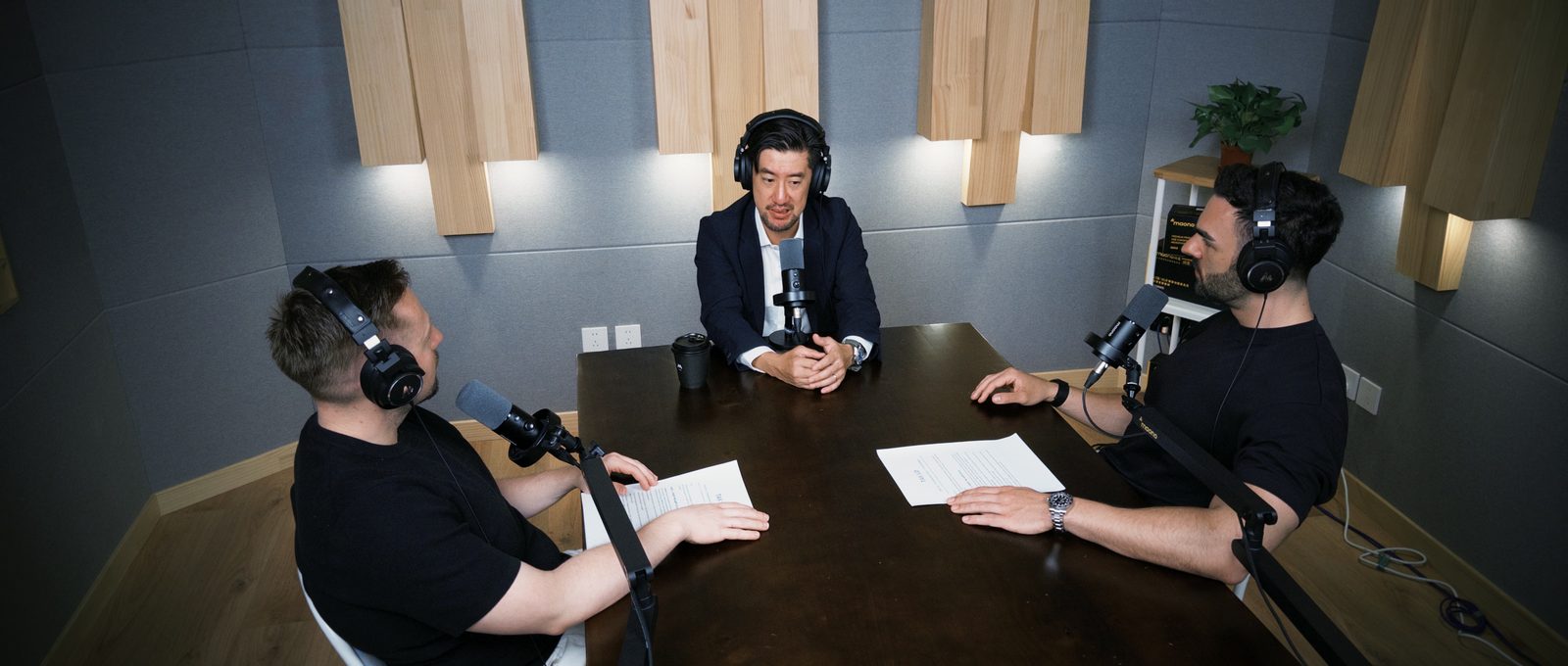
The Deck Eight Years Before ChatGPT
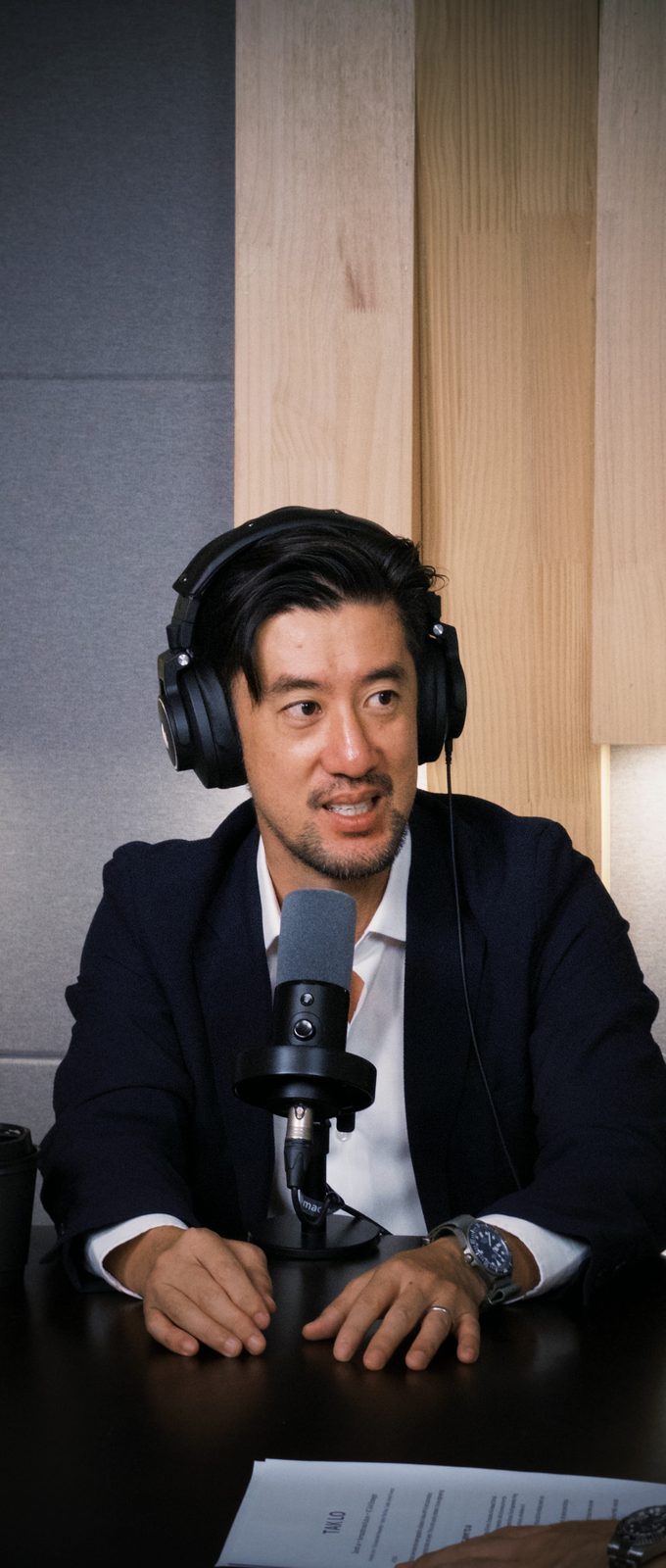
Tak Lo opens the conversation with a contrast that does most of the work in the episode. The US, in his telling, looked at AI and saw Armageddon, the killer of jobs, the harbinger of mass unemployment. China looked at the same technology and called it productivity, something to embrace, implement, ship into hospitals and factories and consumer apps. Tak ran the comparative study, saw the gap, and wrote the deck eight years before ChatGPT made the same argument look obvious in San Francisco.
The deck became the foundation for Zeroth.ai in 2017, the first AI-focused accelerator anywhere in Asia. Around 50 portfolio companies, one IPO, two acquisitions, and a majority stake later acquired by Animoca Brands. The bet that looked early in 2017 looked vindicated on a single weekend in early 2025, when DeepSeek hit the global market and the rest of the AI world realized the gap Tak had been pricing into his deal flow for eight years was now table stakes.
From the US Army to Hong Kong VC
The path to running an AI fund in Hong Kong did not start in tech. Tak joined the US Army straight out of high school, became an engineer, and got sent to Korea instead of Iraq. He spent 2.5 years on a base where he also met his half-Korean wife. From the military he moved to Booz Allen Hamilton in Virginia, defense contracting for another 2.5 years, then a London Business School MBA, then a failed first startup, then Techstars London, where he ran 60 European investments with an explicit overweight toward Eastern Europe.
"The US was like, AI is bad. It's going to take all our jobs. It's going to be Armageddon. China's perception is, this is great, this drives our productivity, we should embrace it."
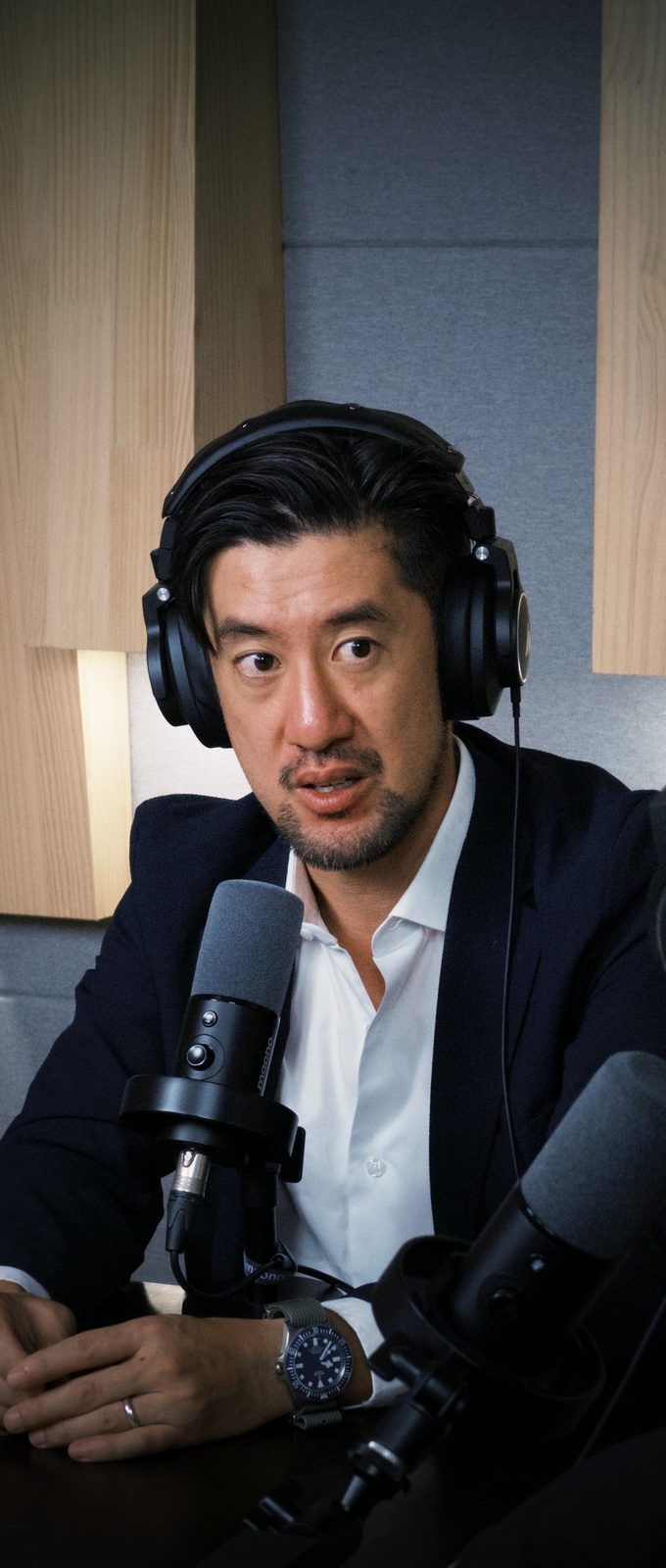
The move to Hong Kong was not a tech decision. His oldest daughter Nora developed eczema in the UK that the family attributed to the local water. They tried Hong Kong, the skin cleared up, and the three-month visit turned into eleven years. Tak is a fourth-generation Hong Konger and the city had always been the natural anchor. The AI fund grew out of that anchor, not the other way around.
The Deal You Sign When You Download an AI App
Tak's most precise framing of the US-China AI gap is not about chips or models, it is about the deal end-users sign. Every AI app that ships into a phone is, in his words, a trade. You give the model your data, your voice, your photos, your queries. In exchange you get a working assistant. The Chinese consumer signs that deal without flinching because the productivity upside is obvious. The American consumer signs it grudgingly, often after a privacy disclosure designed to scare them out of signing it at all.
That asymmetry, repeated across hundreds of millions of users, is what bent the AI adoption curve in Asia. It is also why DeepSeek caught San Francisco off guard. The model was trained on a side hustle stack inside a Chinese hedge fund. The founder had built up China's largest Nvidia GPU inventory for quant trading. DeepSeek itself was a research project sitting on top of those GPUs when the trading model was idle. Then it shipped, the world saw it, and the eight-year-old deck on the Asian century read like a press release.
"When you are downloading an AI app, you are trading your privacy. You're giving data to train models. That's the deal. You should know that's the deal."
Komputational Kulture: Media and Space
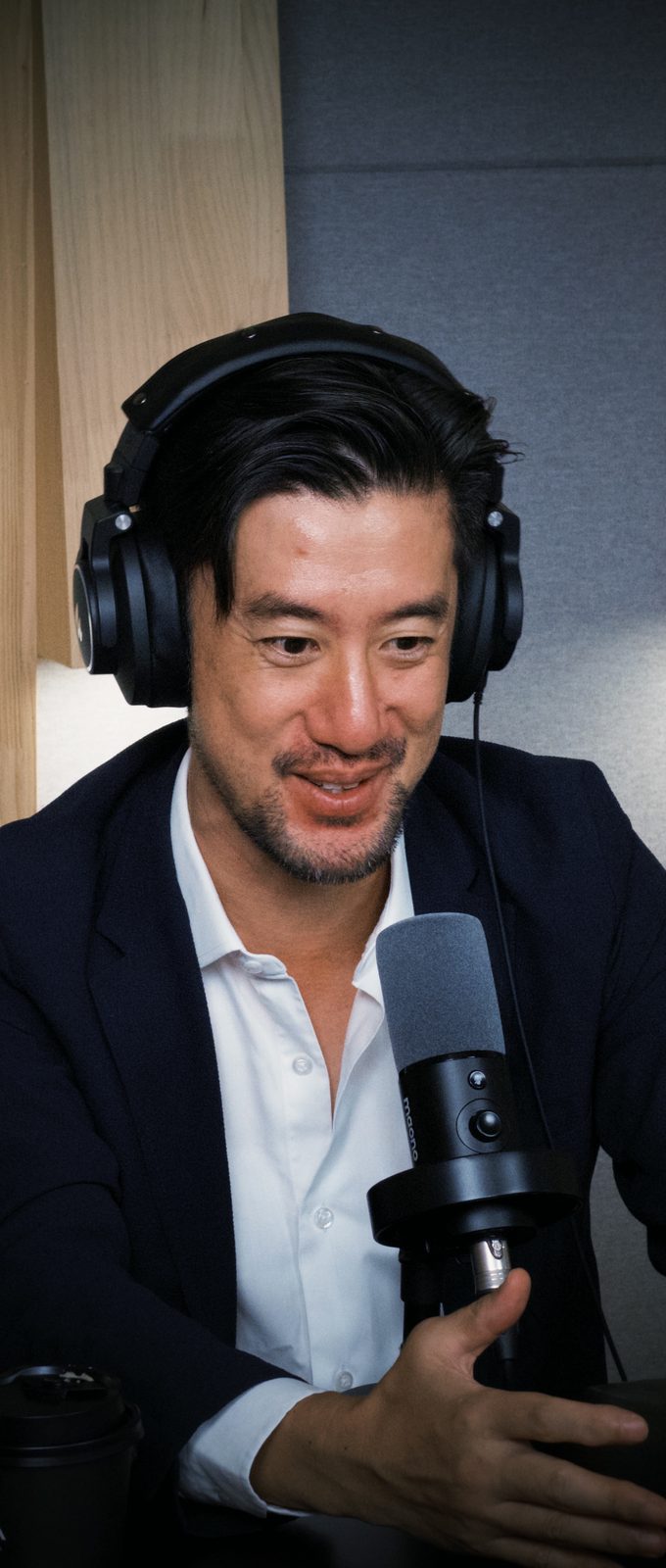
Tak's current vehicle is Komputational Kulture, two new funds raising in parallel. One is media and entertainment, one is space. The thesis on the media side is sharper than the standard generative-AI pitch. As AI slop floods every feed, live human content becomes the premium product. The premium will not be in the volume tier where AI dominates, it will be in the live, the embodied, the unfakeable.
One of the louder bets inside the media fund is Kudum, a Sichuan University spin-off based in Chengdu. Kudum turns a phone camera into a 10-minute at-home sperm test using a slide attachment and an AI microscope app, paired with a sperm-freezing solution. Tak frames the company as fertility infrastructure for a region heading into demographic collapse. The same fund is backing a sperm racing event he calls the Olympics of fertility awareness, designed to do for sperm health what Movember did for prostate cancer.
"I've known more Chinese women that are willing to become single mothers."
South Korea at 0.85 and the Demographic Bet
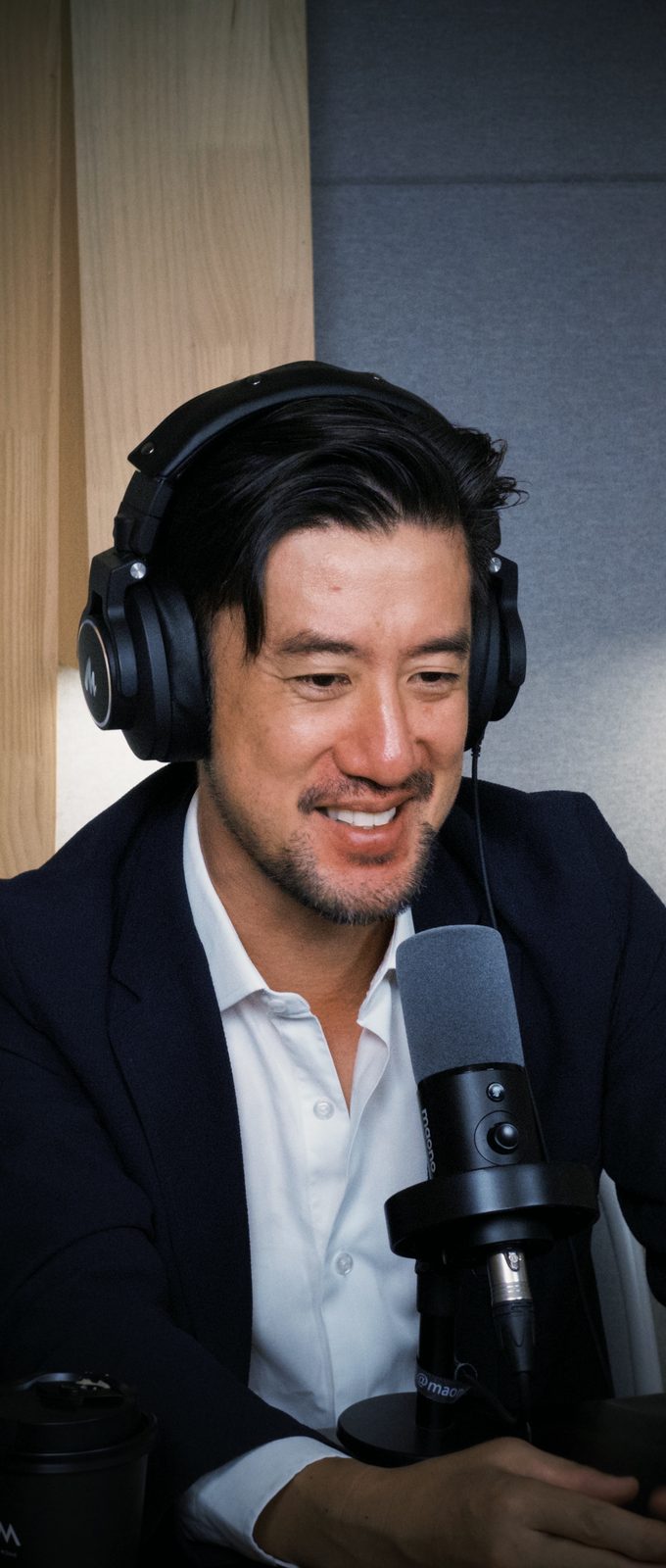
The demographic collapse argument runs underneath several of Tak's investment decisions. South Korea is at a replacement rate around 0.85 children per woman, well under the 1.2 to 1.6 most developed economies hover at, and far under the 2.1 actually needed to sustain a population. Every other modern country, in Tak's reading, lands in the same hole eventually. The window to fix it sits inside the next decade.
He hears the second-order version of that collapse directly from the founders and friends in his network. More Chinese women in his circle, he says, are willing to become single mothers, decoupling marriage from motherhood as an explicit life choice. That trend is what makes Kudum a fund-able bet for him rather than a curiosity. The market is not waiting on regulation, it is waiting on a price point.
Moving the Family to Shenzhen
The next chapter for Tak is across the border. He is moving his family from Hong Kong to Shenzhen and is currently looking at apartments. Three reasons stack up.
His kids, eleven and seven, should be meaningfully exposed to mainland China rather than seeing it as the place across a checkpoint. Real estate in Shenzhen offers better long-term value than Hong Kong on his time horizon. And the hardware-heavy bets inside the new funds, the robots, the medical devices, the consumer gadgets, all live closer to Robo Valley than to Central.
"I want my kids to be exposed to China in a meaningful way. Not just in all of Hong Kong. That's still very expat-y."
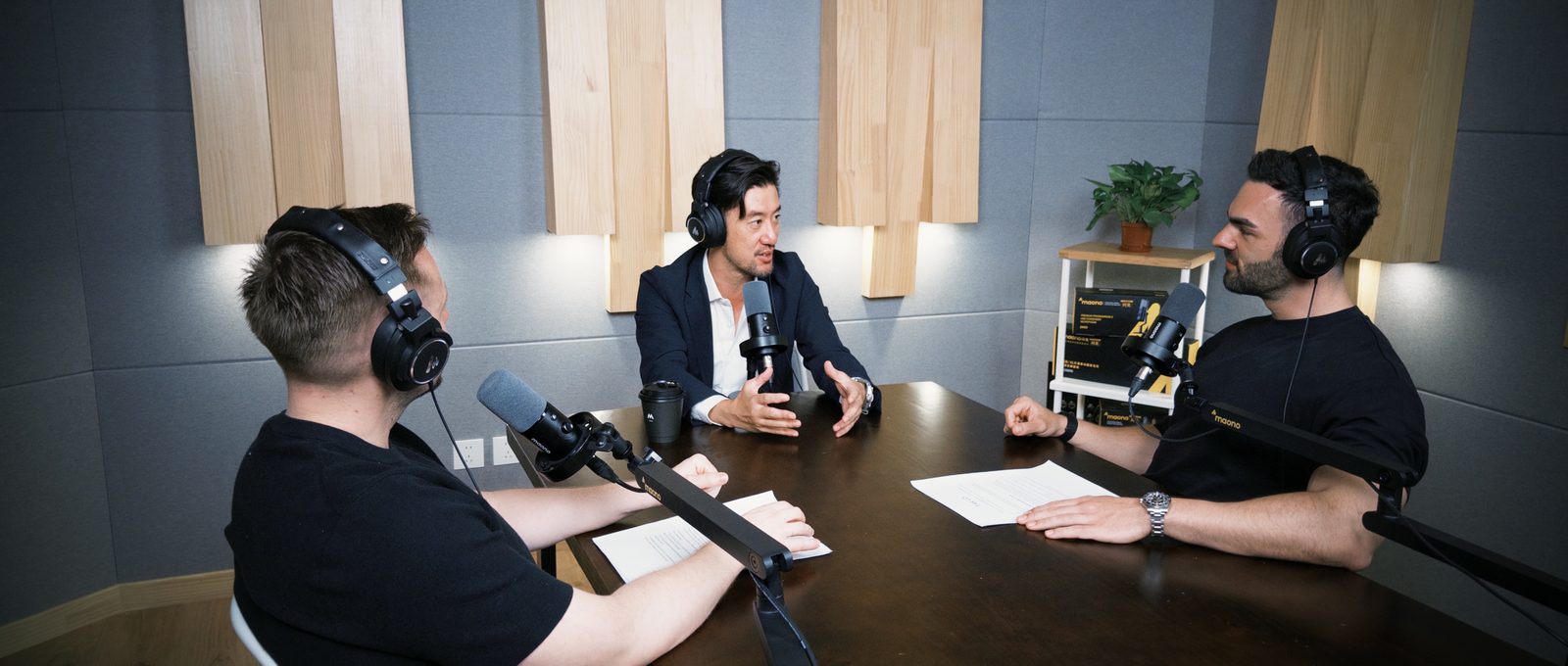
The closing thought is the one that ties the whole arc together. Tak started in 2003 in a US Army uniform betting that Korea was where his life would happen. He ended up betting on Hong Kong, then on Shenzhen, then on China's entire AI stack eight years before the deck looked obvious. Now he is doing it one more time, this time with the kids in tow, betting that Robo Valley over the next decade will look the way Hong Kong looked when he showed up eleven years ago.
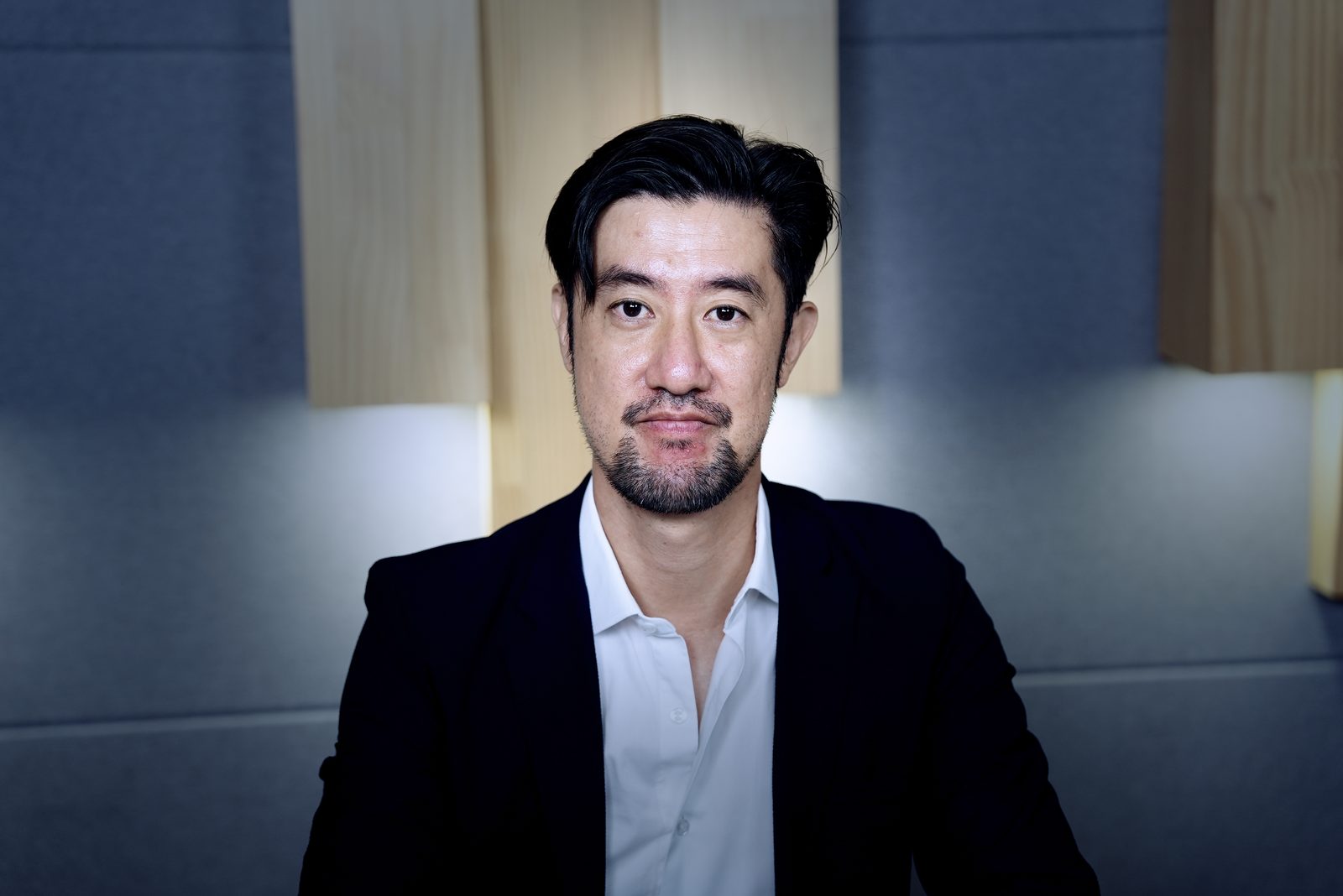
Tak Lo
Tak Lo is a fourth-generation Hong Kong VC and AI strategist, currently raising two new funds at Komputational Kulture, one in media and entertainment, one in space. He founded Zeroth.ai in 2017, Asia's first AI-focused accelerator, with around 50 portfolio companies, one IPO, and two acquisitions before Animoca Brands took a majority stake. Tak co-runs The Automated, a daily AI newsletter, and is the author of three books: I, Leader; The Flow; and Atomic Prompts. Career path: US Army engineer in Korea, then Booz Allen Hamilton in Virginia, then a London Business School MBA, then Techstars London, then Hong Kong eleven years ago.
[00:00] The US was like, "AI is bad." It's going to take all our jobs. We're all going to get killed. It's going to be Armageddon. China's perception is, this is great. You know, this drives our productivity. We should, you know, we should embrace it. They want it to happen, so that means they're going to implement it. People will download apps. When you are downloading an AI app, you are trading your privacy. You're giving data to train models. Right. If they don't tell you that, that's the deal. That's the deal. You should know that's the deal. If you don't know it, sorry, that's on you. Right. You know, I did a deck eight years ago around that.
[00:32] Why? This is the Asian century. It was a big shock for like the entire world, basically, where everybody was seeing, okay, China is doing something really So tech. Hello. Welcome. Thank you. Thank you for having me here. Yeah, welcome. Thank you for being here. So a couple of years ago, you were still at the US Army as an engineer, and now you're sitting in Shenzhen on our podcast. Yeah, that's right. What a. What a big
[01:03] change. What a journey. Yeah, that's right. So tell us a little bit, how did it start? Like, you being in the US Army? Yeah, so essentially it was actually my first job after university. Well, actually first before I come in. Thank you again for having me. I know it took a little bit for us to arrange the times the first time around. I was like, yeah, that's a little bit further away from the city center. So I was like, maybe I need to stack this as the first thing
[01:33] of the day. I need to do it that way. I do this and then figure out where I'm going to be in Shenzhen. So thank you for being patient. Wonderful place, wonderful podcast studio. It's visually very, very nice. For the listeners, there are like three lights and it's very professional here. So, yeah, so I started off my career in the US Army. I was an engineer after college, so went to the University of Chicago, studied economics with some really brilliant minds. But I felt everything was very academic. And I am slightly older, so I joined actually when
[02:06] the Iraq war started. And so I was like, everything. 2003? Correct? Yeah, 2003. So the war started and I was like, well, I want to do something that was globally interesting. I didn't want to just go into a bank. And I felt that was the most important thing around the time. And then yeah, signed up and joined the US Army. And they sent me instead of Iraq, they sent me to Korea, which were basically the only two places they would send you. So I had a bunch
[02:36] of guys that went to the sandbox, which was Iraq, and then they sent the other kind of crew or the other big contingent over to Korea, which is still actually technically at war. The Korean War officially never ended. It's still, I think it's considered officially a truce. Really? Yeah, so I was there two and a half years. I met my wife there. So I got something out of it. Better food than in Iraq. Yeah, exactly, exactly. Better food, better culture.
[03:09] So yeah, so that's kind of what I did. How long did you stay there in Korea? I was in Korea for about two and a half years. So I think my contract was like two years. And then I extended it for a little bit in Korea. The rest of my time they sent me back to the US to, to get, I think the term was to get ETS'd out. So I just did my off-boarding and everything in the US and then I left. Okay, and then you started working in the US as well. That's right, yeah. So then I came to. I was a defense contractor
[03:40] for about two and a half, three years. So I was a consultant for the defense industry in Washington D.C., in Virginia. Whenever anyone says Washington D.C., that's a lie. They probably live, unless they're a politician, in Virginia or Maryland. So I was in Virginia for the longest time. I worked for two firms, something called Booz Point and Booz Allen Hamilton. So I consulted on defense for two and a half years. And then I said I didn't want to be part of defense anymore.
[04:10] Which can be a good or bad thing. It's a very small industry, or, sorry, it's a big industry, but it's very closed, as you can probably imagine. So a lot of people went to West Point or Naval Academy in order to get ahead. I didn't go to either of those. So I said, I have a cap. Also didn't have my U.S. — no, I did have my U.S. citizenship, but it was complicated because my wife's Korean, from Hong Kong originally. And so it's
[04:40] very difficult to rise up politically there. So I said, nope, I have to have an international career. That's when I went to London for business school. So I said, I need to go internationally. I want to go to business school in a different location. Like Europe. I've always liked Harry Potter. No, no, I don't. You know, everybody — shit, I like James Bond. Can we — we can't curse on this podcast. We can. Oh yeah, whatever. You just — I mean, you will get canceled. Exactly.
[05:11] Maybe if we speak German. Scheiße. So it's — it's — yeah. So no one can notice that. Yeah. So I was in London for two and a half years. Two years during the MBA. Loved Europe, loved my time there. It's a great time to be in Europe. Back then, the tech scene was starting, so I did a startup after my MBA. I'm just going to cover my entire career, and then it might be a little bit easier, save you from asking questions. So I did a startup — it failed a little bit. Spectacularly. Didn't go well. So I said, maybe I'll make for a better investor.
[05:41] So I joined Techstars in London. That was their first international office and first European office. So I did that for about two and a half years. Invested in, I think about — I think with Techstars, invested probably about 50, 60 startups across Europe. Startups, basically AI. It was too early for AI. So basically, when was that? Tech — that was 2011, 2013. 2013. German startups — we didn't really invest in them,
[06:11] but I went — well, sorry, we did, but I didn't. But primarily I focused on kind of Eastern Europe. I went to Belarus, I went to Romania a lot. I went to Armenia a lot. I went to Scandinavia a lot. I saw, like, Estonia. Right. So there were lots of very interesting things there. Berlin was great for the coffee shops and the raves. The raves and currywurst. I remember those. Estonia is a very, very interesting country. Like, yeah, I mean, I was — that's why I think I was always interested in kind of
[06:42] the edge, right, as a personality, but also kind of my experience investing as well. Because even back then, the best startups would go to London and then, you know, Germany and France would actually have great startups as well. But then if you want to be early, if you didn't want to overpay — but also, like, we were extremely early stage, very comfortable with being early stage. We wanted to get them before they go to London, before they go to France, before they go to Germany. And so that meant we
[07:12] had to go to Eastern Europe, we had to go to — we had to go to the source. And so I got to experience that a lot and really enjoyed that, because I think that's really where the raw talent happens. And Eastern Europe — Estonia, as much as they don't like — they like to consider themselves as Nordics. I don't know if you knew that, but if you go to the Estonian airport, like, all their design is, like, Nordic. And I was like, I don't know about that. I don't know what my Swedish friends think. You know, you guys are Europeans. They're not quite Nordic. Right. They're more Eastern, but I get the point.
[07:43] Yeah. They're more Eastern, but I think that's the thing. They've got all the bits of the Eastern side, right, which is the analytical, the structured thinking — the Soviet, you know, I mean, it's a good thing. It's a fantastic thing. We both have Eastern European background. So it's like, I think — I mean, we are Germans, so we both were born in Germany, but our parents are, like, kind of immigrants. So my parents lived in the Soviet Union. All right. And his parents in Poland. Poland.
[08:15] But where in the Soviet Union? In Kazakhstan. What's Kazakhstan now? But it's a long story. So there were German communities in the Soviet Union, in the different countries of the Soviet Union. And my parents and all my brothers and sisters were born in what is now Kazakhstan. Oh, wow. We have some Kazakh neighbors. Okay. Horse. Horse. Guys. Yeah. So they were not Kazakh. They didn't have the Kazakh lifestyle. Right. But my mom also cooked some Kazakh food
[08:45] at home. The bread and noodles. Dumplings. Yeah. Wait, why were the German communities there? Long story. Long story. It was like the grandparents of my grandparents moved from Germany to Ukraine first, and then further east and east. And then in the 90s, most of them moved back to Germany. I didn't know that. Yeah. But, you know, so it's interesting. I think Eastern Europe, it's more structured, obviously, because of the Soviet kind of style.
[09:16] And then also they're more open. Oh, yeah. They're extremely open and also entrepreneurial friendly, which is something you wouldn't really know if you're not, I think, because they're hungry, because they didn't have it. So, you know, like, the Estonians are kind of like that, but if you look at the Romanians, Armenians, you know, I didn't really go to Kazakhstan, so I don't know. But Belarus is also a little bit different because it's still pretty like, you know, I mean, there are great people in all of these countries. Yes, right. Yeah. We also have, like,
[09:47] some friends who opened offices in Kazakhstan now. And then we met people from Romania and Hungary here in Shenzhen. So I've also worked with a lot of Romanians in my previous company, on my team. So, like, these are great people. Fantastic. Yeah. And they're more open, they're more entrepreneurial. I think they're hungrier. And then because of the internet, they know everything about the world and whether they were well traveled or not, depending on the passport,
[10:19] but still they're open conceptually and ideologically and theoretically. So I really enjoyed my time there because I thought — and then what does that mean for an investor? What it means is, one, they're hungry. Right. They came from nothing. So they have ideas on how to do things. Right. They're not fixed on, like, oh, this is the way to do it. This is the American style of doing it. This is the Western Europe style of doing it. Interested in trying something different, or this doesn't quite work, or this model doesn't quite
[10:50] work where we are. It's like, okay, that's pretty — like, that thinking was new. That's the — that's the Eastern thinking, I would say. Like, also, China is going the pragmatic way where we just try. We're very open to new ideas. And I've heard, okay, this is great. Let's try it and then see how it goes. And then along the way, we just either pivot or figure it out. Right. That's a really good point. It's the pragmatism. It works. So that's not, you know, plan everything.
[11:22] It's like, we gotta have a meeting about the meeting. Yeah. And we have to have consensus, but let's do the meeting in three months. No, I love the Swedes, but still that — yeah, that's a very particular style. Right. We have to come together and have consensus before we move on and stuff. And anyway, yeah, so I really enjoyed my time there. And then afterwards I said, okay, time to move to Asia. So at that time — yeah. Why that? So my daughter was born in London, so Vera.
[11:54] Vera. Nora was born in London, but it was entirely for health reasons. So she had eczema, so her skin was too dry. The water in the UK was just too dry for her skin. And so we said — and then my wife was stressing out, and it was very simple for me. I was like, look, I mean, if my wife is stressing out, you know, this is not something that can be treated with just drugs. It'll probably mess her up for the long term. You know, the simple solution is to move. Right. Because I don't —
[12:25] the last thing I need is a stressed out, you know, young mom, first time mom. Right. Because if I don't solve that situation, I don't even have a career. Right. Because I need to — it starts with home, right? Starts at home, starts with home first and especially your family. So I said, yep, we're going to move. So I said, quit, move to Hong Kong. Because I'm originally from Hong Kong and I said, my wife's half Korean, and I said, my wife's half Korean, So Hong Kong's the easiest. We've got all the visas and everything, and
[12:56] yeah, moved to Hong Kong 11 years ago. So that's how old my daughter is. So then in Hong Kong, I was like, what do we do? What do I do? You know, I knew accelerators from Techstars, and then AI was starting to become big in the UK. The smartest people that I knew in the UK were doing AI, right. So Demis from DeepMind, Nathan actually from Airstream Capital, he was starting — Jaan Tallinn from Skype. So they were really, really smart
[13:26] guys doing AI. And then I literally just thought, let's focus on AI. It makes the most sense in terms of the technological leap, and let's focus on that. So 10 years ago, I started the first AI accelerator. We invested in about 50 companies focused on AI, primarily in the Asian region. We had some companies from Europe and Africa, but mostly here in Asia. So Korea, South Korea, China, Southeast Asia, Vietnam and Australia, one or two. And then, yeah, they did pretty well —
[13:59] some startups invested in by Korean development banks, Sequoia, Horizons Ventures, which is the largest family office in Hong Kong. And then, yeah, so led me to here, and yeah, Asia. So I'm all in on Asia. That's actually very interesting because at that time, 2017, right, when you started it. Yeah. Most of the money still went to Silicon Valley. Sure. And a lot of people and funds and investors didn't
[14:29] even think about Asia. But you at that time already had it on your radar. So what was the one thing that made you confident about Asia? That's a great question. And I think the money is still — to your point, the money is still in Silicon Valley. The valuations are still there. At that time, you could argue Southeast Asia. So I had some offers and discussions with funds in Southeast Asia, but I just never felt I had the edge in Southeast Asia. I'm not Southeast Asian. I can intellectually understand
[14:59] it, but I'm ultimately Hong Kong Chinese. I have no edge in Southeast Asia. So the money is still in the Valley, most of it. But I think if you take a look at — for me, I actually built a deck about that for foreign investors. So I think it was Guns, Germs and Steel that basically kind of elucidated the trend. So basically, in order for GDP to grow, there's
[15:29] only a few things that can happen. Primarily it's population that drives most of it. Technology can amplify people and their productivity, but there's no better replacement for growth than the number of people. And he was taking a look at a longitudinal study of human civilization, right. So the industrial revolution kind of changed it a little bit. That marginal, that technological component was much greater. And then there was also a discrepancy between those that actually used technology and countries that didn't. But if you take the
[16:03] span of the entire thing, it really is human population that makes the biggest difference. So then I started thinking, okay, human population — obviously, you know, China and India, Asia as a whole, let's just say, you know, takes the cake there. I think in terms of gap, you know, there was always this thing, right? Opportunity is available anywhere, just not equally distributed. And if you take a look at the know-how across the world, the know-how as a collective human thing,
[16:38] there's a lot of knowledge. But I think whether it's implemented equally in the US and equally in China — I don't think that's the case. Probably in China there's a potential versus in the US it's always leading, but it's only 300 million. In China there's still both the population and a gap. They have room to go. So the US can innovate all they want, but that just leaves a big gap, I think, of implementation and execution in
[17:08] China. So that was the second factor. And then the third factor was really, I think, the view on AI. So there's a study, and I haven't seen this paper in a while, but someone did a comparative study — and I'm sorry to be academic, but that's kind of my background. I'm a Chicago guy. We tend to like academia. There's a study that basically said, okay, what are people's perceptions — comparing US and Chinese perceptions of AI? And the US
[17:39] was like, AI is bad, it's going to take all our jobs. We're all going to get killed. It's going to be Armageddon. China's perception is, this is Great. You know, this drives our productivity. We should, you know, we should embrace it. You know, it was both like, interesting — what are your positive opinions? And, you know, the US has us is less than China is more. And then in terms, it also asked the counter opposite, which is like the negative. Like, are you negative about it? And the Chinese were like, no, we're not negative. And the US are like, definitely super negative about it. So I
[18:11] was like, okay, people's perception of AI is also better in China. Right. So they want it to happen. So that means that they're going to implement it. People will download apps, because ultimately when you are downloading an AI app, you are trading your privacy, you're giving data to train models. Right? That is, you know, that is the — if they don't tell you that. Yeah, that's the deal. It's a deal. That's the deal. You should know. That's the deal. If you don't know it, sorry, that's on you. Right, but if you believe that ultimately it's a good thing, you'll do it. Right.
[18:42] And so I think that positivity made a lot more sense to me and the perception. That's why I think for me, it pretty much made sense in China. And again, I did a deck eight years ago around that — why this is the Asian century. That's interesting that you were this early, because I thought too early sometimes. Yeah, because I thought, okay, people in China really opened up and became very, very open to AI and what's going on.
[19:12] When DeepSeek came out, because then it was like, okay, open source, everybody's contributing to it and we want to make something happen. We don't have what, like the findings and everything that OpenAI had. Right. So we just open it up and see how we can, like, build something out of it. And obviously it was a big shock for like the entire world, basically, where everybody was seeing, okay, China is doing something really great. And then the open source model became extremely popular in
[19:45] China. Right, right. That's very interesting that you saw this already in 2017. No, but to your point, does it make sense? Yeah, but to your point, I was waiting for that too, because I was like, I've got this theory I presented to investors, but I don't know until something validates it — I'm just a crazy guy thinking that, oh, AI is going to... And so when DeepSeek happened, I was like, okay, the moment that I, you know, that I didn't predict that moment, but I was like, it validates a lot of the work and my
[20:17] hypothesis. So yeah, and everybody was proud that it's happening from China. But then, do you know, that was also kind of a bit of an anomaly as well, because I know some of the DeepSeek founder — DeepSeek, he has a hedge fund, right? Essentially. And so he bought the GPUs at some point. He had China's largest inventory of Nvidia — I don't know whether it was like the H100s, but GPUs for his hedge
[20:48] fund to train a model and to perform better for his hedge fund. And I don't know what happened, but it was like, I think it worked. I mean, he made enough money on the hedge fund, but he was like, okay, we can do something with this model, with these GPUs, and he made the model. So to some degree it was an anomaly — it was a side hustle to some degree in AI models. A side hustle, but it's also good fortune, and maybe that's what it requires sometimes, right? A stroke of luck for that to happen. So to your point, I think it was really, really
[21:19] good. Yeah, I should talk about DeepSeek a little bit more too. So, so you said the approach of Chinese customers or private persons is different than in the US. So how did you see it with startups and startup founders? Good question. How's their approach to life and business? How different is it from the US? Yeah, I think what I've noticed — on the privacy level there's more willingness to give up privacy data. So like in Europe you've got GDPR, right. And whether
[21:52] you like GDPR or not, it exists. Right. And so it just makes — are you willing to give up your data to the big corporates like Google and stuff? And are you willing or you're not willing to do it here? It's kind of a given, you know. Sure, why not? Right. It doesn't really matter. And so I think it's just that alignment and difference in thinking about privacy and your data, right? I think it's different. And because of even that philosophical change, that's a big difference on the AI models, because then you can use that
[22:23] data to train. Right. And whether it's like a health startup, right, and using your health records to train a model, or even something as simple as, I don't know, maybe a coffee app, you know, that you take pictures of yourself and your coffee, or even like a SenseTime, right, with face tracking, you know, and them training models on your face and facial structure. I think the Chinese population is much less opinionated and concerned about that privacy issue.
[22:56] I think if you were to use health data records in Germany, I know in the UK, people will be up in arms, like, even for Palantir now, going to the NHS, right? People are like, it's big Palantir, right? It's my records. What are they going to do with it? You know, that type of thing. So I think that's one thing. That difference. So my question was more about the entrepreneurs, like the startups — you know, how is their approach different from the ones in Scandinavia or in the Baltic countries? We talked about that before. I think Chinese people are
[23:26] a lot more pragmatic, right. So I think, you know, I wouldn't say they enjoy working. I don't think it's like — I think if they had a choice, they wouldn't do the 996, but I think they're, they're much more pragmatic, and so they're willing to do 996 to make the money to live and et cetera, et cetera. And I think they're just much more pragmatic about it and just get shit done. You know, I'm gonna offend some European friends, but, you know, like, European friends, I remember, like, oh, in the summer, you know,
[23:57] in the summertime. All right, you know, where are they gonna go? Are they gonna go to Santorini? Are they going to Ibiza? Go to the south of France, right. You know, always. And then during the winter. Is it Courchevel? I don't know. Yeah. Where in the Alps are they skiing? Is it the Italian side or the French side or the German side? Right. But here I don't see that conversation as much. I'm not saying one is good or the other, but I think it's just that the culture is different, and I think those are some of the
[24:28] — that work culture, I think, is different. And that pragmatism I think is extremely different. That's basically for China. Right, but you also invest in startups all over Southeast Asia, right. Is the mentality similar in the other countries? I think Vietnam — I was really, really impressed about Vietnam. So I really like Vietnam because of that. I think it's funny, they've also got that Eastern, you know, communism type of mentality. I wouldn't even
[24:58] say it's like — I just think it's more the fact that they didn't, you know, catch up or rise on that first wave. So they're much more — that gap is bigger now, right. They've seen everything on the internet and they're like, we want to do it too. So it's not a communism thing. I think it's just the stage of development. But Vietnam, I think, is very interesting. I think they've got that really kind of hustle as well. That impresses me. I think in Southeast Asia, Indonesia, I've heard as well in terms of size,
[25:29] but in terms of the people, we were not fortunate enough to invest in any Indonesian founders. You had some successful investor stories. One IPO, I think one, two acquisitions, right? Correct. And what were some wrong predictions you made, or some failures? Too many wrong predictions, but I have plenty of failures. I generally kind of think long and hard about things, but failures, I think —
[25:59] I think in terms — I don't like to talk about failures in terms of other startups because, you know, being a founder is tough, right? And there are many different reasons why something failed. And it's not for me to judge that and their story and what happened, because I might have a view and that might be or might not be the truth. I think for me, I'll talk about my own personal failures. Raising capital I think is always very difficult. But I
[26:30] would say, to your point earlier about money, I think raising capital here in Asia is difficult because we're not the Valley. And so I think — and it's not just raising money, but there's a lot of things that I did when I first came to Asia that I use kind of a Western way of doing things and tried to fit them into Asia, and it didn't quite work. It's raising capital, it's leadership, it's management, it's even raising kids to some degree. And so for me,
[27:01] 10 years, 11 years. And even though I'm Chinese, right, even though I'm Asian, even though I was born in Hong Kong, I still had to. I had to adapt myself to some degree, right? I had to learn a new way. And I feel much more integrated now in a Western way of doing things, but also something that fits an Asian way. But it's funny, like, you speak very good Chinese. I didn't hear enough. You might be very good too. But I feel like it's funny. Hong Kong, to some
[27:32] degree, sometimes China feels alien to us Hong Kong people. And you might wonder why. It's because, you know, Hong Kong left. So the people that left China came to Hong Kong. We were very, very separate. And so oftentimes just seeing Chinese development is very alien and also scary because to some degree they moved on from that historical legacy and became a modern country. Sometimes Hong Kong's too traditional. We're still kind of stuck. You know how
[28:02] it is. Immigrants are sometimes even more traditional than the local people. Right. Because they hang on to the customs. You know, they're like, we're hardcore Irish, right? We'll always keep our Irish ways. But then the Ireland guys are like, we've moved on from that. Like we don't do whatever, right? Kilts and whatever, killing people with axes. So I think that's Hong Kong, Hong Kong. We're very traditional, custom-wise. And so having to come back and realizing how mainland China is — the
[28:32] customs — I've had to marry that with my Western ways and also my Chinese ways, my Hong Kong ways. Now I feel much more comfortable doing business in China. Before, when I first came back, I was just like, I don't. It's not even scary. Well, it's a little bit scary, but I was just like, don't even know where to start. So I think that's my biggest failure. And I'm still kind of reconciling that and trying to improve that. But you somehow managed to get along.
[29:03] So how, what is, what is the big difference now in like raising money here? You said this is one of the hardest parts. Yeah, I think it's — if it's a very specific question, how to raise money, I think now, because raising money is always like, it's not a trick, but it moves all the time. I think now it's about, do you want money in renminbi? Do you want US dollars? If it's RMB, who has the money? It's usually kind of the governments,
[29:33] and you have to play with that. If you want USD, private individuals — probably it's the Chinese money that moved out. Is it Hong Kong then or Singapore? How do you talk to them? What do they want? Because what they want is very different from Western investors. Right? And Western venture investors are a little bit more long term. Chinese money is actually a lot more short term. So you have to balance that, which is one that actually has a point. Because Hong Kong money is to some degree a little
[30:04] bit longer term than mainland Chinese because of the development. I'm not saying it's a philosophy. It's a development thing, you know, because Hong Kong had, after British rule, two or three generations that did preserve wealth. And so they were a little bit more long term in thinking. China is only first generation wealthy, maybe second — let's just say one or two. So it's a little bit less long term. And so to answer your question, it's more like
[30:35] trying to figure out the incentives and what people want and trying to understand those incentives and provide a package that both marries what I want, but also the incentives that matter to them. And they are very, very different because in a venture scenario it's a long term investment. I cannot guarantee an outcome, as much as I want to. I like to be intellectually honest. I'll do my damnedest to make sure you've got a return, and a great return.
[31:06] But also intellectually there is a chance that there's not, right. And so it's making sure that I message it correctly to the LPs and provide that trust, but marrying the interest and the incentives that they want to pursue as well. You just said it's very hard to raise money. So from your point of view, with what kind of product or what kind of service can you offer now to investors that It makes it easy to raise money?
[31:36] I can only speak to this kind of as a venture investor. I think, again, I can speak to what — why I can speak to it now, again, because raising money is always a game and it varies depending. Especially now, geopolitics being as fluid as they are right now, kind of what is top of mind is how to capture some of that crypto wealth. So in Asia there's a lot of crypto wealth that is there, and how to capitalize on that crypto
[32:06] wealth to some degree. But again, reconciling that short-termism with long-term investment — it's about how to couch that long-term investment into, you know, with a fund it could be a seven plus three, right? So you have a seven-year fund and then the next three years after that we're trying to get an exit. So it could be couching that as a long-term investment. It's an ecosystem play, right? So we're trying to build
[32:37] the ecosystem around you or for you or something around that. Right. Because look, not only could they treat crypto as a lot more liquid, they could also put it in the bank because the interest rates are high these days. Right. So it's kind of maybe coming up with ideas that are a little bit larger. And then I think the third piece is working with governments more. So for us, we are working with governments to raise funds because they are longer-term, they are sufficiently motivated to
[33:08] think long-term and to build an ecosystem. Yeah. So those are kind of the three variations or thoughts about raising money, especially in a venture fund. Now how do the requirements differ from a government to — yeah — a private individual? Very different. So we've never done it before. Which, again, is one of my biases coming in. I was like, because in the US, raising money from governments, nobody does that, you know, and so I — I remember the Americans
[33:39] going to Europe. They were like, we don't want to work with governments, the government. But then I already — I was like, in Europe, I was like, that — that doesn't make sense. Because the government does play a larger part in Europe. And I think, and to be fair, it actually plays a larger part than we imagine it to. So to answer your question directly: first, they're longer-term. You have to find, you know, the ecosystem development. You have to be a lot more patient. You can't just say, I need to close the money
[34:10] now. Right. Or tomorrow, I needed the money yesterday. Right. It doesn't work that way. They've got their long-termness. You have to understand they have a process. Right. They have a process because they don't want to be unfair. Right. So if you give me — let's say you're a government worker, you give me money, then it looks like we're best buddies. Even though we could be buddies, we can't look like we're buddies. Right. It looks like we have to have a process. So the process really matters a lot. I think that's the biggest difference. Returns matter, but they're not everything. Right. They're not
[34:41] the single criteria. It's the ecosystem development. Are you here for the long term? Do you want to be here for the long term? Are you doing things like podcasts right here in a city? Are you trying to promote the city as well? Right. So I think those are kind of important as well. So it's everything around — I think the returns and the relationship with the government — that's key. And to go back to — now that I've answered your question directly, I do want to
[35:11] kind of go back to that bias about the government. So for a long time the US has been saying, screw governments, we're private entrepreneurs. That's just a myth. The US likes to have narratives about the lone hero saving the situation, gets the girl, kisses the girl, that type of thing. But if you take a look at venture capital and the tech ecosystem, it was actually built up a lot by the United States government and DARPA. The California state
[35:43] actually helped a lot. So it isn't — it's not an anomaly. The state does play a large role. Institutions play a huge role in a tech ecosystem. And it's absolutely necessary. It's just the narrative in the US sometimes is skewed towards the private individual hero and the entrepreneur, but that's not true in the United States. And if you take a look globally as well, that's not true either. So let's talk a little bit about AI in Asia. It's like a big hype. We had DeepSeek.
[36:14] We had now recently OpenClaw. Everyone is so excited about it here in Asia. But is it just hype or is it actually something worth having a look at, investing money in, you know? Because especially in the LLM world, everything moves so fast. So last year, DeepSeek was the number one. Wow. They can do the same as ChatGPT, but with much lower cost. Right. And now I feel like this year not so many people. Yeah,
[36:47] that's right. And people are not talking about DeepSeek as much as they did last year. How do you evaluate this whole situation? Great question. And I think intellectually I can't know, because to some degree, I just can't know— it's really hard to anticipate. I mean, I run a newsletter, excuse me, called The Automated. We have 13,000 subscribers daily. We've done it for — this is also about three years as well. And I remember in the early days, I'm like, should you write about AI? It's like,
[37:19] daily. Is there enough news daily? Like, I don't know, in two months? I mean, and I've been in AI for a while, right? So I was like, really? Can I — is there enough? And my team was like, yeah, there's enough content. We can write about stuff every single day. I was like, really? Three years later, we're still writing stuff every single day. So I'll answer that question, yes or no. The no part — let's go there first. Sorry, yes. Is it a bit hype? Is there anything — is it a big hype? Yes, it's definitely hyped up. There's definitely, you know, part of it is companies trying to raise capital. Right.
[37:52] So it's in their interest to try to do that. I think there's also less competing narratives of what's going on. So crypto is no longer there. I think there's also geopolitics coming into play because, you know, you can compare China and the US with AI, so there's something interesting there, there's a narrative. But on the other hand, I think there's a lot of room to grow for AI. I think what I'm really interested in is the application side. And this is where actually China competes extremely well.
[38:22] I was at an AI Governance Summit this past weekend, right? So the — there were academics talking about how AI should be governed, right? Who governs it, who should govern it, who governs it, who should govern it, and then what countries should play a part in governing it. So you had Indian guys, Chinese guys, American guys, all coming to discuss. And it was a great kind of point. And there was one Chinese guy, you know, from Tsinghua, Dean Xue, he was basically saying, yeah, the US is very good at model
[38:54] theory, but the Chinese are extremely — Chinese, right. So he's extremely good at the application level. And that accords with everything I've seen. He was approaching it from a policy level. But what we've seen, you know, with our friends at Robotuo, at Robo X, in terms of robots and humanoids, I was at the hackathon, I covered that on my show, and they were just doing stuff with like claws. So it's not just full humanoids, but, you know, partial hardware. So I think — and then —
[39:25] so I think there's still a lot of legs in terms of the applications. And I'm very, very excited to see that and to see where it kind of goes. And I think there is a lot more innovation there, actually. And I think they'll continue to be. I think what we'll start to see, actually, if I may — I'll talk about two funds that I'm looking to raise. So there are two funds that we're raising right now. They're both called Komputational Kulture. One is
[39:57] focused on media and entertainment and the other one is in space. So I think, if you ask me ultimately what the trends and thrusts are, I think those are the two. So I think media and entertainment. Why? Because I think one, everyone's going to be a content creator somehow, some way. And you know, we're doing media here because in the age of AI, I think it's so much easier to create content, right? Whether it's your own avatar, whether it's an email that an AI writes,
[40:29] it's so much easier. So I think there will be a lot more people doing it, but then the people that will be doing live, human content, I think will be more of a premium, because you see a lot of AI slop. People see a lot of AI slop, but they're willing to pay for the human stuff because that's the real stuff. If you take a look at concerts and entertainment artists, that's the evolution — back then you paid for CDs and LPs and that type of thing. Now that's
[40:59] gone away. So that's all free. But you pay for the concerts, you pay for the merch, right? You pay for the human touch. Yeah, I always think people are so afraid of AI artists, but I always think it will be part of the business. And I actually, on my Spotify playlist, I have some AI songs and I think it's not bad. But I will never be — or people will never be — hardcore fans of these AI artists. They just think this song is nice. But if you want to be a hardcore fan of a group, you are, because they have this
[41:30] rock and roll lifestyle. Because they do drugs, they have some scandals, they have. And this is a human touch. This is why people like to be fans of people. If you're too perfect, you don't have any scandals, divorce, break up, people will never be hardcore fans of you, right? So I think there's a place for everything in the future. I agree. So, like, you know, let's say this, right? We will have avatars in the AI age, which we're kind of going to — we'll have avatars doing these podcasts. But then, you know, I
[42:00] see a future age where basically we'll have fans outside watching us do a live one. They'll pay for tickets. I mean, you start to see that anyway, right? You have podcast shows, right? They will pay to see the micro — oh, you know, he's drinking coffee. You know this coffee must be good, right? Like, oh, let's get a signature, let's interact. You pay for the interaction and the stuff outside of just the content itself. The content will be given away for free to get you in, and then you pay more for that interaction. Right? Again, we saw that with artists.
[42:31] I think we'll see that for pretty much anybody, right, in the future. So, media, entertainment — I think that's an interesting thrust and what we're going to get to. And then very, very interesting as well because it's equally as broad in terms of application. Right? So in space you can have humanoids, right? You can have humanoids, you can have science, you can have material science, right?
[43:01] You have materials that go into space and insulate you and keep you warm. You have obviously science and medicine, right, to keep you healthy and keep you strong as you go into space. It also includes food science as well. And then there's also a huge data component, right — SaaS and data component to space as well. Just because space is really, you know, there are startups that are actually about satellites that will provide Wi-Fi — Starlink provides Wi-Fi right from space. So space as a trend is sufficiently broad, and there's a vast surface area that intersects quite
[43:35] well with AI as well. And so those are the two areas that I think are pretty interesting. You're also talking about fertility. I did, yeah. Invested — I advised a startup in the fertility space. Okay, yeah. Do you want to know more? Yeah, I want to know more because we have a big crisis in parts of this world, like in Europe for sure. It's like all the developed countries — they all have the same problem. South Korea is getting —
[44:07] yeah, it's — I mean, your wife is half South Korean. So you did your job, right? Yep, yeah, I did. She did her job. She did her job. Yeah. Just two kids. We need more. Yeah, so I don't have any kids. So, yeah, talk us through this topic. Yeah. So the startup is called Kudum. It's a startup — the scientific team is actually based out of Chengdu, and they have a strong collaboration with Sichuan University in Chengdu. And essentially it's pretty simple.
[44:37] In order to test your sperm, right, traditionally you had to go to the hospital, yeah, to — you know, I did that before. Have you? Oh really? Oh, okay. Are you married? Are you — yeah, so I was married and I did it in Germany and in China. So it's like — yeah, you go there and then you kind of look sheepishly, go to the bathroom. Yeah, it's not a bathroom. They have like dedicated small rooms. Oh geez.
[45:08] You try to flip through some material. TV. They have a TV there. With content. With content. Yeah. It's just like in China. Yeah, it's very interesting. In China it's like soft porn. Yeah, I can imagine. So it's like — but German soft porn is much better than — yeah, I think in Germany you just take your phone. Like in Germany there's no TV. I remember German advertisements at like 10pm are fantastic. Yeah. I mean, Germany is quite open. Yeah. I mean, Germany is quite open.
[45:38] Like, you can see, like, this very 18-plus NSFW scene in. In TV. 10pm call, call whatever number. Side, side, side. So, yeah, so this is. Yeah, you were talking about the process. So, yeah, you go there as a. Yeah. And then. Then you. You do your job. You do your job. And then essentially, so,
[46:09] you know, kind of sheepishly, and then a couple weeks later, you get the. The results, which are pretty good, I have to say. Yeah, yeah, for you. Swimmers strong. So the founder said, "Lao She'd. Okay. What if we can do this? You can do it at home." So you went through the process, but he's like, what if. Just do it at home, you know, with a. With a camera. With your phone camera. Right. And so you can do it and in 10 minutes, you know whether you're good or not. Right. And you use your phone camera to get the results. Correct.
[46:41] So, basically, there are a few innovations here. So one is you do it. You put it on a slide. Right. And the liquid there breaks it up. So technically, it breaks it up and amplifies it. The slide is also an innovation. It has to be thin enough so that it's one. How do I say it? It's one spermatoid per view. So it's not on top of each other. Yeah. Right. So it has to
[47:12] be good enough where it's like, separated out. It's magnified. So then the glass sits there. Has to be good enough where it's magnified for the phone camera. Because the phone camera isn't the best microscope. Right, right. So it has to provide enough amplification, amplification, magnification for the phone camera. And then the phone camera, then the technology, the app, has to be good enough to be able to see and use AI to detect the sperm count and the movement.
[47:43] There are really five factors for the gold standard test, but there are really two that matter most. So it's the number. Yeah. And then the speed. The speed. The motility. Like. Yeah. Whether they move or not. Yeah, whether they move or not. So that's where the algorithm comes in and judges that and gives you a score to say whether your sperm is good or not. And so that's great. You know, we were like, okay, it works. A lot of partnerships and stuff, selling, you know, but we were really thinking about. So I really
[48:14] tried to help out and think about their social media campaign and how they grow and how do they make sperm testing great again. Right. Because people do have this shy kind of, you know, thing, and we think it's not just sperm health. It's not just like, if you want — what we want to make it is not just sperm health, right? Because that market is way too small. If you're trying to have a child, then you look at it. Otherwise you don't look at it. What we want to do was actually make it so that
[48:44] every guy would do it. Right? Because to be frank, every guy does it anyway. Every so often, rub one out, you might as well test while you're at it, you see your score. But what we want to do, we can go into this, what we want to do was make it so common so that you do it, you test, and maybe if you're a guy, we then offer you solutions to freeze. Right? Right. So you say, look, we wanted to make it so cheap where it's like, for a couple bucks you could freeze it. So your best sperm will happen when you're in your 20s,
[49:18] it degrades. I mean, if you compare eggs and sperm, sperm definitely degrades less than eggs. Right? Eggs — after a certain point, after 35, it starts degrading very quickly. But sperm, it doesn't degrade as quickly. But still, a 20-year-old's sperm is generally pretty good. So what we wanted to offer was, for men, after you test, you have an ability to freeze your sperm so that when you do have kids, you're able to do it and make it as cheap as a
[49:49] cup of coffee, where it's like a no-brainer to do that. So these are the solutions that we wanted to provide, because we also noticed that males and females are delaying the choice of childbirth later and later. Is there awareness in the 20s? Because your 20s is all about partying. Exactly, exactly. That's what we really wanted to do. And the next extension of that to promote awareness was actually sperm racing. I don't know if you've heard of it. Sperm racing. Yeah, yeah, there's basically — I think it's called sperm racing.
[50:21] If you go on Instagram, there's actually a contest — a social media race called sperm racing. Okay, yeah, take a look. And essentially it's basically all fake. So we tried it, we were gonna try it, we were gonna do it for China. Look, there's some part of it which is fake, but to get on a camera and get the sperm to kind of like run a race — it's like a Formula One race. And then you go around the track, you can't really get it to do that. You kind of have to fix some
[50:51] of that. But we were going to do that, and to promote it we thought it was going to be a social media hit because you could do like universities racing against each other. You could do different nationalities — like the Olympics of sperm racing. Right. The Germans are better than the French. Right. And the French better than the English, for sure. Right. So there was a huge competitive element around that to raise awareness, and then they would, you know, hopefully buy the products and stuff like that. Funny — we were just talking about Happy Valley. Yeah, yeah, yeah, right, right,
[51:22] yeah. The horses and betting in Hong Kong. I mean, it's a fun topic and we're making jokes about it, but it's actually a very serious topic for a lot of countries. Like, we talk about South Korea — it's going down like crazy. In China it's a big topic. In Germany also. That's right. So it's 100%. I mean, I think the reason why we wanted to come up with all the non-serious stuff is because it's such a serious
[51:52] subject. Yeah, yeah. And we're like, it's so serious — how do you address it? Yeah. It is so serious that, you know, it's maybe too serious. So we wanted to make it more open. Why not test your sperm? Make sperm tests just as common as a blood test. Right. And it's true — it is pretty simple. I mean, all guys do it every so often. Right. So why not make it fun and simple and promote it? Because it is such a serious topic. And to get to the seriousness
[52:23] of it, South Korea is the worst. Right. So I think the replacement rate is like 1.2 kids per family. I think that's the replacement rate — how many kids a family should have. And 1.2, or 1.6, I think if you get below that, that's when you're not replacing the population levels. And Korea is like 0.85. Right. And so all countries will face this issue. And it's not
[52:53] an ideological thing, it's not a race thing. It's because any country that modernizes will inevitably get to that point, because it's just too expensive to have kids. Way too expensive. Right. And parents have to delay that choice later and later, because they all want to get set up and have a good career, and you have more choices and you want to travel and stuff. And so that's a really, really important issue. I don't
[53:23] see it being solved anytime soon. Right. Yeah. Yeah. It's really impossible. So the only way to do that is to offer more choice technologically for people to have kids. Single moms, single dads — you freeze your sperm, do it later, and then, you know, again, single moms or single dads — decouple the idea of being married from having a kid. You know, having a kid and then maybe finding a husband or finding a wife, or not. Right. So I think you decouple
[53:54] that in order for those fertility rates to come up. This is not an easy topic. I mean, in Asia most of the societies are quite traditional, especially in China. Marriage is still a big thing. And so I think it will take a lot of time to educate everyone to accept these kinds of new family concepts. Right. Actually, ironically, I thought the Chinese market was actually our best one. I don't know about you, but
[54:25] I've known more Chinese women that are willing to become single mothers. Yeah. Oh, yeah, yeah, yeah. This is definitely — I don't know the numbers, but I've seen it. How many do you know personally? No, I know some in Germany who did it, but yeah, I mean, there are so many women who say, okay, I focus on my career. I focus on my own life. I don't
[54:55] have to have a man in my life to be happy. I mostly saw it also online, but I mean, I know a lot of women in Shanghai and all the big cities, but I've noticed it, especially in China. They're like, oh yeah, I'm like close to 40, but I really want to have a kid. Yeah. I don't care about the man. Yeah. But as long as the genes are good, then yeah, I've seen a lot. I've seen a lot. That's when we realized, I think actually the markers in China, I'm sure it's also in the west as well.
[55:26] But from what I can imagine, I don't know anyone who actually did it. I know one woman in Germany who did it, but. So I think it needs some time, right? I think so. I mean, it's also like, I'm 46. Right. So it's my friend circle. So there are people in their 40s. Yeah. You know, so they have a career and then that's when they make that change. I think if you know, if you're a little bit younger, maybe not. And then also like, because you know,
[55:57] it's probably big cities, right? Like Shanghai, Beijing, Shenzhen probably will as well. But I 100% think it's a trend. I think it is going that way. Even Korea is going that way. And look, it does make sense, right? If you're a girl. Good. Yeah. Yeah. If you're a girl, look, I mean, a husband is different from a father, you know, and if you can decouple that somehow, you know, it's a choice, it's a good choice. So to answer your question, I just think that actually China is. Even though
[56:30] there's a lot of tradition, a conservative China to some degree can move, can move pretty fast. I mean, it's a big topic and there's no right or wrong. Right. Even like, we also know that growing up with no father is also a big issue for a lot of kids. Right. So it's not easy. So there's no easy answer. But it doesn't mean if you have a husband that you also have a good father. Right. 100%. The other half, 100%. Now we're going into the manosphere. Yeah.
[57:02] Let's talk some business. I can go into that too. Yeah. Very complicated. So you just told us that you're actually considering moving to Shenzhen. Moving from Hong Kong to Shenzhen. Well, is this a business decision or a little bit of both? You know, so my wife and I, we were looking at apartments yesterday in Shenzhen. We were looking in Zhuhai before. So I think a couple of factors. One is just the higher quality of life. Right. Compared to price, Hong Kong is,
[57:32] you know, we live in Hong Kong right now. It's very, very expensive. Shenzhen will get more than double, you know, the value. I think it's also market dynamics. In Hong Kong, especially real estate makes no sense. And so you know, we're paying somebody's rent. Yeah. But we're getting, you know, I would say not as much benefit. Right. Marginally. And then third, I want my kids to be exposed to China in a meaningful way. Right. Not just in
[58:03] all of Hong Kong. Right. That's still very expat-y. In a meaningful way. Look, they're still going to be homeschooled. Right. So the English curriculum and stuff, they're all, that's their type. I'm very international, I'm very kind of western-based, but you know, being able to go out in the city and then have to speak Chinese, it's forced upon you. Everything's around you, I think inevitably they would change and would be more culturally open to China, and I want that for them actually, you know, and because I think
[58:33] about my kids a lot. And raising kids, I didn't want to steer it towards the manosphere kind of bit, but I do think raising kids, especially in this day and age, is very difficult with social media. You have your team also here, like how big is your team? Distributed? Yeah, we have some in the UK, so we're distributed anyway, and so UK, Nigeria, Korea. So it's also we're distributed. So in order to make that life work, we need to
[59:06] optimize my kids' homeschooling for academics. They have exposure to China by living in China. We have a bigger house, and because my kids are 11 and 7 now, they need more space. So in China we get more space. Internet connection — then I was just talking to a friend about how to find my way, and we found a way. It's like this very involved process of server a way. It's like this very involved process of server
[59:37] directly to the US, so bypassing actually the VPN, but a server directly to the US, so we've got Internet, US-based Internet. And that way I can work, they can get connectivity, and then, yeah, I basically just do calls most of the day. But then I'll be close to Shenzhen where this wonderful podcast is, and then I've got connections there and then also in Hong Kong. Right. So I can go do meetings in Hong Kong, and then very close to the airports as well when I need to
[1:00:08] do physical meetings. Yeah, yeah, you were talking about physical AI and all this like application-based AI. Now I think it makes total sense to be here in Shenzhen, right? Yeah. How much do you interact with the robotics companies or AI companies here in Shenzhen, and what's the major difference that you see in the Shenzhen ecosystem, the tech ecosystem, compared to other areas in China? To be frank, I don't quite know. That's what I'm quite keen to find out. I
[1:00:38] mean, I did a podcast with Tuo to understand kind of what he's trying to build in Robo Valley. I'm trying to learn as well. So I can't compare Shenzhen with the other parts of China. I don't, don't really know. But I do want to know that I think, you know, there's a lot to be there, I think with my fund as well. That's a way to learn. Right. Because then I can also fund those startups. We're looking to fund startups in Shenzhen. So that's why in Robo Valley, because that's space and humanoids. That's kind of where it is. Yeah. So. So I'm. I'm really excited to learn and just
[1:01:11] drink a lot of good coffee. Awesome. So I think there will be a lot of overlap. We're also thinking of moving to Shenzhen, so I think we will see each other. You're in Shenzhen many, many more times. No, we live in Shanghai. We just came here for you. Oh, right. So, yeah, it's a great plan and we're very excited about what the future will bring to Shenzhen, to Hong Kong, to the whole world. And we are very happy that we're in Asia where all the
[1:01:41] change happens. It's an exciting time right now. I guess it's an exciting time. I mean. I mean, Europe is great for life sometimes. Holiday. Holiday. Is it? I don't know. I don't know. I want to go to Germany for a holiday. I'll go to like, southern France. Yeah. Never heard of somebody going to Germany for holidays. Mainly Germans are going to Germany. Even the Germans go to, like, Spain for holidays. No one goes. No. People still go to Germany. Tak. Thank you so much for your insights.
[1:02:11] It was a pleasure. Thank you. Thank you for having me.
Founder Report
Get instant access.
Enter your email to unlock the full Asiabits report on DJI's alumni and the next wave of Shenzhen founders.


Get These Insights
Every Monday
Join 18,000+ professionals who stay ahead with Asiabits. Every Monday, straight from Shanghai.