
He Left Germany to Build a $100M USD China Fund
"At some point I decided to stop talking about it. If I help people in the West to make money in China through financial returns, maybe then they will believe it."
With Rafael Ratzel, Managing Partner International at TH Capital (华控基金)
- "Brainwashed." The accusation that turned a missionary into a fund-builder. During COVID Rafael went home to Europe trying to tell people what China is actually like. Lifelong friends called him brainwashed at dinners. He stopped arguing and decided to raise a USD fund instead, because money makes a case that words cannot.
- One-way ticket to Hong Kong at 19, into the biggest typhoon in HK history. St. Gallen plan, met a PolyU recruiter at an education fair, got a full scholarship, parents booked the ticket one-way with one suitcase. Landed in August 2008 on the last flight before Hong Kong's biggest typhoon. Lehman crisis hit in his first weeks at PolyU.
- From a German bar in Lan Kwai Fong to a Heidelberg press with chickens on it. At Bitpoint at 19, a guy in his mid-forties mentioned a printing factory problem in Shenzhen. Rafael took the MTR the next morning, walked into a factory with a five-million-euro Heidelberg 4-color UV press and chickens jumping around on it, fixed it in three days. Six years of one-man trading and tech licensing followed, then one deal that lost him everything.
- Twenty years of TH Capital thesis tracking the Chinese economy. Industrials, then advanced manufacturing, then photonics and aerospace, then post-2017 sanctions semiconductor self-sufficiency, now deep tech: GPUs for AI, HBM, nuclear fusion as power supply. The seven-year boot camp started with 100-page reports on composite materials in aerospace fuselages.
- US chip sanctions accelerated China's own GPU industry. Rafael's read: restricting Chinese AI companies from buying the best chips just gave them more drive to build their own. "It'll take a bit more money and a bit longer time," and they did it, both as state strategy and as individual entrepreneurial pride.
- Zhipu AI: angel round at 800 million RMB, IPO at $50 billion USD. TH Capital knew the founding team at Tsinghua before they even started a company, before ChatGPT existed. Five rounds re-upped. HKEX IPO 1000x oversubscribed in 2025. Now trades at 400-500 billion RMB.
- The Saudi investor at AGM Shenzhen: "10x higher in Silicon Valley." A RISC-V server chip company's valuation came up at the first AGM after closing the dollar fund. The Saudi LP said the same content would be valued 10x higher in Silicon Valley. China discount in public markets is 3-5x; in private markets it is 6-8x.
- Three cross-border German acquisitions, then "never again." Victor, a Xi'an photonics company TH Capital backed and IPO'd in 2021, acquired a Dortmund team on Rafael's advice. The year after the acquisition the German team won the SPIE Award at Photonics West, the Oscar of photonics. Victor still says he will never buy a German company again, only because of the people.
- "Auswandern" is the wrong frame. Rafael refuses the emigrant label. Eighteen years in China, German passport, German cultural context, kids in a European high school where he added a China trip alongside the standard Silicon Valley one. "No matter who you are, no matter what you do, China is going to determine our future."
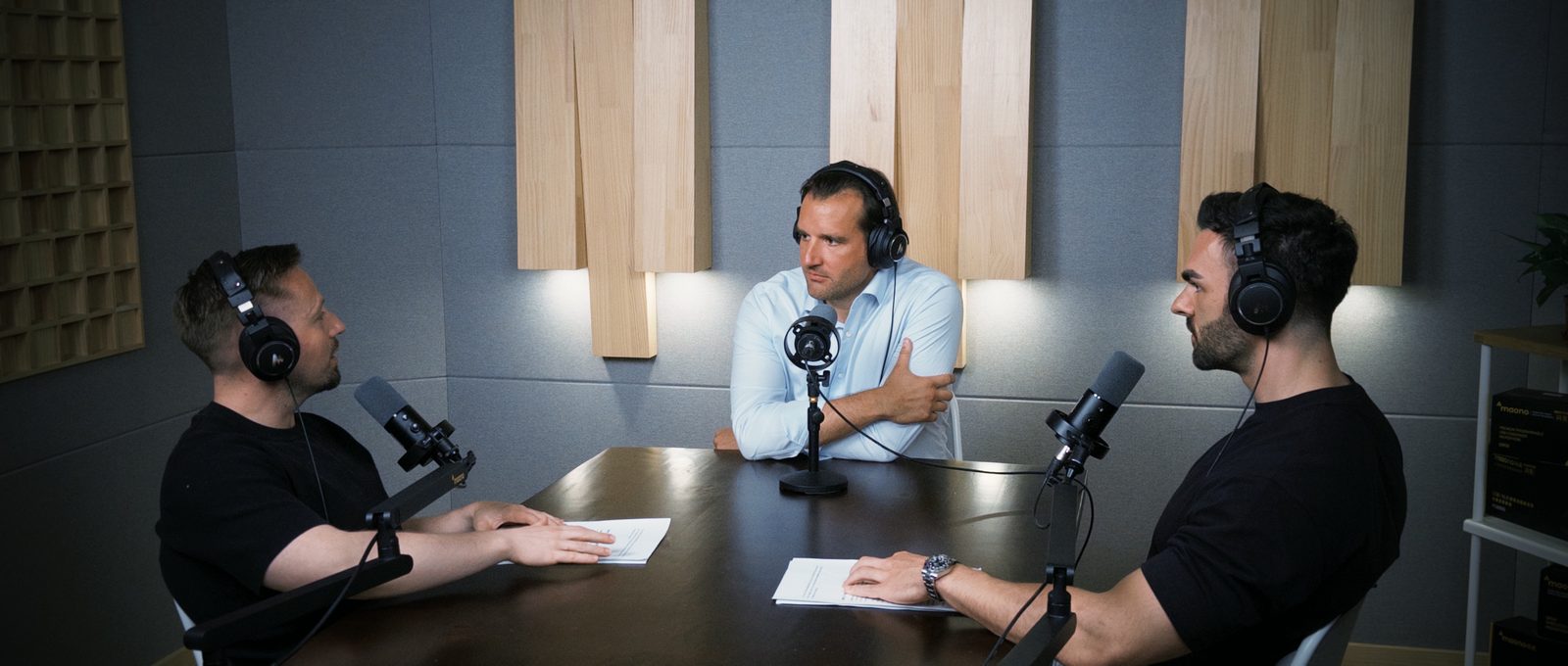
Brainwashed, Until He Built a Fund Instead
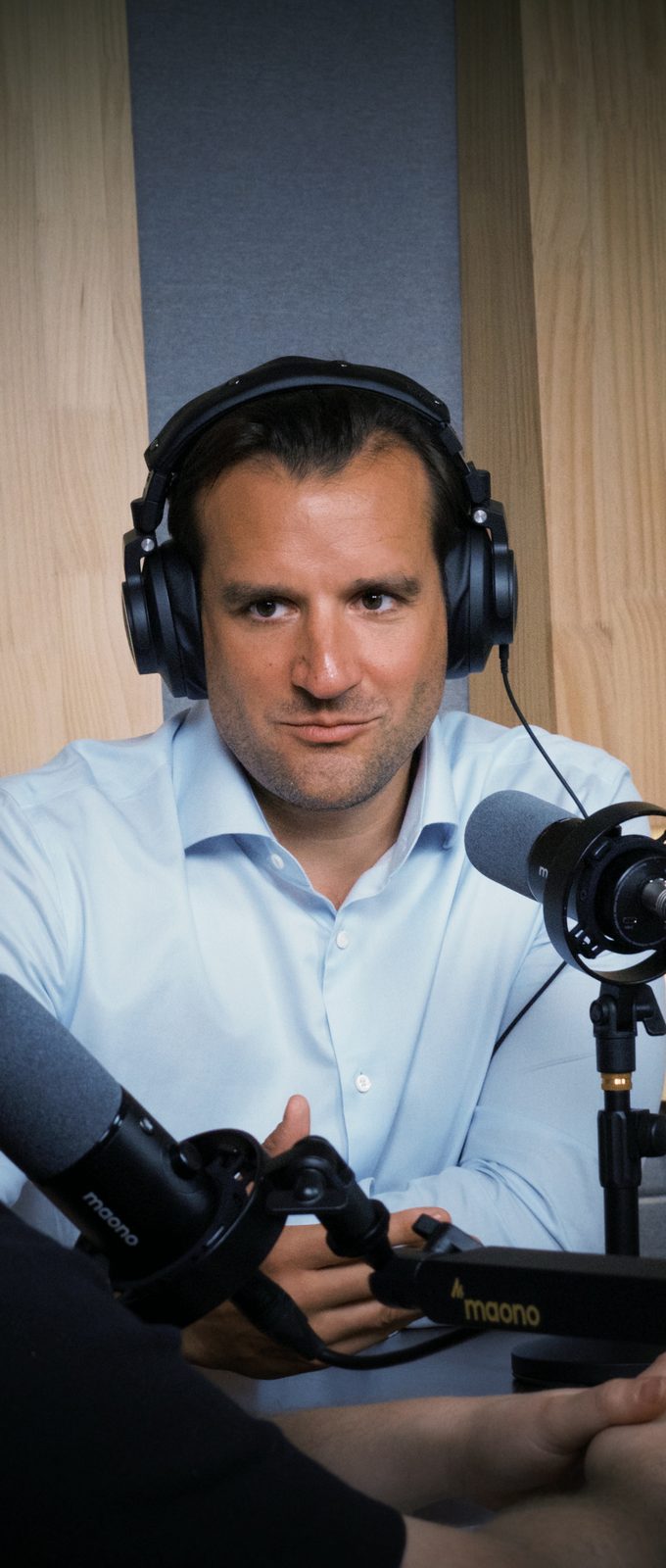
Rafael Ratzel opens with the moment a missionary turns into a fund manager. For years he had gone home to Europe trying to tell people what China is actually like, how nice the people are, how hard they work, how the country runs on a different operating system from the one Western media describes. During COVID those dinners stopped being conversations and started being arguments. Lifelong friends, the ones he had grown up with, leaned across the table and accused him of being brainwashed, of repeating propaganda, of having stakes in the party he did not actually have.
So he stopped talking. The pivot is the spine of the episode. If words could not move his own friends, money would. He decided to raise a USD fund, an instrument that would let his circle in Europe and the US put capital into real Chinese deep tech and watch the returns land in their accounts. The first dollar fund kicked off in 2023 and closed at the end of 2024 with LPs from Greater China, Southeast Asia, Germany, Switzerland, the Middle East, and a couple from the US.
A One-Way Ticket Into the Biggest Typhoon in HK History
Rafael was meant to go to St. Gallen. Then he wandered through an education fair in Cologne and ended up at a Hong Kong Polytechnic University booth where a recruiter put on a Hong Kong Tourism Board video. PolyU offered a full scholarship on the spot. His parents made the decision easy by booking the ticket one-way with one suitcase. The instruction at the airport was simple, do not come back with unfinished business. He landed in Hong Kong on the 22nd of August 2008 at age 19, on what turned out to be the last flight to land before the biggest typhoon in Hong Kong's recorded history.
The Lehman crisis hit a few weeks later. PolyU classrooms ran in an almost depressive mood, the city lost the cheerful confidence Rafael had walked into. He spent the next five years there doing an engineering and management double major and watching a country recalibrate. The framing he uses for the next two decades is three Chinese characters. The Chinese worker, the sweatshop years that built the foundation. The Chinese consumer, the Alibaba and Tencent IPOs of the early 2010s. The Chinese innovator, the period the rest of the world is now waking up to.
"If I help people in the West to make money in China through financial returns, by investing in real China technology, maybe then they will believe it. And they are now spreading the word in Europe, because they are considered not to be brainwashed."
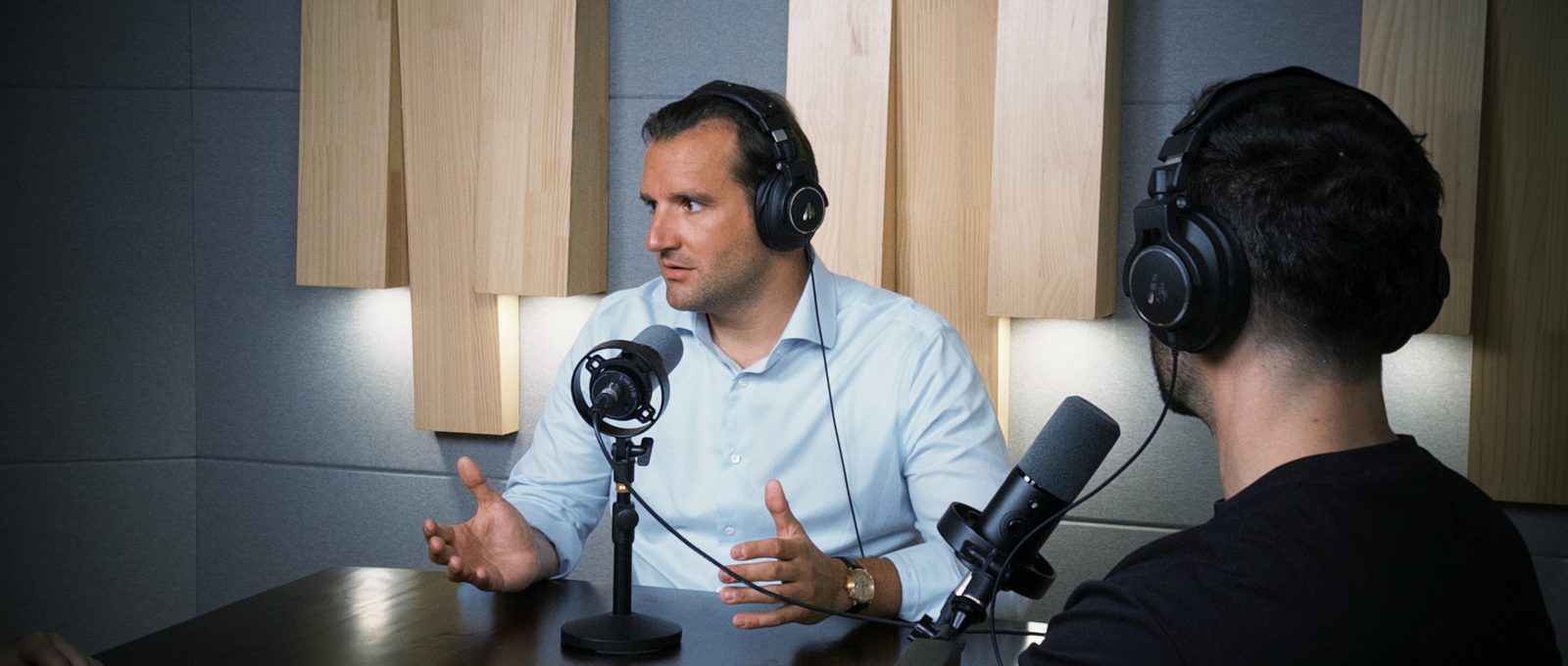
From a German Bar to a Heidelberg Press With Chickens on It
The leap from student to operator started at Bitpoint, a German bar in Lan Kwai Fong that served Bitburger on draft. Rafael was 19, standing at the bar, when a man in his mid-40s mentioned a problem in a Shenzhen printing factory. Rafael did what any 19-year-old running on Bitburger and self-confidence does. He said do not worry, I will help you sort that out. He took the MTR across the border the next morning. He walked into a factory with a five-million-euro Heidelberg 4-color UV printing press and chickens jumping around on the press itself.
Three ugly days followed. There were no video calls yet, so Rafael coordinated with German engineers over the phone, walked the line, watched the press, and did not leave until the press came back online. He invoiced from his personal account because he did not have a company yet. A few weeks later random people started calling him with the same opening line, we heard you are the guy in China who can fix any problem after three days of work. He registered a company and ran an outsourcing and tech-licensing business for six years. The business evolved from problem solver to trader to two-way tech licensing channel between Germany and China. Then one deal went terribly south and lost him everything he had made up to that point.
"I'm not leaving here before it's solved."
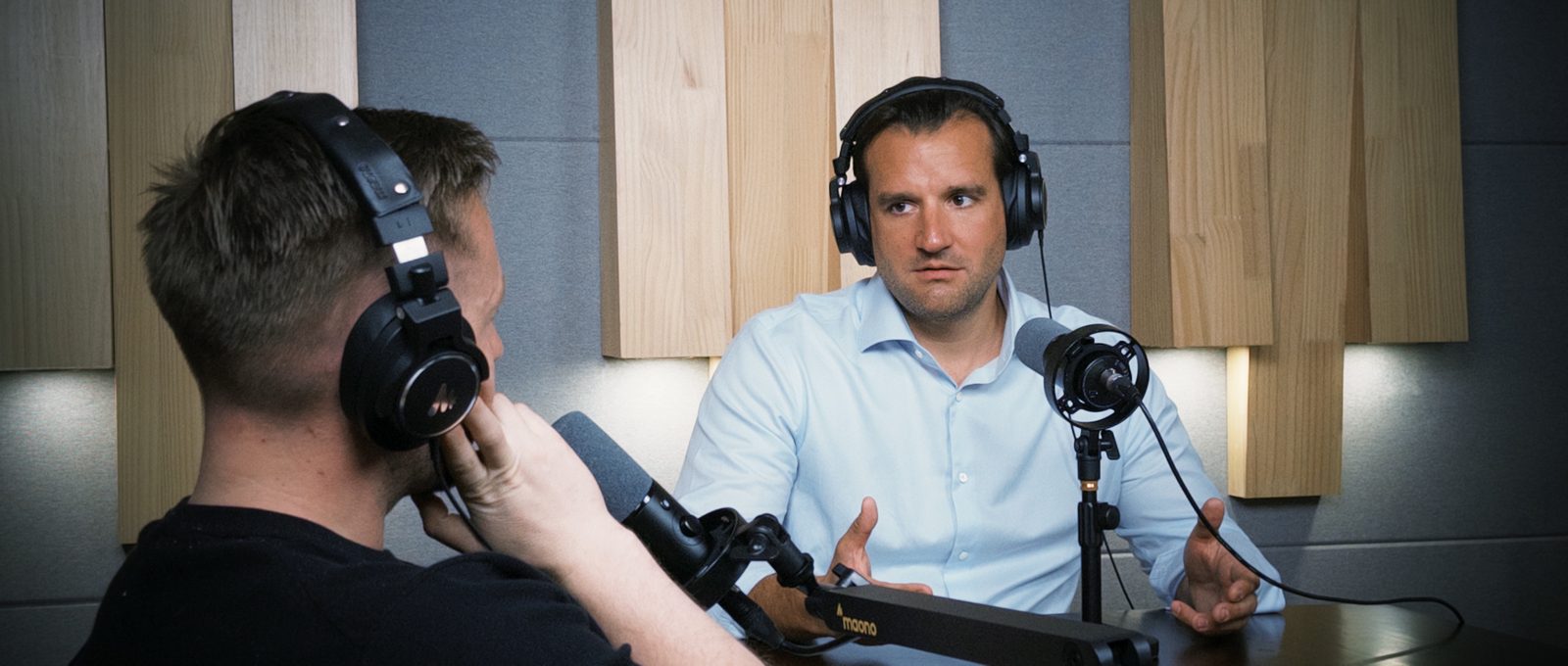
Tsinghua, the Boot Camp, and the Founder Who Said No to Big
The reset came through a Tsinghua MBA. Rafael met TH Capital's founder there, joined as a standard analyst, and explicitly refused the foreign-package shortcut. The mid-2010s were the era of HNA, Anbang Insurance, and CMIG dangling very, very attractive deals at foreigners to lead their cross-border M&A teams. TH Capital's founder said no to that game. The fund stayed mid-cap, stayed disciplined, and ran a six-month boot camp on the analyst floor for anyone who joined, foreigner or not. Rafael spent that boot camp not speaking much Chinese, writing 100-page industry reports on composite materials in aerospace fuselages.
The twenty-year thesis evolution of TH Capital tracks the Chinese economy more cleanly than most macro decks. Industrials in the early years. Advanced manufacturing in 2014 and 2015, the first wave of factory automation. Photonics and aerospace in 2016 and 2017, which is really just precision and advanced manufacturing under a different name. Then the 2017 Trump sanctions hit and the fund pivoted to the basic semiconductor value chain, fab equipment and specialty materials and simple chip design, the self-sufficiency thesis. By 2021 the thesis had moved into what is now called high tech, GPUs for AI, HBM, nuclear fusion as power supply, the deep tech stack the firm runs today.
"I never understood what the US was thinking. Restricting them just gave them more drive. They said, OK, well, we'll just make our own. It'll take a bit more money and a bit longer."
Zhipu AI Before ChatGPT
The clearest illustration of the TH Capital thesis is Zhipu AI. The fund knew the founding team at Tsinghua before they had even started a company. The founder is a Tsinghua faculty member. TH Capital invested at the angel round at a valuation of 800 million RMB, re-upped across five rounds, and watched the company IPO on the Hong Kong Stock Exchange with a 1000x oversubscribed book. The stock now trades at roughly 400 to 500 billion RMB, around 50 billion US dollars. All of this began before OpenAI shipped ChatGPT.
Zhipu's B2G business is local governments rather than military. The product helps municipal bureaus automate workflow, things like recycling permits and routine administrative paperwork, the unglamorous stuff that touches every citizen. The valuation gap Rafael keeps pointing at sits in the contrast between that kind of revenue and what Silicon Valley would price the same growth at. In public markets, the China discount runs around 3 to 5x. In private markets, 6 to 8x. At the first AGM in Shenzhen, a Saudi investor heard a RISC-V server chip company's valuation and said the same content would be valued 10 times higher in Silicon Valley.
Cross-Border M&A and the German Engineer Who Doesn't Know His Customer
TH Capital has run three cross-border M&A deals from China to Europe over the last decade. The cleanest example is Victor, a Xi'an-based photonics company TH Capital backed and IPO'd in 2021. On Rafael's advice Victor acquired a Dortmund company specialized in laser optics. The year after the acquisition the German team won the SPIE Award at Photonics West, the Oscar of the photonics industry. The capital, the customer access, and the patience came from the Chinese side. The talent and engineering DNA stayed German. The deal worked.
Victor still says he will never buy a German company again. Only because of the people, the resistance to change. Rafael relays the line without softening it, and then narrows in on what he thinks is actually happening. A Chinese entrepreneur, in his framing, knows exactly what the customer wants. A German entrepreneur knows every cent of every calculation of every component in every product, and does not know what the customer wants. The BASF anecdote is the punchline. BASF tried to sell its most premium long-life car color to BYD. BYD said no. Chinese owners change cars every five years, no one needs a 15-year color.
"Everybody can do due diligence, everybody can do a valuation. That stuff is almost commoditized. The real journey starts after you acquire the business."
Auswandern Is the Wrong Frame
Eighteen years in, Rafael refuses the emigrant label. The German word "auswandern" carries a one-way finality he does not feel. He is still in a European cultural context, still German, still proud of his passport. The international school his kids attend used to send its best students to Silicon Valley every year. Last year Rafael added a China trip alongside the Silicon Valley one and offered to host the group himself. Just tell me when you land and when you take off again.
The closing line is the one Thomas and Michael keep coming back to in the days after the recording. Rafael does not pitch Europe to come and visit. He does not pitch the US to come and visit. He pitches the inevitable. No matter who you are, no matter what you do, China is going to determine your future. You can't run away. You have to engage.
"As much as I hate to say it, I don't see Europe being part of this in the next 20 years."
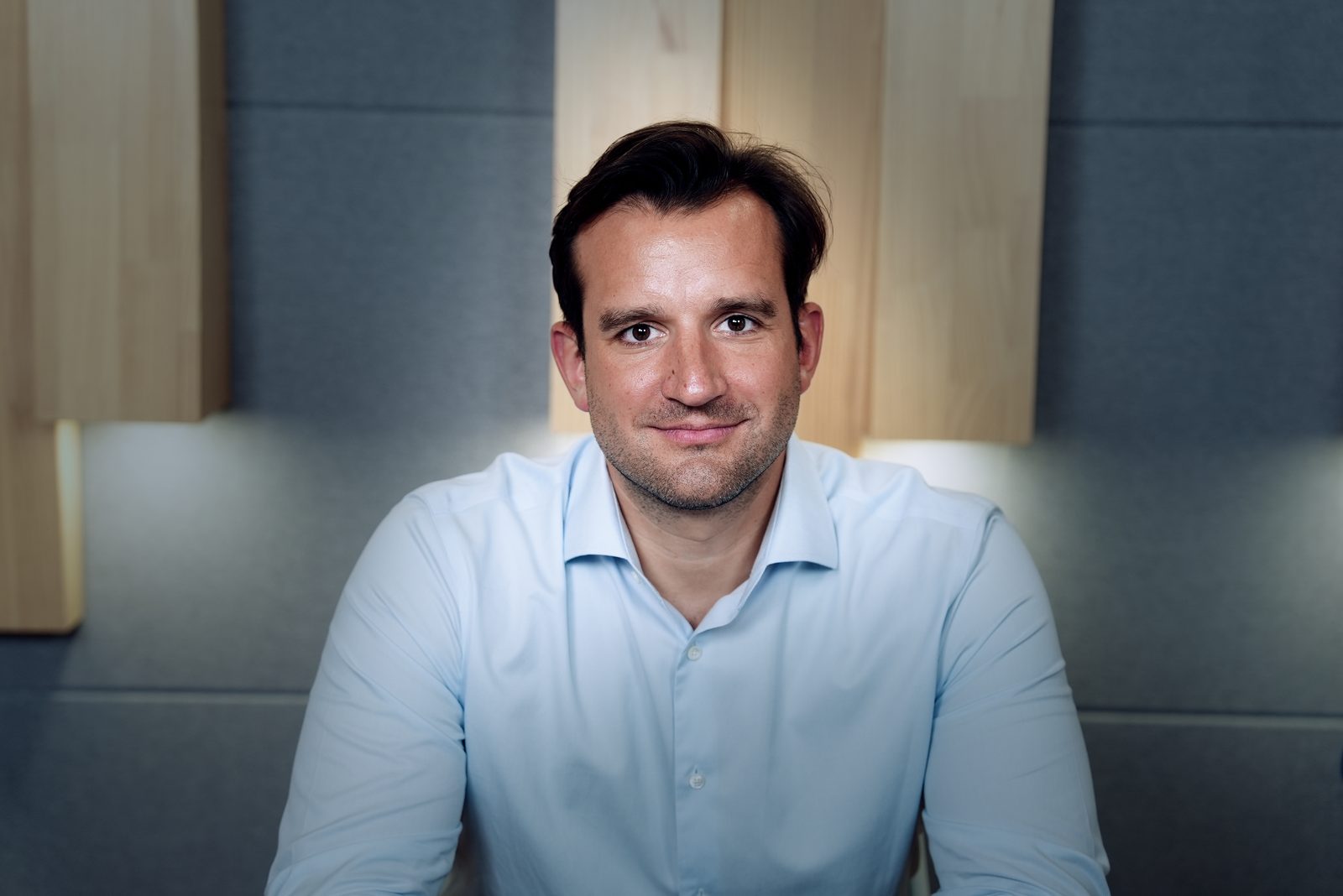
Rafael Ratzel
Rafael Ratzel is Managing Partner International at TH Capital (华控基金), a Tsinghua-ecosystem deep tech VC founded in 2007. The firm manages over RMB 10 billion across six RMB funds and one USD fund. The $100M USD fund closed at the end of 2024 with LPs from Greater China, Southeast Asia, Europe, the Middle East, and the US. Portfolio companies include Zhipu AI (HKEX IPO, 1000x oversubscribed), Aerofugia (eVTOLs), Neuracle (brain-computer interfaces), and Lanxin Computing (chip design). German, Rafael landed in Hong Kong on a one-way ticket at 19 in August 2008. PolyU engineering and management double major, Tsinghua MBA, MIT Sloan exchange. Hong Kong 2008-2013, Beijing 2013-2024, recently relocated. Eighteen years in China.
[00:00] I always tried to tell people about, you know, how great it is here. It's just not fair that people don't get recognition for this. During COVID, this became such an emotional debate. It ends up in almost arguments with friends. Lifelong friends. Right. And then they get very aggressive and say, well, you've been brainwashed. And, you know, this is all propaganda. I'm like, come on, man. Like, I don't have stakes in this party. Right. I'm just here telling you my experience. And people, it would get so emotional. At some point, I decided to stop talking about it.
[00:30] And then I said, you know, if I help people in the West to make money in China through financial returns by investing, to build a fund structure where they can invest in real China technology, maybe then they will believe it. And they are now, you know, spreading the word in Europe and they say, like, look, China is not what you think it is. And that's much more powerful than anything we ever can do, because they're, you know, considered not to be brainwashed. Yeah.
[01:00] Rafael Ratzel. Very German name. But we could all speak German, but today we want to speak English because we want to bring your story to the world. Sounds good. So welcome to the podcast. Thank you. And there's something that connects us , I guess we all booked a one- way ticket. One way. How do you say that? A one-way ticket to China. But yours was in 2008 already. Yes, yes, yes. Walk us through
[01:30] your journey and how you decided on this. Okay. All right. Well, I mean, I didn't think a one-way ticket was a good idea back then, but turns out, you know, it worked out quite okay. So what happened is I was supposed to go to a university in St. Gallen after I graduated from high school. And coincidentally, at an exhibition for universities, I ran into a recruiter from Hong Kong Polytechnic University. And he had a booth at
[02:00] that exhibition. And he was a very nice guy. Right. So I kind of , I sat with him, talked with him, and he showed me a really nice video. And, you know, at that time I was 18, I hadn't been to Asia. And he showed me this video, which I later found out was not done by the university, but the Hong Kong Tourism Board. And you know, the Hong Kong Tourism Board, they're very capable. Yeah. So I saw that video. I'd never been there, and I was totally hooked. And this guy said, you know, why don't you apply? And you're so nice. And I thought, you know, give it a try. And I totally forgot about
[02:30] it until three months later I got an email from the university and they said, you know, you're accepted, you have a full scholarship. And I said, why not? Let's go and try this, right? There was no downside. I mean, if you don't like it, you just come back, I thought. And then my parents, who didn't question my decision, but they made it conditional on a one-way ticket , they made me book a one-way ticket, they made me take one suitcase. And then when I left home, they said, don't come back with unfinished business.
[03:00] And that's how I arrived and landed in Hong Kong on the 22nd of August 2008. At 6:30am. And it was the last flight that could land that day because it was the biggest typhoon in Hong Kong history. Okay. And I landed in this city and on the plane next to me was sitting this German seaman who was going to start a journey on a cargo ship there, right? And I walked out of the building with him and he said, I'm going to go and have a cigarette. And I was so shocked by the jet
[03:30] lag and humidity. I said, I'll have a cigarette with you, even though I didn't smoke at the time , like, totally out of it. And then I took the bus into the city, which was on lockdown. All the windows were kind of taped up and everything was shut down. And I was like, oh my God, what did I do? And then I arrived and checked into the student dorm, which was a 12-square-meter room for two or three students together in one 12-square-meter room, which was very unusual for us from Europe. Right. And you're a tall guy. Yeah. So I showed up, I kind of boarded, and at 9am
[04:00] I was in this room, totally tired and exhausted, looking at my watch. Oh my God, this is another 12-hour day. And that's the only day I ever regretted coming here. And then the second day I met some neighbors and went to play basketball and we went out to have dinner, and never again. So thanks to Papa and Mama Ratzel for being so strict. Right? That's right, that's right. So what was Hong Kong like back in 2008? I mean, it was very different because
[04:30] in the early 2000s, those were the heydays of Hong Kong banking, the financial center, right. Kind of that international jet set that was arriving in Hong Kong. People going to Australia from Europe or going anywhere else would just stop over in Hong Kong for a three-day stay. That's when Lan Kwai Fong was at its peak. But it was also a time of the financial crisis, right? Exactly. So exactly in August or September. So I arrived at university and we're like,
[05:00] okay, this is great. And then the biggest financial crisis the world had seen, right? And then with that came like half a year of very high uncertainty, almost like a depressive mood across Hong Kong. But lucky enough for us, we didn't really, you know, we were too young to kind of understand the magnitude of that thing. But it obviously also had an impact on the city as a whole, right? So the whole nightlife scene and everything quieted down a bit for six months. But then, actually until today,
[05:30] it's quite surprising given how big and significant that crisis was, how fast everything recovered, right? Because in Hong Kong, half a year or a year after, there was basically nothing to see or hear of that crisis anymore. And that's when China really took off, right? When it went from just kind of, So when I look at China from the, you know, starting from the opening in the 90s and this economic liberalization, I kind of divide it into three types of China. And the first China is kind of
[06:00] what I call the decade of the Chinese worker. So everybody, when you talk about China in the West, everybody thinks about these people working away in these sweat factories, right, producing stuff at low cost. And then the second decade, or let's say the second period, which is like from the mid-2000s to 2015 or so, is the period of the Chinese consumer, right? And that's when it really took off. So 2010, 2012, that's when Alibaba, Tencent, all these
[06:30] big B2C companies went public, had like massive impact globally. And those were also the big days in Hong Kong, right? Like Hong Kong was just exploding in 2010, 2012, 2014. And then sort of the third decade, or the third period, is what I call the Chinese innovator, right? What's happening now? So we go from the worker to the consumer to the innovator. And that was kind
[07:00] of the time in Hong Kong. And that's why it was such a kind of an expansion and such a kind of a mindset of adventure, right? Everything was possible. In China in 2014, 2015, everything was possible. And then China started going into the world, right, with all this cross-border M&A. I mean, we talked about it and it just went crazy. And then Hong Kong changed a lot, right, in 2019. And I went to Beijing in 2013 and
[07:30] stayed there for 12 years until last year. But then Hong Kong changed radically. Right, because China changed and evolved and Hong Kong didn't catch up. So the Hong Kong business model didn't evolve fast enough to keep track. And then, you know, 2019, 2020, the whole thing kind of, But now this year and last year, Hong Kong became the hotspot again for all the IPOs. Like companies, mainland companies are lining up to do their IPO in Hong Kong, right? Yeah, 100%. So I mean, last year I think Hong Kong
[08:00] had something like 400 IPOs. It's the global leader in terms of number of IPOs, in terms of capital raised, and also in terms of kind of overall, you know, transition from private to public and bringing names out into the world for tech companies. And a vast majority of these IPOs were tech-related. And that's the story. So when you look at Hong Kong in 2019, you had the big protests, right? I don't want to go into politics, But you know, there's a reason behind
[08:30] that, and it's not what the Western media portrayed. You know, there were big kinds of societal imbalances. There was a lot of tension in Hong Kong as a city, but also as a society. And that just kind of all burst, right? Ignited or originated from specific aspects, but it all came out in one go. And that kind of made Hong Kong a kind of persona non grata, right, from a Western perspective. And right after that, or into that, came COVID. And COVID in Hong
[09:00] Kong was especially difficult because it was confined to just one city for almost two years, right. It's not even like China or a country where, like mainland China, where basically you could travel between cities, which is just one place. So it had an even bigger impact. And a lot of expats left, they relocated, were relocated to Singapore, and it was kind of sort of a double hit, for Hong Kong. And they had to work really hard to reinvent themselves and to kind of
[09:30] also reinvent the business model of Hong Kong. Because when I was in Hong Kong from 2008 to 2012, it always was the window to China, right? If you wanted to pay a factory in Shenzhen, you had to go through a Hong Kong bank and they would transfer it and transact there, and all the stuff would come in containers to Hong Kong harbor, and one of the big operators would then ship it into the world. And then China started building its own ports and ship directly from Shenzhen, Ningbo,
[10:00] wherever it's made, they have their own banks, it all works. So kind of China built a door, so there's no need to climb through the window anymore, right? And then Hong Kong all of a sudden, okay, what do we do now? And after COVID, the government worked really hard and I think, in my opinion, did a good job to kind of work with the mainland government and to redefine their role and say, you know, what are we good at? What's our focus? And we have to move away from just being an intermediary, which is what they were before, and we
[10:30] have to provide more value add. So why don't we help build a capital market that is more accessible and more international than the onshore stock exchanges? Why don't we become a center for Chinese companies going out into the world? And over the last two, actually three years, they kind of refined that model. They started with all these conferences, they started with bringing capital back to Hong Kong. They started reforming the stock exchange to bring access channels and new listing standards that enabled younger, earlier stage
[11:00] companies to list in Hong Kong , things that were not as easy in mainland China. And at the same time, they also helped companies by being a center for internationalization, right? You establish a subsidiary, you work closely with Shenzhen, and then from there, from Hong Kong, you go out into the world. And that had a huge impact. It's exactly what China needs now. And you see it in the , I mean, we just mentioned, you look at the Liang Hui, so the big congress, right, in February, March,
[11:30] that clearly defined that for the next ten years they want the Greater Bay Area. And that's also a concept of that whole reinvention, right, or self-adjustment of their own model, this Greater Bay Area. So Guangzhou, Shenzhen, Foshan, Zhuhai, Macau, and Hong Kong, they will be the center for Chinese high-tech development in the next decade. It'll be an infrastructure hub that connects logistics, capital, and
[12:00] companies within one ecosystem, even though it's across two special administrative regions. And they said this is going to be our equivalent to Silicon Valley. And that's why Shenzhen has become what it is nowadays. And they've also mentioned clearly that they hope that Hong Kong can be the spearhead of this, to bring that tech hub into the world , products, technology, people , and bring the world's capital,
[12:30] mainly capital and talent, back into this Greater Bay Area. So that has led to Hong Kong just completely reinventing itself. And that has spurred this kind of growth over the last 18 to 24 months that you mentioned, which is the Hong Kong Stock Exchange bringing all these companies to IPO, and maybe last year was a bit too much and it'll be adjusted again. Right. So they've mentioned they are readjusting the listing standards, they're checking for higher quality. But you know how it is in China , a bit up,
[13:00] and down a bit, letting loose a bit, tightening up and it's normal. How do you think this will look like in like five years? The whole Greater Bay Area , will they potentially open up? If you look at it, if you look at what has happened over the last 10 years, it gives us an idea of what's going to, what's likely to happen over the next five or 10 years. And one thing is, what we'll see is an even further integration. Start with logistics, right? I mean, 10 years ago,
[13:30] if you wanted to come from Hong Kong to Shenzhen, you had to have a China visa, you had to get a special permit. It was like a long process and so on. Nowadays if you're a Hong Kong permanent resident, you get a special card where you just go through a face scan and you go to the mainland. Right. What's going to happen in five years from now? And this is already announced , they are establishing an immigration channel where with one check you get through both borders. I would love that. That's amazing. And it's just
[14:00] scan your face so you don't need to take out any card, document, or anything, just walk through. Yeah, right. So that's amazing. And they're going to have more checkpoints. They're going to have, you know, now you have the cross-border high-speed train. So we'll see more and more of that integration also in terms of physical kind of infrastructure. So Hong Kong has launched this Northern Metropolis concept, right. Where basically they're now investing, I think it's something like 300 billion Hong Kong dollars to develop a tech and
[14:30] science park or metropolis in the north of Hong Kong. So new territories that border the Shenzhen area, combining both areas. Correct. And so they said there's a pre-clearance channel which is a footbridge over the river, which is essentially the border between the two places where people who are registered and work there can just freely cross the border without having to go through some official check, customs, and so on. So you'll see more and more integration. And think about it long term. I mean, you wonder why is there a need
[15:00] to still have a border between Hong Kong and China? Right. And one key reason is if you look at the two places as an economic center, what determines the flow of goods and people , it's actually one key factor: the GDP, or let's say the wealth on either side, right? So you have a discrepancy or an asymmetry in wealth which would, if you don't regulate it, kind of naturally flow to balance it out. Imagine two water buckets, right? And then you break
[15:30] the barrier between them , of course they'll kind of level out. So what they're doing now, with the development of Shenzhen, Shenzhen is getting richer and richer, right? So at some point they'll have a similar level of wealth. And another question is the level of tax. So wealth is also very much in real estate price. So at some point that'll equal out, but then you come to tax. And Hong Kong has a very preferential tax framework, right? But here in the Greater Bay Area they're now starting to slowly adopt this. Right. So in Zhuhai, I think it's already 15% income tax,
[16:00] which is vastly different from Shanghai or Beijing. So kind of in the economic sort of compartment and in the tax component, I think they'll just start leveling it out slowly and it has to be a gradual process, right? You can't just do that overnight. And at some point, I mean, I wouldn't be surprised if we don't see any border between Shenzhen and Hong Kong anymore. Maybe in 10 years, 20 years, I don't know. But this will just become one large special administrative zone in the GBA, right? So right now you're obviously very deep inside the whole
[16:30] China business investing game. But it wasn't like this from the beginning. We just talked about it. You came here as a student, right, with a one-way ticket and your parents said you don't come home before you finish your business, and you still haven't finished your business obviously, because you're still here. So how did it start? You told us before it started at Lan Kwai Fong. Yes, yes, that's right. So I, in St. Gallen, I was supposed to study business, right? I mean when
[17:00] you're 18, you don't really know what you want to study, but business sounds cool. The problem was when I applied in Hong Kong, I didn't really know how it works and they have a little bit of a different terminology. So I ended up in engineering instead of business. Okay, yeah. And then I added a second degree, a double major in engineering and management. But with that background, I, we were out one night in Lan Kwai Fong, and it was a German bar, unfortunately closed down, but it was called Bitpoint.
[17:30] Because they would serve Bitburger on draft. And I'm at the bar ordering a drink, a beer, and next to me is a guy , a guy who kind of stands at the bar, and how it goes, like, you start chatting. My friends were outside, we ordered four or five beers. It took a while. And then he's like, yeah, you know, this and that, and problems in Shenzhen and the factory and so on. And I say, come on, it's Friday night, don't worry, I'll help you sort that out, right? He's like, oh, okay, great. So we exchanged
[18:00] information, and then actually the next day he wrote me an email and he said, yeah, by the way, you mentioned you can solve this, right? So when can you do it? And I , yeah, so that's how it started. How old was this guy? He must have been in his 40s, mid-40s. And I was 19, right, maybe just 20. And I Googled, I said, okay, so industrial printing, Shenzhen , what do you have to do? And then I just got on the MTR. I went to Shenzhen, I went to
[18:30] this factory and he told me what the problems were. I didn't really understand the details, but I thought it can't be that difficult, right? So I went to Shenzhen and I came to this printing factory and they had, you know, they had all the good equipment. They had a Heidelberg machine with a 4-color, 4-plus UV, plus all that other stuff. It costs like 5 million euros, right, a machine like that. But I came in and there were all these chickens jumping around on the printing machine, which is obviously very delicate, right? Because you press one button and it prints like 2,000 sheets
[19:00] an hour, right? Yeah. So I went to this factory and I said, look, I don't know how this problem is going to be solved, but I'm not leaving here before it's solved. And it was a very ugly three days, but we got it solved, right? And had the guy on the phone. It was before all these video calls and stuff like that, right? So the guy on , this guy on the phone, he's like, yeah, but then you have to check for this color and do a bit more on that button and send me a photo. And eventually we sorted it. So were the chickens part of the solution? No,
[19:30] no, getting rid of the chickens was part of the solution. And then I left and he's like, okay, great, so, you know, how much do you want for this? And I , well, again, you Google and you're like, okay, what do you charge for this? Per week? And I gave him a number and he's like, just tell me where to transfer it. You didn't have a bank account? No, no, it was just personal. And then at some point, like a couple of weeks later, I get a call from somebody random, and they said, yeah, we heard you're the guy in China who can fix any problem after
[20:00] three days of work. Yeah, that's right. And that's how it evolved. And then I, you know, I was like, okay, well, this is my offer. And he's like, yeah, sure, no problem, just get it done. And then one thing led to another. I registered a company and more people started calling. And then for six years I ran my own business, which in the beginning focused on outsourcing manufacturing from European companies and helping them solve operational problems in China. And later it evolved
[20:30] into not just being a problem solver, but actually starting to produce and own and trade products. And the more I did of that, I worked more closely with Chinese factories and companies. And then they started asking me, they said, well, can you somehow help us get technologies from Europe? Right. So I worked on a project with water filtration
[21:00] and they were looking to export products to Germany. So we helped them with that. And then they said, well, we also want to license in technology for filtration from Germany to use in the Chinese market. So it became sort of a two-way street. And that's what I did for the first part of my career, which was very much in line with industrial and systems engineering, which I studied. So, you know, process technologies, basic manufacturing processes, problem-solving and so on. And then something went
[21:30] like, one of the deals went terribly, terribly wrong. It went all the way south. And basically I , yeah, so I lost all the money I'd made up to that point, which was devastating at the time. But I think if you ever make a mistake like that, make it early. Yeah, because you know, when you're 25, it's kind of easier to digest. And I was anyway just about to start my MBA at Tsinghua, because I realized also that from a business standpoint, business understanding and management experience, I had to kind
[22:00] of get a better framework around that. Yeah. So that's how I went to my MBA. And then through the MBA at Tsinghua, I met the founder of the company I'm now part of. And then one thing led to another, and you end up in this China technology ecosystem. Right? Yeah. It's funny that you also solved the chicken-and-egg problem, and you were talking about the worker phase in China. But I think there are still a lot of people in Germany, or outside of China, that think China is still like
[22:30] this. Yeah, 100%. Yeah. Their minds are stuck. Yeah. The worker era , not even the consumer era , 20 years ago. Like you, you've been the workbench for so many countries for like 20, 30, 40 years, and still people think you're just a copycat making cheap products. I mean, I can tell you. So initially, right, the Made in China brand, like the mark, was meant to kind of signal poor quality. Right. Made in Germany ,
[23:00] the same. 100%. Exactly. Right. And it became a quality trademark. So when I , I had a course at Hong Kong PolyU where I did my undergrad, and it was a marketing course, and I chose , we could choose our topics , and at that time I chose the Chinese five-year plan, which announced the Made in China 2025 concept, which basically said we want to be , in 2025 we want to be at a point where Made in China is recognized for products that have technology,
[23:30] innovation, and good quality. But you know, I mean, this is all written down , it's so funny. The West kind of thinks China is a black box. It's the opposite. It's all written down, maybe in a very bureaucratic way, but it's all there, it's all in archives, even online now. Right. You can look up all of these plans. And I just looked at it from a marketing standpoint. And then I presented in class , people, my teacher,
[24:00] said okay, this is good. I showed it to people back in Europe, my friends, and they laughed at me. They said, oh, how can you be so naive to believe that they can do this by 2025? All low-cost manufacturing and so on. In 2024 I went back to them and I said look, we're a year ahead of schedule and the Germans are already totally scared, terrified by Chinese EVs. We all use Chinese phones, right? This is super interesting. The five-year plans. I love this topic because we wrote about it in our
[24:30] newsletter about tool manufacturing machines , it's always been an industry where Germany was the strongest, the biggest exporter worldwide of tool manufacturing machines. But 25 years ago it was stated in the five-year plan that China wants to be number one also , what date? I don't remember. And last year China actually overtook Germany in one of their core industries , tool manufacturing machines , exporting more than Germany. New export Weltmeister. Yeah,
[25:00] it is. I mean, you know, so again , I think yesterday or two days ago I read this, I saw the headline of an article about something, something , the China miracle. That's such nonsense. That's such a silly term. Always a miracle, or there's always a but. Yeah, exactly. How is this a miracle? 20 years ago they told you they'd do this, and then it's just 20 years of very hardcore, diligent execution, day by day by day.
[25:30] That's not a miracle. A miracle is when something unexpected happens. This should not be unexpected. This is written down. Yeah, exactly. Yeah, it's funny. Like, I'm also involved in a lot of cross-border M&A, and I talk to a lot of M&A advisors also from here and they tell me the same , like it used to be like this, that Chinese are buying technology from the West, but now they don't really care. I mean, we also organized these innovation tours, right, for CEOs
[26:00] coming to China. And this is also something that still blows my mind. Like, during COVID, China was the bad guy, everything was bad. Now, actually, Western CEOs are begging companies like Xiaomi or Unitree to see them, to have visits with them. And then the Chinese companies say, yeah, we are quite busy, you know. Then they tell us, show us the list. So it's actually crazy how this happened, how fast this happened. And so I ,
[26:30] when I met our founder in 2015 and talked with him several times before I joined, he told me, he said, I think in about 10 years the German automotive industry is going to be destroyed by Chinese. I wouldn't have believed it in 2015. No, I said, you're crazy. How can you believe this? We invented the car. He said, just wait and see. We're looking at this from a
[27:00] structural perspective and we're taking a strategic long-term approach. And to this day we always pull that joke. He's like, see, I told you. This is also something I learned. I'm now old enough to say I can look back at the last 10, 15 years, and this is also a period of time you need to look back on, right? So one lesson I learned is just zoom out more regularly, more often. Don't get caught up in your emotions or what's happening right now, because I would never have thought that China or the world
[27:30] would be in a position like this five years ago. But then it makes total sense. Or as you said, in 2008 Hong Kong was depressed. Now they're happy, but then they'll be depressed in five years. Again, you don't know. But zooming out really helps in approaching things , and as you said, the structural, analytical view on all these industries and on their development. And that's one of the massive advantages that the system here has. And it's not about right or wrong , I don't
[28:00] want to judge it, but it's an advantage that the system here has over our approach in Europe, because we are not willing to plan long term. And we're not able to plan long term because by default you have to think about the next election and you have to think about your next term as CEO and so on. We don't have incentives for long-term strategic development, which is the basis of all these things. You know, this EV industry in China , it's not a thing of the last 10 years. The first time this was discussed in the government as
[28:30] part of their strategic industrial initiatives was in the 90s, when they actually , I'm going to try and look this up after the podcast. I saw it sometime before, but I didn't make a note of it. So they discussed and said, you know, it's probably likely that we'll never be able to catch up and surpass Western nations in traditional internal combustion engine drivetrain technology , because that's like a huge
[29:00] kind of innovation and already at a very high level of perfection. Therefore, we should look for alternative drivetrain technologies and develop them from scratch with fundamental research, applied research, productization, commercialization, and try to find our own domain to be the global leader and then bring that abroad. And that's what they started, right? Because the EV cars of today are not a result of the last five
[29:30] or ten years of engineering. They are based on fundamental research that was done in universities on battery technology, on drivetrain technology, on electric engines 30 years ago or 25 years ago. And CATL did not just come up with the idea of a great battery, right? These are technology cycles of 10 to 20 years. So the foundation of this was laid much earlier than 2015, 2016. That's just when the productization and commercialization happened. So that's why I
[30:00] find it actually very weak of us in Germany to hide behind this argument: this is only possible because it's subsidized by the government. I mean, who's the biggest shareholder in Volkswagen? It's the state, the provincial government , Lower Saxony. How is their operation not state-subsidized? It's just a very lame excuse to avoid admitting that we missed the train and that we're
[30:30] not addressing the key issues that we have, that need to be solved in the long term , which is low efficiency, low labor input. We're talking about a four-day work week. We're talking about increasing pensions but reducing taxes. How is this supposed to work? You don't need to be an economist to understand that that doesn't work. But nobody wants to address these issues. Yeah, they are extremely comfortable with their situation. and they don't want to change. That's the biggest problem this
[31:00] morning. This morning in the Spiegel. So I still sometimes read German news, right? And of course you read quality news like Der Spiegel. And there was a video about this whole whale, right, that's like stranded somewhere in northern Germany, Northern Germany. And they interview people who are there watching it and suffering with it. And then one person said, yeah, so I find it irresponsible that the German government is not stepping in here and taking responsibility to save this whale
[31:30] and to come up with a solution. I mean, they are responsible here. And this is our mindset, right? We have this , as if the government were an all-round insurance for everything living within its borders. Right? No, it's not. I read a very interesting book by a German professor teaching at Hong Kong University. It's a German book called Die Weltnacht im Westen, the World after the West. And his conclusion was the biggest problem in Europe is that nobody has
[32:00] a clear picture in mind of what Europe should look like in 2050. And that's different in Asia and especially in China. Yep. I mean, you probably know that in China they have these. So, so we talked about five-year plans, right? They have these annual plans, five-year plans, and they have these 15-year visions. But they also have the centennial plans, 100-year plans that were written down in 1921. The first one which was the founding year of the Communist Party,
[32:30] and the second one which was written down in 1949, which is the founding of the People's Republic of China. And in these plans they said, what do we want to be like in 100 years from now? And it goes back to exactly what you said. Right? They said in 2021 we want to be a mid-income level country. And in 2021 they hit $12,000 per capita GDP plus or minus, which is exactly mid-level income in the global community. Right. And by 2049 they want to be one of the innovative leading nations in the world community. Guess where
[33:00] they're going to be. Yeah, right, exactly. What you said , nobody has any idea what do we want to be in 30 years, 25 years from now. And if we don't know now, we're never going to make it up in the next 25 years. Because these are cycles that take two, three decades to kind of forge the path. Right, yeah. It's just the outcome of the Chinese constantly studying the West, which is not the other way around. They are not studying enough what the people are doing here.
[33:30] And that's because they are , I don't know , either afraid of changing. It's arrogance. Yeah, yeah. Ignorance, or ignorance. Yeah, yeah. Why do I need to learn from you? I'm so much smarter. Right. Arrogance. Yes. You have chickens running around the factory. As you said, your boss at the time at Tsinghua University, what he did is what all the Chinese businessmen did. They study all the books, they read
[34:00] all the business plans, they read everything that Western entrepreneurs and successful people do and write. But it's not the other way around. I don't think that anyone in Germany ever read what is Lei Jun from Xiaomi thinking, or how is he developing a strategy, or like the BYD boss or whatever. They're not interested. Because also, you know, I mean, also on the government side. Right. What do people , so first of all, the number of people that come to
[34:30] China from Europe on a business or governance side, I don't know the statistics, but I'm very happy to bet on this , the number of Westerners, Europeans, let's say Germans, going to China for business and educational purposes as a business leader or government leader, is significantly lower, even adjusted for total population size, than the number of Chinese going to Europe. Because over the last 20 years, I have seen so many delegations from China going to Europe and wanting to see everything. Yeah. Learning, studying. And they didn't copy. They just learned. Right. And the other way around,
[35:00] what does a German government delegation do when they come to China? They spend the majority of the time telling them, you shouldn't subsidize this. You shouldn't do these kinds of human rights violations. And then they leave , they've only put across their message, but they take away very little, or maybe nothing. I mean, our Tesla , he went to the factory. Yeah. So at least, at least, at least. Yeah. But it takes some dancing
[35:30] robots to get their attention. It does, yeah. Yeah. But I guess China will always be the bad guy. Like we talked about it yesterday. And now it's China is flooding the world with cheap products, you know, so that all the other companies in the West don't have any chance. in the west doesn't have any chance. You have to be afraid. Now China is again the bad guy because they bring the cheap products. Yeah. But Germany was the world record holder
[36:00] in exports. Yeah. So German products were flooding the world. Exactly. We were not going to create a new balance in the world. Right. Yeah. We were called the champion, and now it's the same. It's like, oh, it's a threat. Yeah, yeah, exactly. But I guess, I guess it's also a good opportunity, because otherwise imagine if it wasn't like that , if there was no asymmetry in information, we didn't have much to talk about here and nobody would be listening. Yeah, yeah, it's super interesting and I'm very happy that we, that we talk about it. And so I would
[36:30] also be interested. Then you went from your MBA into the fund, into the VC investment side. The investment side, yeah. So how did this decision happen? What helped for sure was kind of the project that went bad. Right? Yeah. But actually my point was that I very much liked the idea of entrepreneurship and building something with your own initiative and under your own thinking. Right. But I also realized that in order to understand China better ,
[37:00] and until today I would never claim that I understand China. Right. Maybe now after 20 years, at least I know what I don't understand, which is already a huge step. It is. But nowadays everybody's a China expert on LinkedIn. Right. Like you see these guys who come for a two-week trip and then they're like, China expert now. Yeah. So I kind of said I've got to work for a Chinese company for a couple of years to just see how
[37:30] it is from the inside. And I decided to apply to four companies and speak with the fifth, which is the one I'm part of now. And I went to the four companies that were at that time the spearhead of international cross- border M&A. Right. From the China side, including HNA, Anbang Insurance, and a company from Shanghai called CMIG. And I
[38:00] decided to kind of see what they're doing, talk to them. And they were very actively recruiting foreigners at the time for very, very attractive packages because they needed people to help them do all this M&A abroad and do all the investment, the post-investment integration and so on. And then I met our founder and he had a totally different approach. He said, you know, I'm doing business in China, I'm investing in Chinese technology companies. At that time it wasn't high-tech. So China didn't have high-tech in '15, '16. Right. But I liked his mindset of,
[38:30] you know, being very specialized, having a very unique strategy and then being disciplined to stick to that strategy. He said we don't want to be too big. So the other four all told me, the bigger the business we do, the better. And he said for us it's about doing business well, not doing it big. And we were a small company then, so we were at about 20 people and a small office, nothing fancy. But I liked his mindset and he said look, if you want
[39:00] to join, you can join, but you have to join like everybody else as an analyst and there's no special package. And it was, you know, then you see what you can do. I have a platform. If you have ideas and you want to build, come and build, but there's no special treatment. And I liked that. I said okay, let's try this. And then the first six months were very, very hard. I mean I didn't speak much Chinese before that. And I went into an environment where basically, as part of an analyst
[39:30] in the industry research team, we were looking at medical devices, we were looking at the first generation of semiconductor equipment. We were looking at photonics, at aerospace. And then you have these people kind of hammering out these hundred-page research reports on composite materials in aerospace fuselages, and then they ask you for your opinion on this. I don't know, I didn't understand much. But I made it through that period
[40:00] and it was very nice because I have , until today, and back then, my mentor in the company, who's the co-founder, is a very, very supportive and critical person and he helped me a lot. So that six-month boot camp I went through was he helped me a lot. So that six month boot camp I went through was kind of the foundation of kind of his idea, which was to make or break me. And you know, like a good old German, I said I'm not going to quit because of, because you want me to. Just made it through.
[40:30] And then we started actually building kind of the, so I started getting familiar with what we, what we do, the industry we're in. So we do venture and growth capital for technology companies in China, and we have done that for the last 20 years, moving along the evolution of technology. Right. So 20 years ago it was industrials, manufacturing, then in '14, '15 it was advanced manufacturing. That's when they started with machine building, with automation, simple automation in factories. Then in '16, '15, '16, '17, it was kind of photonics,
[41:00] aerospace, which is, you know, a lot of it is just advanced and precision manufacturing. '17, '18. The first restrictions came from the US, right, under the Trump administration. And we started investing in the basic semiconductor value chain to become self-sufficient as an, as an economy. Right. So it was manufacturing equipment or fab equipment, it was specialty materials and simple chip design. Then in 2021 you moved into what's now called high tech. Right. So very
[41:30] advanced chips. So GPUs for AI, HBM, you have nuclear fusion as power supply, you have, you know, the whole value chain of deep tech. That's what we're doing now. And it's great because again from a 20- year time span, you can see that evolution. Yeah. And also the sanctions and the restrictions that played into the cards, right? Yeah, huge, huge. I mean, especially in semiconductors. I never understood what the US was thinking behind that effort. To say we restricted them from buying it. It's just
[42:00] like, okay, well, we'll just make our own. It'll take a bit more money and a bit longer time. But actually it just gave them more drive to come up with their own solution. Both from the government side, who think about it strategically. Right. But also from the people. And you talk to people here, they say this is ridiculous. Why would you restrict me from buying an AI chip or a GPU for my AI business? I'm not working with the Chinese military, I just want to build an AI company, and you're restricting me from buying this chip. So you know what?
[42:30] I damn well will build the best GPU here and show you that we can do it without you. It will take some time, but I will do it. And I'll do the same. Right? I mean, it's also a matter of pride and just saying, you know what? I don't need you. And that's what they did for the last 20 years. I've done it for the last 10 years. And we did a bunch of value creation initiatives for Chinese portfolio companies abroad. So we've bought a couple of
[43:00] businesses, integrated them, and then four years ago I decided, you know, also as part of COVID, China had an even bigger image problem, right, in the world. And I always tried to tell people about, you know, how great it is here, living here, working here, and how hard the people work here, how smart they are, and also how they're just nice people. Like as a people, the Chinese are just very nice. Like they're super hospitable, curious, curious. They have great humor.
[43:30] You know, it's just like, I don't know about you guys, but I never had, you know, or I cannot even think of negative times or incidents in my life here. Just in general, it's just been very welcoming. So I said, it's just not fair that people don't get recognition for this, right? And I told people about it. But then during COVID this became such a, such an emotional debate that I had dinners in Europe with friends or circles, and you go through it and it
[44:00] ends up in almost arguments with friends who've been lifelong friends, right? And then they get very aggressive and say, well, you've been brainwashed, and you know, this is all propaganda. I'm like, come on man, like I'm, I don't have stakes in the, in this party, right? I'm just here telling you my experience and people, it would get so emotional. At some point I decided to stop talking about it. And then I said, you know, if I help people in the west to make money in China
[44:30] through financial returns, by investing, to build a fund structure where they can invest in the real China technology, maybe then they will believe it. So that was kind of the origin of this idea. And we said, you know, we've always wanted to be an internationally recognized fund, and at the same time it would be a great way to show people what it's really like here. And we kicked this off in '23 and we closed our first dollar fund in '24. So we have an existing RMB business which is very mature. It's a mid-market, kind of mid-cap game.
[45:00] And then over the last few years I've built up the USD equivalent to that, and it's one strategy into the same portfolio. And it's great because we have the business going very well, we're growing well, the investments are doing well. And last year we had our first AGM. So it's an annual general meeting where we invite all the investors, and we have investors from Asia, from the Middle East, from Europe, from Germany, from Switzerland, a couple from the US, and we invited them to come over and we presented
[45:30] in Hong Kong all the financial performance, all the figures. And then I took them on a three-day trip through China. So we did Shenzhen, Shanghai and Beijing. And we visited, I think, 12 portfolio companies. And a number of these guys had not been to China and had never been to China looking at technology companies. And at the end of the trip they were all very surprised and they said, this is unbelievable. We never thought this, and we're so glad that we are part of this fund and we can
[46:00] really see how this has changed China and will change the world. And to me, that was actually the best, the kind of most satisfying outcome of this whole exercise. Of course, I mean, we're all here to make money, right? And we're going to make money, but that outcome. And they are now, you know, spreading the word in Europe and they say, like, look, China is not what you think it is, and that's much more powerful than what we can ever do, because they're, you know, considered not to be brainwashed.
[46:30] Yeah, yeah, that's what we. What we always say is that you have to come here and see it yourself. I mean, we can talk about it and still people will not believe it until they finally see it with their own eyes. Yeah, yeah, yeah. What is it they say in Chinese? It's like, yeah, yeah, something like that, right? Yeah. It's like walking a thousand miles is better than reading. It also means hearing it 100
[47:00] times is not as good as seeing it one time. So what I'm interested in , I just wanted to say you were very lucky, but it's definitely not luck, or maybe a little bit luck. So you also invested in Zhipu AI, right? Yes. So how did you know at that time that this was a good idea? Also, how do you use your instincts now to determine what will be the next Zhipu AI, or what will be the next industry or technology that will be very, very important in the next few years? Hmm. I think luck
[47:30] is always an element in life, no matter what you do. Right. In the end. You know, I think also when it comes to personal careers and personal success, it's always a combination of being willing to be adventurous, willing to take risks, working really hard, and then having a bit of luck, being at the right place at the right time. Just like the bar in Lan Kwai Fong
[48:00] at that time. And here we have kind of , I would say it's the same thing, having an investment like that. And for us, this will be , I would say, no, this will definitely be the best deal we have ever done. We started to invest in the angel round. We re-upped five rounds subsequently, and it went IPO in Hong Kong. So we started investing at a valuation, I think, of a billion , no, 800 million RMB , and it's now trading at 400 billion, 450 billion something. 500. 500 for the initial transaction,
[48:30] right? Yeah. Oh, yeah. 50 billion USD. Oh, yeah, yeah. So, but it goes back to what we discussed earlier. So the way we look at and the way we approach our investments , our fundamental approach is top-down research. So we look at industry fundamentals and industry development. So for every fund generation we define these areas. Right? Right. Because as I told you, over 20 years it's changed. Right. So we cannot be, you know, in Europe you have PE funds who do automotive
[49:00] investment or investment in the service industry and they do that for 20 years because things don't change a lot. But here we do technology and hard tech investment. And every four or five years, the underlying technologies and trends are evolving. Right. So from aerospace to photonics to semiconductors to quantum computing. So we define these areas for every fund vintage. So what we look at now is energy supply, computational supply and applications, which is, in the end, AI, robotics and so on. Now within these areas
[49:30] we have an in-house research approach that goes top down and looks at, within energy supply, what kind of types of energy supply do we have? We have traditional energies, we have renewables, we have the new energy technologies, nuclear fusion, nuclear fission, energy storage, energy distribution, and then we break it down into very specific segments. And we did the same with Zhipu. So we invested in Zhipu before the whole OpenAI ChatGPT happened.
[50:00] Right. And actually we knew Zhipu before it was Zhipu. We knew the team of Dr. Zhipu at Tsinghua University before they even started their business. But as a bigger part of this application segment, we looked at how artificial intelligence will evolve , and back then it was still kind of machine learning, not AI as we know today. How will that evolve over the next years and who are the top researchers or teams working on this within China?
[50:30] And we identified one of them, which was the team that then founded Zhipu. And they were still at Tsinghua University. So we knew them, we got in contact with them and we decided that they have the underlying basics that it takes , meaning the innovation capability, the scientific and technological knowledge, and also the business drive and acumen to create something that'll be groundbreaking. And that's why we decided to back
[51:00] them from the beginning. And there are also a number of other companies who did similarly well. Right. But in the end, our approach is not built to identify the moonshot company or moonshot deal of tomorrow. That happened and it's nice and it's great, but that's not what our business is built on. Our business is built on , and our methodology works , to in a sustainable and replicable manner identify
[51:30] companies that return 3 to 5x across our entire portfolio and make sure that very few, if not no, companies go bust. And then within that approach, okay, you occasionally have a company that returns 10x, 20x, or like Zhipu, maybe 50 or 100x, but that's out of the ordinary. And these kinds of things cannot be planned. But at the same time, we were convinced that these guys can do something extraordinary. Nobody expected it to be that extreme. Also, just as a disclaimer, it wasn't my deal, so it's a colleague of mine
[52:00] who did it. But I think, you know, it's a deal that shows that a systematic and disciplined approach can work and sometimes it kind of exceeds expectations. And then also, like talking about Zhipu and also Minimax, like they have different approaches. Right. Zhipu is more on the B2B side, which is also something that you focus on. Right. B2B and B2G. Going back to the debate of, you know, how things work here, I mean, when you talk about B2G, people think, oh, maybe they're helping
[52:30] the Chinese military. No, they don't. What they do in B2G , and these are clients of theirs , are local governments. Just like Shenzhen, right, where you guys probably know better than me how efficient it is to do anything here nowadays when you go to public service outlets. Yeah, right. Registering a company can now be done at an interactive kind of vending machine. Right. And these local governments go to Zhipu and say, help us improve our service workflow for people that come to the,
[53:00] you know, municipal bureau for recycling and want to get a permit for whatever, trash pickup. Right. And then Zhipu builds applications and helps to integrate their models into the local government workflow so that, you know, it can be all automated, it can be more interactive. And in my opinion, this is B2G, but in a good way. Yeah, definitely. I would imagine this would happen in German municipalities too. Stupid. Yeah, yeah, that's really,
[53:30] that's really great. But how do you see these valuations of these companies now? Like, Zhipu also had a loss in 2025, like 300 million or something. So first of all, I think, you know, when you talk about AI, I mean, this bubble. Yeah. I mean, of course there's a lot of stuff happening which might not be sustainable. Right. And you always have that. It's always hype. Yeah, yeah. But that's also one
[54:00] reason why I told you, we're not just looking at AI, we're actually looking at the things that enable AI, which is energy and computation, which is very important. So if you just look at AI, it's going to be high risk, high reward, but very high risk. Because these valuations, in the end, the question is how much of it is storytelling, how much of it is actual growth that can be sustained in the future. And you've seen this in other industries. Same in the Chinese EV industry, right. A lot of over-
[54:30] creation, a lot of OEMs, 100-plus OEMs, of which most of them will go out of business eventually, and it'll be the same here. So I mean, how do you justify the valuation of a company like that on the stock market? I think the fundamental winners, like Zhipu, like others, their valuation compared to OpenAI or to Anthropic, right. Those guys are trading at close
[55:00] to a trillion dollars, which is 20 times the valuation. Of course they also have different growth in different markets. But still, I think China as a whole in private markets and in public markets. So we looked at this in public markets , the valuation delta is something like 3 to 5x from China, China being below the US, and in private markets, it's something like 6 to 8x valuation markup between the US and China. And
[55:30] when I brought those investors to the AGM here in Shenzhen, we were at a company not far from here. They do RISC-V-based server chip architecture, sorry, RISC-V architecture-based server chips for high-speed, high-volume data transfers in big data centers. And we brought our investors, and one of the investors from Saudi, who is also very active in Silicon Valley, said , sorry, the company was presenting , said, I think
[56:00] I might have misheard something earlier, but what was your valuation? And then he said, that can't be right. There must be a conversion mistake here. It's like, nope, it is. He said, well, in Silicon Valley you could be valued 10 times higher with the same content of what you're presenting here. So they are better at storytelling in Silicon Valley. Yes. And I mean, at that stage, you know, a lot of it is very hard to quantify. So here we see a huge markup in valuations.
[56:30] I think there's still a lot of room to go higher in general. Some sectors are of course already very hyped, but I don't think we're in a bubble scenario where everything is overvalued. Some things are overvalued, some things are at value, and some things are still undervalued. It's just about identifying the different buckets and making sure that you build a portfolio which mitigates those risks and gives you a better risk-adjusted return.
[57:00] So that's kind of our approach. For specific companies, I think, you know, at that stage, these companies all make a loss because they're heavily investing in R&D. And I was at Zhipu last week, Thursday, and super impressive what they've built up. And they will keep investing and they will keep making losses. And if you look back , I don't know if you've seen it , there was an interview with Jeff Bezos with one of the talk show hosts in the early 2000s, right. And he's like , I don't understand, it's on YouTube , he's like, I don't understand,
[57:30] your company's making a loss and your valuation keeps growing. And then Bezos says something like, yeah, we're really good at making losses. People believe in us, we are the best at making losses. Exactly. And now you see where he is, right? Yeah. You've got to spend money to make money. Yeah, for sure. That's true, that's true. I mean, the public market is also very crucial right now for most of the Chinese companies. Right. 100%. Just to be seen, also on the global picture , it's credibility to your customers, it's credibility on the global stage.
[58:00] And it's also more funding. The private markets here still don't have enough money. I mean, there's not enough private money in private markets, which in itself is a huge opportunity. Right. Because in other geographies the markets are flooded with money. So here you still have this valuation opportunity. You have capital benefits. So if you do have capital and you can invest,
[58:30] you can actually get into very good deals before they go public. And I think it'll be like that going forward for another three to five years, because it's been such a drought of capital over the last five years. And talking about the hype, also, as we said earlier, zooming out will help because AI will not be gone in five to 10 years. Right. So that's also something to keep in mind. Sure. Some companies will be gone, or a lot of companies will be gone. Maybe the same in robotics, but it's definitely not
[59:00] a hype. So in 20, 50 years or 100 years, robots will also be here. Yeah, yeah. No, actually, absolutely. I mean, this is. We're now looking at what will be something like the fourth industrial revolution. Right. This is not unstoppable. It's going to evolve. The question is just in which direction and who survives the evolution. And I can tell you, I mean, as much as I hate to say it, but I don't see Europe being part of this in the next 20 years. Right. We're running behind and there are very
[59:30] talented and smart entrepreneur scientists in Europe. But I think we are just missing it, and there are some people who are trying to change it and I have huge respect for them and I think they're doing the right thing. But we're missing this structural approach. We're not giving a regulatory framework, a financial system, an ecosystem that can foster. It's like, think about it, think about trying to grow tomatoes in Germany without a greenhouse. It'll never work. We are big fans of Neura Robotics in
[1:00:00] Germany. David Reger , I listen to his podcasts and he, he is the founder, right. And he's the visionary behind it. And he said the same thing, basically. He said, "I know Germany is the worst country in the world to build a robotics company, but I still believe and I want to change it." He said the ecosystem, the tax system, the entrepreneurial mindset , it's not there. Or it is
[1:00:30] there, but it's in a very bad state. But he still believes and he still wants to change it, and I hope that he will succeed. Of course, they have no understanding of how impactful the whole robotics scene is yet. Because as we said, there's no plan. Yep. Yeah, exactly. So you also did a lot of cross-border work , like you said, you were like a missionary going to Germany and telling them, "Please, you have to, you have to at least be interested in what's happening in China." But you actually
[1:01:00] made a lot of cross-border M&A deals, integrating German companies and Chinese companies. How did that work? It was very interesting. It was a lot of fun. It was very challenging. We've done three, I would say, cases in the first years at our company that all worked out successfully. But it's a very long and painful journey, and the reason is there's a very significant difference
[1:01:30] in how to do business. And again, nobody is right or wrong. It's just different. Yeah. And you kind of have to bridge that, and that can be very frustrating at times. It can be difficult. But if you are able to make it, you can actually create huge synergies. You can harvest a lot of things, or benefit from a lot of things ,
[1:02:00] additional value created that would have been left on the table. And that's more than just a language barrier. Right? It's not about translation, it's about business conduct. It's about strategy, it's about philosophy. And in 2017, we did a deal together with a portfolio company and one of the most , until today, one of the most inspiring founders I've met in China. His name is Victor and his company is in Xi'an. And they went public in 2021. They're doing really well. So I
[1:02:30] supported him in the acquisition of a company in Dortmund. His company started in the photonics business in high-power diode lasers. And so basically the laser is the light source, right? But the light or the laser that comes out is kind of very random, like very unguided. Right. So it's just like an emission of laser light. And we found a company in Germany that is an expert in beam shaping. So they
[1:03:00] helped to focus this laser into a directed beam with a specific purpose, and together you can create a system. And he found that company. We did due diligence, he acquired it. We put money into the Chinese entity to become a shareholder, and he used that money to execute the deal. And then we helped him with the post-investment integration, which is actually the most difficult part , because everybody can do due diligence, everybody can do a valuation. That stuff is almost commoditized.
[1:03:30] Right. But the real journey starts after you acquire the business, because that's when you have to kind of align both, and you have to kind of try to create one. And this was, I mean, that in itself is a whole podcast in itself. But it was crazy. I mean, in Germany, first of all, not only did we buy the company, we decided to give employment guarantees, take care of all the outstanding debt,
[1:04:00] and so on. For a company that wasn't doing well in the first place, we also further invested. So we grew the number of people employed in Dortmund. We invested into the local production and so on. But of course the media said, oh, now come the Chinese, you know, trying to steal our technology and yada, yada, yada. And within the business and within the company, it was unbelievable the kind of resistance you found,
[1:04:30] and not just resistance to China, resistance to change. The company had great engineers, great scientists, great, you know, a lot of people with PhDs. And the year after acquisition, it won the SPIE Award at Photonics West, which is like the Oscar of the photonics industry. It just shows how innovative, how smart they are. And then over many years, it actually turned out to be like Victor, who is obviously Chinese. But you know, he worked in
[1:05:00] the US for a long time and is an amazing entrepreneur, but also an amazing kind of engineer and developer. He has built this into a truly global platform. He's one of the few people that I've met who not just bought a company, but integrated the team to a level where his board of directors is now actually composed, I think, of two or three foreigners, even though he's running a Chinese listed company in the photonics space. So he's been really able to bring in that global thinking, global talent, and build. And then later he acquired
[1:05:30] another business in Switzerland and in Munich again. But he also told me at one point, he said, I'll never buy a company in Germany again. Only because of the people. Yeah, I mean, it's just that resistance to change. So the post-merger integration is basically part of the negotiations from the beginning. Yeah, it starts before you close the deal, right. I mean, you've got to get the right people on board. You have to get the people, and then you have, you know, works council, labor union, I mean, it's a headache. And also that's why we decided this business
[1:06:00] is not scalable. Right. You cannot build a fund model around it. And we don't need to, because our bread and butter business in China is doing so well that it would make a lot more sense to bring that to the world, or let's say bring global capital into that model and just keep building along that. But it was a great exercise to really understand how Chinese companies work, how European companies work, and how you can mitigate
[1:06:30] these kinds of things. Right. So even to understand Chinese entrepreneurs, right. I mean, I always say, as a joke sort of, a Chinese entrepreneur knows exactly to the detail what his customer wants. He knows what product he wants, he knows why he wants it, how he wants it, and he knows before the client knows what the client wants tomorrow. And that's the essence of business. Right. And he might not know all the details going on in the company, but then you talk to German entrepreneurs or company owners,
[1:07:00] and we've talked to a lot of them, including some of the ones we then acquired. And they know every cent of every single calculation of every component in every product. When we ask them, why did you develop this product? Yeah. You know, we thought about the coolest and most advanced thing we could come up with. And then we developed that. We said, oh, how did the sales go? Yeah. And it really didn't sell well. Said, have you ever wondered why? Well, you know, we talked to the customers and they said we really don't need a product at
[1:07:30] that level of performance. And it's way too expensive. Yeah, like, yeah, you know all the details of your own business, but you don't know what the customer wants. Yeah, we have a friend, we have a friend also who works at BASF, right. And they do the colors right. And they do the. The colors for the cars here. And they wanted to sell, like, the best color that they developed in Germany for, like, BYD here. And they said, no, we don't need it because it's too expensive. Like, people have their cars for maybe five
[1:08:00] years. We just need a color that has a life of five years. Then they change the car. So we don't need this extra 10 years. Exactly. That you're promised. Premium. I don't need that. So just give me a lower quality. Yep. Yeah, 100%. So huge difference. Right. And again, it's not one is wrong or one is right. But, I mean, you look at the outcome. So Victor will never buy a German company again. That's
[1:08:30] what he told me. I don't know, but it's time to ask him again. Will you ever go back to Europe? I think for me, you know, in Germany we have this term auswandern. I don't consider myself an Auswanderer. I'm not somebody who left his place of birth or his home. Because I also, you know, I think the benefit of our generation is we live in a world that's much more flexible.
[1:09:00] It's much more fluid. I also think. And without going into a philosophical question, right. But I also think that the concept of nationality is maybe a bit outdated. Right. I mean, what separates us being German from a French person that lives 20 or 30 kilometers from where my parents live, essentially with the same people. Right. Of course, Europeans might be different from Americans or Asians or Chinese or whatever, but I don't think I left my
[1:09:30] home because I'm still in a cultural context, European. I always will be European. I will be German. Of course, I live in China now and I love it. And I'm not. I don't see myself moving away from China, but I do enjoy Europe. I enjoy the culture. I think Europe is a place where. And I hope we can even further integrate as a European Union and European nations and work together even closer, because it's absolutely essential for our future. And I think there's no place in the world where
[1:10:00] you have such a density of. High density of cultural, geographical, culinary, language diversity anywhere else. And that's beautiful. It's amazing, right, because it just creates a very interesting and inspiring place to be. But it's. I would say Europe, for me, the benefit of Europe is kind of quality of life, you know, lower pace of life. So maybe at some point, and you know, like, all the culture, philosophy, and history behind it,
[1:10:30] it's important. At some point, you know, maybe with family or kids, you want them to grow up there for a couple of years to kind of also benefit from that. But if you ask me, would I want to go back to Europe and say I'll never come back to China, there's no way, impossible. Maybe I want to live in Europe for a year at some point, but I think. I don't know if I'll make it a year in Europe. Culinary density, I would debate you on that. I think you're
[1:11:00] right. You're right. I know what you mean. Yeah. Yeah. In Asia, definitely more dense. Even in China. China, right. Even in China. Yeah. So I was just talking to a guy yesterday, and he said, oh, yeah, I'm. I'm kind of wondering, like, what's. What's Chinese food like? And it's so different to what I imagined. I said, you don't have any. There's no Chinese food. Yeah. What is Chinese food? Yeah, that's right. But other than that, it's like, you're definitely right. Like, what we also hope to do with this podcast and with everything we do, it's not to show that
[1:11:30] everything is better here, but also to spark innovation in our home countries and in our home region and. And also facilitate exchange. Right. Yeah. And that's why. That's why, you know, I go back to Europe regularly, because if we. We want to build a bridge, if we want to connect people, we have to be integrated on both sides. Both sides. Yeah. Yeah. Because. And then that's the difference between, you know, auswandern and immigrating or. Or helping to. Or being part of two ecosystems,
[1:12:00] because we are here to be in both. Back in the day, immigration was, I'm leaving my home because I want to find a better place, and then I don't need to go back. So that. That concept in, I think in our generation, at least for us, maybe also because we're more fortunate than other people, doesn't apply anymore. Right. Yeah. Yeah. The way we talk about it, sometimes it feels like, okay, we're like pro-China. I mean, it's. It's. For us, it's. It's convenient to live here. Like, they have a great, it's a great lifestyle. But, but again,
[1:12:30] You don't have to become that China fanboy or Asian fanboy. It's just like, you have to understand, and that's something we want to do. So this week, the reason I'm in Shenzhen today is because this week I'm traveling with a European high school through China. And I met their headmaster, who's a, you know, very, very forward-thinking and smart guy. And he said, yeah, you know, for our best students, every year we organize an entrepreneurship trip to Silicon Valley.
[1:13:00] And I said, why don't you do a trip to China? He said, yeah, you know, it would be very interesting, but it's kind of very hard to know what to do. I said, don't worry, you come here, we'll make it happen. Just tell me when you land and when you take off again. And that happened for the first time last year, and happened again this year, and we hope to make it an annual thing. But the idea behind it was exactly what you said, we just want people. And I told the students every year, I said, I don't want you to go back
[1:13:30] and say it's the coolest thing I've ever seen and I want to live here and so on. I just hope that you can go back and say, look, this is very different from what I expected. This is interesting. I might not even like it. Not everybody has to like the same thing. Right. But I'm aware, and I will take it into consideration for my future, because no matter who you are, no matter what you do, China is going to determine our future.
[1:14:00] And in order to deal with that, we have to engage with it. You can't run away, you have to engage. Yeah. Rather participate than just close your eyes and not , exactly. And then in the end it's just... ...the bad guy from China who just , exactly. And we can do this free of ideology. Right. I know, in the end, it's mostly an economic topic. Yeah. So, yeah, that's what I think, but I think it's starting
[1:14:30] to open up more and more. We also work now together with university programs, bring people and startups here. They're like, they really want to see what's going on. And then we also work together with the National Innovation Center now in Vietnam as well. So they also want to collaborate and see what the main industries are and how they can adapt or, you know, be one of the first movers in their industry. Learning from China. I think now is a good time
[1:15:00] that this is happening , 100%. And that's also why , I mean, I told you before we started this, I'm actually very, very happy to be here today because I heard about what you guys do. I think it's a very important job, a very important part of this whole ecosystem, and I think it needs to be supported by all of us, because we can't just criticize. We have to take action. We have to be part of it, and everybody is a little part. I help people to make money and bring capital here. You guys help to engage and excite people through visits,
[1:15:30] whether it's business leaders or students or so. So I think, you know, all of that together forms a general effort to bring two parts closer together. Cool. Thank you so much. All right. Thank you. Good. Love it. Thanks for having me. This was amazing. Yeah. And talk to you in five years when you have your next big exit. Sounds good. No, I hope it doesn't take five years. Okay, sorry. Two years, maybe end of this year. End of this year. Talk to you again. Sounds good. Take care.
Get instant access.
Enter your email to unlock the full Asiabits report on DJI's alumni and the next wave of Shenzhen founders.


Get These Insights
Every Monday
Join 18,000+ professionals who stay ahead with Asiabits. Every Monday, straight from Shanghai.