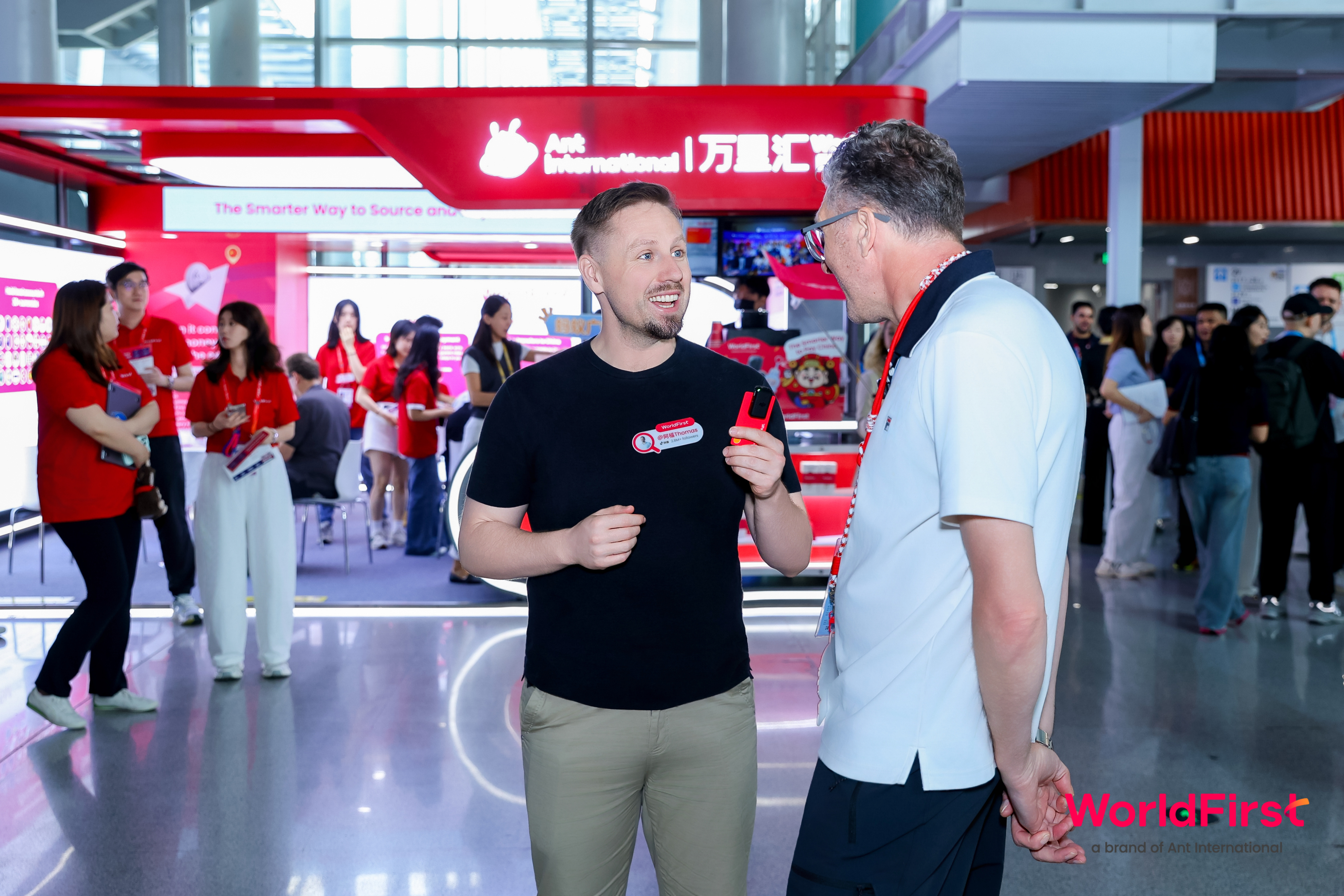
A founder from Belgium is deciding where to put his Asia hub. He was telling me this in Shanghai, at an event the city had built to make exactly that decision go its way.
Shanghai has been my home since 2016, and I know it works as a place to live. Whether it works as a place to start something is a different question, and this week it was being answered by people who had landed the day before. Founders from seven countries came to find partners, investors and customers.
Robots for the spaces people cannot enter
The Belgian founder runs a soft robotics company. His machines go into extremely confined spaces, the kind that are hazardous for a person to reach, or that no human and no current robot technology can get into at all.
The reason he came sits in the business model. The company works robot as a service, so the machines stay theirs. That turns Asia Pacific into a logistics problem before it is a sales problem. Somebody has to hold the units, ship them, service them, send them out again.
His answer to where that hub should sit was China, and inside China, Shanghai. He gave two reasons: the location, and the companies around it.
Safety for machines that move among people
The second founder I spoke to works at the other end of the same industry. His company makes autonomous systems safer, and his description of the gap was flat. When an autonomous machine meets a human, whether that machine is a vehicle or a humanoid, the safety is still lacking.
He came looking for two things. Customers in automotive and robotics who will put his technology into their machines, and investment alongside them. A few hours in, he said the resonance from both sides was already positive.
Two European robotics companies, both in Shanghai in the same week, both looking for the same thing. One wants the supply chain around him. The other wants the customers who are building the machines his technology protects.
What the city did in the first 24 hours
I asked whether the pitch came with anything concrete. The Belgian founder counted the support he had received in a single day, and put the government at the top of that list. Representatives came to him directly and said that if he wanted to develop the business further in Shanghai, they would help with it.
For a founder with no local network, that shortcut is worth more than the stage programme. You normally spend the first months working out who to email.
Recently I was in another country, also in this region. It was very difficult to discuss the same things with them. And here, this meeting has definitely, in my mind, strengthened the feeling that it has to be in China.
He did not name the other country and I did not push. The comparison is the part worth keeping. He was shopping the region, and the conversation here went more easily than the one he had somewhere else.
Why this should interest a European supplier
The second founder is describing a gap in machines that European companies are building right now. Autonomous vehicles and humanoids that work next to people need a safety layer, and he needs the customer who buys it. He came to Shanghai for that customer because this is where people took the meeting.
If you are the one weighing an Asia hub, look at what the Belgian founder is optimising for. Getting hardware to customers and back, at a cost that survives a service contract. That calculation puts you near the suppliers and the ports, and it is a different calculation from the one that picks a sales office.
There is an opening in this for anyone who supplies robotics hardware in Europe. The teams arriving here are small and they are committing to Asia before they have a partner.
What a good first day does not prove
Nothing I heard was a signed lease. Both founders were 24 hours into a trip the city had organised, on the day the city was making its best impression. An offer of help from a government representative is a sentence, and sentences are cheap until somebody files a form.
What I want to know in a year is whether that hub exists, and whether the safety technology ended up inside a Chinese robot or a Chinese car.
In the next video I ask an adviser who has been bringing foreign startups into China for decades which mistakes he keeps watching them make.
[00:00] Shanghai has been my home since 2016 and we all see it is an awesome place. It's a great home. But today I want to ask the question, is Shanghai also a great home for entrepreneurs, for businesses, for startups who want to start their journey here? >> Recently I was in another country also in this region. It was very difficult to discuss the same things with them and here this this meeting has definitely in my mind strengthened the feeling [music] that it has to be in in China. >> [music] >> Today Shanghai is pitching itself to foreign founders who want to come here. I met people from seven different
[00:47] countries who want to find partners, who want to find investment, who want to find business opportunities here and we will see how Shanghai is pitching itself to them. I am here with Jazz from Belgium. Can you tell us a little bit about your business? >> Yes, absolutely. So I am the CEO and co-founder of Zenit's AI, a soft robotics company where we basically build robots that can go into extremely confined spaces which are either hazardous for humans to reach or simply inaccessible by humans or any of the current robotic technologies. >> I am Lucas. I am co-founder and CEO of CogniBit. >> Well, we make autonomous system more safe. We see today that the interaction of an autonomous machine be it an autonomous vehicle, be it humanoid
[01:34] robots with humans is still lacking safety. >> What is your purpose of this trip right now? >> With Zenit's we are actually working with the robot as a service model. Since that is the case, it is important that we are able to build a hub where we can be basically can be the logistical hub for the company for Asia Pacific. That's my idea for China and more specifically Shanghai because of the location, because of the companies around and I think there is no better place to do that than China itself. >> I mean, I I see it in the last, you know, 24 hours, how many supports that we got from the government. >> We see, of course, support in business development. So, we are looking now for customers, for automotive, robotic companies that want to work with us, that want to try our technology to increase the safety. We also look at the same time for investments. And this is something where we see already now a lot
[02:22] of good, positive resonance after the first hours of being here. >> Today, Shanghai is pitching itself to foreign founders. How did they do? >> I think they did a great job. I was very impressive. Of course, the location is also very impressive, but everything that has gone on so far as of 1:00 today when we started with the pitching and coming here, it's always very impressive to see the simple size and scale of China as it is. >> And have you seen any very concrete measures, concrete actions they take to make life and business easier for foreign founders here? >> Absolutely. I think we had some people who represent the Shanghai government here, and they came to me right away explaining that if there would be any interest in developing the business further in Shanghai, they would definitely help out with that. And that was very very nice to see that.
[03:10] Recently, I was in another country, also in this region. It was very difficult to discuss the same things with them. And here, this this meeting has definitely, in my mind, strengthened the feeling that it has to be in in China. >> As a Shanghainese, I was so happy to hear that last sentence. [music] Shanghai definitely is a great place to live and to start a business. But like anywhere, there are traps. So, I met with Joey, one of the most experienced startup advisers in Shanghai, and asked him [music] which mistakes he has seen foreign companies make so you don't have to make them yourself. That's [music] in the next video. See you there.
Get These Insights Every Monday
Join 18,000+ professionals reading Asiabits. Free, every Monday, straight from Shanghai.
Subscribe Free →