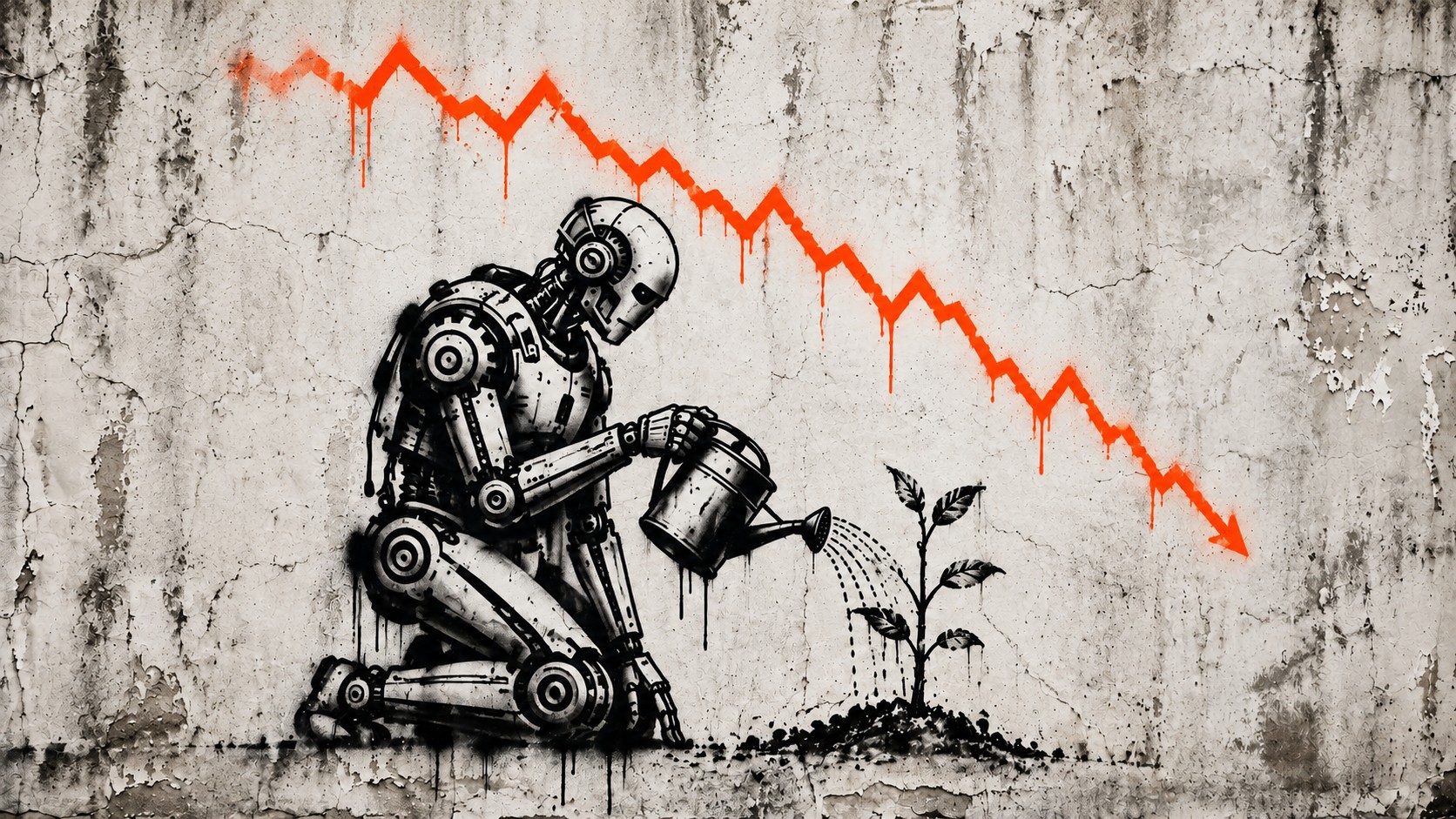
China’s AI boom has suffered a severe setback on the stock market. By the start of the week, the STAR50, an index of major Chinese chip and technology companies, was around 40% below its peak. About $480 billion in market value had disappeared in less than four months. Selling continued through the end of the week.
The slump hits China’s hopes of taking a leading role in AI and robotics. Investors had already priced in substantial profits.
State backing offered no protection against losses
One of those investors is Chen Wensheng, a small-business owner from the southern Chinese province of Hainan. He invested during the rally. The involvement of state-backed funds in companies such as robot maker Unitree gave him confidence. Now he and his friends are nursing losses, Reuters reports.
Expectations had run far ahead. Even after the fall, the STAR50 was still valued at roughly 100 times its companies’ past annual earnings at the start of the week. Share prices therefore continue to assume strong profit growth.
The prospect of further restrictions on Chinese technology in western markets is also weighing on the outlook. Companies investing heavily in new products eventually need enough customers to pay for their development.
Unitree sells more and keeps investing
Unitree’s latest results show the tension. Third-quarter revenue rose 70% year on year to 665 million yuan, about $100 million. Net profit fell by just over 17%.
The company had more than tripled its spending on research and development. Money is going into AI models, computing capacity and its engineering team. Demand is growing while Unitree spends heavily on its next generation of robots.
That can disappoint a shareholder. For the development of the machines, these investments matter. Share prices and technological progress are moving at different speeds.
AgiBot wants to measure the work robots do
Practical deployment is also receiving more attention within the industry. On Thursday, AgiBot introduced a new metric called “Worken” in Shanghai. It aims to capture how many robots are actually working, how long they operate without human help and how much useful work they complete.
It is a manufacturer’s proposal. The direction is revealing nonetheless: companies increasingly need to show what their machines can do in everyday use. The number of robots shipped provides little answer on its own.
A machine can already take on work while its manufacturer still faces high development costs. The benefits can reach businesses before manufacturers’ profits catch up with stock-market expectations.
Get These Insights Every Monday
Join 18,000+ professionals reading Asiabits. Free, every Monday, straight from Shanghai.
Subscribe Free →