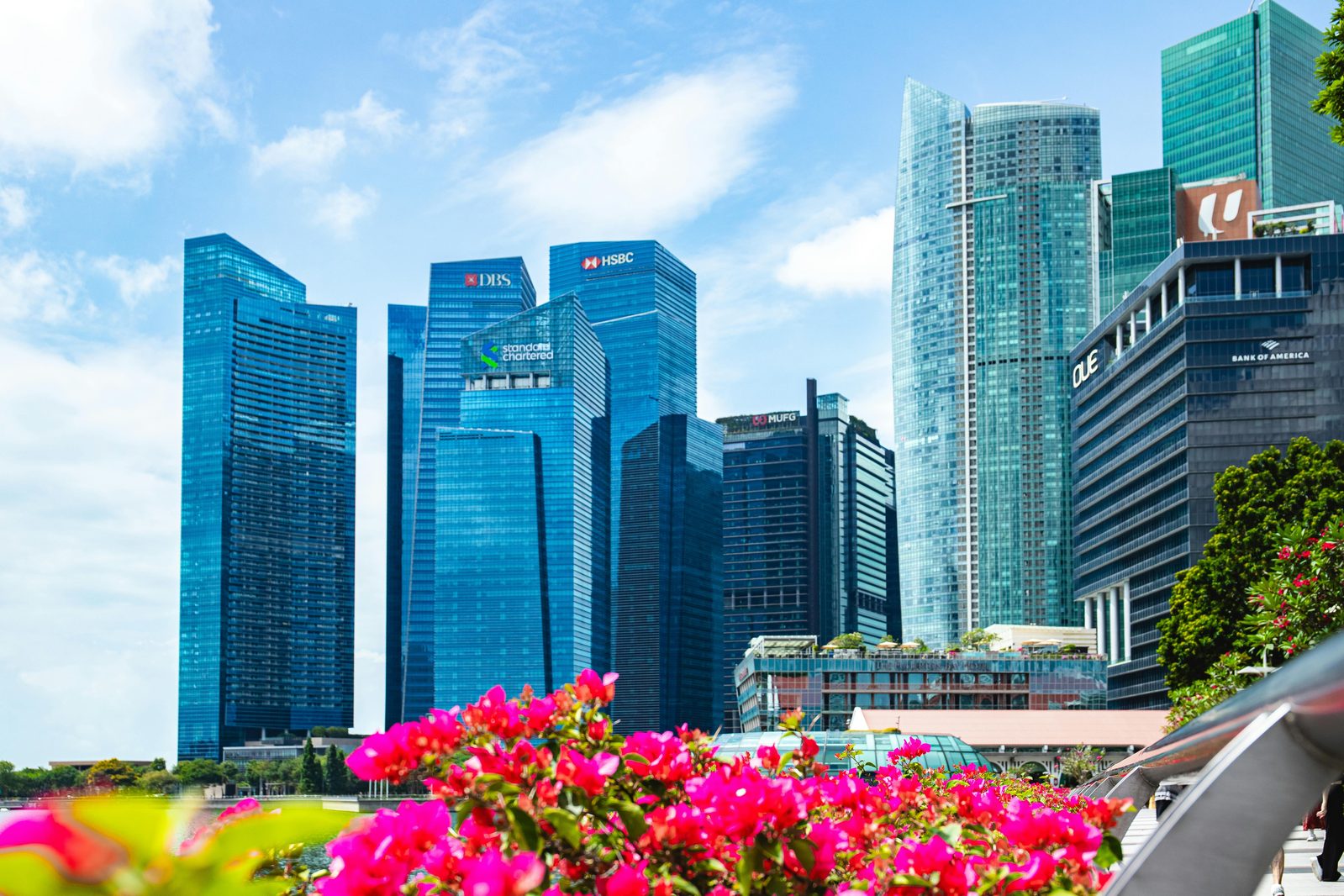
Singapore's OCBC posted Q1 net profit of S$1.97 billion, up 5 percent year on year and ahead of the S$1.88 billion Bloomberg consensus, with wealth management doing the heavy lifting. Group CEO Tan Teck Long used the earnings briefing to defend the bank's S$475.5 million premium for HSBC's Indonesia retail and wealth book, calling it a 'perfect fit' for OCBC's Next Frontier strategy.
The Details
Net profit Q1 2026: S$1.97 billion, up 5 percent year on year
Beat: S$1.88 billion consensus (Bloomberg survey of five analysts)
Net interest income: S$2.2 billion, down 5 percent
Net interest margin: 1.76 percent, down 28 basis points
Non-interest income: S$1.61 billion, up 23 percent, a record
Wealth management fees: S$422 million, up 34 percent
Non-performing loan ratio: 0.9 percent, unchanged
HSBC Indonesia premium: up to 6.5 trillion rupiah (S$475.5 million) on top of net asset value
HSBC Indonesia assets coming over: S$6.6 billion in AUM, 336,000 customers, 1,300 staff
Why the deal makes sense to OCBC
The HSBC portfolio is almost pure wealth and deposits, with only S$300 million of retail loans attached. Tan called it 'very clean,' meaning OCBC does not have to worry about credit costs or single-borrower concentration risk from the acquired book. The deposit base is heavy in Casa, the low-cost current and savings accounts that banks fight over.
OCBC is already one of the top three privately-owned banks in Indonesia, so it can plug the HSBC book into existing operations and pick up cost synergies quickly. DBS and UOB also bid for the portfolio, according to earlier reports, and both rivals have separately talked up their wealth hiring. Tan's response: competition is not new, and the exit of several international players from Asean has left the field less crowded for the locals.
OCBC kept its full-year 2026 guidance, with stable to growing income and a slight to moderate decline in net interest income, on the assumption of one US Fed cut in Q4 and Singapore and Hong Kong benchmark rates at 1.2 percent and 2.7 percent. The deal closes in Q2 2027.
Sources: Business Times Singapore
Get These Insights Every Monday
Join 18,000+ professionals reading Asiabits. Free, every Monday, straight from Shanghai.
Subscribe Free →