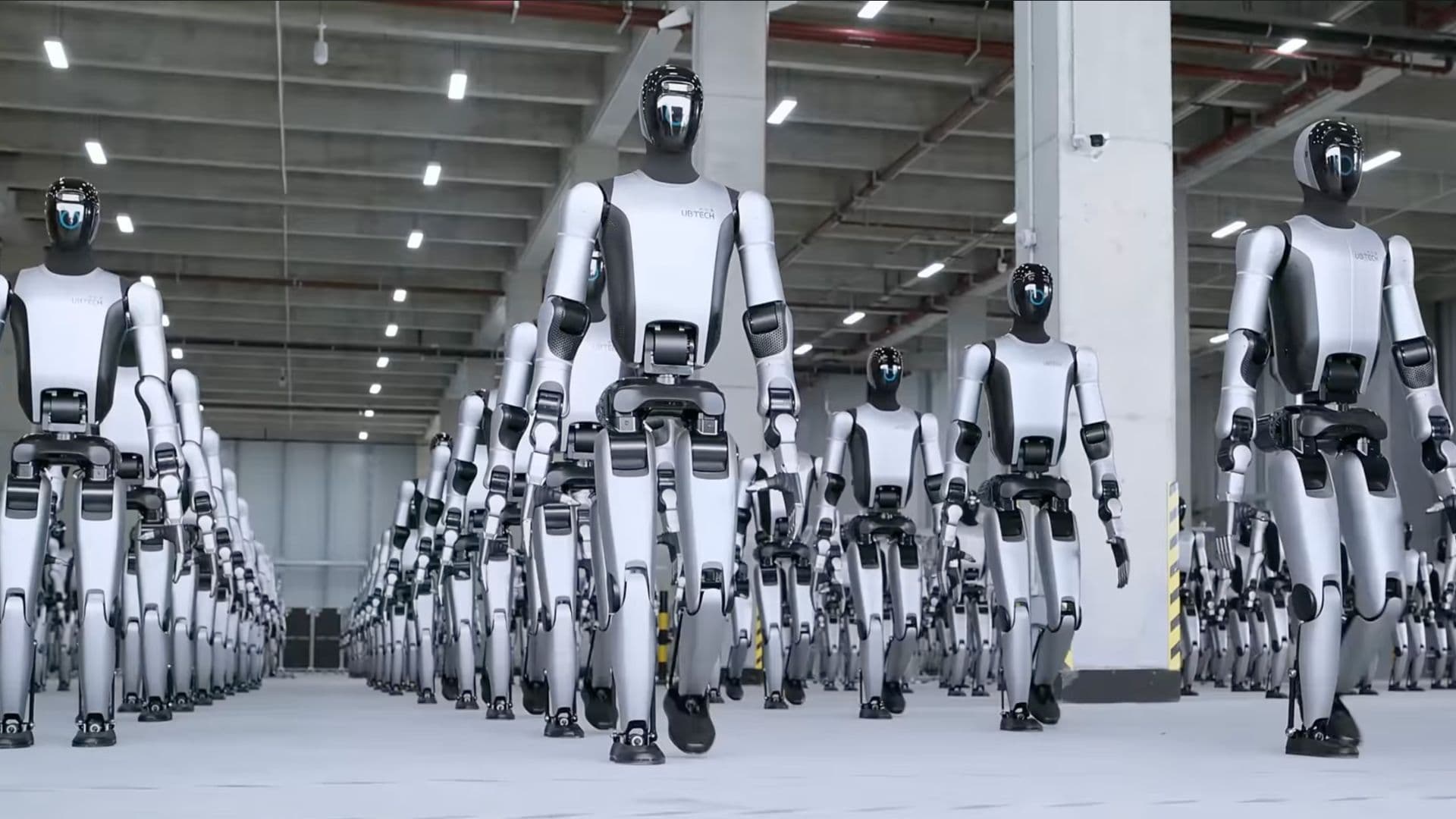
UBTech Robotics sold 1,079 full-size humanoid robots last year, generating $119.2 million in revenue from machines taller than 160 centimeters. In 2024, that number was $5.2 million.
The Details
Humanoid robots now account for 41% of UBTech's total revenue, up from a negligible share a year ago. The company calls it the "humanoid flip": for the first time, walking machines outsell everything else in its portfolio.
- Total revenue: $290.5 million, +53% YoY
- Net loss: narrowed 32% to $108 million
- Gross margin: improved from 29% to 38%
- Production capacity: 6,000+ full-size units annualized
The Walker S series, designed for industrial applications, was adopted across auto, electronics, and semiconductor manufacturing. Tasks include material handling, sorting, parts assembly, and quality inspection. UBTech claimed the "world's first mass delivery" of industrial humanoid robots in late 2025, shipping hundreds of Walker S2 units to partners.
Revenue from other segments tells a different story. Educational and logistics robots fell 17% to $91 million. Consumer hardware (lawn mowers, pool cleaners, vacuums) grew 6% to $72 million.
Unitree comparison
UBTech's 38% gross margin looks modest next to Unitree's reported 59.5% ahead of its IPO. The gap reflects different strategies: UBTech builds heavier, industrial-grade machines at higher cost. Unitree focuses on lighter, cheaper platforms with standardized components.
The margin math
Stock surged 17.1% to HK$100 on the results, though still well below the February peak of HK$156.40. The loss is narrowing, margins are expanding, and the revenue mix is shifting decisively toward the highest-growth segment.
At $108 million in annual losses, UBTech is still spending significantly more than it earns. At current trajectory, breakeven is at least two years out.
Sources: Yicai Global, Humanoid Daily, KrAsia
Get These Insights Every Monday
Join 18,000+ professionals who stay ahead with Asiabits. Every Monday, straight from Shanghai.
Subscribe Free →