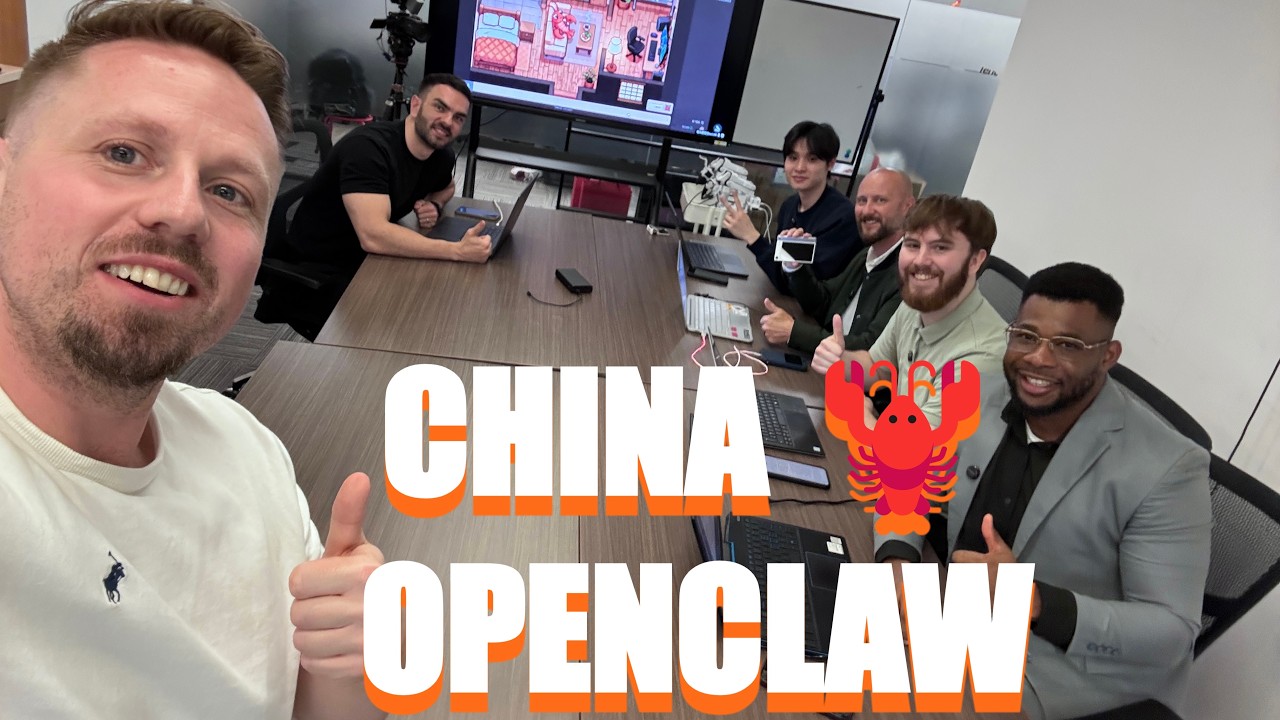
A professor from Cambridge told me she had been in China for less than 24 hours. She was already pitching.
We were standing at the WeStart entrepreneurial investment conference in Shanghai. More than 200 teams from seven countries applied. 21 were selected, and most of them work in two fields where China is very strong: AI hardware and biotech.
When I started my business here in 2016, I was one of very few Germans doing that. The Germans in Shanghai mostly worked for big corporates, the car companies above all. Founders were rare. In 2026 that picture has changed completely.
Cancer drugs for targets nobody could reach
She is a professor of computational and molecular biophysics at Cambridge and co-founded the biotech company the team brought to Shanghai. Her co-founder is a professor in Madrid who used to do research at Cambridge.
Their problem is a hard one. They develop cancer drugs for targets that are currently considered undruggable, and they get there by combining physics with artificial intelligence.
So why fly to Shanghai with that? One of them put it plainly.
They are pushing very hard and very fast with funding opportunities and partnerships to develop biotech companies. And we really believe that this is the place to be.
Their first day confirmed it. People wanted to hear about new ideas, and they could see how much money the government is putting into biotech and biomedicine.
A Brazilian founder with a German degree
The next founder and I found out mid-interview that we studied at the same university in Germany. He is Brazilian, and like me he now lives in China.
His company works on fish farming. China was a natural path, he said, because it is the biggest market and a living one. It already holds more than half of the world's fish market, and everything here moves fast.
The technology is smart feeding. Stress is the central problem in animal breeding, and feeding causes a lot of it. Take the stress out of feeding and the fish grow faster. In a real case in Brazil, the cycle went from six months to four.
I had to ask whether calmer fish also taste better. They do. Taste is closely tied to the stress hormone.
Help inside the first 24 hours
When I asked what support he got, the answer was practical. A soft landing, with a talent apartment and an office.
In 2016 I found my apartment, my office and my partners on my own. These founders had help with the basics before their first night was over.
For a small foreign team, every week not spent searching for a lease is a week with potential partners.
I also asked what he is looking for in China right now. Customers, partners or investors? "One bit of each."
What this means if you are building in Europe
The teams I met came with a specific problem and a specific technology, and they came to find the people who can take it to market with them. Shanghai puts the support at the start of that search.
If you run a company in biotech or AI hardware and you are weighing where your next partnerships come from, this conference is a good place to see who is arriving and what they bring.
One day is too early to judge how any of these teams will do. Which of the 21 sign a partner or close a round is what I want to follow.
In the next video, I ask more founders from Europe what Shanghai has to offer them.
[00:00] Why are two Cambridge professors coming to China to look for partners and investors? Why is a Brazilian entrepreneur leaving Germany for China? What are all these foreign founders looking for here? Let's find out. China and this area in Asia, they are pushing very very hard and very fast with funding opportunities and partnerships to develop the assets to develop biotech companies. And we really believe that this is the place to be. When I started my business in 2016 here in Shanghai, I was one of the few, especially coming from Germany, most of the Germans who work here work for big corporates. We know the automotive companies, but entrepreneurs, not so many. This totally changed in 2026.
[00:50] What you see in the back is the we start entrepreneurial investment conference. For this conference, there were more than 200 applications from seven countries and in the end 21 teams were selected and most of the teams are from two fields where China is very strong. Number one is AI hardware and number two is biotech. I'm Rosanna Kardo. I'm a professor of computational and molecular biohysics at the University of Camry and I'm also a co-founder of Pasikica Biosciences which is the company that we have brought here today. >> I'm Jorge Herren Spinosa. I'm a professor at the Computencia University of Madrid and former researcher at the University of Cambridge. >> So I'm very interested what problem does your company solve? So we are developing
[01:39] drugs for cancer drugs currently considered undruggable and the way we do that is by combining physics with artificial intelligence. >> So how different is life in China, business in China to what you imagined before you came here? >> Well, I've only been in China less than 24 hours. Okay. >> We have been welcomed really well and we are very excited. There seems to be a lot of opportunities and interest especially in biotech biio medicine which is our area. So what we see is that people is very interested in new ideas, innovation and it seems that the government is investing a lot of money on that which is a a [music] contrast to what we see in Europe. >> We just found out that we both studied at the same university in Germany at the Ru University Boom but now we both live
[02:28] in China. What was your decision to move here? China was a natural path for us because China is the biggest market and is a living market. So everything is moving so fast here and China already holds more than 50% of the fish market in the world. We are reshaping how fish farming and aquaculture is built by the smart feeding technology. Animal breeding is all about stress. We fix the main problems of the fish farming, the aquaculture industry by removing the stress from the feeding. So the in this way we can speed up the process from 6 to 4 months [music] is a real case in Brazil. >> So less stress means the fish tastes better in the end.
[03:15] >> Yes. Also this because the taste is highly related to the stress hormone. So what was some support you got from from the government or from the [music] organizations here in China? >> So uh first of all was like a soft landing with talent apartments uh office. >> So what are you looking right now here in China? Is it customers? Is it partners? Is it investors? One bit of each. Okay. Thank you so much and wish you all the best. When I started my business in Shanghai in 2016, I found my apartment, my office, and my partners on my own. These founders got support within their first 24 hours. In the next video, I ask more founders from Europe what Shanghai has to offer them. Some of the answers really surprised
Get These Insights Every Monday
Join 18,000+ professionals reading Asiabits. Free, every Monday, straight from Shanghai.
Subscribe Free →