A simpler gearbox shifts the challenge
Low-ratio designs use a stronger motor with less mechanical reduction. They shift demands toward magnets, copper, power electronics and cooling. A cheaper gearbox does not remove the engineering work.
Insights / Report review
A humanoid’s joint design determines where it needs precision engineering. Core Matter explains how the choice of motor and gearbox changes component costs and supplier requirements.
Read the original analysis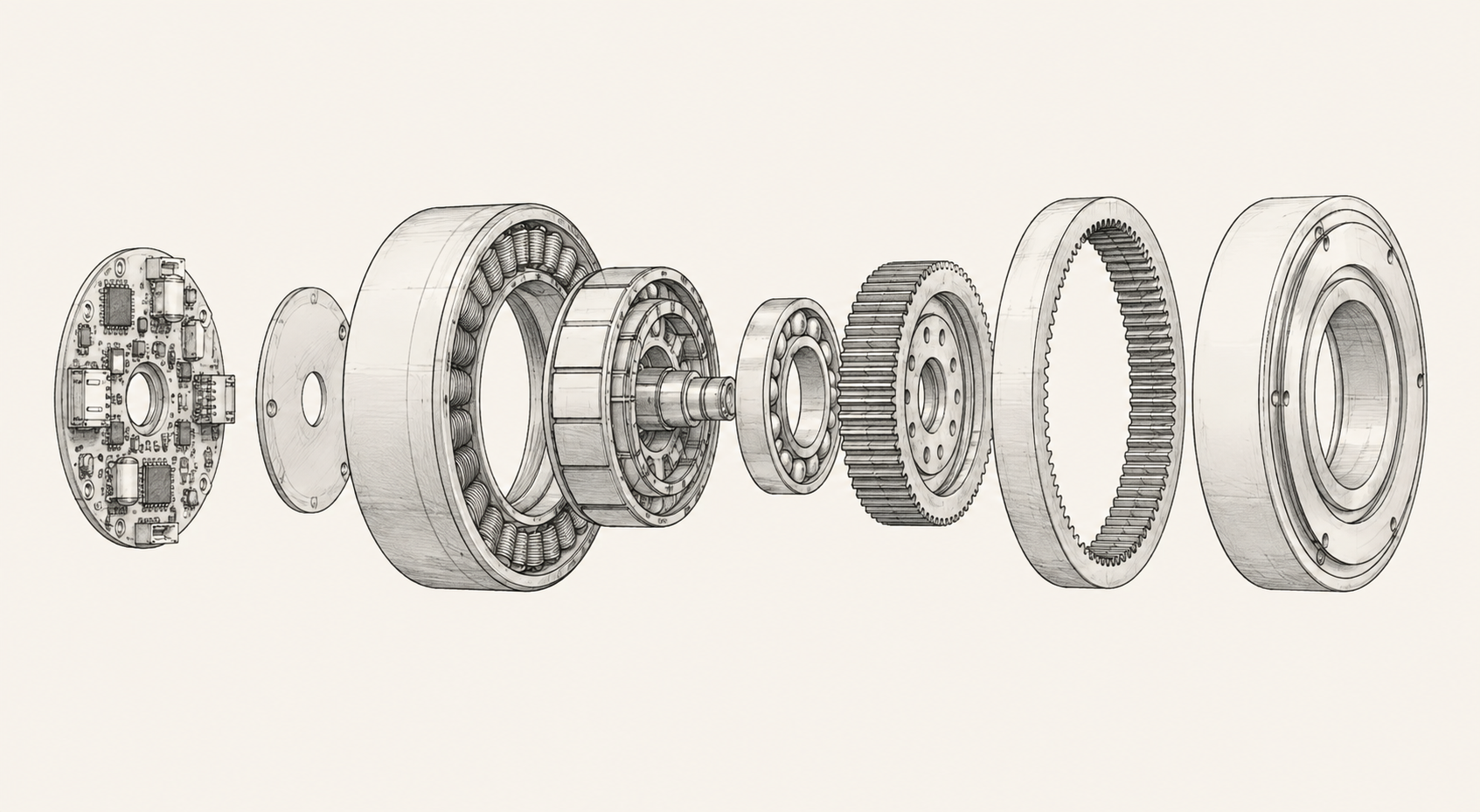
Low-ratio designs use a stronger motor with less mechanical reduction. They shift demands toward magnets, copper, power electronics and cooling. A cheaper gearbox does not remove the engineering work.
The Chinese robot maker combines a high-torque motor with a low-ratio planetary gearbox and rapid torque control. Core Matter uses this architecture to explain why different joint designs depend on different components.
Peak torque is available only briefly. For a supplier comparison, examine continuous torque, heat management, joint mass and impact tolerance alongside the headline specification.
Get insider access to Asia's biggest tech and business moves. Every Monday, straight from Shanghai. 5-minute read.