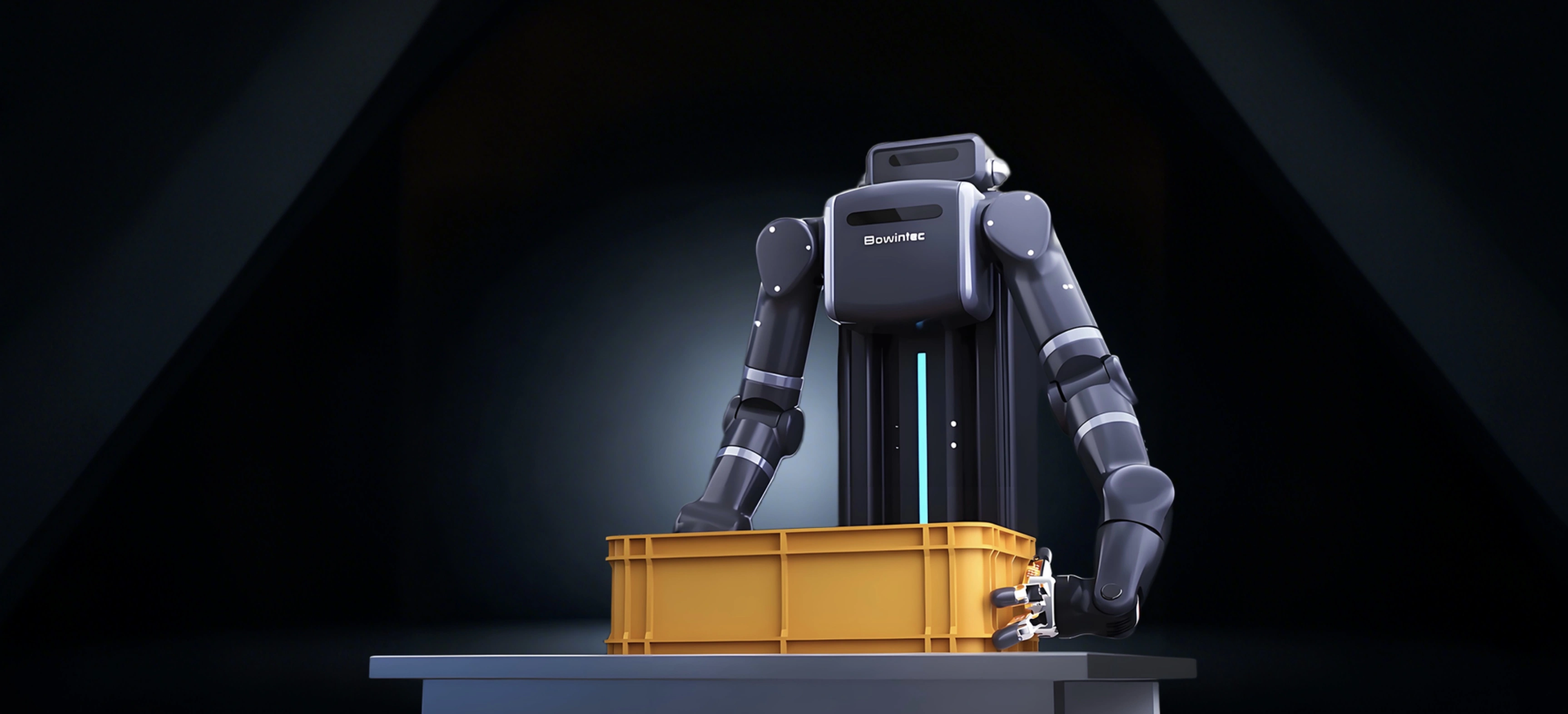
The United States has closed its border to humanoid robots built anywhere else. Around 85 percent of the humanoids shipped last year came from China, so we can drop the word foreign and say what this is aimed at.
The order did not come from the president. It came from the FCC, which decides what electronics may enter the country, and it covers humanoid robots built outside the US, four legged robot dogs, and the power inverters that sit inside solar farms and data centres.
What the ban stops
Machines already running on an American line keep running, and models the FCC has approved can still be imported. What stops is the next import of everything else.
That sounds mild until you know the release cycle here. Every robot maker I talk to in China ships a new version every six months, so the effect lands by year end. A US buyer keeps the fleet it has and cannot upgrade it.
The stated reason is national security. Think about what sits inside one of these machines: microphones, cameras, a line to somebody's cloud. On that point I do not argue. Beijing called it an overstretch and promised countermeasures.
Who this costs
America has two big humanoid names, Tesla and Figure. My own database holds around 160 Chinese robot makers, and the Chinese ministry expects the country to ship 100,000 robots this year. A Morgan Stanley report puts China's humanoid market at 15 billion dollars by 2030, which is three and a half years from now. Even the humanoid Nvidia built this year runs on hardware from Unitree.
The makers I speak to here are not nervous, because the US was never their first market. They sell most units at home, and their export list starts with Japan and South Korea, then Europe, the Middle East and Africa.
Which leaves buyers in Europe and the Middle East in an unusual position. You still have full access to the Shenzhen supply chain and your American competitor does not. That advantage has a shelf life of a year or two, until these companies have found their partners without you.
The car makers are the story under the story
A video went round claiming BYD runs 150 humanoids around the clock in its own plants and plans 20,000 units this year. It was convincing. I read the Chinese sources: BYD denies the 150 units in Changsha and Shenzhen, and denies the 20,000.
Stella Li, one of the company's leaders, put it like this.
The direction is right. We are putting a lot of emphasis on humanoid robots this year.
I take denials here with some salt. Companies would rather under promise than let a competitor read their roadmap. What is confirmed is enough anyway. BYD has a business division only for humanoids, it tests machines on its own line with Unitree and UBTECH, and the first robots go into showrooms this month as sales assistants. A Chinese showroom is a family weekend destination, so one robot there gets seen by more people on a Sunday than most factory pilots see in a year.
XPeng is the one making me recalculate. Construction on a robot production base in Guangzhou started in the first quarter of this year: 110,000 square metres, about 15 football pitches, with validation, trial production and full manufacturing on one site. The target is mass production by the end of 2026, at 1,000 humanoids a month. The startups I visit sold 20 or 30 units and hope for 100 this year.
I doubt XPeng hits that date. But if anyone reaches it, it is a car maker, because they know how to mass produce and they own the factories to test their own use cases in.
The price line nobody in Europe has updated
Most humanoids in China are rented rather than bought. That business started after Unitree's machines danced at the 2025 Spring Festival Gala and every company wanted one for its booth. Renting cost between 1,400 and 2,800 dollars a day. I checked JD before recording: about 150 dollars a day now, engineer included.
Purchase prices moved the same way. A Unitree H1 sold for 90,000 dollars. The G1 launched at 16,000 and goes for around 13,500 direct today. The R1 came in July 2025 at 5,900, and there is a version at 4,900 now. One year to go from 90,000 to under 6,000.
People read the cooling rental market as a bubble deflating. I read that price line as the best indicator we have for how soon these machines turn up in a hotel or a home.
The detail I would watch instead of the ban
Samsung hired the executive who ran robotics strategy at Hyundai Motor Group, the owner of Boston Dynamics, launched a humanoid division called RX in July, and set up research hubs in four countries, China among them. At BYD and at XPeng the setup is the same: the humanoid division reports straight to the CEO. When a robot programme sits with the CEO rather than inside R and D, the budget behind it is not pilot money.
Whether a closed border helps Tesla and Figure or makes their components more expensive, nobody knows yet, and rules written with exemptions tend to get rewritten. Samsung needs no lecture on manufacturing and still put researchers inside China. Anyone who wants to work with these companies can walk in today, and it is easier this year than next.
[00:00] The United States just closed its borders for foreign humanoid robots. This covers all robots that are produced and built outside of the US. And we all know that 85% of the world's humanoid robots are built here in China. So, this is a very interesting story to watch. Because we also know that [music] Chinese robots have the best prices. In China, you can buy a humanoid robot for a couple of thousand US dollars, while the Americans ones don't even publish their prices. I'm very interested to see on how Europe and the European buyers will react. Today, I want to find out with you, does a ban like this help the American [music] humanoid robotics
[00:48] industry, or will it be a problem for them? Let me know what you think of it [music] in the comments. The next story I want to talk about with you is BYD. We know BYD [music] is Tesla's biggest competitor, but they are also big in humanoids. They are planning to put [music] two to three humanoids in their showrooms. I saw a rumor online they already have 150 humanoids working [music] in their factory. And I checked for you if this rumor is true [music] or not. And then we will talk about Xpeng. They have very ambitious plans. They are also a car maker called Xiaopeng [music] in Chinese. They are building a production facility for humanoid robots right now. >> [music] >> And their plan is to get 1,000 of them a month off the line. If this is
[01:38] possible, if this is feasible, we will see later. We will discuss later if this is feasible [music] or too ambitious. And one interesting thing I want to share with you today, [music] the prices of humanoid robots are collapsing. We see it on the rental market, but we also see it on the buyers market. So, this will be a topic that [music] is super interesting also for your business. And then we go to Korea to have a look at Samsung [music] because Samsung CEO is also having a very close look at humanoid robots and they're also [music] deploying them in their factories already. Stay till the end because I found a robot dressed up as a dinosaur in a Chinese [music] theme park. So, this cute dinosaur can also not enter
[02:26] >> [music] >> the US starting from this week. Sorry, dinosaur. The interesting thing about Xiaopeng, about Samsung, about BYD is that [music] all these divisions, they report directly to the CEO, which means [music] it is super important for them. I also see it in my daily life because I bring CEOs, [music] board members, and investors to these Chinese robotics companies every week now. All the >> [music] >> companies, they know how important robotics is. So, this is my invitation to you. If you want to see Chinese robotics companies on-site, I have all the contacts to them. If you want to make a tour, just write me an email. The link is down below. And now, [music] let's dive into the robotics news of this week.
[03:14] >> Asia base. >> So, let's start with the US ban for humanoid robots. This didn't come from Donald Trump. Maybe he's involved in this >> [music] >> somehow, but it came from the FCC. The FCC is the authority that decides which electronics are allowed [music] into the country. And they banned three things. Number one, humanoid robots. Number two, robot dogs. And number three, power inverters, the boxes that sit inside solar farms, data centers, and home appliances. And as I said, it covers all foreign-built appliances like this, but we all know that most of these are built in China. So, it is a direct attack on these Chinese industry. Who would have
[04:02] guessed is national security. The White House task force looked at these foreign built humanoid robots. They create a cybersecurity risk to critical infrastructure, and the goal is to secure America's supply chains. And it makes sense if you think what is inside this machines. We have microphones, we have cameras, and we have lighters, and often times it's also connected to a cloud or a online server. So, this itself makes sense. But, let's see how far these restrictions >> [music] >> go. These restrictions are for newly important machines. [music] So, if you have a robot already running on a US factory line, you can still use this robot. And there's another exemption. The models that the FCC [music] already approved can be also
[04:51] imported. China's foreign ministry already reacted to it. They think that this is an over stretching of national security, and they will come up with some counter measures to [music] this new policy. Although, it doesn't change your US operations in the [music] next week, but I speak to so many Chinese robotics makers, and they all tell me that they bring a new version to the market every 6 months. This means right now [music] there's no big difference. By the end of the year, US buyers will not be able to get the newest version of the Chinese humanoids. So, any US company right now can keep the fleet it has, but it will not be able to upgrade it. Because we know it is called a ban
[05:40] for foreign humanoid robots, but we all know that in 2025 85% of the shipped humanoids came from China. The big forecast from the Chinese Ministry for this year is that China will ship 100,000 [music] robots. And America has two big names, Tesla and Figure. And in China, I myself in my database, I have around 160 [music] robot makers. I read a Morgan Stanley report recently, which said they expect China's humanoid market to be worth around 15 billion dollars by 2030. 2030 sounds far away, but it's only three and a half years. This [music] will be a multi-billion dollar industry. And we all know that a
[06:28] lot of components and [music] over the whole supply chain of humanoid robots come from China. So, we have to be realistic. So, if you are planning to put a humanoid robot in your factory, in your hotel, in your warehouse, or wherever, you [music] are relying on Chinese robots. And I'm very curious to see how the European market will react. And uh we [music] also have to say that in this world there's not just the US and China, these two poles. There are many, many other regions that are important [music] customers for the Chinese robot companies. So, the companies I am talking to, they tell me the first markets they want to go is Japan and South Korea, so in East Asia, Southeast Asia, Europe, Southern America, and Africa are also very
[07:16] important markets for them. They are used to have restrictions from the US. They know that it's a tough market, so they are already on these other markets and exploring their opportunities there. And also the Middle East, this new policy will not hurt the Chinese robot [music] makers so much because they have all these other markets. And right now, they're selling most of their robots inside of anyway. [music] So, I think this creates more problems for the US than for China cuz let's have a look at Nvidia. Nvidia built a humanoid this year, which the hardware comes from Unitree. So, [music] if you want to build a cheap robot, a cheap humanoid, you need China to do it. And then
[08:03] there's the supply chain and the value for money. We all know that in Shenzhen, we have this ecosystem of the supply chain chain of the robotic makers, of the R&D, and there's no place in the world that can compete with this ecosystem and with the prices you get there. So, if you are from Europe or from the Middle East or from any other region outside the US, this is actually a big advantage for your business because [music] now you can work with Chinese robotics companies, and you are ahead of your US competitors because they don't get the access to them. So, I'm very curious on how the story will evolve. If you know the Chinese word for crisis, which is called weiji, you have the weixian, which means dangerous. I see a big chance for companies outside
[08:51] of the US to work with Chinese manufacturers right now, but the window is closing. Give it another 1 or 2 years, then all the Chinese robotics companies will have enough partners to find their use cases. If you want to see them now, if you want to meet them now, come to China >> [music] >> immediately. Let's go to story number two, BYD. I saw a video going viral this week, and it made a lot of claims, which were very convincing, but I was not sure if they were true. It said that BYD has started a humanoid project in 2022, [music] and the prototype is already in the seventh generation. We just talked about the iteration speed, so I thought this makes a lot of sense. And this video also said that 150 of these humanoid
[09:40] robots already work 24 hours in a factory of BYD failure rate of 20%. So, 80% they do right. And they're doing the material handling, line inspection, and labeling. The video also claimed that BYD is planning to have 20,000 units this year. And I think it makes sense, you know, BYD they're already building batteries, they have all the production line, they built the motors, they built the control system, and they have their own factories to test these humanoids. I did a fact check because I speak Chinese and I can read the Chinese sources. So, I did a fact check about this video and you don't have to thank me for this. Just [music] give me a like, share this video with a friend of you, and be sure to leave a follow. This
[10:29] helps [music] me a lot. So, now the fact check. I checked what BYD was saying. They have some press releases, they came out and denied it. So, they said this is not a seventh generation prototype. They denied that they are 150 units running [music] in Changsha and Shenzhen. And they also denied that they are planning to deploy 20,000 units this year. Stella Li, who is one of the leaders of the company, said, "Yes, the direction is right. We are putting a lot of emphasis on humanoid robots this year." But they denied all these numbers. But I am not so sure if these denials mean something because sometimes I see it here in China
[11:16] that they don't want to over promise and they're also afraid of the competition. They don't want them to know too much about you. So, in the end they can show the results and don't over promise in the beginning. [music] You have to make out of these numbers whatever you want. So now let's have a look at what is actually confirmed. BYD will deploy the first humanoid robots in August this year, which is very soon, [music] and they will put them in their showrooms. So they will have sales assistants in their room, and you have to know showrooms [music] in China are very, very important. They are basically the Disneyland for families. We also have a Disneyland here in Shanghai, but sometimes families will go to shopping malls, will go to showrooms with their kids on the weekend
[12:03] >> [music] >> to have a look. Look, the goal is to put two to three humanoids in every showroom of BYD. [music] Stella Li said that the plan is that in two to three years you have two of these humanoids in every store, and they will be the sales assistant, they will explain the car, and they will just be there to make you feel good. The other thing I could confirm is that there is a business division just for humanoids at BYD. So they work together with Unitree and UBTECH [music] to test humanoid robots in their factory line. But they don't have a plan to sell their own humanoids to customers yet. So they [music] only want to use them their self. So the takeaway of this story, and also the beginning of the next story, [music] is
[12:50] that Chinese EV makers are serious players when it comes to humanoids. You have to take them serious [music] cuz they are so good. As I said, they have the experience, they know how to mass produce, and they have the factories where they can test their own use cases. And the same is for Xiaopeng XPENG, which is the next story. So XPENG already has a small testing [music] facility in Guangzhou, which is in southern China. But now they are building a serious factory to build Iron, [music] which is the name of their humanoid robot. If you don't know Xiaopeng or Xpeng or they are called in English, they are smaller than BYD. [music] They are on roughly one level with Li Auto and Nio. Let me give you some facts about the new factory they
[13:40] [music] are building right now. A purpose-built robot production base in Guangzhou in southern China as I said. Construction started in the first quarter of this year. [music] The size is 110,000 square meters, which is about 15 football pitches. You know, I'm German and we Germans like football pitches. So, it's [music] as big as 15 of them. And they will do the R&D validation, they will the small batch trial production, and the full-scale scale manufacturing will all happen on this site. And the target they set for this site is mass production by the end of 2026. And you know that 2026 is the year that we are living in right now. So, they have around 5 months left to start mass production. And the big goal is to
[14:30] produce 1,000 humanoids a month. And this is a very ambitious goal, and I myself I'm not so sure if they can reach this. But if someone can reach it, it is a Chinese EV maker because they have all the necessary things [music] they need to start this off. So, they are actually a serious competition for the humanoid robot makers because I talked to some of them and they said, "Okay, sold. We sold like [music] 20 or 30, and this year we we plan to sell 100." But the EV makers, they plan to make to produce 1,000 a month, which is crazy right now if you think about it. So, they are taking the
[15:17] car industry thinking and applying it to robots. So, if you want to watch them closely, you have to put them on your short list to see what they are doing with with the robotics and humanoids. You also can subscribe to my newsletter. I send it out every Monday with all the most important stories about business, humanoids, and technology from Asia with the most important stories of the week. So, if you're interested, just subscribe through the link below. So, the next story is very interesting because prices are collapsing. I had a look at the business with humanoid robots, and I found out that most of the humanoids here in China are rented and not sold. It started last year with the Spring Festival Gala in 2025. People and companies started to rent humanoids from
[16:07] Unitree because they were very prominent at the Spring Festival Gala. And renting is very attractive because you [music] can put them on your booth on a trade fair or put them on a on a company event, and people will think it's very interesting and fun, and you don't have to put a lot of money in [music] it. But in 2025, it cost between 1,400 and 2,800 dollars a day if you wanted to have one. And just right now, before the recording, I checked it on JD, which is China's big online retailer, you can rent one now for about 150 dollars a day with an on-site engineer included. So, we have a price drop of more than 80% in a single [music] year. We see the same
[16:56] thing with purchase price. A Unitree H1 sold for 90,000 dollars. Then the G1 was launched, and it sold for 16,000 dollars and goes for around 13,500 direct today. And now we have the R1 launched in July 2025 at 5,900 US dollars, and the air version you can buy right now is 4,900. It took a year to go from 90,000 dollars to a couple like 5, 6,000 US dollars. So, this is crazy and I think the price is also a very important indicator on how soon we will have humanoid robots in our homes and in our factories. And if the development goes on like this, it will
[17:45] be very, very soon. So, what does it mean? We see the rental market and the prices are cooling down. So, is it a bubble and we have to say no, it's not a bubble for sure. Maybe the excitement and the hype is gone a little bit, but in 10 years, in 20 years, we will see more and more humanoids in our lives. So, this is not a short-time trend like Dubai chocolate. [music] Dubai chocolate, it was hyped, but it was not necessary for our daily lives. It's still there, but the hype is gone. For humanoids, it will be different. Humanoids will just become more important over the time, but not for events or marketing purposes. They will be in production lines, they will be in your hotel, and they will be in your home doing the monkey tasks you don't
[18:34] want to do. For the last story, I want to go to our neighbors in South Korea. It has a very interesting point in this story. Samsung just hired an executive [music] that worked for the robotic strategy at Hyundai Motor Group before. And we know Hyundai Hyundai owns Boston Dynamics, also very strong in humanoid robotics, and they are the company behind Atlas and the dancing robots we also saw before on on Twitter. He moved over to Samsung in May. So, now, why is this so important? Because they hired him so he can report to the CEO directly. They have a dedicated humanoid division called RX, [music] and it launched on the 21st of July. So, you see how important it is for these boards, for
[19:25] for the leaders, for the founders and CEO of these companies. They all want to have a direct connection to all these humanoid robotics comp- They all want to have a direct connection to their humanoid robotics divisions. And it's not just the car mentions here in China I mentioned before. We know Samsung is the biggest company in whole of South Korea. They were famous for their electronics and and chips, but now they are also building robots. So, and there was one detail in this story that I find super interesting. They are building research hubs in on four countries actually, in South Korea, in Japan, in the US, and also in China. So, they are trying to compete [music] with the Chinese. They are exactly doing what I
[20:12] see German companies doing a lot now. They come here to China to find Chinese partners, or at least be close to the Chinese competition, [music] and also understand the ecosystem here. Because we all know that there is no ecosystem in the world like in China, in Shenzhen, in Hangzhou, in Beijing, in Shanghai. [music] We all have these innovation clusters, and you have to be here. You have to be on site, because if you just come here once a month or once a year, you will not understand [music] the speed and the innovation that is happening here. So, now you have seen it all. So much happening in Asia when it comes to humanoids and robotics. I am overwhelmed every day, so I pick these stories for
[21:01] you I found interesting. Thank you for watching. Be sure to leave me a comment to tell me what do you think. Will this ban help the US or will it be counterproductive for them? So, tell me in the comments, do you think the ban was a smart move from the US? What is your take on this? And as promised, I will [music] show you the robot dinosaur right now. See you next week.
Get These Insights Every Monday
Join 18,000+ professionals reading Asiabits. Free, every Monday, straight from Shanghai.
Subscribe Free →