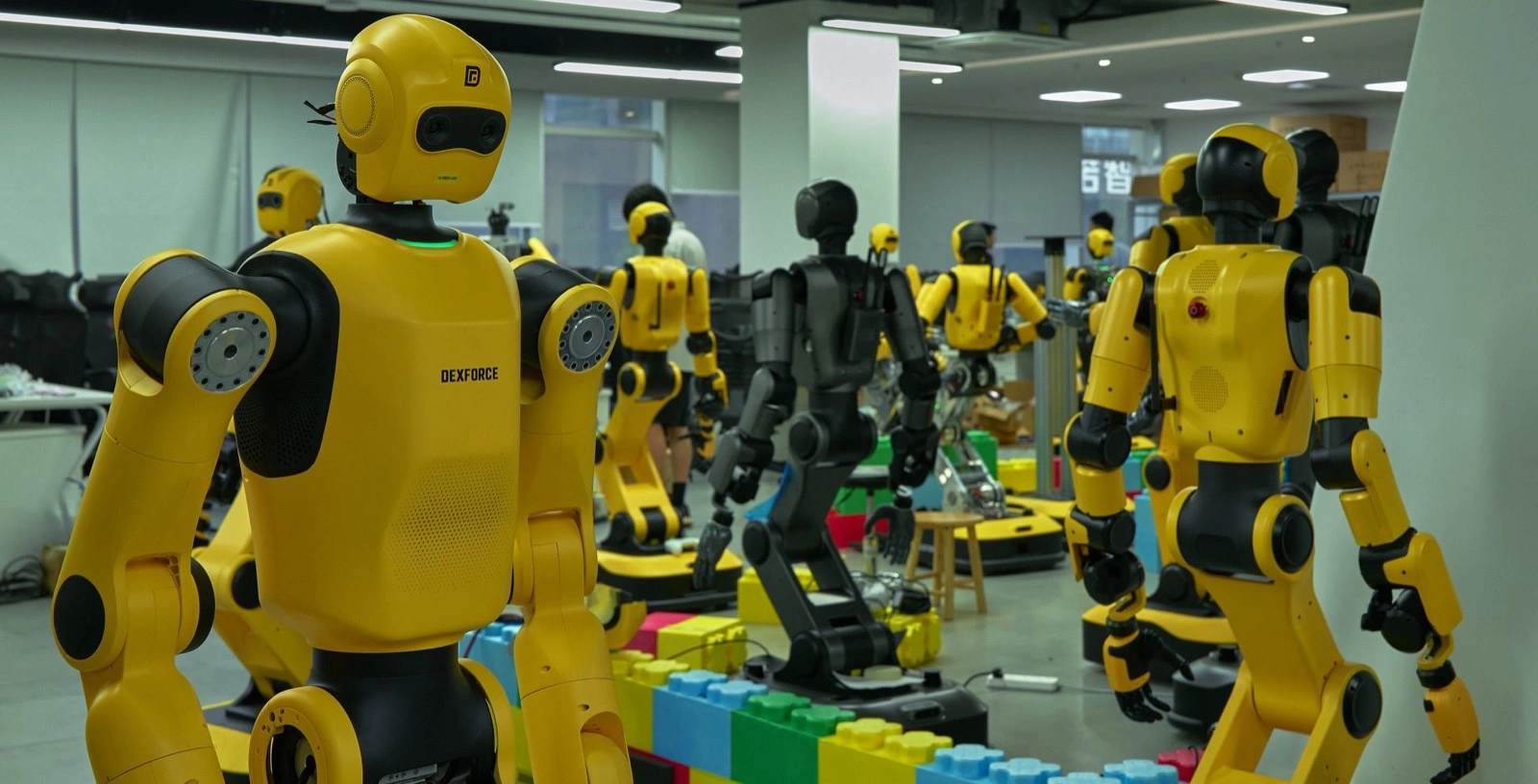
German manufacturers can learn how Chinese robotics suppliers develop products, assemble supply chains and approach factory applications. The practical value comes from comparing companies against a specific production problem. A visit should produce evidence for a pilot, a supplier assessment or a decision to wait, with clear responsibility for the next technical step.
In a conversation in July 2026, I described taking a European industrial team to robotics companies in China. What interested me was the move toward discussing use cases and possible proof-of-concept projects. Seeing the hardware gave the team a starting point for asking how it might fit their own factories. Those discussions were preliminary; they did not establish production performance.
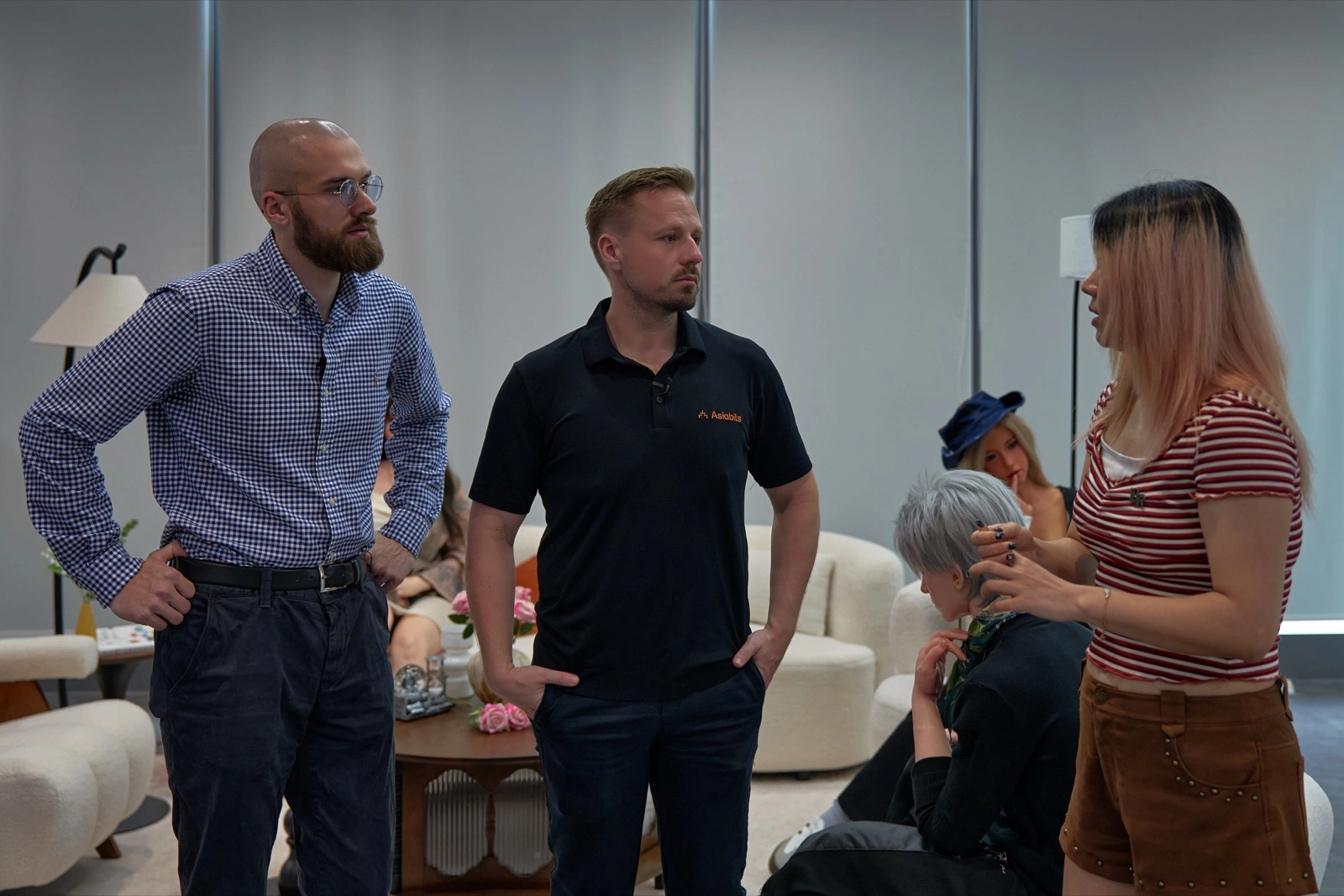
I'm Thomas Derksen, founder of Asiabits in Shanghai. That experience shapes how I think about visits by German manufacturers. A robot demonstration can start a conversation. The useful work comes when the visitors explain their own operating conditions and ask the manufacturer to respond to them.
Why should German manufacturers study China's robot clusters?
They offer a way to examine potential competitors, suppliers and development partners in the same research trip. Which role matters depends on the visiting company's product and production needs. An equipment maker may want to understand competing machines. A component supplier may be looking for customers. A factory operator may want help with a repetitive handling task.
In a June LinkedIn post, I pointed to China's position ahead of Germany in the Global Innovation Index 2025 and argued that European teams should update their view of Chinese research and development. That was a reference to a particular edition. In the 2025 WIPO results, China ranked tenth and Germany eleventh. This broad index cannot tell a buyer whether an individual robot works reliably.
The same edition's cluster analysis is more useful for planning research geographically. WIPO placed Shenzhen, Hong Kong and Guangzhou together at the top of its innovation cluster ranking. China's intellectual property administration also reported that finding in its September 2025 account of the report. The ranking covers innovation more broadly than robotics, so it should guide further investigation rather than serve as a robotics supplier score.
For a German management team, the opportunity is to replace a broad national assumption with direct comparisons. Ask how a company develops a product, who supplies difficult components and how it handles a customer's changing requirements. Each answer should be tied to a particular product or application so it can be checked afterward.
What does our company database tell us about the geography?
Our database shows substantial groups of robotics companies in several Chinese cities, giving visitors multiple places to investigate. In our database of 7,000+ robotics companies, the snapshot checked on 22 October 2026 contains 7,320 company records globally. Of those records, 532 are assigned to Shenzhen, 294 to Shanghai, 121 to Suzhou and 110 to Hangzhou.
These are counts of records assigned to each city in our research database. Coverage is uneven, and the figures include different company types and applications. They are not a census of active factories, a measure of output or a ranking of product quality. A city with more records in our database does not automatically have a better supplier for your task.
The practical use is to begin a shortlist with enough alternatives to compare. If a team wants a robot for a particular handling operation, it should look for companies working on that operation and the equipment around it. If the team makes components, it should investigate the robot architectures that could use them. Company count alone answers neither question.
Geography then helps turn that shortlist into a workable route. A visit to a robot maker can be paired with a discussion about the component or integration problem that matters most to the visitors. Our guide to finding robotics startups in Shenzhen provides a more local starting point. Confirm the actual meeting address and the technical people available before building the itinerary around a headquarters listing.
What should visitors learn beyond the robot demonstration?
Visitors should learn what makes the demonstrated task succeed and what makes it fail. The visible movement is one part of that answer. The surrounding conditions determine how useful the result is for a factory considering a purchase or a development project.
For example, ask the host to explain the objects used in the demonstration. Are their positions fixed? Can their surfaces or dimensions vary? What happens after a failed grasp? A team assessing a handling application should request evidence that matches the objects and variation it expects in production. A successful test on a prepared object leaves those questions open.
Then ask who performs the integration work. Someone has to connect the equipment to the production process, define how faults are handled and maintain the system after installation. These responsibilities should be discussed early because they affect both the supplier comparison and the customer's own engineering workload. A manufacturer may be able to demonstrate a product without offering the full deployment service your factory requires.
I would also ask to see how a technical change is documented. Suppose the application needs a different gripper or a revised fixture. Who agrees the change, who tests it and who confirms the effect on performance? The response gives the visiting engineers something specific to discuss with their colleagues at home. Our article on humanoid robot costs explains why the hardware purchase needs to be considered alongside the work needed to use it.
How can German component suppliers evaluate a partnership?
A component supplier should connect its technical capability to a documented requirement from a robot developer. Precision, service life or thermal performance can be a starting point for a discussion, but the prospective customer needs to specify the conditions under which those properties matter.
Before a visit, prepare a short description of the component and the evidence already available. Explain the load conditions, dimensions and interfaces that can be supported. Where performance depends on a particular test method, bring that method into the conversation. This lets both engineering teams identify whether they are comparing the same thing.
During the meeting, ask where the developer is experiencing difficulty and how it evaluates alternatives. A proposed improvement needs a baseline. If the discussion concerns wear, for example, ask how wear is measured and what operating cycle the test represents. If the requirement remains vague, record it as an unresolved question rather than returning home with a claimed partnership opportunity.
Any next step should specify what each side will provide and how the result will be assessed. That could mean exchanging a permitted technical drawing, reviewing a test specification or deciding whether a sample evaluation is justified. Keep confidential engineering information within the agreed sharing arrangements. A productive first meeting can end with a narrower technical question; it does not need an announcement.
How do you turn a visit into a useful factory decision?
Start with a written application brief and compare every candidate against it. The brief should describe the task, the operating environment and the evidence needed to decide whether further testing is worthwhile. This gives purchasing, engineering and operations a common basis for reviewing what the team learns.
Bring the difficult parts of the application into the brief. Describe the variation in incoming parts, the available working area and the procedure when the process stops. Where possible, use approved images or sample data. Remove information that the team has no authority to share. The host can then explain which requirements its existing product covers and which would require development.
After each meeting, separate what you observed from what the host stated and what still needs testing. A demonstration witnessed by the visitors is evidence of that demonstration. A claim about continuous operation needs supporting records or a suitable test. This distinction prevents a promising meeting from becoming an unsupported internal business case.
On returning home, assign responsibility for each remaining question. The factory team should decide which evidence would justify the next expense and who can assess it. A pilot proposal needs an acceptance method, an owner and a stopping condition. If those elements cannot be agreed, further research may be the appropriate result of the trip.
When should a manufacturer wait before committing?
A manufacturer should wait when the application, evidence or delivery responsibilities are too uncertain to support a purchase or pilot. Supplier density makes comparison easier, but it cannot resolve a missing requirement inside the customer's factory. A trip is most useful when the visitors can explain the decision they need to make.
There are limits to what we can establish through visits and database research. Our city counts cannot show which supplier will remain financially healthy. A founder meeting cannot establish long-term uptime. A prototype may demonstrate progress while leaving production reliability unresolved. Treat each of these as a separate question and request evidence appropriate to it.
German companies can also learn without changing suppliers. A visit may reveal that an existing automation approach still fits the job, that a component needs more testing or that the proposed task is too variable for the available product. Those findings can help a team direct its engineering time toward a more suitable application.
Asiabits organises private robotics visits and delegations in China around the question a business wants to answer. We use company research to select relevant discussions and help visiting teams communicate their requirements. For a German manufacturer, the useful starting point is a short description of the factory problem or component capability, together with the decision the visit should inform.
Frequently asked questions
Why visit Chinese robotics companies as a German manufacturer?
A visit lets technical and commercial teams compare potential suppliers, customers or development partners against a defined requirement. Prepare the application question before selecting companies and distinguish observed tests from supplier claims.
Which Chinese cities should a robotics delegation investigate?
Shenzhen, Shanghai, Suzhou and Hangzhou all have substantial groups of company records in the Asiabits robotics database. Select the city and companies by application fit, then confirm the actual technical meeting location. Database counts measure research coverage rather than supplier quality.
Does China's innovation ranking prove its robots are better?
No. WIPO's Global Innovation Index 2025 measures broad innovation performance, and its cluster ranking covers activities beyond robotics. Product suitability requires application-specific evidence and testing.
What should a German component supplier prepare before visiting?
Prepare the component specification, supported operating conditions and available test evidence. Ask the robot developer for a measurable requirement and an agreed way to assess any proposed improvement.
What should a robotics visit produce?
It should produce evidence for a decision and a list of unresolved technical questions with named owners inside the visiting company. Further testing, a supplier assessment or a decision to wait can each be a useful outcome.
Get These Insights Every Monday
Join 18,000+ professionals reading Asiabits. Free, every Monday, straight from Shanghai.
Subscribe Free →