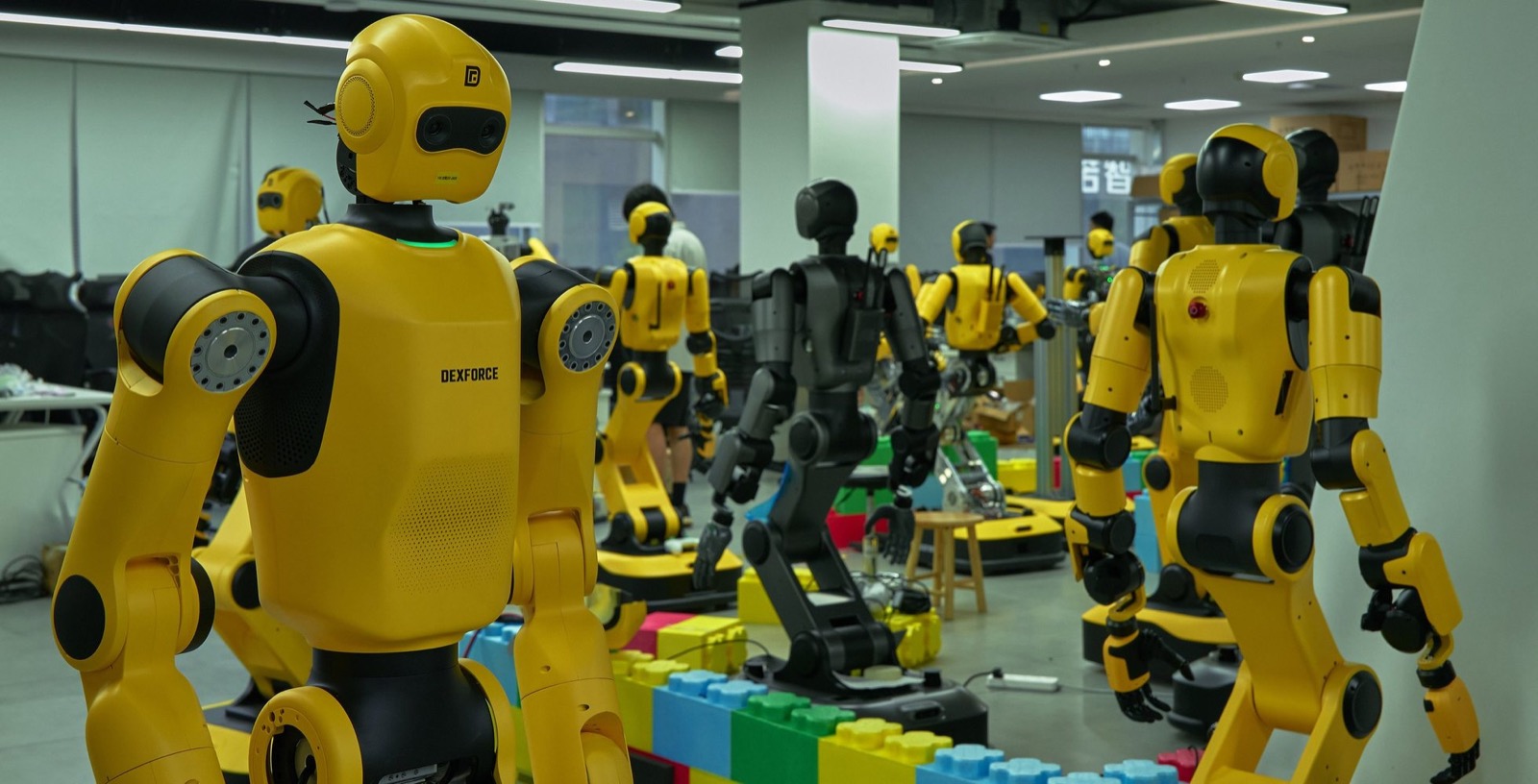
If you are looking for humanoid robot suppliers in China, start with the component you need, then map the search to the manufacturing cluster that makes it. A July 2026 industry report places planetary roller screws around Xinchang, reducers, servos and controllers around Suzhou, and tactile sensors, dexterous hands and complete robots in Shenzhen. Treat that map as a route into supplier discovery, then verify each factory's product, process and production ability yourself.
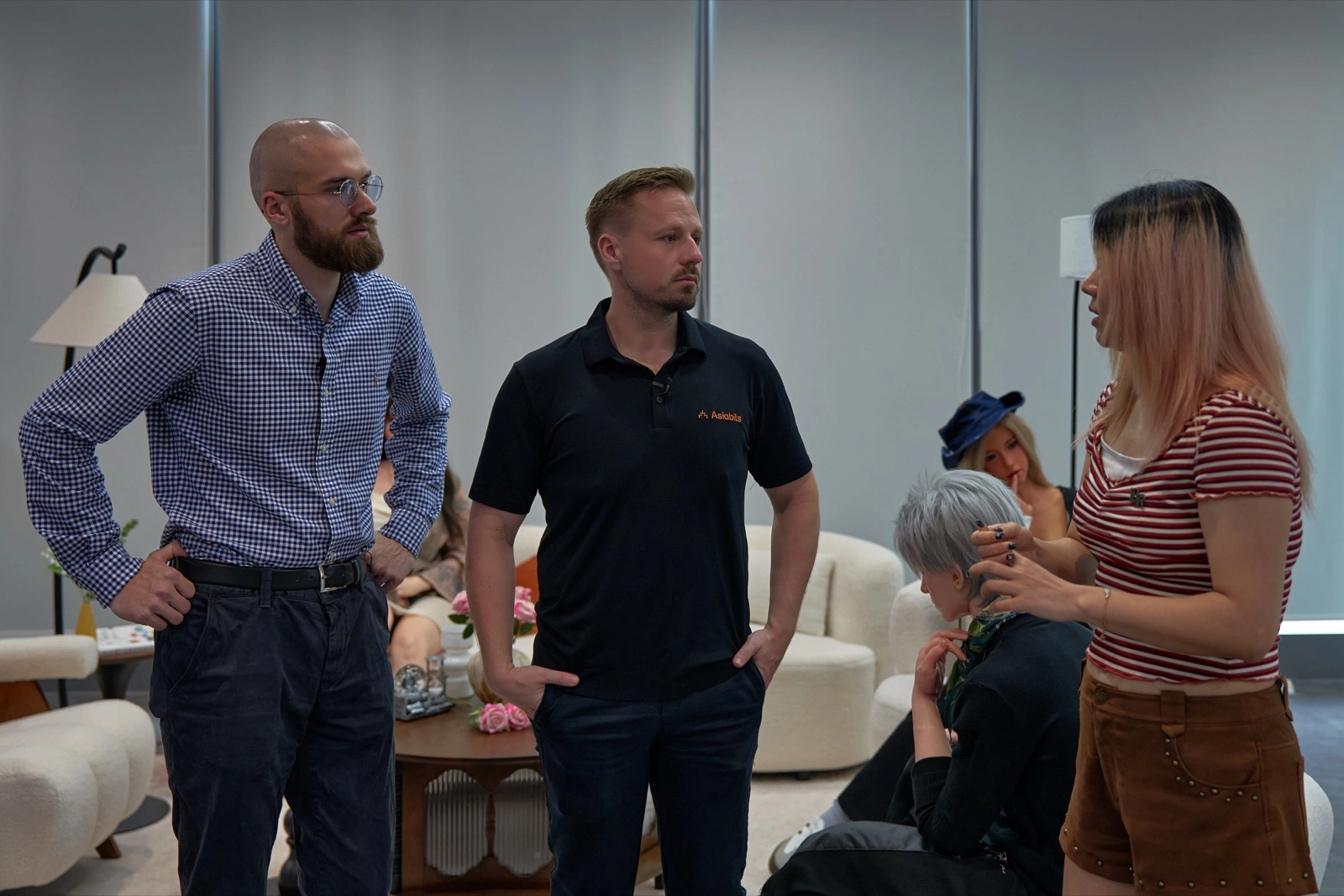
I'm Thomas Derksen at Asiabits. I have lived in China for twelve years, and I have spent much of that time walking through factories, labs and showrooms with international teams. The question I hear from manufacturers is practical: where should we start if we want to supply humanoid robots? The answer depends on whether you make a screw, a control unit, a hand, a sensor or a finished machine. China's manufacturing map gives each of those questions a different first stop.
Why does the city matter when you are looking for a supplier?
Location tells you where to begin a search and which neighboring capabilities might be close by. A cluster map narrows the search. Supplier fit depends on quality systems, capacity and engineering requirements, which you verify at the factory against your specification.
In its report dated July 7, 2026, Tianxia Gongchang Research describes several component clusters rather than a single national robotics center. Xinchang in Zhejiang is linked to planetary roller screws. Suzhou in Jiangsu is associated with reducers, servos and controllers. Shenzhen in Guangdong has companies across tactile sensing, dexterous hands and complete machines. The report also notes activity in Dongguan and Shanghai. Those are useful signposts, with the report's publication date kept in view.
Government and industry sources point in a similar direction. A June 2026 report from Zhejiang's provincial government describes Xinchang's robot transmission industry and the opening of a metrology center for parts such as reducers, lead screws and tendon ropes. Suzhou's city government describes a local supply chain covering transmission, sensing and control. Shenzhen's 2025 to 2027 embodied robotics plan names components, tactile sensing, motion control and dexterous manipulation as development priorities. Together, these documents describe industrial capabilities and policy priorities. Buyers still need to qualify each supplier for the intended product.
That distinction matters to a sourcing team. The right first question is not, "Which city has the most robot companies?" It is, "Which process or component will constrain our design, and where can we examine suppliers who work on it?"
Where should you look for screws, reducers and motion control?
For planetary roller screws and related transmission work, put Xinchang on the list. The Zhejiang government describes the county's robot transmission industry and a metrology center that supports testing of transmission parts. This indicates established industrial activity, while each supplier's product and capacity still need verification.
The same source describes a metrology center that tests transmission components through the production process. For a buyer, that points to questions worth asking during a visit: which dimensions are measured in-house, what inspection equipment is used, how are calibration records kept, and what data can be tied to each production batch? Those answers are more useful than a map pin when the part has to carry a repetitive load through a robot's operating cycle.
Suzhou is a useful starting point for reducers, servos, controllers and other motion components. A May 2026 report published by the Suzhou municipal government describes local companies working across drive components and says the city has developed a supply chain for transmission, sensing and control. The city is also developing application and testing platforms for embodied intelligence. That combination gives a visiting team a way to compare suppliers and ask how their components fit into a wider robot system.
Keep the application specific. A component used in a collaborative robot or an industrial arm may share a manufacturing process with humanoid parts, yet the load, duty cycle, noise, weight and control requirements can differ. Ask suppliers to show the exact product family they have built, the materials and process controls behind it, and test results for the operating range you need. Then confirm whether their current line can reproduce the sample at the intended volume.
Where are dexterous hands and complete humanoid robots being built?
Shenzhen is a strong place to explore the connection between hands, sensors, electronics and complete robots. Tianxia Gongchang's July report describes activity across several parts of that supply chain. Shenzhen's municipal plan identifies miniature motors, joint modules, force and tactile sensors, AI chips, dexterous hands and robot control as priority technologies. The plan sets future cluster targets, so its goals describe ambition rather than completed supplier counts.
Shenzhen's advantage for a sourcing visit is the range of hardware work that can sit within the same regional search. A dexterous hand combines mechanical design, small actuators, sensing, control and materials. A supplier meeting can surface follow-on questions about wiring, connectors, embedded computing or assembly. Use that regional breadth to map the product system, then confirm local availability and supplier fit company by company.
Suzhou also belongs in a humanoid search, especially when the brief centers on motion and precision manufacturing. The city government's May 2026 account describes reducers, servos, control systems and other supply-chain capabilities. Xinchang belongs on the map when the design depends on screw drives and transmission parts. Teams can compare these locations by part family, then use a visit to test the fit between a supplier's established process and a robot maker's design.
Shanghai and Beijing are useful places to include when the search is centered on robot developers, research, system integration or a particular application. The cluster locations vary by product category and by the evidence used to count companies. A list of humanoid manufacturers is therefore a different research job from a component sourcing list. Our earlier guide to finding robotics startups in Shenzhen looks at the city's founder network, while our guide to Chinese robot companies by humanoid use case helps compare robot makers.
How can you turn a cluster map into a supplier shortlist?
Start with a one-page component brief. State the function, operating conditions, interfaces, material constraints and the evidence you need before a sample can pass. If the design is still changing, identify what can change and what must stay fixed. A supplier can then tell you whether it makes the part, integrates bought-in parts or only resells a finished module.
Search by process as well as by product name. A robot company may describe a module as an actuator, while a component maker may describe the same work through its motor, reducer, screw or controller. Ask which operations take place in-house and which are outsourced. For a critical part, trace the path from incoming material through machining, assembly, inspection and shipment. This helps distinguish a maker with control of its process from a sales office presenting another factory's product.
Use a sample meeting to test engineering fit, then agree on a repeatable validation plan. Compare the drawing revision, test setup, acceptance criteria and change control. Ask how the supplier responds when a part fails or the design changes. Discuss the production line, inspection records and traceability that would apply at volume. A sample that works once is a useful start; production readiness depends on repeatable results.
Finally, check commercial and legal matters separately. Confirm who owns the design, tooling and test data, how changes are approved, and what rights apply to your market. A regional cluster can make it easier to meet relevant companies in one trip. Due diligence still needs to cover quality, export rules, intellectual property, service and continuity.
Our experience with China's robotics companies supports this practical approach. In our visits, smaller humanoid makers were often open to supplier conversations and pilot projects. The recurring engineering needs we heard included lower weight and better heat management around actuators and electronics. That is an observation from visits, not a claim about every manufacturer. It gives a supplier a useful way to prepare: bring examples of a relevant process, the operating limits it solves, and evidence from testing.
What can you learn from a factory visit?
A directory can help you find names and locations. A visit lets you see the process that sits behind a product description. You can ask to follow one part from material receipt to final inspection, observe how engineering and production work together, and understand which tests are routine. You can also ask an engineer to walk through a failure case and show what changed in the process afterward.
On tours, I have seen how a supplier conversation becomes more useful when it starts with a real engineering problem. Weight and heat came up repeatedly in humanoid discussions. Those topics lead to specific questions about motor efficiency, thermal paths, materials, cooling, duty cycle and packaging. A general conversation about "joining the humanoid market" rarely produces the same clarity.
That is one reason the supplier search should include both component makers and robot OEMs. A potential component supplier needs to understand the machine it will go into. A robot maker can explain the design constraints and what evidence it expects from a partner. The visits should be selected around the part and the engineering question, rather than around the fame of the host company.
We described the broader supplier question in our guide to finding robotics suppliers in China. The cluster map adds a geographic starting point: Xinchang for screw and transmission work, Suzhou for motion and control, and Shenzhen for hands, sensing and integrated robot hardware.
How should an international team plan its supplier search?
Choose one technical theme for each visit. A team comparing motion components can use Suzhou and Xinchang as separate stops, with a clear reason for each. A team looking at dexterous hands and robot integration can focus its questions in Shenzhen. If your shortlist spans several regions, plan the trip around the work you need to see rather than trying to cover every robotics city in a few days.
Before travelling, share the component brief with each host and ask what the visit can cover. Confirm whether the meeting is with the engineering team, the production team or a sales representative. Bring the drawing or interface description you are authorized to share. Prepare questions on capacity, testing, line ownership and change control. These steps make it easier to compare what you see across different factories.
After each visit, record the supplier's stated capability separately from what your team observed. Track open questions, sample commitments and the evidence still needed. A promising discussion can begin technical evaluation; qualify the supplier after its evidence meets your requirements.
Asiabits helps international teams identify relevant robotics companies and arrange focused visits with founders, engineers and manufacturers in China. If you are looking for a particular component or application, start with a short description of the part and the technical question you need answered. We can help you decide which cluster belongs on the shortlist and what to examine on site. Learn more about Asiabits' robotics and innovation tours.
The best first stop is the cluster closest to the part your design depends on. The best supplier is the one whose process and evidence hold up when your engineers examine them.
Frequently asked questions
Where are humanoid robot suppliers in China?
Suppliers are spread across several clusters. A July 2026 industry report associates roller screws with Xinchang, reducers, servos and controllers with Suzhou, and tactile sensors, dexterous hands and complete robots with Shenzhen. The right location depends on the component you need.
Which Chinese city should I visit for humanoid robot components?
For screw and transmission components, begin with Xinchang. For reducers, servos and controllers, consider Suzhou. Shenzhen is a useful starting point for tactile sensing, dexterous hands and integrated robot hardware. Verify each company's capability before making a sourcing decision.
Are Shenzhen robot suppliers suitable for production orders?
A cluster's presence does not confirm that an individual supplier can meet your production requirements. Review the exact process, capacity, inspection records, traceability and change control for the part you need. Validate samples against an agreed specification.
How do I find a Chinese humanoid robot supplier?
Define the component and its operating requirements, then search in the manufacturing cluster associated with that part. Ask suppliers to show which processes they perform in-house and what testing supports their claims. Use factory visits to verify process and engineering fit.
Get These Insights Every Monday
Join 18,000+ professionals reading Asiabits. Free, every Monday, straight from Shanghai.
Subscribe Free →