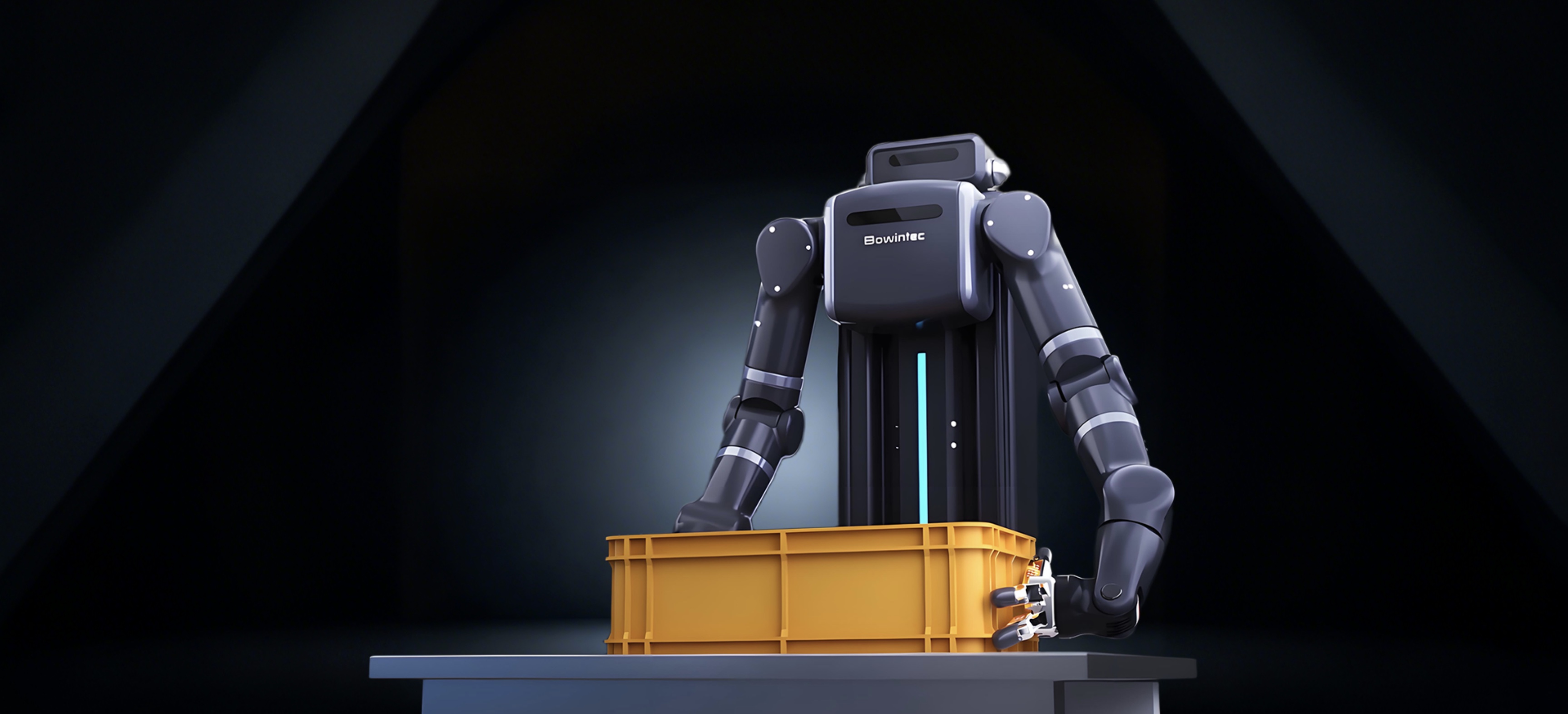
Building a humanoid robot in China takes about $35,000 in parts, according to Bank of America's estimate for 2025, and the bank expects that to fall below $17,000 by 2030. Close to half of the parts bill sits in the actuators that move the joints. Chinese list prices start at $5,900. Putting a humanoid to work in a real operation can cost as much again as the robot.
In July I was at a robot maker in Shenzhen, one of the visits I make most weeks. An engineer put a single robot hand in my palm and told me it was worth more than a used car. He wasn't joking. I'm Thomas Derksen, I've lived in China for twelve years, and I spend much of my time in robot labs and factories in Shanghai and Shenzhen, often with European leadership teams. On those visits the question I hear most is about money: what does one of these cost, and what will it cost us?
What goes into the bill of materials of a humanoid robot?
The joints dominate the bill of materials. A humanoid carries between 28 and 44 actuators, and together they account for 40 to 60 percent of the parts cost, according to an analysis of humanoid BOMs by XenoSpectrum. Each actuator combines a motor, a reducer or screw, an encoder and a driver board, and each one has to fit inside a limb while holding a body upright.
Bank of America's cost model for a China-built humanoid makes the assumptions explicit: 16 rotating actuators with harmonic reducers, 14 linear actuators driven by planetary roller screws, a dexterous hand with six degrees of freedom, a depth camera and LiDAR, and Chinese components wherever possible (Bank of America Institute, Physical AI part 2). On those assumptions the parts came to $35,000 in 2025.
Morgan Stanley did the same exercise for Tesla's Optimus Gen 2. Its estimate put the full bill at about $46,000, of which the actuators alone took around $22,000, as the South China Morning Post reported. Hands come next. Sensors, compute, wiring and the battery follow at a distance, and the frame and shell are the cheap part.
When I explain this to visitors, I describe a humanoid as forty expensive motors wearing a plastic body. If a company tells me its new robot is cheaper, my first question is which joints changed.
Why are Chinese humanoid robots so much cheaper?
Chinese humanoids are cheaper because almost every part on that list is made in China at volume, often a short drive from the assembly line. Morgan Stanley estimated that Optimus Gen 2 would cost about $131,000 instead of $46,000 without Chinese suppliers, with the actuators rising from $22,000 to $58,000 (SCMP, Interesting Engineering). The magnets inside every motor point the same way: McKinsey's April 2026 report on the humanoid supply chain puts China's share of permanent magnet processing at about 90 percent.
Our own data shows the cluster. In our database of 7,000+ robotics companies, 159 Chinese firms are classified as humanoid makers, against 20 in the United States. Among companies whose profile mentions harmonic reducers or roller screws, 28 are Chinese and 4 are American. For robot hands the count is 26 Chinese firms and 5 each in the US, Japan and South Korea. For a start-up in Shenzhen, most of its joint suppliers are a car ride away.
Speed is part of the price too. Francesco Crivelli, who visited more than 500 robotics companies across China, told me on episode 6 of the Asiabits podcast how his team once needed an extra pair of hands to assemble robots. They paid a food delivery rider a couple of hundred yuan, and he helped them for a day. In his words, that kind of speed at that cost only happens in Shenzhen and Shanghai.
How much does a humanoid robot cost to buy in 2026?
A Chinese humanoid costs from $5,900 for a small research model to about €20,500 for a full-size industrial machine at list price in 2026. Unitree launched the R1 at $5,900 in 2025, a walking platform for research and AI training without real grippers. Its G1 lists at $16,000 (heise, Notebookcheck). The G1 is 1.32 metres tall, runs fewer joints than a full-size robot and uses simpler hands, which explains most of the gap.
Full-size machines now have published prices as well. UBTech's U1 started shipping on September 16, 2026, at around €14,500 for the Lite version and €20,500 for the Pro, with 13,361 units on order at launch. I wrote about what that price means for factory budgets in our piece on UBTech's published price. At that level a humanoid competes with a mid-range forklift for capex.
Volume is what pushes these prices down. In 2025 AgiBot delivered 5,168 humanoids and Unitree 4,200, and China passed the United States as the largest producer of humanoid robots. Each production run spreads tooling and engineering over more units, and the component makers in the clusters scale with them.
What does it cost to put a humanoid robot to work?
Getting a humanoid to do a real job usually costs as much as the robot, and often more, because integration and software take most of the engineering hours. Francesco gave me a ratio on the podcast: in industrial robotics, system integration makes up four fifths of a deployment and the hardware about one fifth. He based that on numbers from large robot makers such as KUKA and ABB. Humanoids add balance, walking and hands to the integration work.
This week the head of innovation at a large property group in Southeast Asia told me they now plan for integration to cost as much as the robot itself. Their robot fleet turns over every three years, so they built a middleware layer that connects any new robot to their building systems. That way they pay for integration once.
A European industrial manufacturer I spoke with in September started with the question I wish every buyer started with: what is the realistic total cost of ownership, and do we buy the robot as capex or rent it as a service? Their use case is a paint line, work they would rather no person had to do. For them the robot price is one line in the budget. How the machine copes with heat, temperature swings and paint decides the rest.
Then there is runtime. Nils Pihl, the founder of Auki, said it on episode 14 of our podcast: ask a humanoid to do real work and it will be out of battery in about two hours. An eight-hour shift means charging or swapping, and spare batteries and charging space go into the budget too.
When does a humanoid robot pay for itself?
A humanoid pays for itself when its full cost drops below two years of the labour it takes over. In China, the brokerage Guotai sets that threshold at about 160,000 yuan: annual labour cost of around 80,000 yuan, recovered over two years. At the G1's list price, the robot alone already sits below that line. The full deployment, with integration and the hours of an engineering team, often does not.
European labour costs are much higher, which moves the threshold up and makes the math work sooner. The jobs where I see the first serious pilots are the ones companies struggle to fill: night shifts, heat, paint, heavy repetitive lifting. That is where a robot that works at 30 to 40 percent of human productivity, the level reported for Chinese humanoids in 2025, can still make sense.
Which parts of a humanoid robot will get cheaper first?
The actuators will get cheaper first, because that is where most of the cost sits and where China is adding capacity fastest. In our database, 100 Chinese companies mention actuators, reducers or servo motors in their profile, against 73 in the United States and 8 in Germany. Bank of America's forecast of a parts bill below $17,000 by 2030 rests mostly on joints made at that scale.
Hands will take longer. A dexterous hand needs many small actuators and tactile sensors in a tight space, and every finger joint adds cost and failure points. That is why the hand the engineer put in my palm cost more than a used car, and why the cheapest humanoids ship with simple grippers or none.
Compute and software follow a different curve. Chips get cheaper per unit of performance every year, but the models that let a robot handle a new task still need data, and collecting that data costs money on every new site.
What don't we know about humanoid robot costs?
Nobody outside the companies knows their exact margins or what they pay suppliers. The parts bills above are analyst models with stated assumptions, and list prices move with every launch. A $16,000 robot that walks well on a stage may still not pick a part off your line reliably for a full shift.
So I give every visitor the same advice: price the task, then the robot. Write down the job, the hours, the cycle time and the error rate you can accept, and ask each maker to show the robot doing that job. In my experience, that one request separates most of the demos from the products.
How Asiabits helps you check the numbers
If you are budgeting a humanoid pilot, Asiabits takes leadership teams into robot labs and component makers in Shanghai and Shenzhen, where you can ask the engineers what each joint costs and watch the machines do real tasks. You can read how we run these factory visits or see the bespoke tours. To research suppliers yourself, start with the Asiabits robotics directory.
Frequently asked questions
How much does a humanoid robot cost in 2026?
Chinese humanoids start at $5,900 for Unitree's R1 and $16,000 for the Unitree G1. UBTech's full-size U1 costs around €14,500 for the Lite version and €20,500 for the Pro. Integration into a real operation can add as much again.
What is the most expensive part of a humanoid robot?
The actuators in the joints. A humanoid carries between 28 and 44 of them, and they account for 40 to 60 percent of the parts cost. Dexterous hands are the next big cost block.
Why are Chinese humanoid robots cheaper than Western ones?
Most components, from harmonic reducers to magnets, are made in China at volume and close to the assembly lines. Morgan Stanley estimated that Tesla's Optimus Gen 2 would cost about $131,000 instead of $46,000 without Chinese suppliers.
Will humanoid robots get cheaper?
Bank of America expects the parts bill of a China-built humanoid to fall from about $35,000 in 2025 to below $17,000 by 2030. Most of that drop is expected to come from actuators made at higher volume.
How much does it cost to deploy a humanoid robot?
In industrial robotics, system integration typically makes up about four fifths of a deployment, based on figures from large robot makers. Buyers planning humanoid pilots should budget at least as much for integration and software as for the robot.
Get These Insights Every Monday
Join 18,000+ professionals reading Asiabits. Free, every Monday, straight from Shanghai.
Subscribe Free →