The battery cells for the electric Renault 5 are built in Douai, in the north of France. Emmanuel Macron came to the opening last year and the European Commission had signed off 48 million euros of French state money to help build it. The plant belongs to Envision, a group out of Shanghai.
This month, the robots arrived.
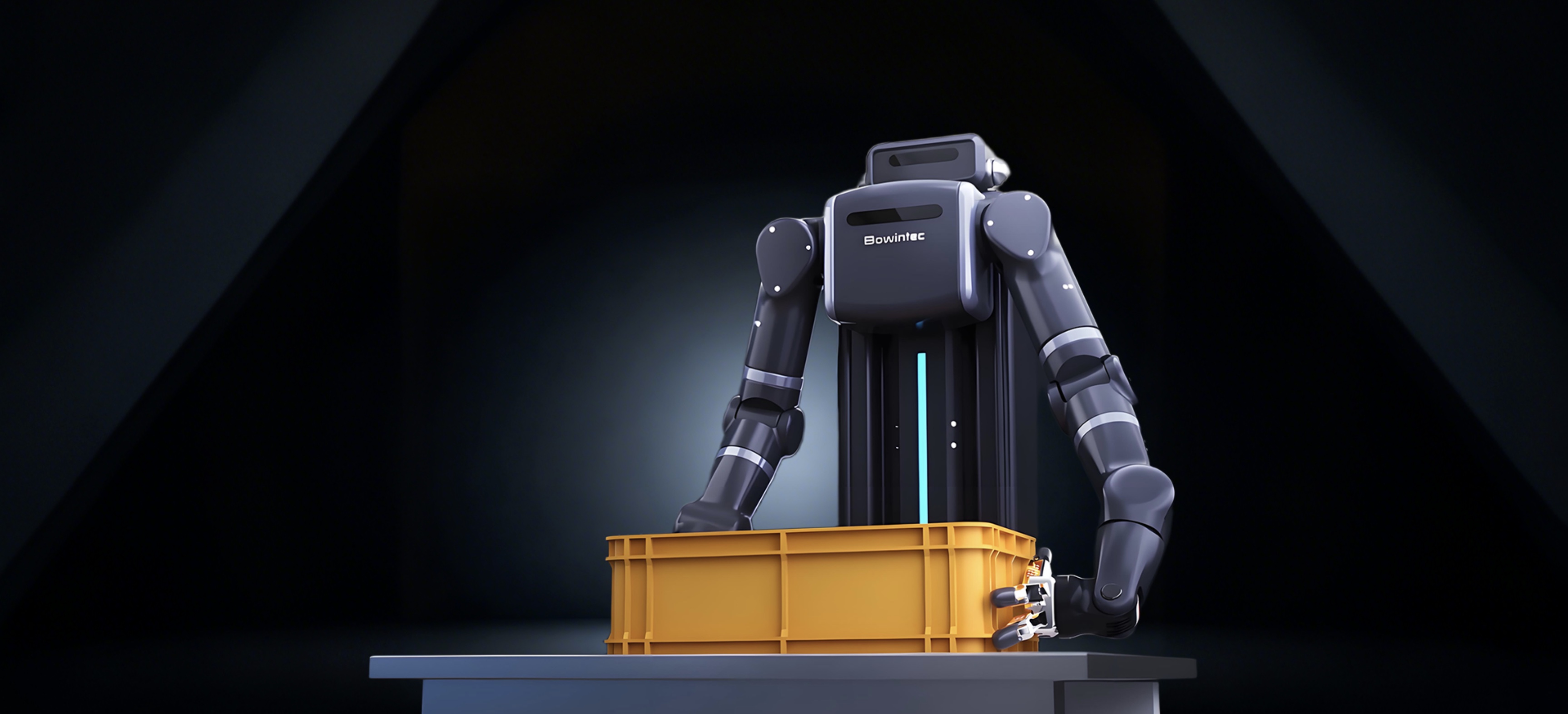
They come from a Beijing company almost nobody in Europe has heard of. The model is the K15: wheels, two arms, loading and unloading machines and moving boxes across the shop floor. The two sides signed in late April and the contract runs to more than 500 million yuan, around 60 million euros.
Building the machine was the easy part.
Eight months and a million yuan before a single unit shipped
In July the K15 became the first machine of its kind to clear the full industrial set of European certificates. Machinery safety, radio equipment, electromagnetic compatibility, functional safety, the cybersecurity standard. Eight months of work and more than a million yuan spent before one unit went on a ship.
And that covers the machine only. The man who runs industrial robot certification for TÜV Rheinland in China laid out the rest last week: the power board needs its own certificate, so does the joint module, the battery, the safety controller.
Then comes the second wall. Under the European Cyber Resilience Act, if somebody exploits a security hole in your robot, you report it to Brussels yourself, and the fine goes up to 2.5 percent of global turnover. The new European machinery regulation turns mandatory on 20 January 2027, four months from now.
China has no humanoid standard to certify against
I looked this up on the Chinese standards platform myself. 183 published national standards carry the word robot in the title, 74 of them cover industrial robots, and for humanoids there are none. 52 projects are open at the national robot standards committee, 19 of those deal with safety, and every one of them is still being drafted.
So a machine built to no humanoid standard at home has to satisfy a European rule that turns binding in four months. Two regimes, two sets of tests, neither side recognising the other's paperwork. Somebody in that chain pays for the same machine twice.
China's state science newspaper ran a long piece on all of this last week. A person from the industry drops this line:
A humanoid that sells for 200,000 yuan at home sells for 800,000 in some countries.
24,000 euros here, up to 96,000 once it lands in Europe. The paper does not name the person, so treat the figure as industry talk. The direction matches what I hear from buyers on both sides.
The hardware is the cheap part of that multiple and it gets cheaper every quarter. Unitree's own flagship went from 590,000 yuan in 2023 to 160,000 in 2025. The expensive part is the certificate, the spare parts depot, the engineer who can be on site on Thursday morning, somebody willing to sign the insurance. Every one of those is a European business, and right now it is unclaimed.
The money is already moving into your market
On Saturday a Shenzhen company called Hai Robotics filed to list in Hong Kong. Their machines climb warehouse racking and pull out single boxes. They took 32.8 percent of the world market for that type of robot last year and burned around 3.5 billion yuan getting there, call it 420 million euros, while gross margin doubled from 16 to 34 percent.
When your intralogistics quote comes in next year and the Chinese number looks impossible, assume it is deliberate. Somebody has worked out that your market is worth losing money for, and has gone to the stock market to raise the cash to keep doing it.
China wrote the job description before the robots got there
On 9 September the labour ministry published its eighth batch of official new occupations. One of them is the embodied intelligence robot application technician: operate the robot through teleoperation gear, collect and clean the data it produces, fine-tune the model to the site, install and debug the hardware on the customer's floor. The certificate has three levels and the first one was handed out on 26 August.
I have watched this country run that sequence before. The occupation list gets written, then the vocational schools get the money, then a few hundred thousand people come out the other end holding a piece of paper. That is how China ended up with the welders and the battery technicians its EV industry needed.
Whoever ends up supplying your robots, somebody in your building has to run them, repair them, collect their data and teach them the job. In most of Europe there is no course that person could take.
What Douai does not prove
One plant and one order book do not make a market. The founder of a humanoid company here, 27 years old and a Tsinghua dropout, reckons fewer than five firms in the whole country can mass-produce a robot body at scale.
What Douai does show is that the door opens, and that opening it costs eight months and a certificate file nobody wants to pay for twice.
Which leaves the question I keep putting to the manufacturers who ask me about Europe. If a Chinese supplier turned up at your gate with a machine and a complete CE file, would you still want a European partner in the middle?
[00:00] Chinese Roberts just moved into a Renault battery plant in France. Chinese Roberts started work this month in a French factory that builds the batteries for the electric Renault 5. The French president Emmanuel Macron opened that factory himself last year. The robots came from a company in Beijing almost nobody in Europe has heard of. Getting them through the door was the hard part and it had nothing to do with [music] the robot. Once a machine like that stands on our side of the door, it carries a completely different price. I will give you that number in the first story. Then we go to Hong Kong because on Saturday, a company from Shenzhen filed to go public. They built the robots that climbed your warehouse wrecking. They are number one in the
[00:47] world at it and they [music] have burned three and a half billion yen getting there. After that comes the least glamorous thing that happened all week. A Chinese carrier started selling a mobile data plan for Roberts, 599 yen a month, and the only number in it that matters is the upload speed. Then the price floor drops again [music] and again. On Monday, a university spin-off in Shian put a humanoid robot on sale for 9,800 yen. In our money, that is about €1,200. [music] And then we also fly to Japan because Fanuk has built a robot that reads your part drawing and then [music] writes its own welding program. It ships at the end of December and the brain
[01:35] inside it comes from Google. And the last story is the one I would keep if you only remember one thing from today. Last week, China wrote an official job description for the person who operates these machines. Somebody sat down and decided what that human being has to know. I also have a clip at the very end that made me laugh out loud. I make this show every week so that you see these moves before your competitors do. And why me? I live in Shanghai. I speak Chinese and I read the filings and the industry reports in the original language that is Chinese. Over the past year, I have taken more than 100 VCs, board members, and founders into robotics companies here in China and the rest of Asia. If [music] you want to see this for yourself, if you want to meet these companies, buy from them or work
[02:23] with them, just write me. The link is down in the description. Asia base. So, let's start in France. The factory we are talking about sits in Dais in the north of France. It built the battery cells for the electric Renault 5. Production started in June last year. The French president Mcron came to the opening and the European Commission had already signed off 48 million euros of French state money to help build it. 650 people work there today and the plan is a,000. Now look at who owns that plans. It belongs to Envision, a group out of Shanghai. So the battery in a French electric car already comes from a Chinese company standing on French soil. And this month the Roberts arrived. They come from a Beijing company called
[03:11] Anverse Dynamics and the model is the K15. It rolls on wheels and it carries two arms. The work is loading and unloading machines and moving boxes across the shop floor. The two companies signed in late April. The contract is worth [music] more than 500 million yen, so around €60 million. anywhere says it global order book is close to $100 million and that more than half of its business now sits outside of China. The hard part of this project was never the robot. This is easy for Chinese manufacturers. In July, the K15 became the first machine of its kind to clear the full industrial set of European certificates, machinery safety, radio equipment, electromagnetic compatibility, functional safety, and the cyber security standard. On top of
[04:00] all of that, it took them 8 [music] months and more than a million yen before a single unit was shipped. I want to stay on that because this is the part that never makes it into a press release. The man who runs industrial robot certification for tinland in China said it out last week. Certifying the machine is not where it ends. The power board needs its own certificate. So does the joint module, the battery and the safety controller. There's a second wall coming straight at everybody. Under the European cyber resilience act, if somebody exploits a security hole in hole in your robot, you have to report it to Brussels yourself. The fine goes up to 2 and a half% of global turnover or 15 million. Then there's the date
[04:50] that should be in your calendar already. The new European machinery regulation becomes [music] mandatory on the 20th of January 2027. That is 4 months away. And the state of play behind that date is strange. China does not have a single published national standard for a humanoid robot. I went and looked it up on the Chinese [music] standards platform myself this week. There are 183 published national standards [music] with the word robot in the title. 74 for industrial robots and zero zero for [music] humanoids. 52 projects are open at the National Robot Standards Committee right now. 19 of those are about safety and every single one of them is still being drafted. The ministry's own road map is out for public comment until next Wednesday. And
[05:38] the target is it sets is a 100 key standards by 2028. So, a machine built to no humanoid standard at home has to meet a European machinery rule that turns binding in four months. That means two regimes and two sets of tests with nobody recognizing anybody else paperwork. Somebody in that chain pays for the same machine twice. You saw a version of this last week without knowing it. A clip went round the world of humanoid suddenly lunging at an engineer and kicking the remote control out of his hand. I'm sure you also saw this. Every foreign outlet that ran it named a company. Not one Chinese source does. And the company they all name is not even based in that city. I'm not going to tell you whose robot that was because nobody outside that test room
[06:26] actually knows. So, let me give you the number. I promise. China's State Science newspaper ran a long piece on all of this last week. Somewhere in the middle, a person in the industry drops this line. A humanoid that sells for 200,000 yen at home here in China sells for a 100,000 in some countries and sometimes 800,000. 24,000 at home up to 96,000 once [music] it lands here. The paper does not name the person. So take it as what people in this business say to each other rather than a price list. [music] The direction is right though and I can tell you from the rooms I sit in why this is right. The hardware is the cheap part of that multiple and it gets cheaper every quarter. The expensive part is the certificate, the [music] spare parts
[07:13] depot, the engineer who can be on your side on Thursday morning, somebody willing to sign the insurance. Every one of these things is a European business and right now it is sitting there unclaimed. You can pay each time you buy a machine or you can be the company that sells it. Which brings me to my [music] question for you this week. If a Chinese supplier turned up at your gate with a machine and [music] a complete CE file, would you still want a European partner in the middle? Write yes or no in the comments and tell me why. Chinese manufacturers ask me this almost every week and I would like to bring them a real answer. So, let's move from the factory floor into the warehouse, which is something I really love. On Saturday, a Shenzhen company called High Robotics, I went there a couple of times, filed to
[08:01] go public in Hong Kong. Most people in Europe have never heard the name. Their machines are already working in [music] European warehouse. They built warehouse robots and they invented their own category. The version most people picture drives underneath a whole shelf and carries the shelf over to a human picker. The high robotics machine [music] climbs the wrecking instead and pulls out one single box that lets you build the wrecking higher and tighter so more goods fit into the same building. The founder is called Cheni. He did his bachelor in Hong Kong and his robotics master at Shurik which is about as European [music] and engineering education as you can get. He started the company in December 2016 and he has raised money 15 times [music] since
[08:50] then. Last year they took 32.8% of the world market for this type of robot. Number one on the planet out of Shenzhen in a category most people in our own industry [music] cannot name. Now let's have a look at the numbers out of the filing. revenue was 800 million yen in 2023. [music] Then 1.36 billion, then 2 billion last year. In the first 6 months of this year alone, they did 1.1 [music] billion. Then look at the other column. They lost 1 billion yen in 2023, 1.26 [music] billion in 2024, 828 million last year, and 431 million in the first half of this year. That is about 3.5 billion yen burned in 3 and 1/2 year. Call it €420
[09:38] million. One number tells you where this goes. Their gross margin was 16% in 2023 and is 34% today. It has more than doubled while they were growing [music] this fast. Goldman Sachs is sponsoring the listing with CITIC. They tried this once already in February and the that filing lapsed in August. So this is the second run on it. One line in the filing is worth more than all the others. Five customers now account for half of everything of this company sales. Three years ago, it was a third. The world number one in warehouse robots is carrying the same customer risk as a midsize German supplier and it is doing it at 10 times the speed. So the world leader in your warehouse category is going to the stock market while still
[10:27] losing money and that money goes into selling [music] into your market. When your intra logistics quote comes in next year [music] and the Chinese number looks impossible, read it as a decision rather than a mistake, a company has worked out that your market is worth losing money for and it has just gone and raised the cash [music] to keep doing it. If this is useful to you, hit subscribe because I do these kind of videos and insights every week. The next story is one I keep telling people about and it has no robot in the picture at all. On the 10th of September in the city of Hu, a mobile network went on sale whose customer is a robot. Three names are on it. Lju Robotics China, Telecom, Anoy, and Huawei. Lju is one of
[11:17] the older houses in this field. It came out out of the Harbon Institute of Technology in 2016. So, it was building humanoids years before any of this became fashionable. The plan has a name and it has a price list. The standard version costs 599 yen a month, around €70. For that, you get 300 mgabits per second of [music] upload speed and 200 GB of high-speed upload traffic. The bigger version is yen with 500 megab bits, 500 gigabytes and its own lies of the network. Latency stays under 20 milliseconds 95% of the time and robber traffic gets scheduled ahead of [music] everything else on the cell. Go back over those numbers and
[12:04] notice what is missing from all of them. Nobody mentions download speed ones. A robot does not stream films. A robot pushes camera feeds and sensor data up into the cloud all day and then waits for an answer to come back down. Every mobile contract I have ever been sold in Europe was sold to me on download. On the same day in the same park, they switched on a group of humanoid robots doing inspection rounds over that network. Several [music] machines at once outdoors on one public network. So, if anybody in your company is planning a robot pilot on your own site next year, there's one question worth asking your career right now. What upload speed do I actually get at the far corner of the yard with 10 machines running [music] at the same time? Most of them cannot answer that yet. The one that can will
[12:53] win the contract. Now, let's talk about the price because the floor dropped again on Monday. A company in Xi in western China put a humanoid robot on sale for 9,800 yen. That is less than a decent laptop. The company is called Blue Warm Embodied. It came out of Shi Anjhaun University and at the end of 2024 and the founder still holds 71% of it. The robot is called Mantis Standard and everyone there calls it Xiao by Little White. For that money, the specification is serious. It stands 1 m 40 tall with 22 joints in the body and 7 kilos of payload on each arm. [music] It runs 3 hours on a charge and it rolls on
[13:40] wheels. When you operate it by hand from a distance, the delay stays under 10 milliseconds [music] and that matters matters far more than it sounds because that delay decides whether the training data you record is worth anything. The clever part is that the whole machine comes apart. The arms, the chassis, the lifting column, and the head all clip on and off through the same connector. One brain runs whatever shape you built that morning. University lab can run a desktop arm rigged before lunch and a mobile robot after it on one machine and one control system. And this price did not come out of nowhere. Look one layer down at the parts. A harmonic gearbox in China used to cost 3 to 5,000 yen and now goes for 1,500 [music] to 2,000. Planetary roller screws have
[14:29] fallen by more than 80%. A Dexter's Hands was over 10,000 yen and is [music] now under five. Unit's own flagship went from 590,000 [music] yen in 2023 to 160,000 in 2025. Those figures come from one Chinese business paper and the other outlets have [music] simply reprinted it. So treat the exact numbers carefully. The slope however is not in doubt. The other side of this belongs on the table too because cheap and useful are two different things. The Chinese trade press is [music] blunt about the 10,000 yen class of robot. Most of its demo hardware that never does a day of real work. And this week the founder of another humanoid company said the line I keep coming back to. He is 27. He dropped out of Chinua to build
[15:19] these machines. and he reckons fewer than five companies in the whole of China can actually mass-roduce a robot body at scale. Both of those things are true at the same time. The showroom is crowded and the factory floor floor is nearly empty for you. The price is still the news. [music] Running your own robotics experiment used to need a board paper. Now it needs a purchase order your team lead [music] can sign on a normal Tuesday. If somebody in your company owns the automation budget, send them this video. Time to leave China for a moment because the most interesting product of the week came out of Japan. Last Friday, Fanuk announced something it called the AI [music] welding agent. You know, even if the name means nothing to you, it is the largest [music]
[16:07] industrial robot maker in the world. In one of the four whose arms stand in almost every car plant in Europe, the thing works like this. You hold a part drawing up the camera that is already built into the tablet on the robot. The robot reads the drawing, works out what the part is and what it is made of and then writes the welding program itself. Current voltage, the path of [music] the torch, the lot. The operator can run it straight away or go it change it first. Nobody has to buy new hardware for this. It runs [music] on the collaborative arms. Fanuk already sells and it arrives as a subscription. So the customer never signs anything with Google. Google matters here because the brain inside is the Gemini Enterprise and Fanuk did a
[16:55] deal with Google in May to put [music] that into industrial robots. Fanuk also says the drawings you feed it stays [music] stay yours and never train a model for anyone else. It ships at the end of December. They put it on a stand at the welding show in Tokyo in the middle of September. Now, think about what that removes. Welding robots have been affordable for years. The bottleneck was always the programmer. Somebody had to teach the machine every single [music] seam. And for a workshop that builds, let's say, 40 different parts a month, that arithmetic never worked. Fanuk has just put that job inside a subscription. This one I find genuinely clever and I would watch what happens next. The company is Japanese, the AI is American and the arm gets built in [music] Asia. If you run a
[17:43] fabrication shop, your question stops being whether you can afford a welding robot. It becomes whether you can keep affording somebody to program one. And the last story for today is a small one, but I think it is the most important thing on the list. [music] On the 9th of September, the Chinese Labor Ministry published its eighth batch of official new occupations, 11 new jobs, and 23 new trades. One of them is the embodied intelligence robot application technician. So, let's have a read what that person is actually supposed to do because [music] it is very specific. They operate the robot through teleoperation gear. They collect and clean the interaction data the robot produces. They fine-tune the model and
[18:31] adapt it to the site. They install and debug the hardware and the software on the customer's floor and then they watch how the machine performs and keep improving [music] it. Two traits sit underneath the title. One is Robert data collector and the other is Robert trainer. There's already a certificate with three levels, junior, intermediate, and senior. And the first one was handed out on the 26th of August. Follow what that means. China has decided that the person who runs a robot is a trained profession with a syllabus and an exm [music] and it decided that while most of these robots are still sitting in pilot projects. I have watched this country run that sequence before the occupation list gets written then the vocational schools get the money then a
[19:19] few hundred,000 people come out the other end holding [music] a piece of paper. That is how China ended up with the welders and the battery technicians the EV industry needed [music] and the timing was never an accident. Now hold that against your own side. Whoever ends up supplying your robots, somebody in your building has to run them, has to repair them, collect their data and teach [music] them to do the job. That person is not on your orchard yet. And in most of Europe, there is no course they could go on. So tell me in the comments who does that job in your company in 3 years. Is it your maintenance team? Is it your IT department? Or is it somebody you have not hired yet? Maybe. Let me put the week together. Chinese robots started
[20:07] work in a French battery plant that Mong opened after 8 months of European paperwork. The biggest maker of warehouse wreck robots in the world went to the Hong Kong market with three and a half billion yen of losses behind it. [music] A Chinese carrier started selling network capacity to Roberts by the months. A humanoid went on sale for €1,200. Fanuk put the welding programmer inside a subscription and starts shipping in December. And China wrote the job description for the person who operates all of it. That is six stories in one week. And what runs through all of them is that the hardware part is the part that everyone is staring at. And the hardware is the part that actually is already settled. The certificates, the service network, the data plan, the
[20:55] programming, the training, the people, every one of those is still open and every one of them is a business, maybe a business for you. Most of them are businesses. A European company is better placed to run than a factory in Shenzhen is. That is the part I want you to see with your own eyes. reading or listening to me talking about this and standing on the floor of one of these plans are two different experience and only one of them changes what [music] you do on Monday. So if you are serious about it, write me a message. I built the route. I open the doors at the companies you actually need to meet and I sit in the room with you while you talk to them. It get builts around your company and the question you actually are trying to answer. The link is down in the
[21:42] description. So write me a message. Looking forward to it. Now [music] stay for one more clip because this is one of my favorite of the week. See you next week. >> [music]
Get These Insights Every Monday
Join 18,000+ professionals reading Asiabits. Free, every Monday, straight from Shanghai.
Subscribe Free →