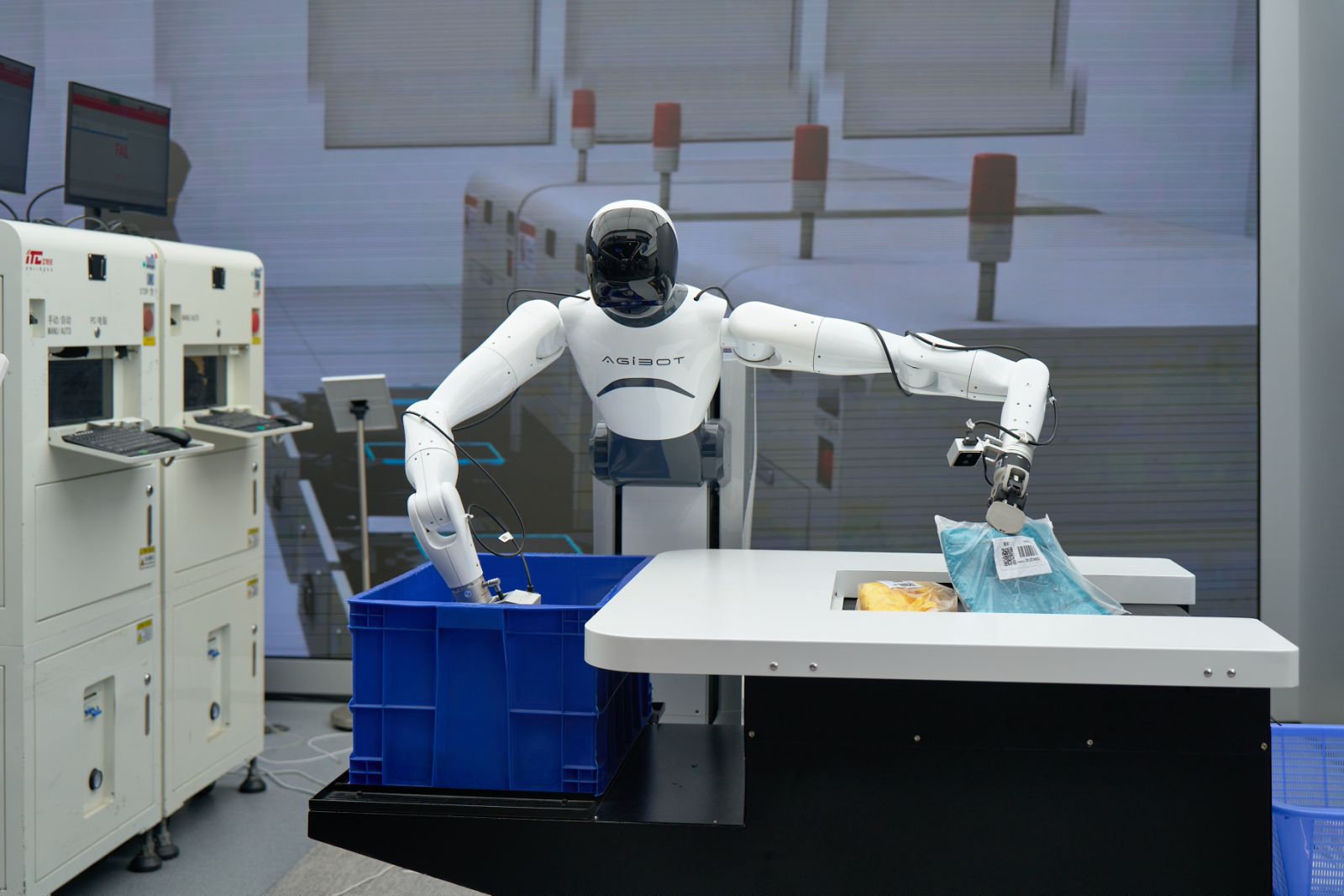
Robots from China can automate warehouse transport, picking, pallet handling and parts of parcel sorting. The right machine depends on the goods, their presentation and the next step in the workflow. Start by defining one material handoff, then test the proposed system with the products and exceptions your facility handles.
Earlier this year, I wrote about reading Hu Anyan's memoir, I Deliver Parcels in Beijing, in Chinese. His account includes a night shift sorting packages at a logistics hub in Foshan. That description shaped the question I wanted to ask as founder of Asiabits about logistics robots: which repetitive tasks can machines take over, and what work will people do around them?
That question becomes practical when a warehouse team considers automation. A carton arrives on a pallet, travels to a conveyor, gets identified and eventually joins an outbound order. Each transfer has its own physical constraints. Choosing a robot starts with deciding which transfer the project should improve.
Which warehouse task should you automate first?
Choose a task with a clear input, output and measurable operating requirement. Moving a tote between stations is a different project from extracting an individual item inside it. Write down what arrives, how it is presented and where the goods must go after the robot finishes.
For a transport task, describe the load carrier and the route. Include the point where a person or another machine places the load on the robot. At the destination, identify who confirms receipt and frees the robot for its next job. These handoffs determine whether the proposed movement fits the operation.
For a picking task, describe the object and its surroundings. A sealed carton on a pallet gives a gripper different access from a pouch partly covered by another item in a bin. Give the supplier photographs and representative samples, with permission to share them, so the engineering discussion addresses the actual goods.
Set the business measure before the demonstration. That might be completed transfers over a shift, correctly fulfilled order lines or manual interventions during a defined test. Choose the measure that corresponds to the task being changed. Record the current process on the same basis so the proposed system has a useful comparison.
Our guide to what to examine during a robotics factory visit explains how to carry an application brief into a technical discussion. For a warehouse project, the brief should follow the goods through the proposed automation boundary.
How do mobile robots and robot arms divide the work?
Mobile robots move loads between locations; robot arms handle goods within their working area. A combined system can pass a tote or carton between those functions. Specify the transfer between the machines as carefully as each machine's individual task.
Chinese warehouse robotics supplier XYZ Robotics describes this arrangement in its published logistics cases. In a tote-handling example, mobile robots bring totes to a depalletizing position, while arms move and scan them before onward transport. The example connects movement across the building with manipulation at a station.
A buyer can turn that sequence into an interface drawing. Mark where the carrier stops, how its position is confirmed and what tells the arm that the load is ready. Show the outgoing conveyor or receiving carrier too. The integrator needs enough information to explain how each completed action releases the next one.
Include recovery in the sequence. If a carrier arrives without its expected load, establish how the system detects the mismatch and who resolves it. If the receiving conveyor is occupied, establish where the upstream work waits. These are useful demonstration scenarios because they reveal how the proposed system coordinates movement.
Ask who owns the complete transfer. When separate suppliers provide the mobile base, handling station and software connection, identify the party responsible for commissioning their interaction. The buyer should leave the discussion with a named technical owner for each interface and a shared description of the finished workflow.
What makes picking and pallet handling different?
Picking selects an object for the next operation; pallet handling builds or breaks down a load arrangement. The product mix and placement requirements determine the gripping and planning needed. A robot removing cartons from a pallet faces a different output requirement from one assembling a stable mixed load.
XYZ Robotics' case material includes carton handling with outward-facing labels and tote handling linked to conveyors. Those examples suggest useful questions for a buyer: must the label face a scanner, must different products be placed in a specific sequence, and what does the receiving process accept? Each answer changes the task specification.
Industrial robot supplier ABB describes a related use in its depalletizing documentation: removing boxes from a pallet to feed an automated sorting system. That establishes a clear boundary for evaluation. The robot must deliver the box in a form and position the downstream equipment can use.
For your own test, group products by the handling problem they present. Include differences in size, packaging surface and rigidity where they occur in the operation. Ask the supplier which proposed gripper and vision setup will be used for each group. Keep that configuration with the test results.
Check the output as well as the pickup. Inspect product damage and the final placement. For pallet building, ask your logistics team to review the proposed stack and handling procedure. For sorter feeding, include the scanner and conveyor in the acceptance discussion so the test measures a usable transfer.
Where do humanoid robots fit in warehouse automation?
Evaluate a humanoid against the specific work sequence it would perform, including how it receives instructions and handles interruptions. The comparison should include the equipment already suited to that task, such as a mobile carrier or a fixed handling station.
A human-shaped machine may be proposed where work involves movement between locations and manipulation at existing stations. Ask the supplier to demonstrate the complete route with representative objects. Include the approach to the station, the grip and the placement, together with whatever acknowledgement ends the job.
Distinguish autonomous behavior from operator assistance in that demonstration. Establish which actions are controlled by the machine and which require a person, then include that person's work in the operating plan. A remote intervention belongs in the staffing calculation whenever the proposed workflow depends on it.
Our guide to China's industrial and humanoid robotics provides broader context. At the warehouse level, the useful question is whether the offered configuration completes your handling sequence with acceptable support effort. Ask for evidence tied to that sequence.
How can you research warehouse robotics suppliers in China?
Research suppliers by function, then narrow the list using product documentation and application fit. In our database of 7,000+ robotics companies, the 8 November 2026 snapshot contains 7,320 company records, including 373 in Warehouse / Logistics Automation and 272 in Mobile Robots / AMR. The database covers multiple countries.
Those categories provide separate starting points for a project involving both handling and transport. Filter candidates for China and inspect the relevant products. Record whether each company supplies the robot, the application software or the integrated installation. This gives your team a clearer comparison than grouping every vendor under warehouse automation.
For each candidate, request a description of a comparable task and the offered configuration. Match the goods, presentation and destination to your brief. A case involving uniform totes may help assess tote transport; a project handling loose cartons addresses a different part of the requirement.
Arrange the discussion with the people who can answer application questions. Bring your warehouse operations lead and the engineer responsible for system integration. Share the layout and sample information in advance, within your company's confidentiality permissions, so the manufacturer can prepare a relevant demonstration and identify missing inputs.
What should a warehouse robot pilot measure?
A pilot should measure completed work, quality and the human effort required under agreed operating conditions. Define when a job begins and ends. Include the normal replenishment, downstream waiting and exception handling that fall inside the proposed system's scope.
Use representative goods from the intended product mix. Record successful transfers, failed attempts and manual interventions, together with the reason for each interruption. Keep the layout, software version and hardware configuration attached to the record. Your team can then distinguish a product-handling issue from an integration problem.
Include the people who will run the installation. Have operators practise the proposed recovery procedure and maintenance staff review access to serviceable parts. Ask how faults are reported and what support is available during the shifts the warehouse works. Include the time spent clearing rejected goods and restarting the equipment after a stop. These answers belong in the operating plan before wider rollout.
Asiabits helps international teams research Chinese robotics manufacturers and prepare focused technical visits. Start with the robotics directory for company research. Through Bespoke Tours, teams can meet relevant manufacturers and examine the equipment behind a proposed workflow. Bring the material handoff you want to automate, with representative goods and a defined output, so the visit can advance a specific application decision.
Frequently asked questions
Which warehouse tasks can Chinese robots automate?
Available systems address transport, picking, pallet handling and parts of parcel sorting. Define the goods and transfer involved before comparing equipment.
How do I compare warehouse robot suppliers in China?
Compare the offered configuration against the same application brief. Check who provides the hardware, software and integration, then test representative goods.
Does a warehouse need a humanoid robot?
The answer depends on the handling sequence and installation. Compare the proposed humanoid with mobile carriers and handling stations using the same completed-work and support requirements.
What should a warehouse robotics pilot include?
Include representative products, normal handoffs and exception recovery. Measure completed transfers, quality and human interventions under recorded operating conditions.
Get These Insights Every Monday
Join 18,000+ professionals reading Asiabits. Free, every Monday, straight from Shanghai.
Subscribe Free →