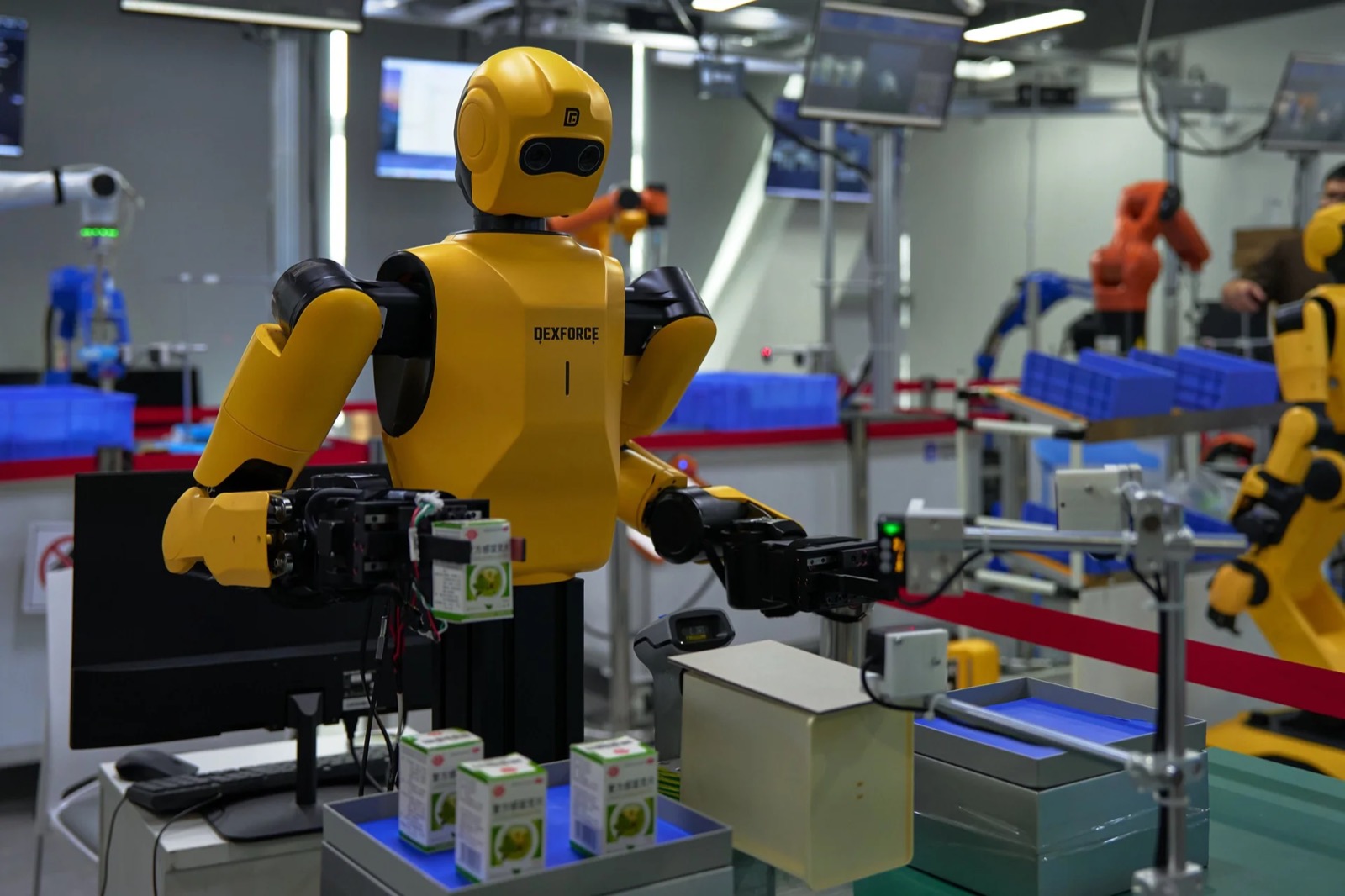
On a robotics factory visit in China, follow one part through the station. Watch how it arrives, what the robot does to it and where it goes next. Ask the operator to explain a recent stop and how production resumed. Those observations give you a basis for judging whether the process fits your own plant.
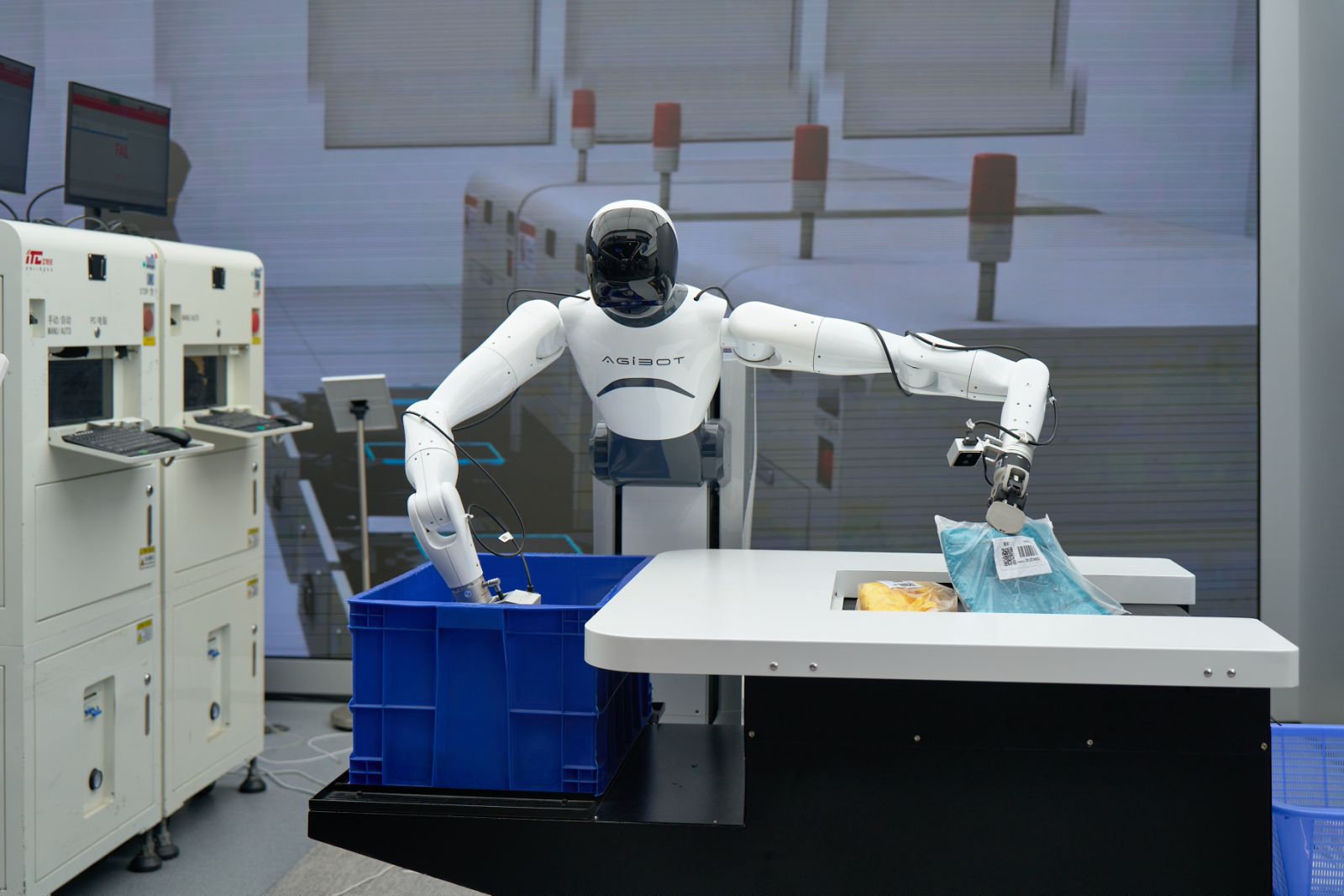
In June I watched Chinese robot maker AgiBot's livestream from an electronics factory in Nanchang. The G2 robots shared a tablet inspection line with human operators. AgiBot's account of the livestream identifies the inspection section and the conditions under which the robots worked.
My name is Thomas Derksen. When preparing a visit at Asiabits, we start with the work the team wants to understand. For the walkthrough, give one visitor the job of tracing the part and another the job of asking how the station is run.
What should you ask to see before booking the visit?
Ask for a workstation that handles the kind of material your team works with. Describe the part, what should happen to it and how it reaches the station. A robot that picks identical cartons from a level tray faces a different job when the same cartons arrive tilted in a deep tote. A photograph of your input and output, cleared for sharing, can make that difference clear in one email.
Ask where the demonstration will take place and who can explain the process. A supplier's lab is a useful place to see how a gripper handles an awkward sample. An operating plant gives you a chance to see how material is supplied and how the station interacts with the rest of the line. If the host can offer a pilot cell on its own premises, agree on which variation of your task it can run there. Put the setting in the itinerary so everyone knows what evidence to expect.
In our database of 7,000+ robotics companies, 543 records fall under cobots and industrial arms and 272 under mobile robots. Those are worldwide categories in our research collection. For a visit about moving trays between processes, both categories are worth searching. A mobile robot may bring the tray to the cell, where an arm takes over. Asking each company which part of that route it handles gives you a better shortlist than searching for a single machine to do the entire job.
How do you follow one part through a robot station?
Pick a part that arrives during the visit and trace it to the next handover. At a sorting station, watch who brings the container, how the robot knows which part to take and how the rack leaves when it is full. If parts are checked along the way, find out where a rejected part goes. The useful view often starts a few steps back, where the feed and the people working at it are both visible.
For example, Xiaomi, the Chinese electronics and car maker, reported an eight-hour factory trial on November 3 at a station sorting side covers for car centre consoles. In Xiaomi's video, reproduced by Humanoids Daily, the robots move parts between containers and slotted racks. Pause the footage before a pick and after the placement. The places where parts wait are as useful to a visiting production team as the motion of the robot's hand.
Draw those waiting points on a page. Mark the person or machine responsible for releasing the next batch. At your own plant, a pallet arriving late or a tray being placed slightly off centre may be the condition that determines whether the station works. Seeing where the demonstration relies on prepared inputs tells you which interface to investigate back home.
What should you measure during the walkthrough?
Separate the time for the robot's move from the time for a finished part to leave the station. A supplier can show you a fast pick while an operator replenishes parts or clears the completed stack between runs. Ask which of those activities are included in the stated cycle time. If the host can share an operating record, ask for accepted output and elapsed time over the same interval.
One useful distinction is between attempts and completed work. If a part needs two attempts before it reaches the right slot, the robot has made two picks and the station has released one part. For a packaging job, a box counts as complete when it meets the downstream requirement, whether that means the lid closes correctly or the label can be read at the next station. Agree on the unit before comparing two suppliers' figures.
Write the operating conditions next to the number. A trial with identical parts from one batch tells you how the station ran with that batch. If your own line sees a different mix every shift, ask how changes in material or product are recorded and whether the figures are available by variant. When the only available evidence is a demonstration, record the cycles you saw and request a longer run for the comparison.
Check what the counter does during breaks and resets. Some displays show the pace only while a cycle is active. A shift total will include the time between those cycles, including the wait for an empty rack. Ask to see the clock or the reporting window behind the figure before using it in a capacity calculation. If the line supplies a process that draws parts in bursts, ask how many good pieces are ready when the downstream operator calls for the next batch.
What happens when the station stops?
Ask the person who runs the station to describe a recent interruption and walk you through the restart. Where allowed, a host can show the recovery on a training cell or replay a fault record from production. A recovery starts when the station detects the fault and ends when acceptable parts are moving again. The person with the reset button is often the best guide.
Consider a station placing covers into a rack. If the gripper leaves one cover at an angle, the next slot may still be free. Can the robot recognise the misplaced cover and put it right? If it calls an operator, what does the operator see on the screen? Find out who removes any affected parts and where the robot resumes. Those details tell you which support work comes with the machine.
Also ask what the upstream process does during a stop. A buffer can give the rest of the line time to keep running. When that buffer fills, someone has to decide whether to switch to a manual station or pause the process feeding it. Ask the host to point to that buffer and explain how the operator knows when it is full. You can take that question straight back to your own production team.
Ask who can change the station's settings between products. If an operator selects a recipe on the panel, have the host show how the panel confirms the correct recipe is loaded. If a technician has to move a guide or adjust a camera, add that step to the changeover notes. A station that processes one long batch and a station that changes products several times per shift can have the same running speed and very different output.
What should you bring back to your team?
Bring back a station sketch and a short record that says what you saw, what the host reported and which test you want to run next. A sketch is often enough to capture the part route when photography is restricted. Record the station type and the task in your first line, so a colleague reading the note later can distinguish an operating line from a lab demonstration.
Compare stations that do the same job by putting the material, the finished output and the recovery method side by side. If one ran only the supplier's sample, put that in its column. If the other showed a shift record with a mix of parts, write down which variants it covered. Your next test should fill the gap that matters most to your plant. That might be feeding a worn returnable tote, handling a part with a reflective finish or processing the small batches your second shift sees.
Send the sketch to the colleague who owns the process and agree on what to bring to the next conversation. For a mixed carton job, that could be two batches of cartons with the labels and tape you use on a normal day. We cover access and scheduling separately in our guide to arranging factory visits in China. For a visit centred on a particular city, see our Suzhou robotics visit guide.
Asiabits builds private company-visit programmes in China around the work a team wants to see. We use the team's brief to choose relevant hosts, check what each site can show and help the delegation compare what it learned across visits. A useful brief starts with the part or process you want to understand.
Frequently asked questions
Who should join a robotics factory walkthrough?
Bring someone who owns the process you are considering and someone who can assess how the equipment fits the line. If the people who will operate or maintain it are staying at home, get their questions before the visit.
Can we bring our own parts to a robot demonstration in China?
Agree on sample material with the host in advance. Share dimensions and handling requirements first, and ask how the host wants to receive the samples and whether the station can accommodate them.
Can a robotics factory visit include a line in normal production?
Ask the host to confirm what will be running and where visitors can stand. A process engineer can explain handovers you cannot see directly, and a cleared station record can help you review a part of the process that is closed to visitors.
When is a showroom visit useful for a manufacturing team?
A showroom can help you compare a robot's reach, gripper options or handling of an agreed sample before you arrange a line visit. Decide which of those questions you want to answer and give the host the sample details ahead of time.
Get These Insights Every Monday
Join 18,000+ professionals reading Asiabits. Free, every Monday, straight from Shanghai.
Subscribe Free →