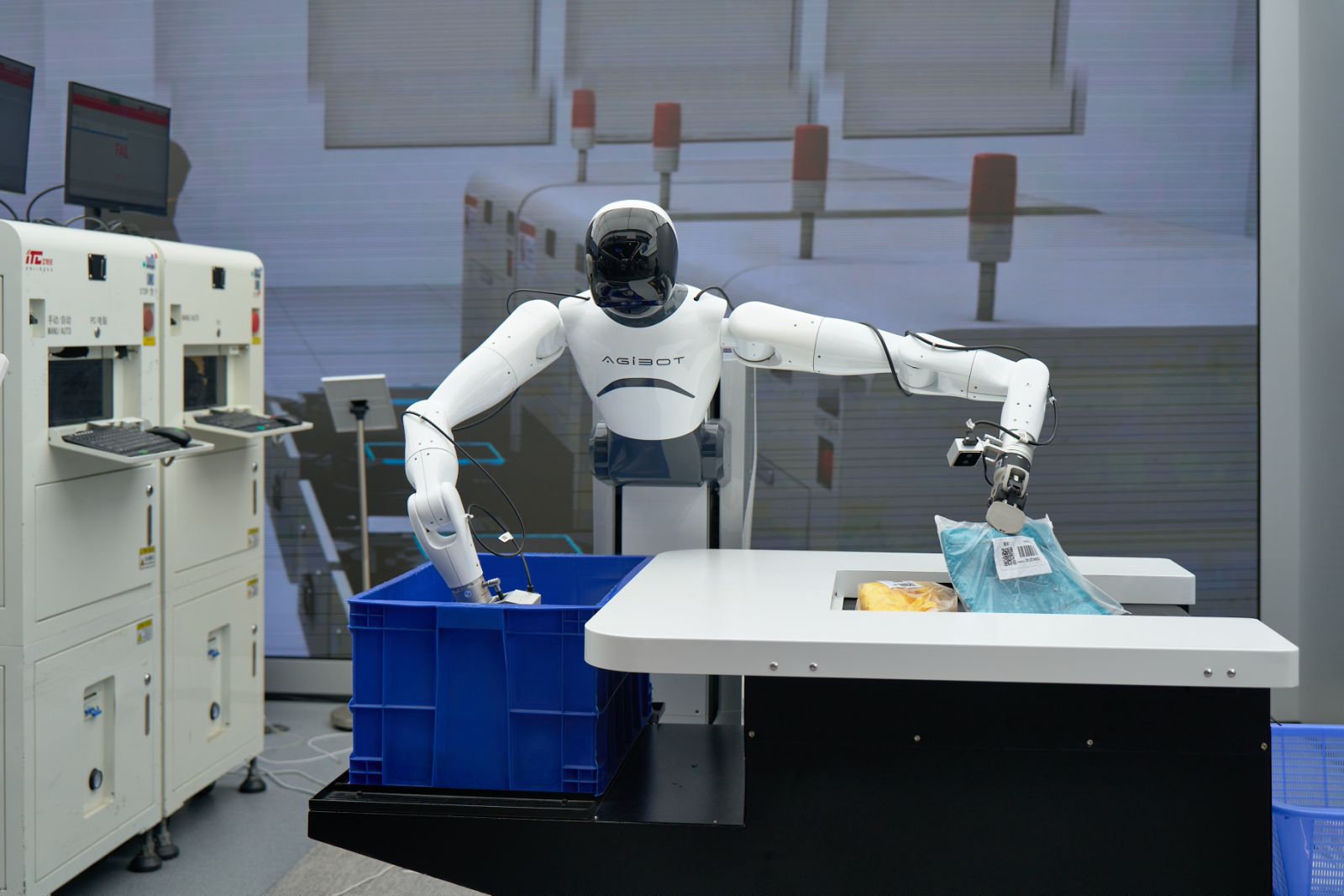
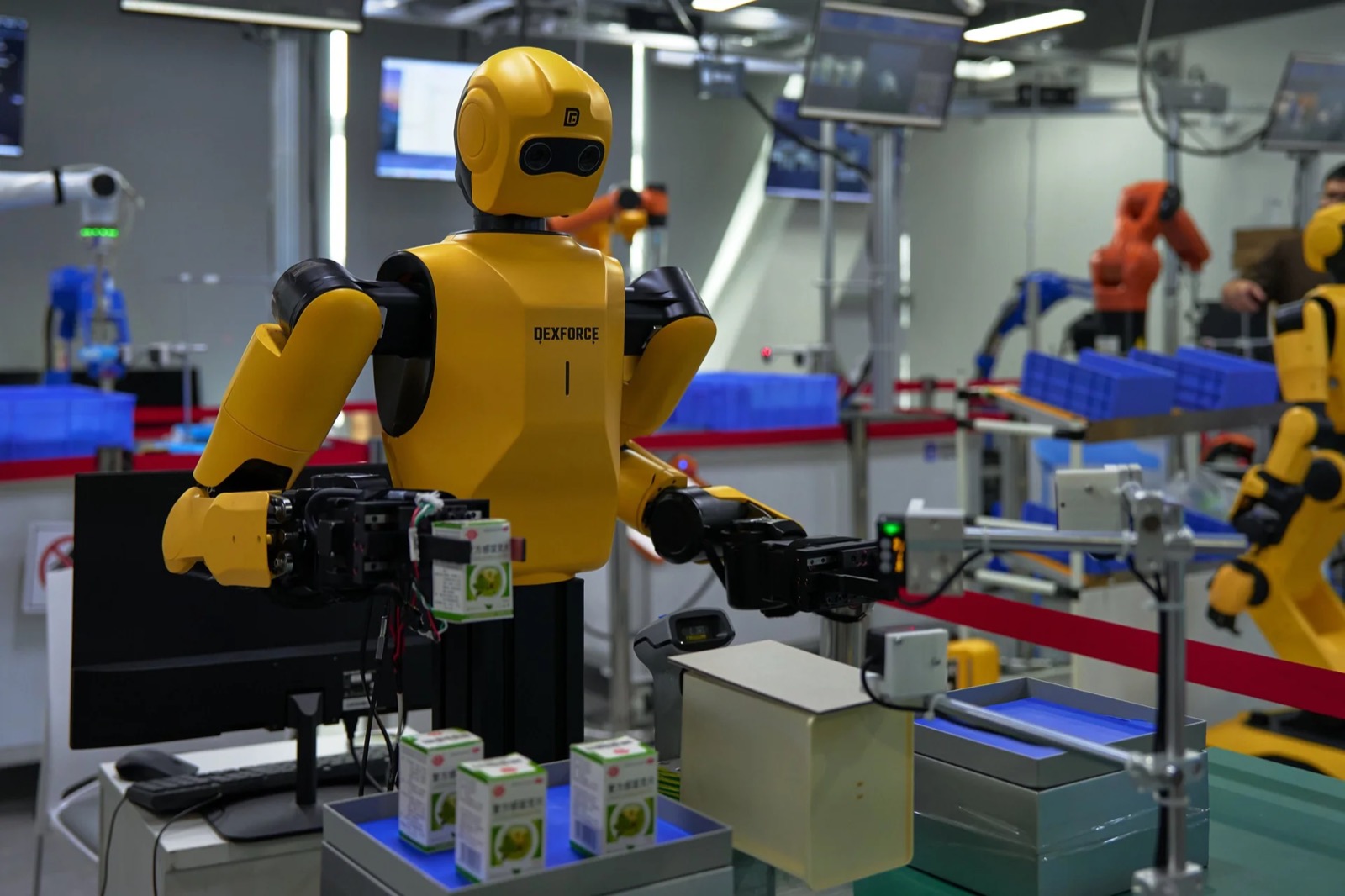
A robot actuator converts energy into controlled movement. In an electric robot joint, the actuator assembly can combine a motor, transmission, sensors and control electronics. To compare suppliers in China, define the joint's load and movement, then examine continuous performance, feedback and integration requirements under the conditions your machine will face.
During a Shenzhen visit described in my July 2026 LinkedIn post, an engineer placed a robot hand in my palm. Holding that mechanism made the engineering inside a small part of the robot tangible. I'm Thomas Derksen, co-founder of Asiabits. When we look at robotics companies, the components behind a movement deserve their own discussion.
A hand has to close around an object. An elbow has to lift it. A knee has to support movement while carrying the machine above it. Each creates a different requirement for the hardware producing force. Understanding those differences helps a buyer ask useful questions before arranging a demonstration or requesting a sample.

What is inside an electric robot actuator?
An electric actuator assembly brings together the parts needed to produce and control movement at a joint. The motor generates rotation. A transmission, where fitted, changes the relationship between motor speed and output torque. Bearings support the moving assembly, while sensors report information used by the controller.
Torque is the turning effect applied around an axis. A robot lifting an object through its elbow needs enough joint torque for the object, the arm's own weight and the movement being commanded. The distance between the load and the joint matters. Moving the same object farther away changes the demand on that joint.
A reducer allows a motor to turn faster than the joint output. The choice of transmission affects how the joint responds to load, how much space it occupies and how it behaves when force comes back through the mechanism. These characteristics need to fit the intended movement and operating conditions.
An encoder measures position or movement. Feedback allows the controller to compare the requested motion with the measured state and adjust its command. Ask where the measurement happens. A sensor on the motor and a sensor on the output side observe different points in the mechanical chain.
Suppliers package these functions differently. One quotation may cover a motor and gearbox, while another includes a drive and integrated sensing. Request a component list and an interface drawing with each proposal. That gives the engineering team a clear basis for comparing what each assembly contains and what the robot builder must supply.
Why do torque and speed need to be considered together?
A joint has to deliver the required torque at the speed and duration the application demands. A peak rating describes a different operating condition from a sustained load. Ask for the conditions behind each number, including supply voltage, cooling and the permitted duration of the peak.
Consider a hypothetical elbow that lifts a container and then holds it while another operation finishes. The movement and the hold create different demands. A demonstration of a quick lift answers part of the question. The proposed actuator also needs evaluation during the stationary hold, when it must continue supporting the load.
Write down the complete cycle before comparing products. Include the starting position, load, movement path and hold period. Specify how frequently the cycle repeats and the surrounding temperature. This lets suppliers assess the actual application and identify the information they still need before selecting hardware.
Keep the mounting arrangement attached to the comparison. An actuator connected to a large metal structure can lose heat differently from one enclosed inside a compact limb. Ask how the test unit was mounted and how temperature was measured. Your engineer can then judge whether the published result transfers to the intended installation.
For sample testing, agree on the result you want recorded. That could include joint position, load, temperature and any protective shutdown over the full cycle. Retain the configuration alongside the result. A trace with its operating conditions gives the next engineering discussion a shared reference.
What does a precision reducer contribute?
A precision reducer changes speed and torque while helping the mechanism reach the required positioning behavior. Its suitability depends on the load, geometry and movement of the joint. Ask the supplier to explain the trade-offs for your application and provide the relevant performance information.
US precision-motion supplier Harmonic Drive explains how strain-wave gearing uses a wave generator, flexible spline and circular spline. Their interaction produces the speed reduction. This gives buyers a useful starting point for understanding what a supplier means when it proposes this type of transmission.
Backlash is clearance that can allow lost motion when the direction of loading changes. It belongs alongside stiffness and positioning behavior in the technical discussion. Ask which property a specification describes and how it was measured, so that apparently similar claims can be compared on the same basis.
For a joint that repeatedly reverses direction, request a test that includes those reversals under the intended load. For a joint that must hold a precise pose, include that hold in the evaluation. Share the accuracy requirement at the point where the robot does its work, as well as the requirement at the joint.
Discuss the mechanical interfaces early. The output flange, mounting faces and cable passage affect how the assembly fits inside a robot. Provide the available envelope and the expected external loads. A clear drawing can resolve a mismatch before either team invests time in a prototype.
How do actuators fit into a complete humanoid?
Actuators work within a coordinated machine whose joints, sensing and controls must operate together. A knee, wrist and finger have different jobs. A component comparison becomes more useful when it names the joint and the task that joint must perform.
Chinese robot manufacturer Unitree's G1 documentation describes joint motors, output bearings, encoders and cooling alongside its hand options. Reading those fields together shows how mechanical and electrical specifications meet inside one platform. Buyers can use the same categories to organise questions about another machine.
For a hand, start with the object and the contact. A rigid box, flexible pouch and delicate surface present different gripping questions. Ask how the hand detects position or contact and what information is available to the robot controller. Then examine how the grip changes when the object arrives in a different orientation.
At the arm, include the mass of the hand itself when discussing payload and movement. The hardware attached beyond a joint becomes part of the load that joint must move. Ask the robot builder to confirm the proposed end effector within the complete configuration being offered.
Controls access also affects development work. Establish which commands the buyer can send, which measurements can be read and what documentation accompanies those interfaces. Have the controls engineer review this before ordering a development unit. Our humanoid hardware cost guide connects component choices to the broader build.
How can you research actuator suppliers in China?
Research actuator suppliers by function and required performance, then check the specific product and company behind each candidate. In our database of 7,000+ robotics companies, the 7 November 2026 snapshot contains 7,320 company records, including 1,597 in the Components category. The database covers multiple countries.
That category gives research a broader starting point than a list of finished robot brands. Search within it for the hardware your design requires, then check manufacturer documentation. A business making motors, sensors or transmissions may address one part of the requirement. An integrated joint supplier may combine several functions.
Build the shortlist around the application brief. Record the proposed model, technical contact and documentation available for review. Ask each candidate to identify which parts it manufactures and which it integrates. This helps your engineers direct questions to the people responsible for the relevant design and production process.
Keep qualification tied to evidence. Request the drawings and test information needed for your own review, then agree on sample evaluation. If a supplier proposes a change to the specification, record that change with the revised model. Your team should be able to trace a test result back to the configuration it actually received.
For geographic planning, our guide to China's humanoid robot suppliers provides additional context. Combine location research with the technical shortlist so a visit brings the right engineers into the discussion.
What should you settle before ordering an actuator sample?
Before ordering a sample, settle the configuration, integration responsibilities and acceptance test. Identify the power supply and communication interface, together with the mechanical connections. Confirm what software and documentation arrive with the unit and who will answer setup questions.
Agree on how the sample will be tested against your cycle. Include the measurements your team needs and the conditions under which the supplier expects the unit to operate. Ask which settings can be adjusted and how changes should be recorded. This keeps the test repeatable when another engineer takes over.
Plan for maintenance while the design is accessible. Establish how a fault is diagnosed, what can be replaced and whether replacement requires calibration. Ask how product changes are communicated and how the supplier identifies revisions. These answers help the buyer estimate the work needed to support the assembly after integration.
Asiabits helps international teams research robotics manufacturers and prepare technical conversations in China. The robotics directory supports initial company research. Through Bespoke Tours, teams can meet relevant manufacturers and examine the hardware behind their application. Share the joint, load and operating cycle you are investigating so the discussions can focus on an assessable engineering requirement.
Frequently asked questions
What does a robot actuator do?
A robot actuator converts energy into movement. An electric joint assembly can include a motor, transmission, sensing and control electronics.
Is a robot actuator the same as a motor?
The motor produces rotation. An actuator assembly can combine that motor with a transmission, feedback and other parts needed to control joint movement. Check the component list for the product being offered.
What should I compare when buying robot actuators in China?
Start with the load, movement and complete operating cycle. Compare sustained performance under stated cooling and mounting conditions, then review interfaces and the sample acceptance test.
Why are reducers used in robot joints?
A reducer changes the relationship between motor speed and output torque. Its mechanical behavior and size must suit the joint and the work it performs.
Get These Insights Every Monday
Join 18,000+ professionals reading Asiabits. Free, every Monday, straight from Shanghai.
Subscribe Free →