Compare Chinese humanoid robot manufacturers by the work you want a robot to do, then check the exact hardware, software access and support behind each proposal. Unitree, AgiBot and UBTECH sell different platforms and configurations. A useful shortlist connects each candidate to a defined task and a test your team can assess.
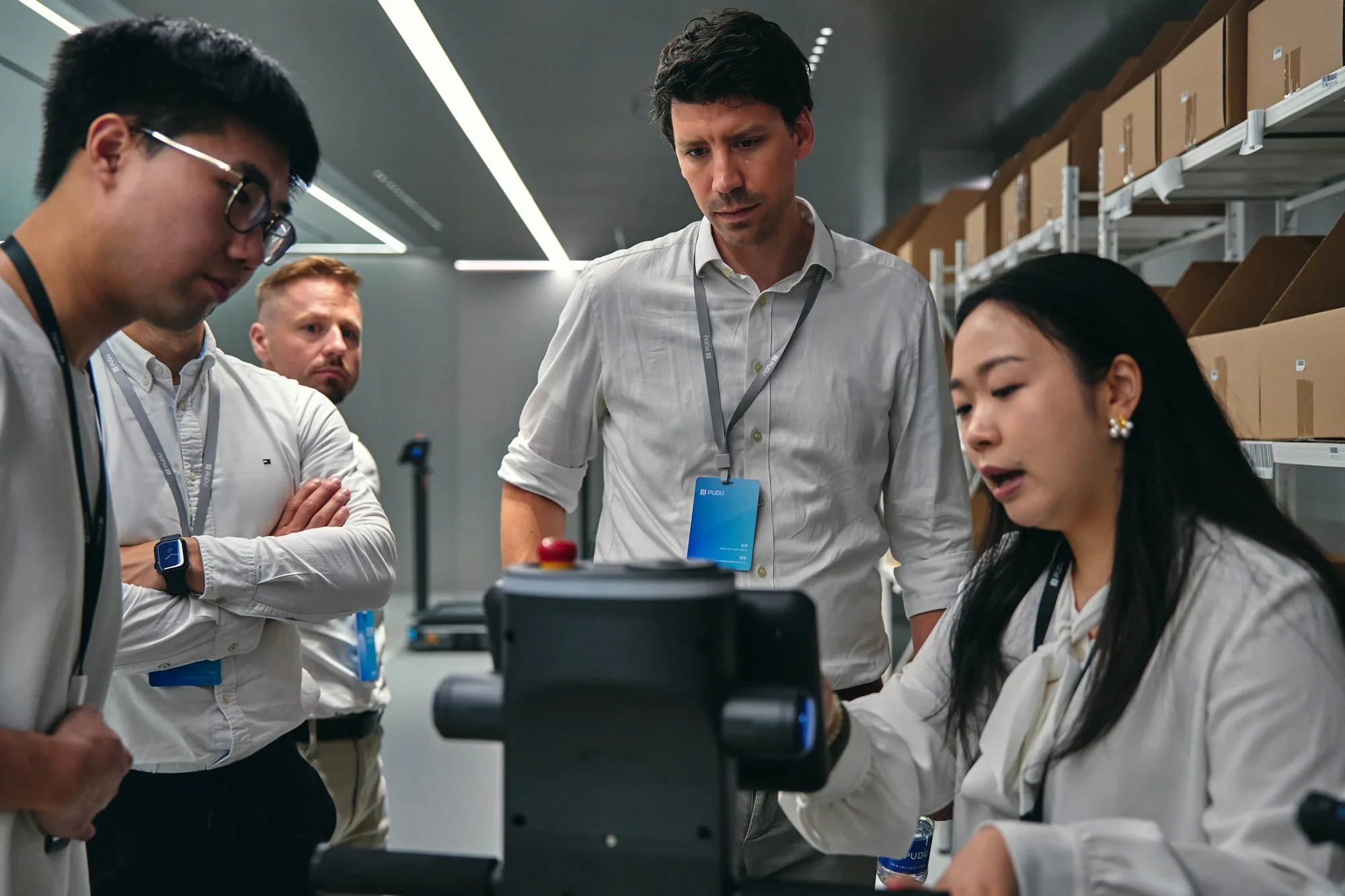
During a Shenzhen visit I described in July, an engineer put a robot hand in my palm. That small component made the discussion much more concrete. A hand has to grip the object you actually use, at the required angle, with enough control to release it safely. The appearance of the complete robot tells you little about those details.
At Asiabits, I am Thomas Derksen. Taking international leadership teams into Chinese robotics companies has taught me to prepare comparisons around questions that the host can demonstrate. A general presentation is useful background. The most productive discussion starts when both teams are looking at the same task, object or technical interface.
Which kind of humanoid manufacturer should you compare?
Start with the purpose of the purchase: research, visitor interaction or a defined operating task. Each leads to a different comparison. A university developing control software needs access to the robot. A visitor centre needs a usable interaction and a person who can operate it. A factory needs a repeatable process that fits its working environment.
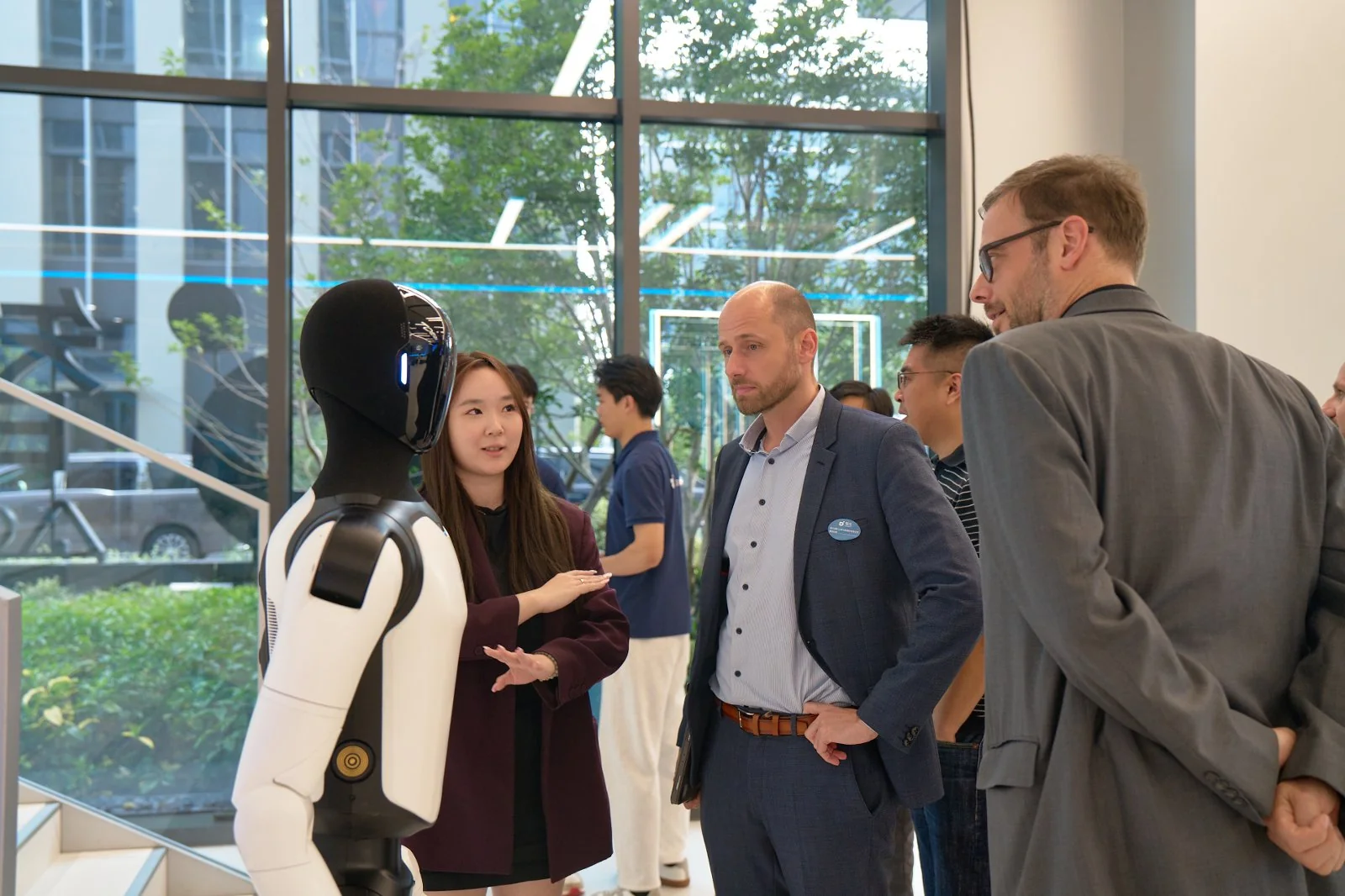
These categories can overlap within the same manufacturer. AgiBot, a Chinese embodied AI and robotics company, lists multiple robot families. Its A2 product page describes conversation, guided presentations and enterprise knowledge bases. That makes interaction a relevant subject for an A2 discussion. Ask the supplier to identify the exact model and application package it proposes for your own setting.
UBTECH, a Chinese robotics manufacturer, presents its Walker S2 as an industrial humanoid with autonomous battery swapping. This directs a factory buyer toward questions about the charging station, the route to it and the work that resumes afterwards. A feature becomes useful when you can describe its place in the process.
Prepare a short task description before requesting recommendations. For a hypothetical parts-handling trial, it could specify the container, object weight, pickup position and destination. Include the people and equipment sharing that space. The same description should go to every candidate so their answers can be compared directly.
How do you build a shortlist from a large supplier pool?
Filter manufacturers by the capabilities and responsibilities your project needs, then investigate the candidates individually. Our database of 7,000+ robotics companies contains 7,320 company records worldwide in the snapshot checked for this article. Of those, 214 are assigned to the Humanoid Robots category and 1,597 to Components. These figures describe our research coverage across countries.
The component category is useful because the company supplying the robot and the company making a critical part may be different. A task involving delicate objects puts particular attention on the hand and its sensors. A project involving repeated lifting raises questions about the arm, joint loads and heat. Give the relevant specialist a place in the technical discussion when necessary.
For each candidate, record the legal seller, proposed robot model, intended application and person responsible for integration. Integration means connecting the robot to the physical workspace and the systems around it. Keep a link to the original product documentation alongside the proposal. This makes it easier for colleagues to see what supports each entry.
A manageable shortlist has a reason for every inclusion. One company might offer the development access your engineers need; another might be able to demonstrate the handling task. A company should stay on the list because it can answer your project question. This approach gives a supplier visit in Shenzhen a clear purpose before travel begins.
What should match in a hardware comparison?
Compare the exact configuration being offered, including hands, sensors, computing hardware and accessories. The manufacturer name alone is too broad. Even two robots with the same model family can arrive with different equipment, and those differences affect the work your team can attempt.
Unitree, a Chinese manufacturer of quadruped and humanoid robots, provides a useful example. Its official G1 comparison table separates the G1 from the G1 EDU and lists different options for hands and computing. It also distinguishes their support for secondary development, meaning the ability to build your own software applications on the platform. A comparison should retain that distinction.
Ask each supplier to mark included equipment and optional equipment on the same list. Then connect the equipment to the task. If a demonstration uses a different hand from the proposed unit, request an explanation of how your version will handle the object. If extra computing runs the demonstration, establish where that computing will sit in your installation.
Use drawings or measurements for reach and clearance. A robot may reach a shelf when standing still yet need more room to turn or recover its balance. Request the conditions attached to payload statements, including arm position and whether the figure concerns one arm or both. Your own workpiece and station geometry give these questions a practical answer.
How can you compare software and demonstrated ability?
Separate the robot's existing functions from the application your team or an integrator will build. This defines the work left after delivery. Ask who supplies the task software, what interfaces are available and who maintains the application when either the robot software or the workplace changes.
An SDK is a software development kit: the tools and interfaces programmers use to communicate with the robot. Request documentation and a relevant example before assuming your team can modify a behaviour. Also establish which controls remain with the manufacturer. Our guide to how Unitree robots work explains the relationship between motion control and task applications.
During a demonstration, ask the host to identify how each action starts. It might follow a stored sequence, a remote operator's input or an autonomous decision based on sensors. Each can serve a useful purpose. Knowing which is running lets your engineers estimate the application work and lets your operators understand their role.
A useful comparison test changes something relevant to the task. In a hypothetical picking trial, move the object within the expected working area, change its orientation or introduce an empty container. Agree those variations with the supplier in advance. Record the outcome, any intervention and how the system returns to work. This produces evidence your colleagues can interpret.
For conversation applications, prepare questions drawn from the information the robot should actually provide. Check the required language, how answers are updated and what happens when the robot cannot answer. These tests connect an interaction feature to a real visitor or employee need, without turning a general conversation demo into an assumed business capability.
What should you ask about support and the working relationship?
Ask who will get the robot working again when your local team cannot resolve an issue. A project needs named responsibilities for commissioning, training, fault diagnosis and replacement parts. Those responsibilities can sit with the manufacturer, a distributor, an integrator or your own engineers.
Have the proposed seller explain the support route for your country. Request the relevant warranty terms and clarify where repairs happen, how parts are ordered and which software updates are included. If a local partner provides support, speak with that team about the proposed model. A sales contact and a technical service contact perform different jobs.
Map the information the application uses. Ask whether it stores images, audio or operating logs, where those records go and who can access them. For an application using company documents, establish how the knowledge base is loaded and maintained. Your technical and information-security teams can then assess the actual setup being offered.
Safety discussions should use your intended workspace and task. Ask for the documentation relevant to the supplied configuration and involve the person responsible for workplace safety. Establish who assesses the completed installation, including tools, surrounding equipment and access by people. That conversation belongs early enough to influence the proposed trial.
What should you bring home from a manufacturer visit?
Bring home a comparison your team can use to choose the next technical step. For each manufacturer, keep the proposed configuration, observed task, test conditions and outstanding engineering questions together. Add the person responsible for answering each question and the document or demonstration that would settle it.
Discuss the results with the people who will operate and integrate the robot. Ask whether the observed behaviour addresses the original task, which changes the workstation needs and what development remains. Agree the evidence needed for a pilot decision. This keeps a successful visit connected to the practical work that follows.
Asiabits helps international teams research Chinese robotics companies and prepare bespoke robotics visits around their business questions. Share the task you want to investigate, the experience of your team and the comparison you need to make. Those details help shape relevant company discussions and a visit programme that gives your team something concrete to assess.
Frequently asked questions
Which Chinese humanoid robot manufacturer is best?
Choose against a defined task and the exact configuration offered. Compare software access, demonstrated performance, integration responsibilities and support in your country.
How do G1 and G1 EDU differ for a buyer?
Unitree lists them as distinct configurations with different development access and equipment options. Check the current specification and the exact unit proposed before planning your application.
What should a humanoid robot demonstration include?
Ask for the task you want to investigate, the control method and relevant variations in objects or conditions. Record operator interventions and the steps needed to resume work.
What information should you send before a robotics visit?
Send a concrete task description, object and workspace details, and the questions your team needs answered. This helps the manufacturer prepare a relevant discussion and demonstration.
Get These Insights Every Monday
Join 18,000+ professionals reading Asiabits. Free, every Monday, straight from Shanghai.
Subscribe Free →