Plan a Shenzhen robotics visit around the decision your team needs to make: buying a complete machine, sourcing a component or finding a development partner. Match each meeting to that decision, confirm the actual site and technical participants, and group nearby visits together. Leave time to compare answers before adding another company.
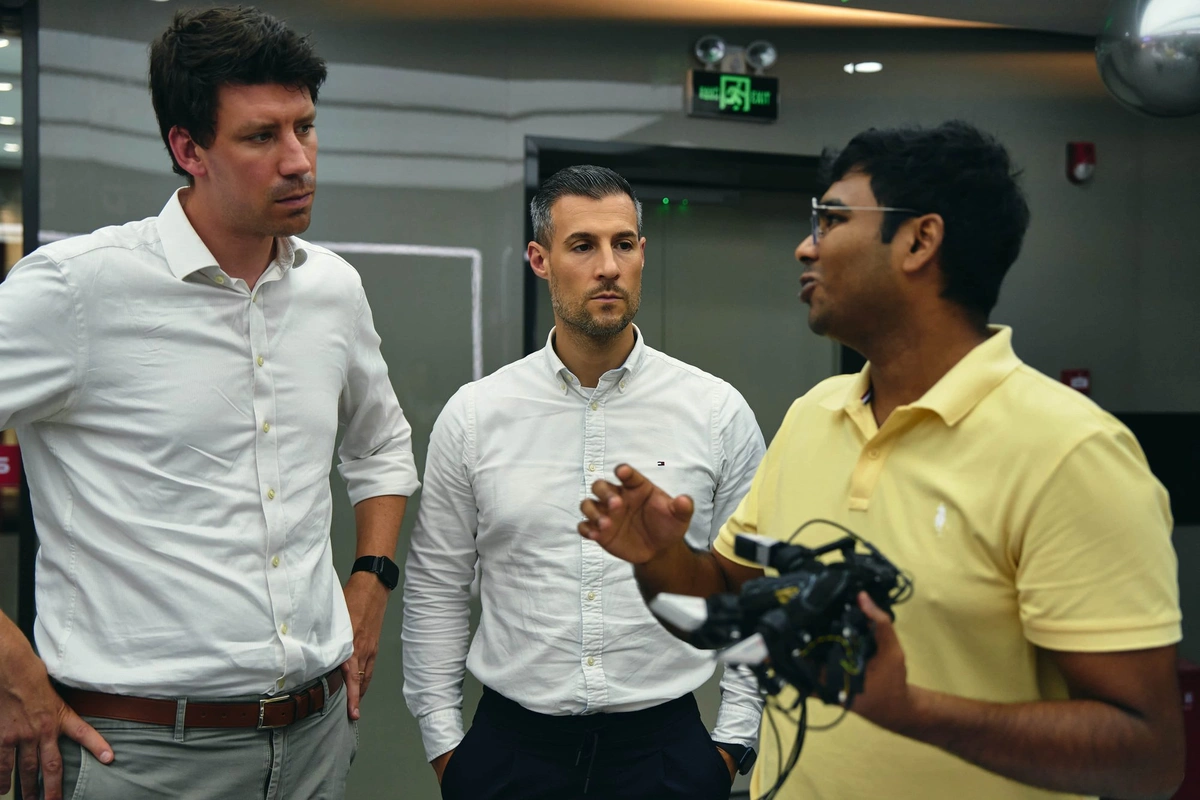
During a Shenzhen visit described in my July 2026 LinkedIn post, an engineer put a robot hand in my palm and explained that it cost more than a used car. Holding that hand made the component question immediate. A finished humanoid can attract all the attention while the purchasing or engineering opportunity sits inside its fingers, joints or sensors.
That experience shapes how I, Thomas Derksen, approach a visit programme. The useful route depends on what the visitors want to understand or build. A team exploring robot applications needs a different set of meetings from a manufacturer looking for customers for its own components.
What should a Shenzhen robotics visit help you decide?
A useful programme should answer a question that somebody in your company can act on after returning home. Write that question before selecting hosts. For an operations team, it might be whether a particular handling task deserves a trial. For a component manufacturer, it might be whether a robot builder has a technical problem its product could solve.
Make the question specific enough to change the agenda. “Understand humanoid robotics” leaves almost every presentation relevant. “Compare the hand requirements of robot developers with our existing sensing technology” tells a host which engineer should join and which hardware would help the discussion.
Agree the expected output inside your own team. A board may need a recommendation on further research. An engineering group may need a sample specification. Purchasing may need to compare suppliers against an existing requirement. Those are different outputs, even when the visitors sit through the same demonstration.
Choose participants accordingly. Bring someone who can explain the application and someone who can assess the answers. Give that person time to ask follow-up questions. A programme becomes difficult to use when everyone can approve the travel but nobody can define the next technical exchange.
Which kinds of companies belong on the route?
Choose companies by their role in the project: complete robot builders, component suppliers or businesses that integrate robots into an operating process. Each can answer a different part of the same question. A robot builder explains its machine architecture; a supplier explains the component; an integrator addresses the surrounding equipment and workflow.
Our research illustrates why a component meeting deserves its own place. In our database of 7,000+ robotics companies, 1,597 of 7,320 worldwide company records were classified as Components when checked on 13 November 2026. These are counts of our research collection. They give us a broad starting point for a shortlist alongside complete-machine manufacturers.
For a hand-related project, a proposed comparison could pair a robot developer with a gripper or sensor specialist. Ask the developer what it needs to measure and control, then ask the specialist how its product handles that requirement. The second meeting becomes more useful because the first has supplied a real technical question.
A market or exhibition stop has a different purpose. It can help a visitor recognise product categories and discover names to research. Reserve the detailed application discussion for an appointment with the appropriate team. Our guide to finding robotics startups in Shenzhen provides a starting point for exploring the city.
Keep the shortlist tied to the objective. A famous manufacturer belongs on it when the proposed conversation helps answer the question. A smaller specialist can be the better meeting when the visitors need to discuss a material, interface or component that the specialist develops directly.
How should you organise the day across Shenzhen?
Group appointments by the confirmed visit address and the depth of discussion required. Check whether the host is offering an office meeting, showroom demonstration, laboratory discussion or production visit. Put that description next to the address before arranging transport. A company name alone leaves too much of the day undefined.
Request the location of the actual meeting. A registered address or website contact page may lead to a different site from the one the technical team wants visitors to see. The same check helps establish which equipment and people will be available there.
Build travel time around the final addresses, then leave a buffer for entry procedures and a discussion that runs longer than expected. Ask the local coordinator to check the route at the relevant time of day. Use that result to decide whether another appointment fits.
Protect a short comparison session after a substantial visit. Record what changed in the team's understanding while the discussion is fresh. If the first host has answered the original question, use the next meeting to test the remaining uncertainty. An itinerary should leave enough room for the team to learn.
Give interpreters the brief and the relevant vocabulary in advance. If the team uses a specialist term for a sensor function or failure mode, explain it with a drawing or example. This helps the discussion stay on the engineering question and gives both sides a common reference when a word has more than one meaning.
For a mixed delegation, agree which questions everyone needs to hear and which require a smaller technical discussion. That can help a host prepare the meeting without making executives sit through every interface detail or forcing engineers to abandon a useful exchange.
Meals can also provide time to compare notes, but give the group a clear choice about whether a meal is a host meeting or an internal discussion. Mixing the two can leave visitors without an opportunity to speak candidly about what they have seen.
What should you send to hosts before the visit?
Send a short application brief that explains the visitors' roles, their technical interest and the conversation they want to have. Give the host enough information to choose the right colleagues. A company introduction is useful when it explains why these visitors and this host have a reason to meet.
Describe the task in ordinary operational terms. For a proposed handling application, that could include the object, its variation and the working environment. For a component discussion, specify the relevant interface and performance question. Label missing information as a question for discussion rather than filling it with an assumption.
Agree what the host will show. A live machine, a component sample and a production process answer different questions. If the meeting concerns engineering, ask whether the relevant engineer can participate. A conversation about adapting a product needs somebody who can discuss the proposed adaptation.
Set practical expectations for photography and information sharing before arrival. Confirm what the group may record and whether any material should remain inside the visiting team. Send only the background information the host needs for this meeting. Keep unrelated customer material out of the brief.
Our broader guide to visiting factories in China covers the preparation around a company appointment. For this Shenzhen route, the priority is making the technical purpose legible to each host before the group arrives.
How do you connect the visits to a technical next step?
Finish each substantive meeting by defining the next exchange: what will be sent, who will review it and which question that review should answer. A sample drawing, a test proposal or an introduction to the application engineer gives both sides a manageable continuation.
Keep the observations from different hosts comparable. Record the application discussed, the hardware shown and the remaining technical question in the same format. A team comparing hands should be able to find each host's answer about the same task without searching through unrelated presentation slides.
Separate a proposed trial from an agreed trial in the meeting notes. Write down the conditions still needed to start it, such as a representative part or a defined test procedure. That gives the project owner a clear next action and helps prevent a promising discussion from becoming an assumed commitment.
For example, a hypothetical team evaluating a gripper could leave one visit with the dimensions of its test object still unresolved. Its next step would be to supply that information, then request a proposal for testing. Booking another general demonstration would add little until the task itself is defined.
Decide who inside the visiting company will combine the findings. Engineering and purchasing may have heard different things in the same meeting. Bring those views together before asking a host for further work, so the next request reflects an agreed requirement.
For more detail on what to examine on site, see our robotics factory visit guide. Use the Shenzhen programme to connect those observations across the machine builder and the relevant suppliers.
Asiabits plans private executive innovation visits in China around a team's business and technical questions. We select relevant companies, arrange meetings and chair discussions in Mandarin and English. To start a Shenzhen programme, send the application you want to explore, who will travel and your timing. That lets us propose a route with a clear purpose for each visit.
Frequently asked questions
How do you plan a robotics visit in Shenzhen?
Define the decision the visit should support, then select hosts that can answer the relevant questions. Confirm the actual sites and technical participants before grouping nearby appointments into a route.
Should a robotics delegation visit component suppliers?
Component suppliers are useful when the team needs to understand or develop a particular part of a machine. Pair their meetings with a robot builder when comparing application requirements with component capabilities.
What should you prepare before meeting a Chinese robot manufacturer?
Prepare a short brief describing the application, the visitors' roles and the technical questions. Agree which equipment the host will show and who will join the discussion.
What should happen after a Shenzhen robotics visit?
Assign an owner to combine the findings and define the next exchange with each relevant host. That exchange might be a drawing, sample specification or test proposal.
Get These Insights Every Monday
Join 18,000+ professionals reading Asiabits. Free, every Monday, straight from Shanghai.
Subscribe Free →