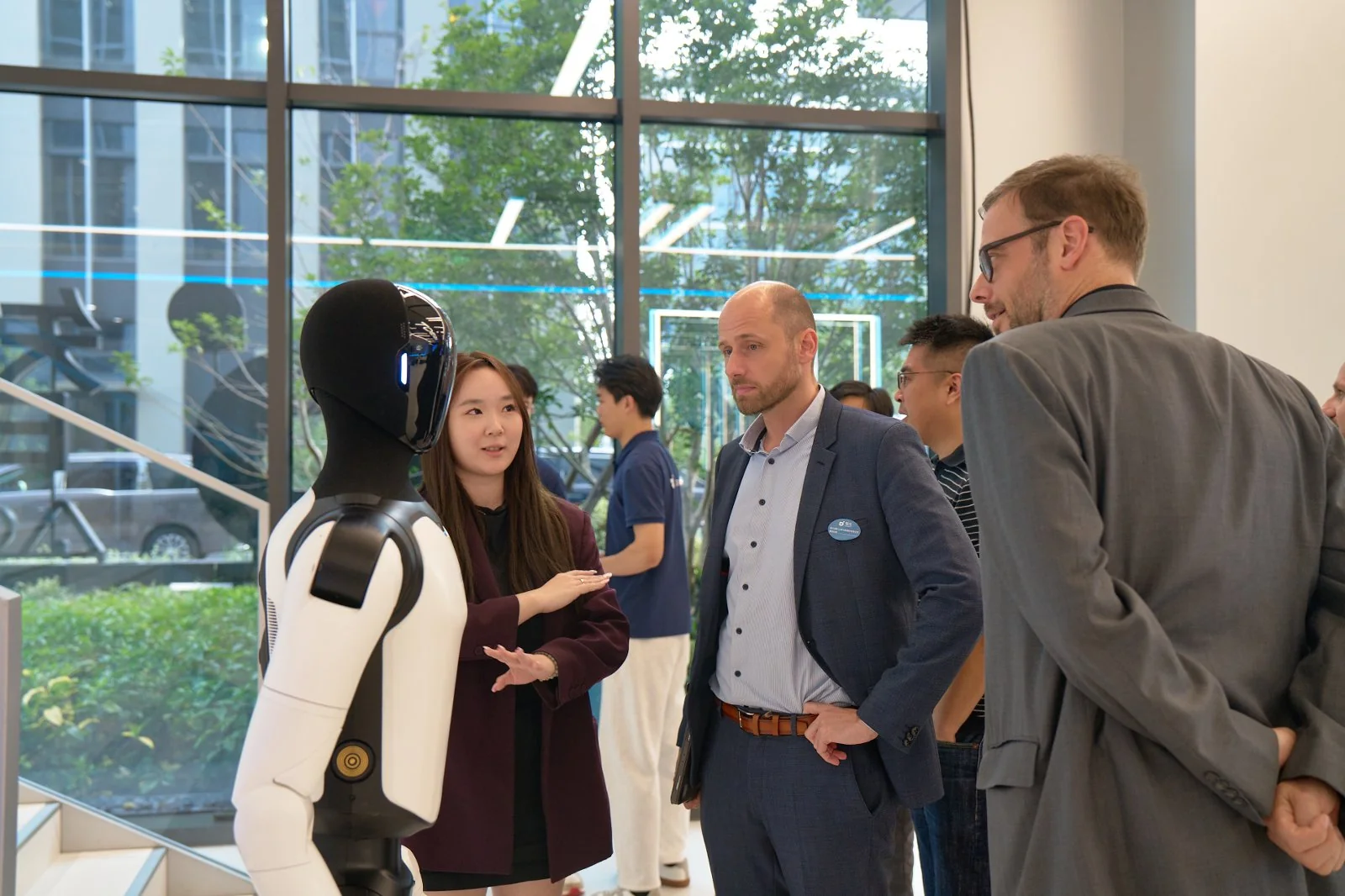
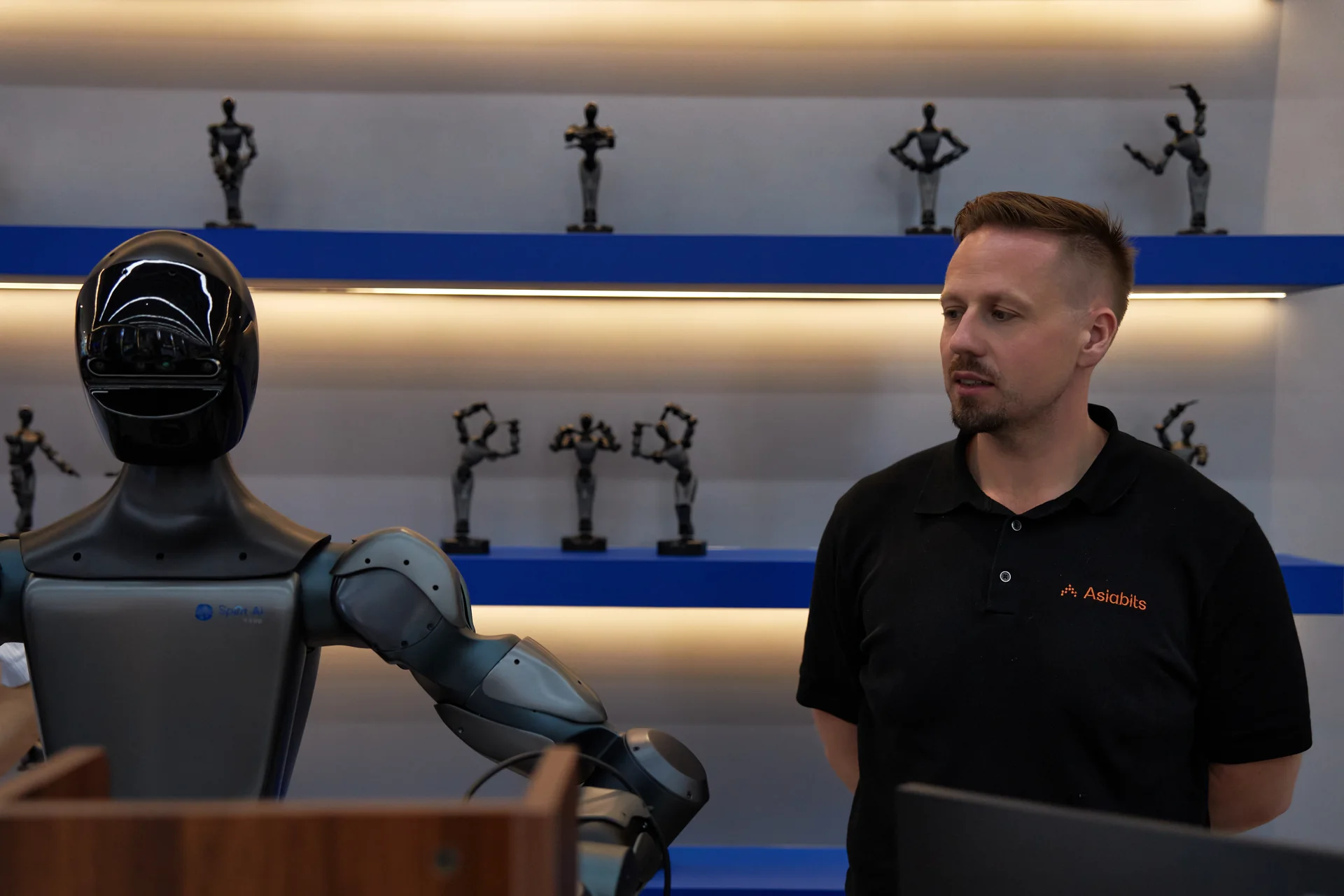
German companies can develop robotics with Chinese partners by combining an actual factory task with robot hardware, application data and a shared test plan. Schaeffler's cooperation with Spirit AI shows how this can work: the industrial partner contributes manufacturing experience and production settings, while the robot developer brings embodied AI and robotics capabilities.
During two weeks travelling through Germany earlier this year, I visited NEURA Robotics and met people working in industry. By July, I had become more optimistic about cooperation between Germany and China. Automotive engineering and the supplier network were central to that view. There is useful work to do together when both sides can describe the contribution they need.
My name is Thomas Derksen, founder of Asiabits in Shanghai. For a manufacturing team considering a Chinese robotics partner, the first decision is where to cooperate. Buying a finished machine, supplying a component and helping a robot learn a production task are different projects. Each needs a different owner inside the factory.
What does the Schaeffler and Spirit AI partnership involve?
The partnership combines work on embodied AI data, humanoid components and industrial applications. German motion technology supplier Schaeffler and Chinese embodied AI company Spirit AI signed their agreement on June 3, 2026, according to Spirit AI's announcement. It describes cooperation on data collection and component development alongside a strategic procurement relationship.
Schaeffler's June 4 release names electric lifting columns, sensors and rotating joints among the component areas. It also reports an initial box-folding application validation using Spirit AI's robot with support from its development team. The task addressed boxes of different sizes and shapes.
That example gives a factory team a useful way to frame its own discussion. A production setting supplies objects and conditions against which a robot can be developed. Component engineering and application development can proceed together. For another company, the starting point could be packaging or material presentation, provided its engineers can define what an acceptable result looks like.
Consider an illustrative packaging project. The plant would describe which cartons are used, how they arrive and how the folded result is checked. The robotics partner would explain the proposed handling method and what needs development. Those two descriptions make it possible to identify a first experiment and the people who must attend it.
What can a factory contribute beyond buying the robot?
A factory can contribute task knowledge, representative materials and a place to evaluate a proposed method. Experienced operators can explain details that a product drawing leaves out: where a package catches, which presentation varies and how they recognize a result that needs rework.
Start with an observation sheet for the current process. Record the input condition, the required output and the exceptions operators encounter. Where production records already exist, use them to choose representative cases. A process engineer should decide which variations belong in the first test and which can wait for a later stage.
This changes the preparation for a robotics meeting. Instead of bringing only an automation budget and a product brochure, bring samples and a description of the work. Include an example of a good result and an example your quality team would reject. A developer can respond much more precisely when the acceptance decision is visible.
There is also a practical staffing question. Who can release samples, explain a failure and authorize a change to the trial setup? Assign someone with enough production knowledge to answer those questions during development. Otherwise, a robot team may keep testing an interpretation that the factory would never accept.
How should the first development task be selected?
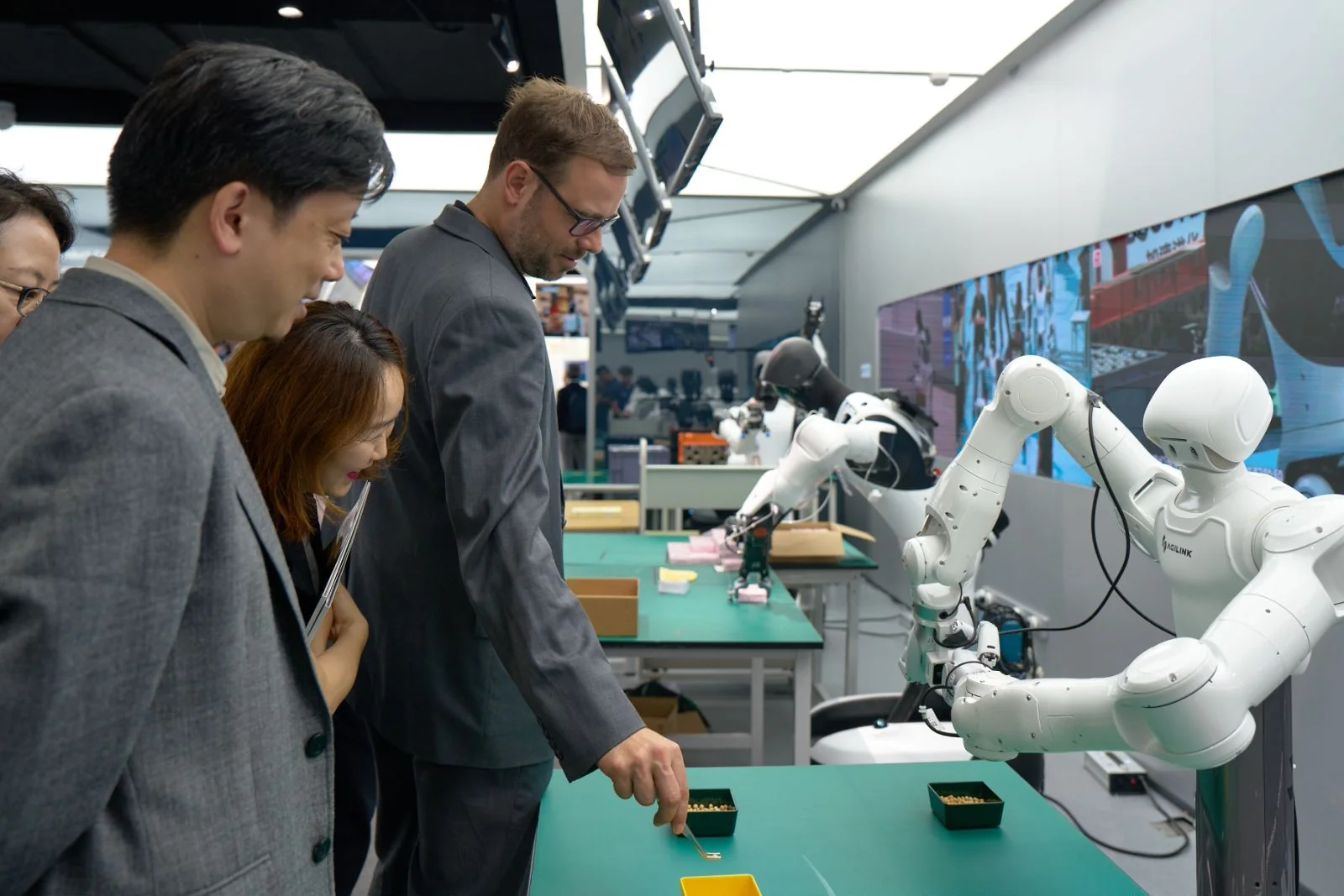
Select a task whose inputs and successful output the factory can describe and reproduce. A bounded operation makes it easier to determine what changed between tests and whether the proposed method deserves more engineering time.
Use a real production inconvenience as the starting point. For example, a team could investigate handling one family of empty packaging. Define the object range, the permitted presentation and the destination. Then identify what the robot must detect or manipulate. This is a proposed project structure, with the actual limits to be set by the factory and developer.
Choose the robot form after describing the operation. If the work stays at one workstation, ask the developer to compare a fixed installation with a mobile machine. If movement between stations is necessary, include that movement in the experiment. Our guide to the types of robots Chinese companies make helps distinguish these options.
Write a short decision statement before the trial. It might ask whether the proposed gripper can handle every agreed carton without damage, or whether the machine can recover from an empty pickup position. Avoid combining several unresolved tasks into the first demonstration. Separate questions make failures easier to diagnose and improvements easier to evaluate.
Keep a comparison with the current method. The engineering team needs to understand what would change for the operator, the workstation and downstream quality checks. A technical improvement becomes relevant to production when that comparison explains where time, rework or manual intervention would change.
How should training and acceptance testing be separated?
Use development trials to improve the proposed method, then evaluate the agreed version against a defined acceptance set. The factory should be able to see which cases the developer used while making changes and which cases were reserved for evaluation.
A workable test sheet records the starting condition, the action attempted and the result. Include interventions: an operator repositioning a carton, a remote correction or a reset belongs in the record. This lets both teams distinguish a completed operation from an operation completed with assistance.
Preserve the conditions of the comparison. Record the robot configuration and the test setup alongside the software version. If the gripper, lighting or object presentation changes, explain that change in the results. Otherwise, the factory may attribute an improvement to software when the physical setup also changed.
Define failure categories that lead to different next steps. A missed object may call for a perception adjustment. A damaged object may require a different grip. A station stoppage may need work on recovery. The categories should help the engineers choose the next experiment rather than produce a single attractive success percentage.
For the evaluation itself, agree who observes the run and who judges the output. Include the production quality owner before the test date. A result accepted by a robotics engineer may still leave a packaging or inspection requirement unresolved. Our article on how humanoids learn new tasks gives further background on the learning process.
Which responsibilities need agreement before work begins?
Agree who provides the equipment, who operates the trial and who can approve changes. A shared development project needs an explicit handover between the robot team and the plant team whenever the setup or task changes.
For data collection, list what will be recorded and which company may access it. Production video can include people, labels or information about other products. Choose a trial arrangement that captures the task while excluding unrelated material. Set the permitted use of recordings and development results before collecting them.
Plan the physical work with the plant's safety and engineering owners. They should define the trial area, the operating procedure and the conditions for stopping the experiment. Identify who is authorized to restart the machine after a fault. These responsibilities belong in the project plan from the beginning.
Include a restart test in the proposed evaluation. After an interruption, can the operator return the workstation to the agreed starting condition using the documented procedure? Record the assistance required and any material that must be removed. This gives the production team a specific maintenance and operating question to discuss before considering a wider installation.
The commercial decision also needs an owner. Set a review point at which both sides examine the results and decide whether to redesign, continue testing or prepare a production proposal. Budget the next step against the work it requires. A successful workstation experiment gives the team evidence for that decision.
How can a German team find the right development partner?
Find partners by the capability the project needs, then verify that the relevant engineering team wants to work on the task. A robot brand, a component company and a system integrator can each provide a different part of the solution.
In our database of 7,000+ robotics companies, the November 5 snapshot contains 7,320 company records worldwide, including 1,597 classified under Components. Asiabits uses this research collection to map potential partners by role. For this kind of project, the useful shortlist connects the required hardware with application engineering and testing capacity.
Send the same short task brief to potential partners so their answers can be compared. Request the proposed technical approach, the information they need from the factory and the development work they expect. A useful reply identifies an engineer who can discuss the operation and explain what a first visit would resolve.
Asiabits prepares company research and focused visits for European teams exploring robotics in China. A bespoke visit programme can bring the relevant production question into discussions with manufacturers and engineering teams. Start with the task your factory wants to improve and the decision your team needs to make after seeing the proposed approach.
Frequently asked questions
What can a German factory contribute to Chinese robot development?
A factory can provide representative materials, process knowledge and a defined place to test the task. Assign a production engineer who can explain failures and judge the output.
What are Schaeffler and Spirit AI developing together?
Their June 2026 agreement covers embodied AI data collection, humanoid components and industrial applications. Schaeffler also reported an initial box-folding application validation.
How should a joint robotics pilot begin?
Choose a bounded task with reproducible inputs and an agreed output. Define the first engineering question and the decision that the test should support.
How should a factory evaluate a robot development trial?
Record completed operations, failures and human interventions under agreed conditions. Use a defined acceptance set and involve the production quality owner in judging the result.
Get These Insights Every Monday
Join 18,000+ professionals reading Asiabits. Free, every Monday, straight from Shanghai.
Subscribe Free →