Plan robotics company visits in Hangzhou by choosing the application first, then confirming which site and technical team can address it. Unitree, Spirit AI and Hikrobot offer different starting points for research. A useful programme specifies the demonstration, operating conditions and follow-up questions before anyone books transport to a company address.
During a conversation about visiting Chinese robotics companies, I found myself explaining why manufacturers can differ so much beneath a similar robot body. Some concentrate on hardware, others on perception or the software that turns instructions into actions. That discussion shaped how I approach a visit shortlist at Asiabits: start with what the visitor needs to learn.
My name is Thomas Derksen, founder of Asiabits in Shanghai. The question I would take into a Hangzhou planning meeting is practical: which uncertainty about your application could a visit resolve? A research team selecting a robot platform and a warehouse operator investigating material movement need different conversations, even when they travel to the same city.
Which robotics companies in Hangzhou fit your purpose?
Build the shortlist around the capability you want to examine: a robot platform, an embodied model or an industrial automation application. The following companies illustrate different research routes. Their public pages establish a reason to investigate them; each proposed meeting still needs an agreed scope.
Unitree's official contact page lists its Hangzhou headquarters in Binjiang and presents quadruped and humanoid product families. For a team comparing platforms, useful questions include which configuration will be present, what software access it includes and who can explain the control arrangement. Our guide to Unitree robot control sets out the distinctions to investigate.
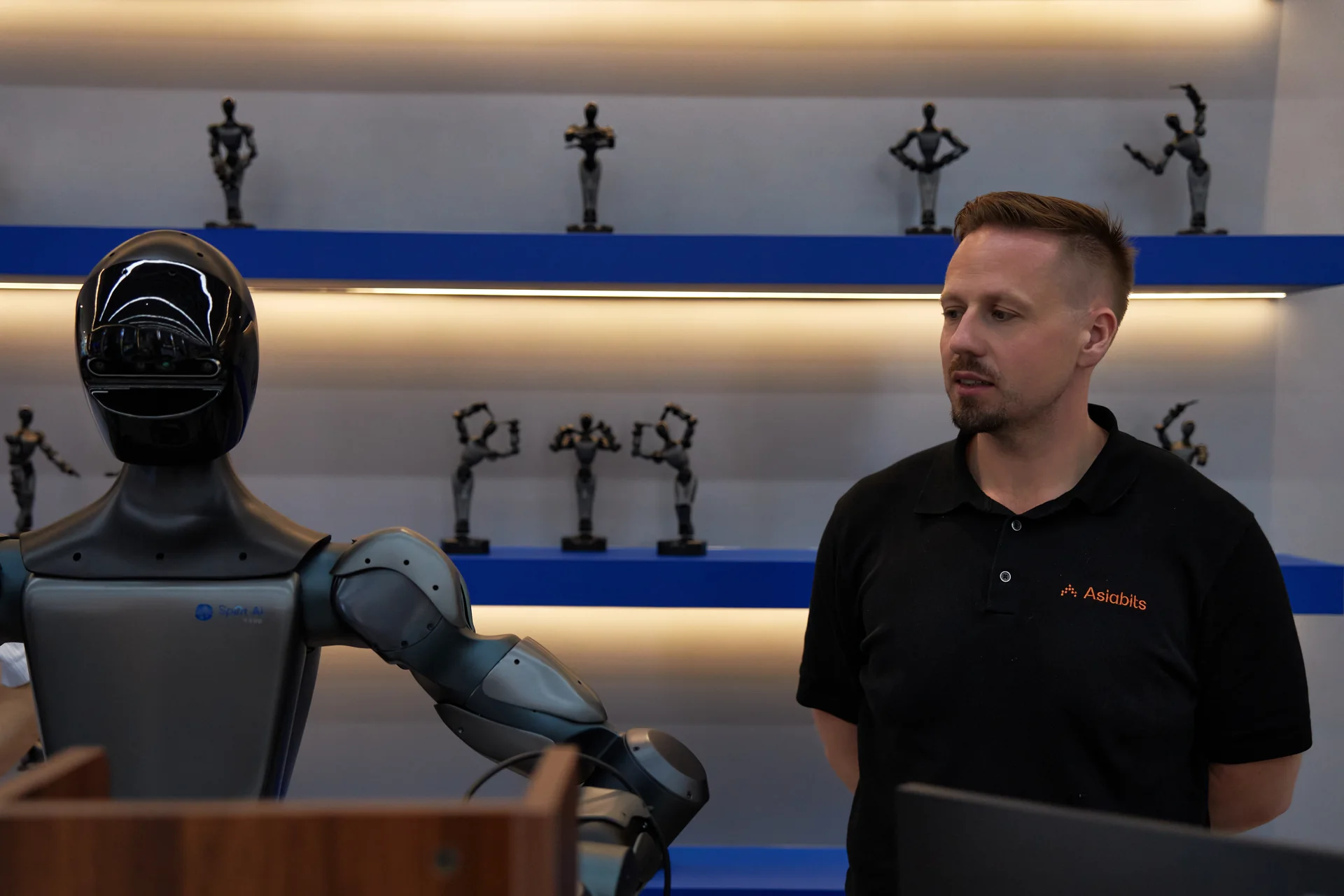
Spirit AI describes its focus as general-purpose embodied models and lists a Hangzhou location in Yuhang. That makes the relationship between model, training data and physical task a sensible subject for a proposed discussion. Ask the host what can be demonstrated and which engineers can discuss the model's limits. Published positioning alone cannot answer those questions.
Hikrobot's official site describes machine vision and mobile robotics and lists a Binjiang address. A visitor investigating warehouse or factory material movement could start there with a process description. The relevant questions concern the load, route and interfaces required by that process. Those questions differ substantially from choosing a humanoid for research.
What does our database tell you about Hangzhou?
Our database provides a pool of companies to investigate, with 110 records assigned to Hangzhou in the snapshot checked on 30 October 2026. In our database of 7,000+ robotics companies, that same snapshot contains 7,320 company records globally. These figures describe our curated research coverage, which includes different organisation types and applications.
They do not count factories open to visitors, confirmed suppliers for your project or robots operating in customers' facilities. Location fields also need checking against the manufacturer's current information. A company can have several offices, and the address associated with a record may serve a different function from the place where your demonstration would happen.
Use the records to expand a shortlist beyond the names already familiar to your team. For each candidate, write down the application, the reason for requesting a meeting and the evidence still missing. Remove a company when its offering does not address the question you brought, however recognisable its name may be.
Our January 2026 robotics analysis separated industrial robots, mobile robots, components and software into distinct categories. That distinction remains useful for organising research. Its historical counts and regional assignments should be rechecked before use in a current itinerary. For wider geographic context, see our guide to locating Chinese humanoid suppliers.
How do you confirm the right site before travelling?
Ask the host to confirm the exact address and what happens at that location before arranging the day's transfers. A headquarters, showroom, development laboratory, production building and customer installation each support different kinds of observation. The word factory in a travel brief should refer to a confirmed production visit.
The public addresses above already show a planning issue: Unitree and Hikrobot list Binjiang locations, while Spirit AI lists its Hangzhou location in Yuhang. That establishes districts to investigate, without establishing driving times or the location of an agreed meeting. Request a current map pin, entrance instructions and an on-site contact for every confirmed appointment.
Then ask what the host is permitting the group to see. If the purpose is manufacturing assessment, identify which production process can be observed. If the purpose is software evaluation, request the relevant technical participant and demonstration. When a customer application is involved, that customer's permission is a separate dependency. A manufacturer's invitation cannot settle access to another company's premises.
Build the route only after those answers arrive. Check live travel estimates between the actual entrances and allow for check-in and discussion overruns. Keep an alternative activity ready if a technical participant becomes unavailable. A narrower programme with the right people can answer more than a longer list of addresses.
What should you ask to see during a demonstration?
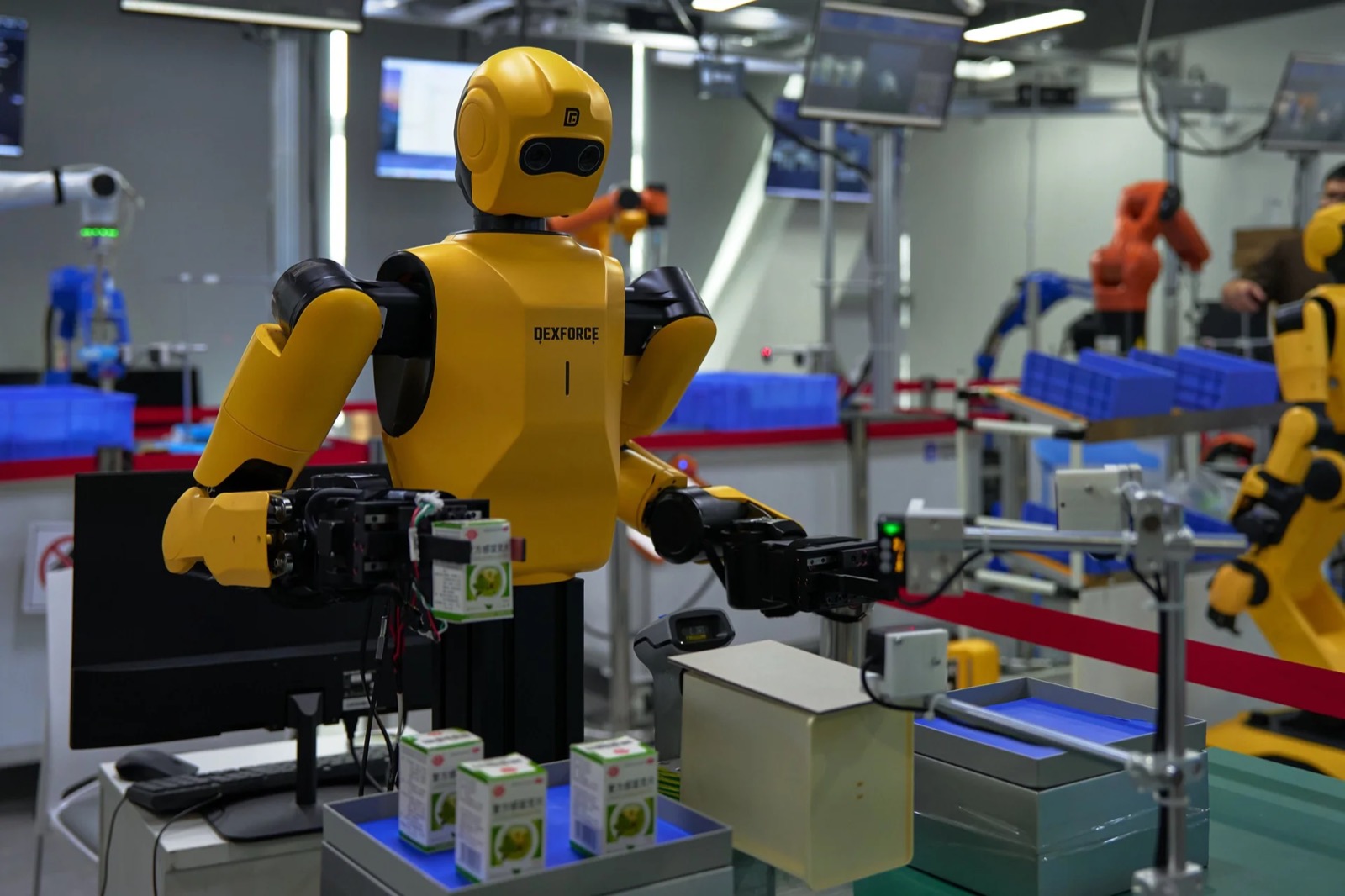
Request a task demonstration whose conditions are clear enough for your team to compare with its own application. For manipulation, describe the object and how it is presented. For mobile robotics, describe the movement of goods and the surrounding workflow. Ask the supplier which parts it can reproduce during the meeting.
Record how the robot receives instructions and what the operator does before, during and after the task. Ask whether the sequence is scripted, remotely controlled or generated by a model, and where human intervention is required. A successful attempt becomes more informative when visitors understand the setup, resets and assistance behind it.
For an illustrative picking task, ask what changes when an object is repositioned or a grasp fails. For an illustrative transport task, ask how the system handles a blocked route and how an operator recovers it. These are proposed evaluation questions, not claims that any named company will provide a particular test or achieve a particular result.
Agree on safe observation and recording arrangements with the host. Visitors should request permission before touching equipment or changing a test. Keep notes that distinguish what you observed from what the supplier described. A video can document a demonstration, but a useful technical record also explains its conditions and the questions left unanswered.
What brief should the host receive before the visit?
Send a short application brief that lets the host judge whether the meeting fits its capabilities and who should attend. Describe the process in ordinary operational terms before introducing a preferred robot shape. Explain what enters the task, what must happen and how your team would recognise an acceptable result.
For an illustrative warehouse application, the brief could describe the load and its pickup and delivery points, then explain how movement is requested today. For an illustrative manipulation application, it could describe the parts, their presentation and the required handling. Use your actual operating conditions and measurements. Leave unknown values labelled as questions for your engineering team.
State what kind of decision the visitors are preparing to make. An exploratory meeting may need a broad product discussion. A platform comparison may need software documentation. A proposed pilot may require an application engineer who can assess feasibility. Ask the host to confirm the participants and material it can provide in advance.
Keep sensitive operating information out of an introductory brief until sharing arrangements are agreed. An anonymised process description may be enough for initial screening. Send only the detail needed to assess fit, and ask before including customer images or documents. Preparation should make the technical conversation easier without exposing information the recipient does not need.
What should you bring home from a Hangzhou visit?
Bring home a comparison that supports a decision: which suppliers merit further technical work, what evidence supports that choice and what remains unresolved. Give every candidate the same review fields so that an engaging presentation does not become the main basis for selection. Include an owner for each follow-up question.
For each meeting, record the site function, product configuration and observed task. Separate supplier statements from your own observations. Then identify the next useful evidence, such as documentation, a scoped test or a discussion with an application engineer. A proposed next step should state what it would establish before your organisation commits further resources.
A visit has limits. It cannot establish long-term reliability, implementation effort or suitability for your premises through observation alone. Some questions require testing under your conditions and review by your own specialists. Our pre-pilot supplier guide helps structure that later assessment.
Before leaving, ask which documents may be shared with colleagues and which observations need clarification. Record any restriction beside the relevant material. That gives the team at home a usable account of the visit, with the evidence and its limits kept together.
Asiabits prepares bespoke robotics visits in China around the decisions a team needs to make. We research suitable companies, coordinate proposed meetings and help visitors communicate with hosts. Start with the application and the uncertainties you want to resolve; those determine which Hangzhou conversations belong in your programme. Access, demonstrations and technical participation are confirmed with each host.
Frequently asked questions
Can international companies visit robotics manufacturers in Hangzhou?
A company visit requires the host's agreement on participants, purpose and access. Public contact details are a starting point for an enquiry; they do not establish a production tour or customer-site visit. Confirm the exact site and demonstration before arranging transport.
Which Hangzhou robotics companies should a visiting delegation research?
Unitree, Spirit AI and Hikrobot illustrate different starting points: robot platforms, embodied models, and machine vision or mobile robotics. Choose candidates according to the application and evidence your team needs. A public product description does not establish suitability for your project.
Does a Hangzhou headquarters address mean you can visit a robot factory?
A headquarters address identifies a company location, whose function must be confirmed with the host. Ask whether the meeting includes a showroom, laboratory or production process. A customer installation requires separate permission from the site owner.
What should you prepare before a robotics visit in Hangzhou?
Prepare an application brief describing the task, operating conditions and decision you need to make. Ask which demonstration, configuration and technical participants the host can provide. Confirm the map pin and entrance instructions after the meeting scope is agreed.
How many robotics companies are in Hangzhou?
The Asiabits database snapshot checked on 30 October 2026 has 110 company records assigned to Hangzhou, within 7,320 records globally. This is a count of curated research records across organisation types. It is not a census of active factories or companies accepting visits.
Get These Insights Every Monday
Join 18,000+ professionals reading Asiabits. Free, every Monday, straight from Shanghai.
Subscribe Free →