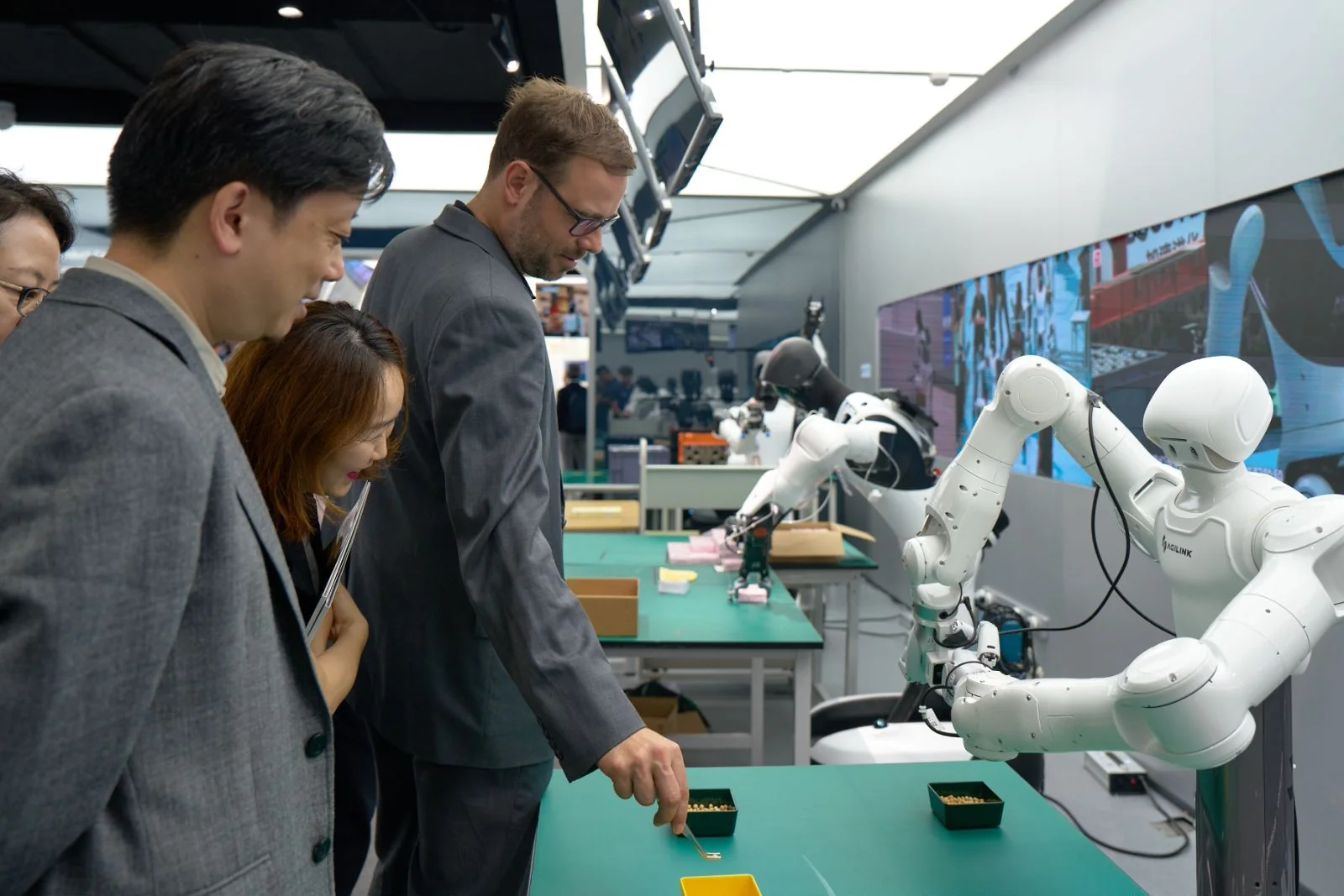
Humanoid robots already perform selected tasks in factories, including handling parts around inspection equipment. Broader adoption depends on how reliably a particular machine completes a defined job, how much human support it needs and whether the whole station pays for itself. For a manufacturer, readiness is best assessed one application at a time.
In June, I watched Chinese robot maker AgiBot's livestream from a tablet inspection line at electronics manufacturer Longcheer in Nanchang. Human operators and robots worked on the same line. My June 24 post recorded what I was watching at that point. The useful question for a business watching today is which part of its own process could benefit from the same kind of test.
My name is Thomas Derksen, founder of Asiabits in Shanghai. In an August post, I made a distinction I still use when discussing robotics: a current equipment budget and a longer-term development plan answer different questions. A factory can investigate humanoids while choosing established automation for a job that needs to run now. That gives engineering teams a practical way to act on progress.
What are humanoid robots already doing in factories?
They are being applied to bounded handling tasks where the material, equipment and required output can be defined. AgiBot's G2 deployment at Longcheer offers a concrete Chinese example. The robot maker's June 29 account describes robots working in the tablet quality-inspection section during a six-day livestream. The work took place alongside people and existing production equipment.
Longcheer's own account describes picking, transferring and sorting around tablet testing. The electronics manufacturer also identifies integration work involving communication with existing machines, production timing, exception handling and safety boundaries. Those details help explain what turning a robot into a production station actually involves.
For a prospective user, the application is the useful unit of comparison. Identify the objects being moved and the equipment receiving them. A robot loading a test fixture has a different requirement from a machine picking irregular components out of a deep bin. Both may be described as factory automation, but the handling difficulty and the consequences of a failed pick differ.
Read a deployment announcement with that distinction in mind. Look for the task description and the operating setting, then ask what changed during installation. A case involving a recognisable production process gives your engineers a starting point for discussion. It becomes more useful when the supplier can explain which conditions the robot needs and show how those conditions compare with yours.
Why does factory readiness vary between applications?
Readiness varies because each application combines physical handling with its own production rules. An object may arrive in a repeatable position or somewhere inside a mixed container. Its surface may be easy to see or reflective. A successful placement may leave plenty of clearance or require alignment with a fixture. Each difference changes what the system has to perceive and control.
Consider two hypothetical jobs involving the same plastic housing. In the first, an operator places every housing in a tray with shaped pockets. In the second, housings arrive loose in a tote and can overlap. The robot's final placement might be identical in both jobs. The work required before that placement is substantially different. A supplier comparison should describe the input as carefully as the desired output.
The surrounding process matters just as much. If a machine waits for a signal before releasing a part, the robot station needs to exchange that signal correctly. If a rejected component must be kept separate, the station needs a defined route for it. These are engineering requirements your team can investigate before discussing a broad rollout.
That is why I would put a photograph or drawing of the intended task at the start of a supplier brief. Add the material variation and the next process that depends on the output. The supplier then has something specific to evaluate. A reply explaining the required fixture or a difficult surface is useful evidence for planning a trial.
Does a factory robot need legs and human-like hands?
The required movement and manipulation should determine the robot's form. A station serving equipment within reach may have a different need from a task requiring travel between work areas. Describe those movements before choosing a body. Ask what the proposed design contributes to the job and which other configurations can meet the same requirement.
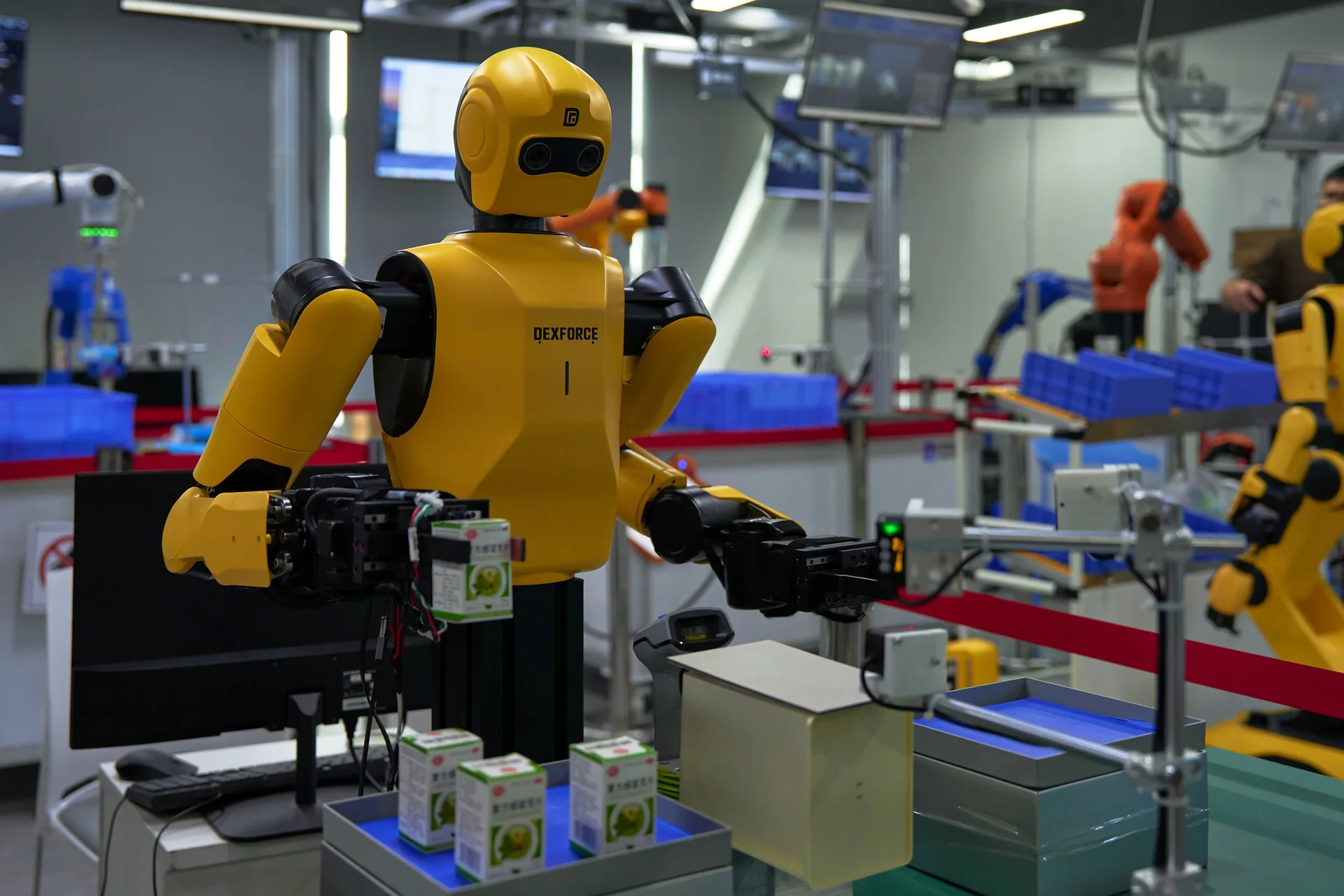
AgiBot's G2 example is useful here: the system used at Longcheer is a wheeled, dual-arm robot. The factory application concerns moving devices through a testing workflow. The label humanoid covers designs with different mobility and manipulation capabilities. When comparing suppliers, put the actual configuration beside the task rather than assuming every humanoid has the same body or abilities.
In our database of 7,000+ robotics companies, we currently track 7,320 records worldwide, including 214 in the Humanoid Robots category. These figures describe the breadth of our research collection. They help us build a field of companies to investigate. The next step is to compare product configurations and application evidence for the particular work a customer wants to understand.
During a Shenzhen visit described in my July post, an engineer put a robot hand in my palm. Handling a component makes the hardware behind a humanoid much more tangible. For a production team, the follow-up question is which grip the job needs. The useful comparison might involve a simple tool designed for one part, or a more adaptable hand for changing objects. Our guide to robot actuators explains another component that affects how a machine moves.
What evidence makes a humanoid worth testing?
A humanoid is worth testing when the supplier can connect its demonstrated capability to a problem your operation wants to solve. Begin with the current process. Record what the worker or existing machine does, how material arrives and what counts as acceptable output. This establishes a comparison that remains useful even if the trial points toward another type of automation.
Ask for evidence using representative objects. If the supplier has handled the same product family, discuss the differences in packaging, finish and presentation. If it has only used its own prepared samples, a test with your material can answer a useful next question. Choose samples your company is authorised to share and agree on how they may be photographed or retained.
The trial should measure completed acceptable work over a defined period. Record assistance whenever someone repositions an object, clears a fault or helps the robot continue. Count the work required to prepare the station as well. These observations help the operations team estimate what support the application would need at its own site.
Agree on a decision before starting. A trial might determine whether the gripper can handle a particular component, whether a station can keep pace with the adjacent machine or whether a longer on-site evaluation is justified. Each is a valid result. A clear decision keeps the team focused and gives the supplier a practical target for the next demonstration.
For a visit, ask who can explain the application and the work behind it. A production engineer can discuss how the station communicates with neighbouring equipment. A maintenance colleague can explain recovery and replacement parts. Our factory walkthrough guide covers how to collect that evidence on site.
How should a manufacturer plan its next step?
A manufacturer should choose a bounded application and assign someone who owns the process to investigate it with the supplier. Keep the current production requirement visible. If the task needs immediate capacity, compare the humanoid proposal with available alternatives using the same input, output and support assumptions. That comparison gives a development project a clear commercial reference.
Build the cost estimate around the station. Include the robot, tooling, installation and the changes needed to feed and receive material. Add the people required to run and maintain it. Discuss software and support arrangements with the supplier, including who implements a product change. A purchase price alone leaves much of the implementation work unpriced.
Use the trial to improve that estimate. If someone regularly prepares trays, include the preparation time. If a technician is needed for changeovers, ask how that fits your shift pattern. If a failed pick damages a component, include the quality consequence. The evidence gathered during testing should change the business case, rather than sit in a separate technical presentation.
Keep a second track for learning. Your engineers may find a supplier interesting because it is developing a capability your future products will need. Record the capability to revisit and the evidence that would justify another discussion. This gives longer-term research a concrete purpose without requiring an immediate equipment order.
At Asiabits, we organise private robotics company visits in China around the question a team needs to answer. We research relevant hosts and help visiting teams discuss their requirements and compare what each site can show. For a first brief, describe the part or process and the decision your team wants to make after the visit. That is enough to begin identifying useful conversations.
Frequently asked questions
Are humanoid robots already used in factories?
Yes. AgiBot and electronics manufacturer Longcheer describe G2 robots handling tablets around quality-inspection equipment in Nanchang. Their reports concern a defined production workflow.
When will humanoid robots be ready for my factory?
Readiness depends on your application, materials and production conditions. Start with a representative task and use a measured trial to assess acceptable output and required human support.
Do factory humanoids need to walk?
The required movement should determine the configuration. Wheeled dual-arm robots can serve some factory workflows; evaluate whether legs contribute to your particular task.
What should a humanoid robot pilot measure?
Measure acceptable completed work over a defined period, with human assistance and preparation recorded. Compare the result with the current process and use it to assess the next investment step.
Get These Insights Every Monday
Join 18,000+ professionals reading Asiabits. Free, every Monday, straight from Shanghai.
Subscribe Free →