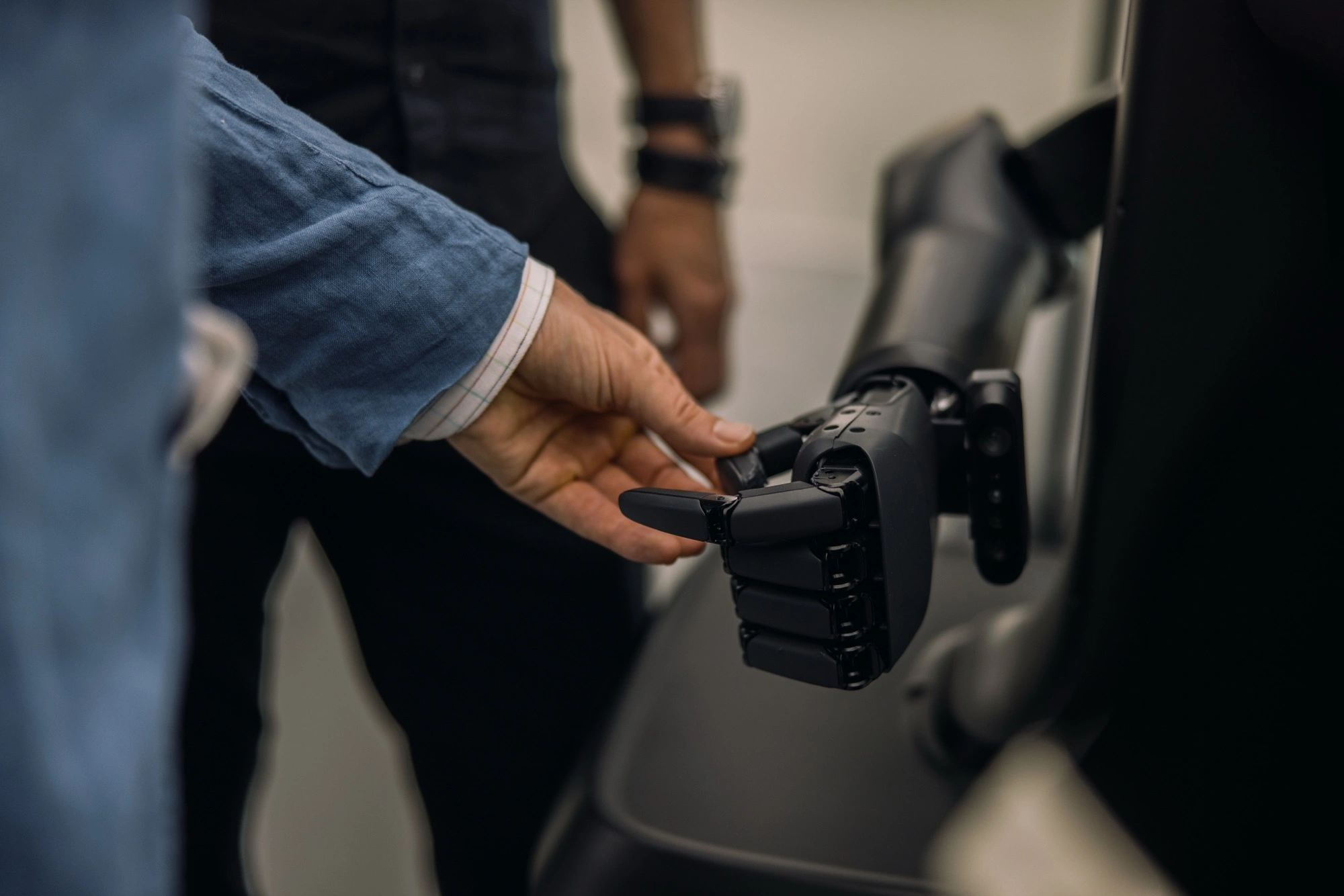
Some humanoid robots use wheels because their work combines human-style reaching and handling with travel across a factory floor. A wheeled base can move the arms between work positions without a walking mechanism. For a buyer, the useful comparison starts with the route, working height and handling task the machine must complete.
In June, I watched Chinese robot maker AgiBot's livestream from electronics manufacturer Longcheer's tablet inspection line in Nanchang. Robots worked alongside human operators. My June 24 post described what I was watching on screen. The work around the test equipment was what interested me: moving a device into position, letting the equipment do its job and handling the next step.
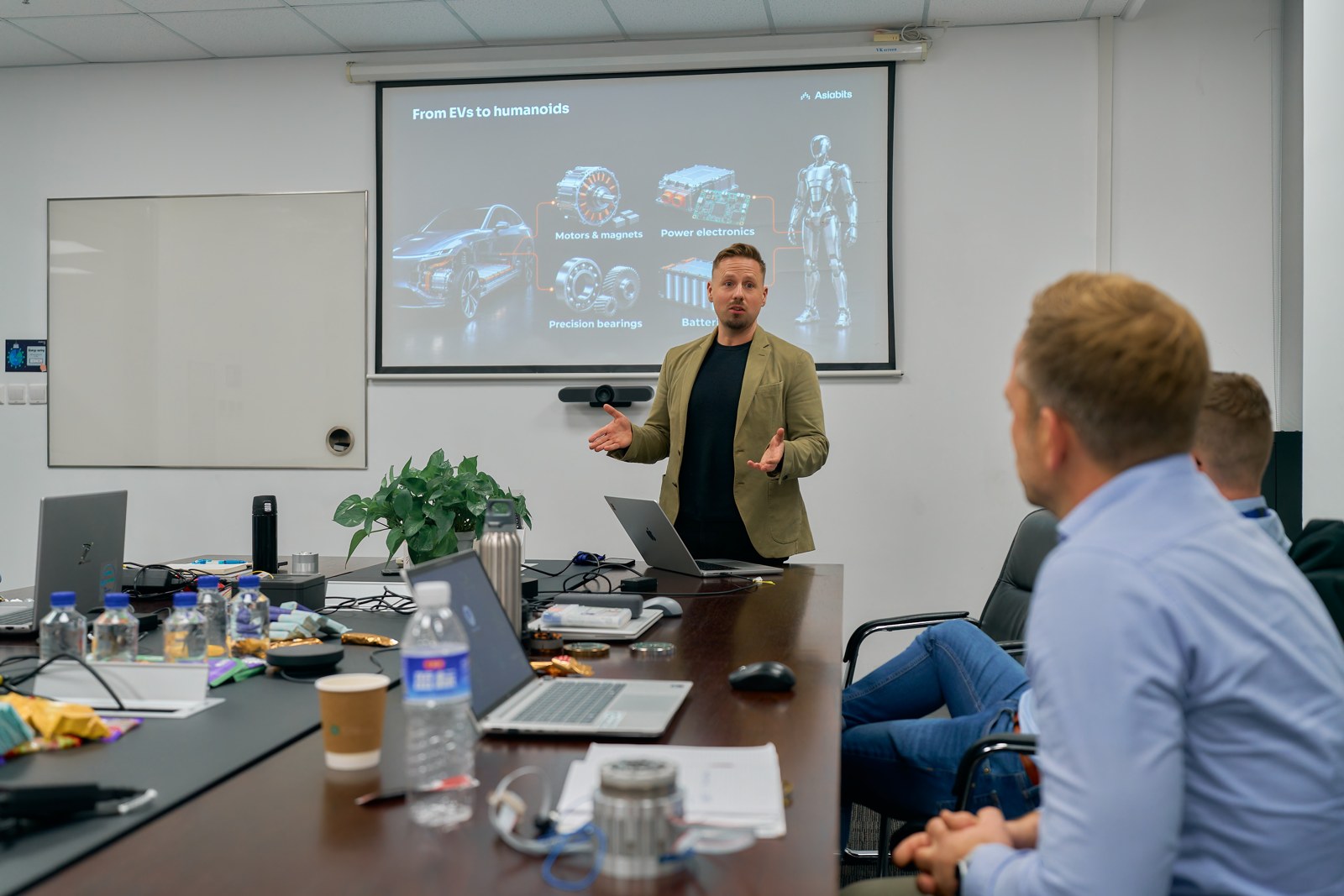
My name is Thomas Derksen, founder of Asiabits in Shanghai. When people ask about humanoids, the conversation often starts with legs. Factory research becomes more useful when we start with what the hands need to reach and how the robot gets there. A wheeled machine belongs in that discussion whenever the job takes place on an accessible floor.
What is a wheeled humanoid robot?
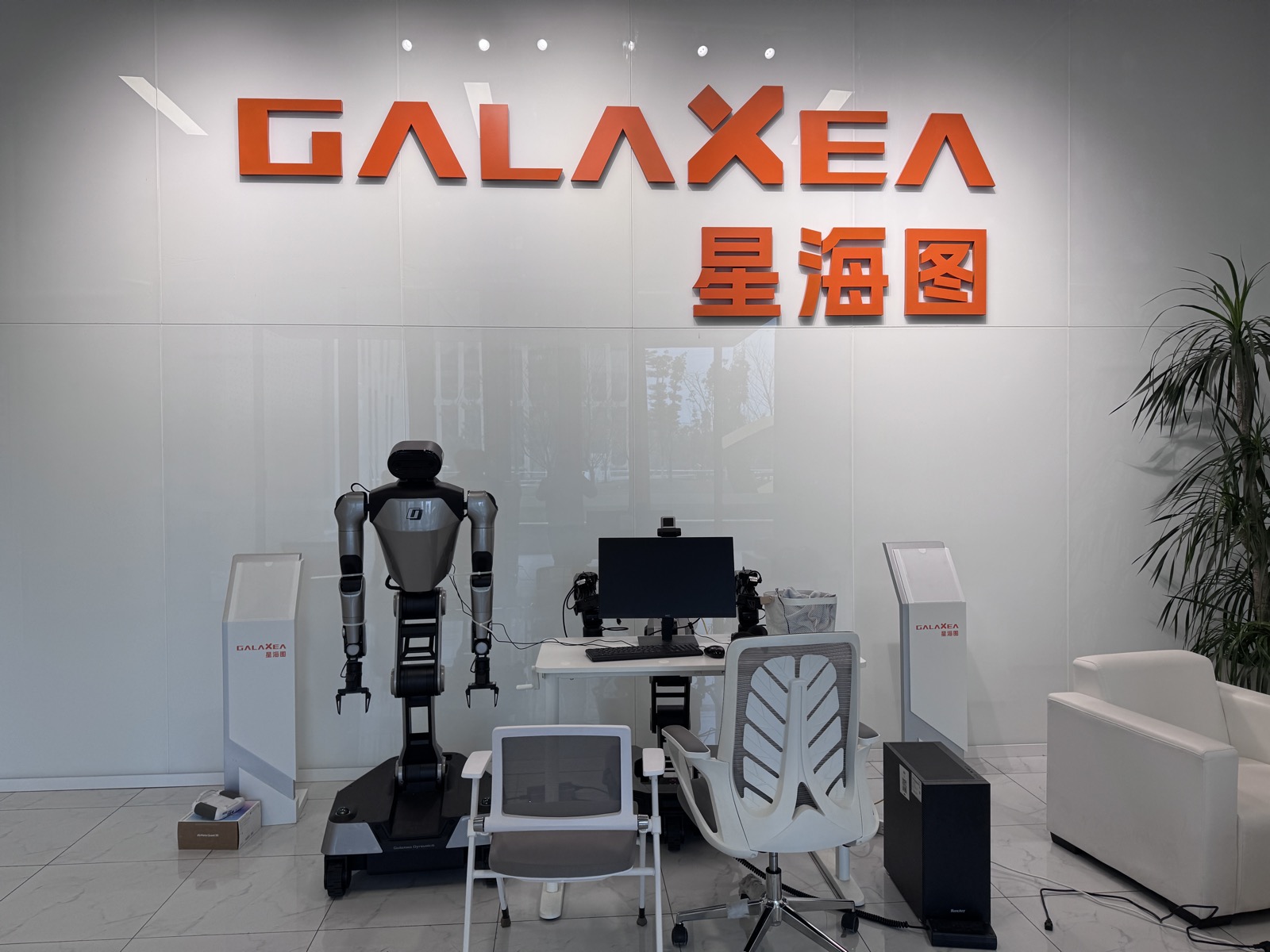
A wheeled humanoid combines a mobile base with an upper body designed to manipulate objects, often using two arms. Manufacturers use the term for different configurations, so inspect the actual hardware. Some machines have a lifting torso, some bend at the waist, and the hands or grippers depend on the intended work.
AgiBot's G2 user manual identifies the product as a wheeled humanoid. It specifies indoor use and a flat operating surface, with a stated slope limit. This gives a buyer a useful starting point: compare the manufacturer's operating conditions with the floor the machine would encounter.
The word humanoid describes part of the design; it leaves many purchasing questions open. Ask how the robot moves sideways, turns and adjusts its working height. Establish whether the base stays still during manipulation. The answers determine which stations it can serve and how much clearance each station needs.
Separate the functions when making a shortlist. Navigation gets the robot to the station. Manipulation handles the object. Communication coordinates the robot with nearby equipment. A demonstration should show the functions required by your application in the same sequence. This makes it easier to identify what the proposed system includes.
Why choose wheels instead of legs for factory work?
Wheels are worth evaluating when a job can be reached over a suitable floor and requires useful movement between work positions. Start by drawing that route. Include doorways, corners and the final approach to the equipment. Then examine what the robot must do after it arrives.
Consider a hypothetical inspection area with several benches along the same aisle. A mobile two-arm robot could be evaluated for moving between the benches and loading a fixture at each one. Its reach and docking behavior would matter alongside its ability to travel. A demonstration of driving down the aisle would answer only the route question.
Now consider a task across a staircase. The route creates a different mobility requirement. A buyer might evaluate a walking platform, change the route or position equipment on the same level. That is a process-design decision with consequences for installation and operation. Compare those options before treating the robot's body shape as settled.
Wheels also change the questions your maintenance team asks. Inspect floor contact, wheel access and the method for moving a disabled machine. Ask how the supplier handles debris or damage affecting travel. Keep these questions attached to the intended site so the answers are useful to the people who will support the equipment.
For background on the wider comparison, our guide to humanoid factory readiness explains how to assess a bounded production application. The choice of base is one part of that application.
What does the Chinese factory example show?
The Longcheer example shows wheeled humanoids handling products around existing inspection equipment. In its account of the June livestream, the electronics manufacturer describes picking, transferring and sorting tablets in the testing section. It also describes integration work involving equipment communication, production timing and exception handling.
That division of work is useful when examining your own process. A robot may load an instrument that performs a specialist measurement. The required outcome depends on both machines working together. Identify who controls the handover, where the result goes and what happens when either side cannot continue.
During a supplier meeting, ask for the complete sequence around one representative part. Follow it from its arrival to its final destination. Include rejected parts and a missing input. This gives the engineering team a more useful picture of the proposed station than a sequence edited down to successful picks.
Keep the case linked to its actual task. Loading a tablet fixture provides a starting point for an electronics-handling discussion. A different object may need another gripper, presentation method or motion. Bring a representative sample or drawing so the supplier can explain the changes needed for your application.
For company research, we recorded 7,320 companies in our database of 7,000+ robotics companies worldwide on November 24. Forty records contained the word wheeled in their descriptions. At Asiabits, that is a search entry point for different mobile platforms. A technical shortlist needs a closer look at each product's arms, mobility and intended work.
How do you check whether a wheeled robot fits your site?
Check the route and the working position as a connected system. Measure the available floor area around the station, including what people and material carts need. Record the position of the input and output, the height of the fixture and the clearance available for the arms.
Use a floor plan to mark the narrowest passage and the tightest turn. Photograph thresholds and floor joints for the supplier's review. Explain when aisles become busy and whether pallets temporarily occupy the approach. These are operating inputs that should be discussed before a route demonstration is agreed.
At the station, test the actual combination of base position and arm motion. A gripper reaching an empty fixture may behave differently when the neighboring fixture is occupied. Include the object, surrounding equipment and the intended placement. Ask the supplier to show the permitted operating area for that configuration.
Keep people in the layout discussion. Establish where operators load material, inspect output and access controls. The supplier and the site's responsible engineers need to assess how those activities interact with robot movement. Request the safety documentation for the proposed installation and identify who is responsible for evaluating the integrated station.
Charging belongs on the same plan. Ask where it happens, how the robot gets there and what work stops during the process. If a supplier proposes battery replacement, review the procedure and staffing with maintenance. Evaluate the shift around these arrangements rather than treating battery capacity as the complete operating plan.
What should a demonstration measure?
A useful demonstration measures completed acceptable work through the full application cycle. Define the object and its arrival condition, the required destination and the quality criteria. Include the travel required for the job. Agree in advance which actions count as human assistance.
For a hypothetical mobile inspection assistant, the cycle might include leaving a waiting position, approaching a bench, loading a part, receiving the test result and placing the part in the correct tray. Time the whole sequence. Record a failed approach or an interrupted handover alongside successful cycles.
Keep travel time separate from manipulation time in the results. That helps identify the cause of a missed production target. A faster gripper cannot resolve a blocked aisle. Better docking may reduce the adjustments needed before an arm can begin. The breakdown helps supplier and buyer decide what to change.
Run representative variations. Change the input position within the range your process permits and include the normal differences between parts. Ask how a new product is introduced and who prepares the robot's next task. The resulting workload belongs in the estimate for operating the station.
Agree on the decision the demonstration should support. It may establish whether the machine can reach all required positions or whether a longer on-site evaluation is justified. Our manufacturer comparison guide covers how to keep evidence comparable across suppliers.
How should you begin a supplier discussion in China?
Begin with a short application brief describing the work and the route. Include the object, fixture and output requirement, plus a floor plan with relevant dimensions. State whether the investigation concerns one station or movement between several stations. This lets the supplier propose a configuration around the actual job.
Request a clear division of responsibility for the trial. Identify who supplies tooling, who connects the robot to the production equipment and who supports commissioning. Ask which software functions are included and what your engineers must build. Record the proposed configuration so later test results refer to the same machine.
Asiabits helps international teams research robotics companies and prepare technical visits in China. We use the application question to select relevant manufacturers and organise useful discussions. Share the task and route your team is investigating; the visit can then focus on the hardware and engineering decisions needed for that work.
Frequently asked questions
Can a humanoid robot have wheels?
Yes. Manufacturers use the term wheeled humanoid for robots with a mobile base and an upper body designed to manipulate objects. Inspect the actual configuration and operating conditions for each model.
Why do factory robots use wheels instead of legs?
Wheels are worth evaluating when the work is accessible over a suitable floor. Compare the route and the handling task together, including the position from which the arms must operate.
What is an example of a wheeled humanoid in China?
AgiBot identifies its G2 as a wheeled humanoid. Electronics manufacturer Longcheer describes G2 robots handling tablets around inspection equipment at its Nanchang factory.
How should a wheeled humanoid demonstration be tested?
Measure acceptable completed work across the full cycle, including required travel and equipment handovers. Record human assistance and inspect how the robot recovers from interruptions.
Get These Insights Every Monday
Join 18,000+ professionals reading Asiabits. Free, every Monday, straight from Shanghai.
Subscribe Free →