A robot gripper is the tool that holds an object while a robot moves or manipulates it. Choose one by defining the workpiece, available contact surfaces, required movement and acceptable damage. Then test representative parts through the complete handling cycle, including pickup, travel, placement and release, before comparing suppliers.
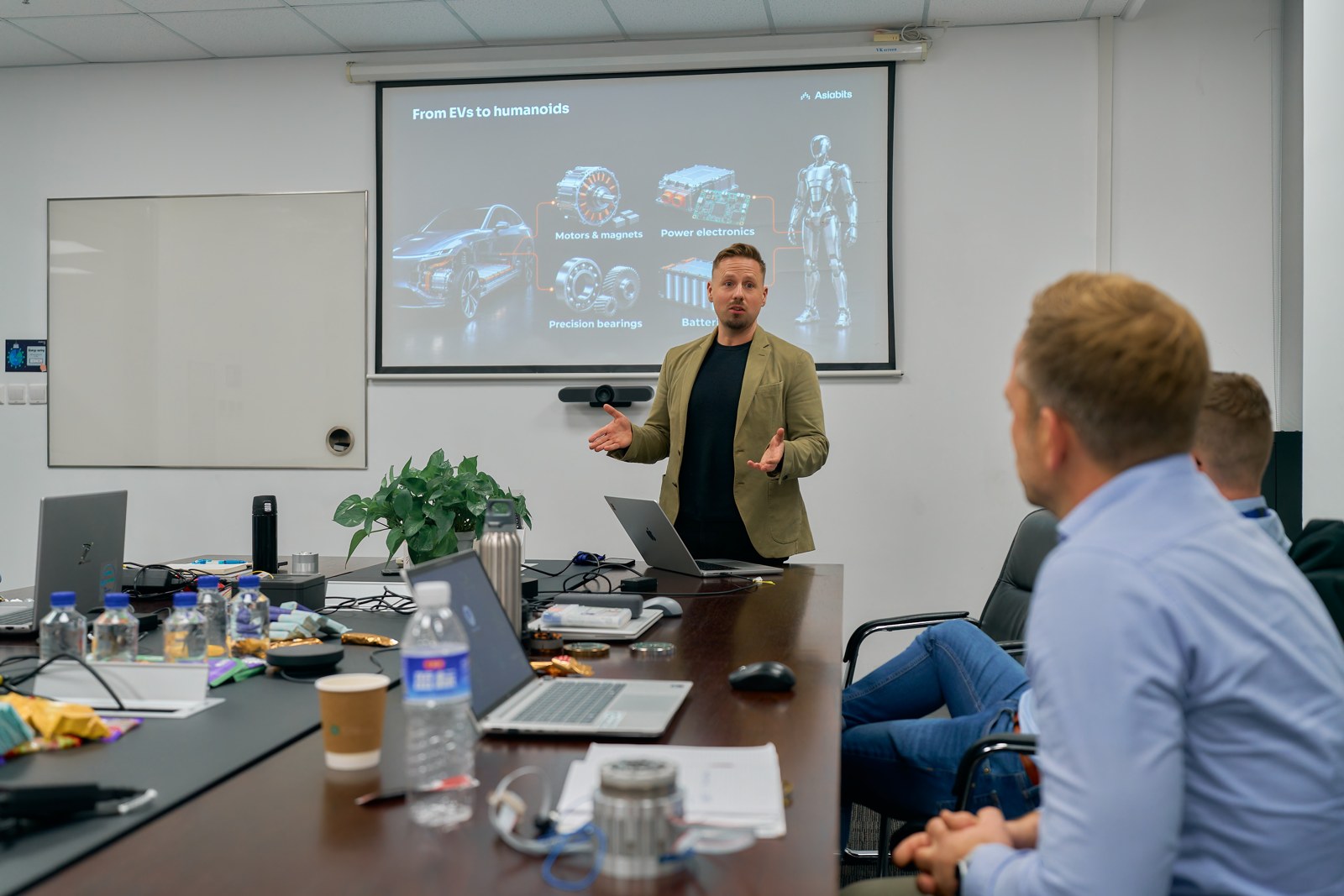
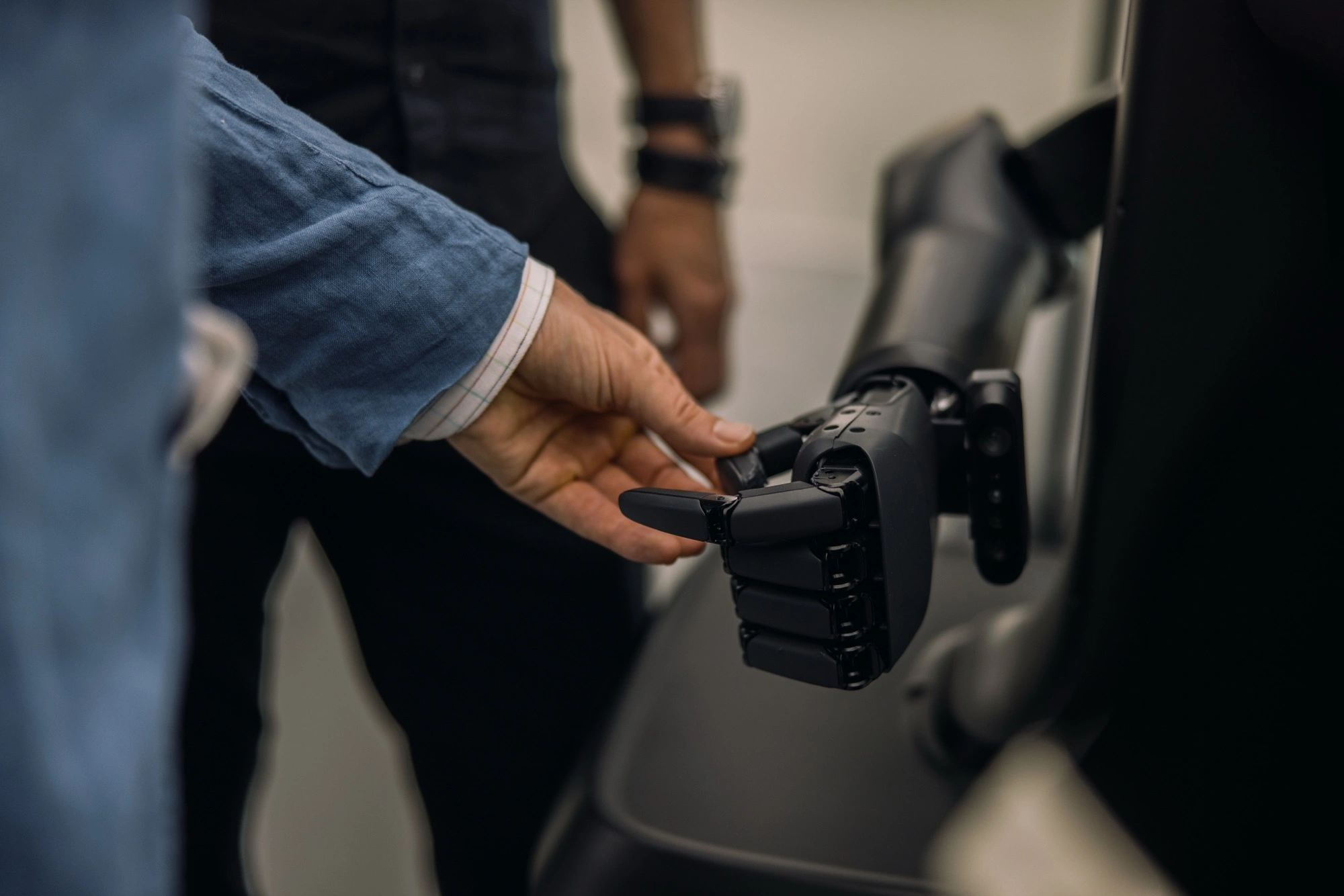
During a Shenzhen visit I described in July 2026, an engineer placed a robot hand in my palm. Holding it made the hardware behind a grasp much easier to appreciate. I'm Thomas Derksen, co-founder of Asiabits in Shanghai. That encounter is a useful starting point for a question buyers can investigate: what must the tool at the end of the robot do to your product?
A carton, a metal casting and a loose cable each present a different handling problem. Before choosing a robot or arranging a supplier demonstration in China, describe the object and the state in which the next process needs to receive it. That gives the engineering conversation a clear purpose.
What is the difference between a gripper and an end effector?
A gripper holds a workpiece; an end effector is the broader category of tooling attached to a robot to perform a task. A welding torch, screwdriver or dispensing nozzle can also be an end effector. Knowing which function you need helps separate handling equipment from equipment that changes or assembles the product.
The robot arm positions the tool. The gripper establishes contact with the object. The fingers, suction cups or other contact elements determine how that contact works. Their shape and material can be as important to a handling application as the body of the gripper behind them.
A dexterous robot hand adds articulated fingers and more possible contact configurations. That may be useful when the application needs varied grasps. A fixed production task may be served by a simpler tool whose fingers match the part. Ask the supplier to explain the proposed mechanism in terms of the work your process requires.
Keep the gripper discussion separate from the robot joint discussion. Our guide to robot actuators explains the hardware that produces movement. For handling, the next question is how that movement reaches the workpiece without losing position or damaging it.
Which gripping principle fits your product?
The appropriate gripping principle depends on the object's geometry, material and accessible surfaces. Mechanical fingers can close around a part or expand inside an opening. Vacuum tooling uses a pressure difference at the contact surface. Other applications may call for magnetic or specialised handling tools.
Consider a rigid component arriving in a known orientation. A mechanical gripper may have suitable surfaces to contact on either side. Now consider a sealed package with a broad accessible upper face. A vacuum tool may be worth testing. These are starting hypotheses for an application study; the physical samples determine the next engineering choices.
Surface details matter. German vacuum-handling specialist Schmalz explains that its vacuum gripper designs address different workpiece shapes and materials, including flexible packaging. Its examples show why contact geometry belongs in the selection discussion. Bring the actual packaging material and its normal variation to the test.
Think about access as well as grip. A tool may hold a part on an open bench and struggle to reach the same surface inside a bin. Ask to see the approach path and the clearance around the fingers. Include the destination fixture, since the tool must also withdraw after leaving the part behind.
For mixed products, group the items by their handling problem. Products with similar dimensions may need different contact materials or grip settings. Ask which groups can share a tool, which require adjustment and which need a change of tooling. That answer affects how the system will operate between production batches.
What information should you give a gripper supplier?
Give the supplier a description of the actual workpiece, its presentation and the complete movement. Include mass, dimensions, material, surface condition and the permitted contact areas. Supply drawings or representative samples within your company's sharing permissions, and identify which characteristics vary in ordinary production.
Describe the incoming condition. Is the part fixed in a tray, loose in a container or arriving on a conveyor? Does another machine establish its orientation? The gripper proposal needs to account for how the tool finds an accessible grasp and what happens when the incoming position differs.
Define the outgoing condition just as carefully. The next machine may require a particular angle or seating position. A shipping pack may need an undamaged surface. Write down what a completed transfer means, including the placement and release, so the demonstration can be assessed against the downstream process.
Provide the intended cycle and robot movement. Japanese automation supplier SMC's air-gripper selection documentation relates selection to workpiece mass and contact friction. Use the proposed finger geometry and operating conditions when asking the supplier to justify its selection. A catalogue force figure needs that application context.
State the utilities and environment available at the destination. Ask whether the proposal needs compressed air, vacuum generation, electrical power or additional controls. Include cleaning requirements and exposure to fluids or dust where relevant. The supplier can then identify equipment and materials that belong in the proposed system.
How should you test a robot gripper?
Test a gripper by running representative workpieces through the intended handling sequence and recording the result of every attempt. Include normal variation in the product and incoming presentation. Agree on acceptance measures before the demonstration so both teams evaluate the same task.
Begin with the contact itself. Does the tool find the intended surfaces? Does the object move as the fingers close? For vacuum tooling, ask how the system confirms that a usable grip has formed before travel begins. Have the engineer explain the feedback the controller receives and the action it takes if the required signal is absent.
Then follow the load through the movement. Include the orientation changes and acceleration proposed for the application. Check for slipping and inspect the product after release. Surface marks, deformed packaging and an incorrect final position belong in the test record alongside a dropped object.
Ask the team to retain a reference sample and a written description of any accepted cosmetic marks. Photograph the agreed placement and record the inspection method. Colleagues receiving the equipment can then repeat the same checks, including after a tool change or replacement of worn contact elements.
Keep unsuccessful attempts visible. Record what failed, whether a person intervened and what changed before the next attempt. If the supplier adjusts the fingers or software, keep the revised configuration with the results. This allows your team to see which version was tested and what it achieved.
Include replenishment and product changeovers when they fall within the application. Ask an operator to demonstrate the agreed recovery procedure after a failed pickup. For a hypothetical packaging line, a useful result would show how an unpicked pack is identified and removed before it obstructs the next cycle.
For warehouse applications, the guide to warehouse tasks robots can automate connects this test to the movement of goods through the wider operation. A successful grasp becomes commercially useful when the transfer fits the receiving process.
How do you compare gripper suppliers in China?
Compare suppliers against one shared application brief and one agreed test, then examine the engineering and support included with the tool. This makes differences in proposed finger design, utilities, controls and maintenance easier to assess.
In our database of 7,000+ robotics companies, a November 2026 search found 106 records containing the word gripper in their name or description. The database held 7,320 companies worldwide. At Asiabits, that is a starting set for research: the next step is to check each candidate's location, product range and fit with the handling task.
Ask candidates who designs the contact elements and who owns the drawings. Establish how replacement fingers, suction cups and seals are specified and supplied. Ask the engineer to show the replacement procedure and explain which adjustments are needed afterwards. Your maintenance team needs to understand that work before the equipment arrives.
Confirm the interface with the robot and controls. Identify who supplies the mounting adapter, cables and any valves or vacuum equipment. Request the relevant manuals and configuration files. Where a separate integrator is involved, assign responsibility for the complete handling sequence; our system-integrator selection guide covers that division of work.
Before a visit ends, write down the configuration demonstrated, the samples used and the remaining engineering questions. Give each open point an owner. That creates a useful basis for a sample order or further application testing and helps your colleagues assess the same evidence after returning home.
Asiabits helps international teams research robotics manufacturers and prepare relevant technical discussions in China. Our Bespoke Tours connect company visits to the application the team wants to investigate. Share the product you need to handle, its incoming condition and the required output so the proposed discussions can focus on a testable task.
Frequently asked questions
What does a robot gripper do?
A robot gripper holds an object while a robot moves or manipulates it. The contact elements and mechanism must suit the workpiece and the complete handling sequence.
Is a robot gripper the same as an end effector?
A gripper is one type of end effector. Other end effectors include tools used for welding, fastening or dispensing.
How do you choose between a mechanical and a vacuum gripper?
Start with the workpiece geometry, material and accessible contact surfaces. Ask suppliers to test the proposed gripping principle using representative parts and the intended movement.
What should you check before buying a robot gripper in China?
Use a shared application brief and an agreed acceptance test. Confirm the tool configuration, controls, replacement parts and responsibility for integration before ordering.
Get These Insights Every Monday
Join 18,000+ professionals reading Asiabits. Free, every Monday, straight from Shanghai.
Subscribe Free →